Barbell Pendlay Row
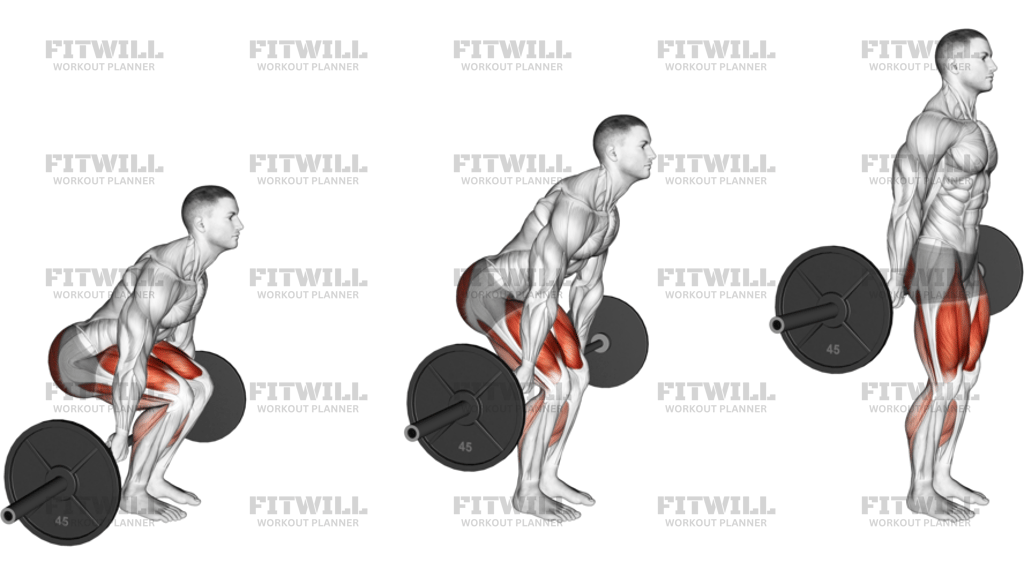
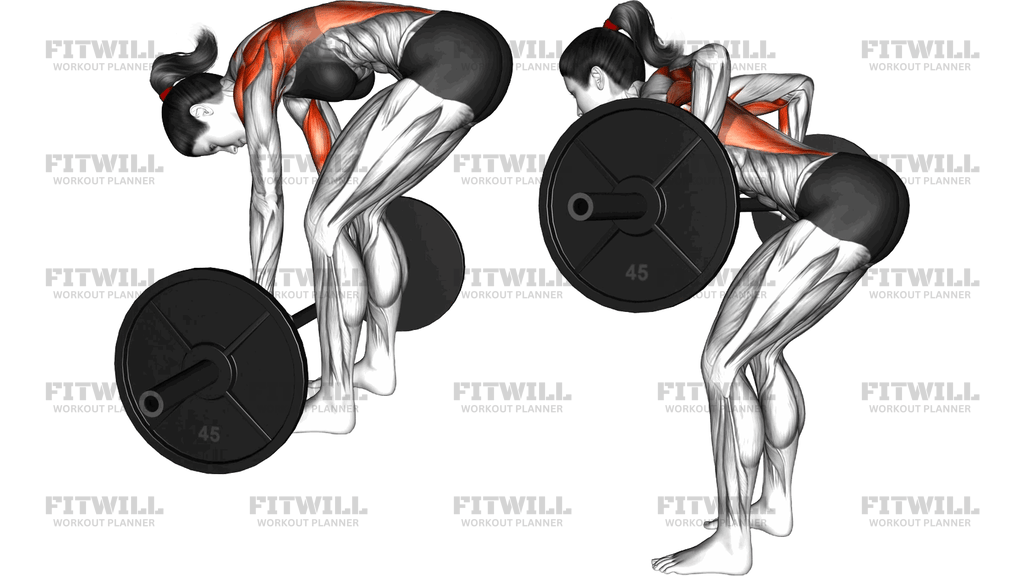
The Barbell Pendlay Row is a strict, explosive rowing variation developed by weightlifting coach Glenn Pendlay. Unlike a standard bent-over row, every rep starts from the floor with the bar at a dead stop. You hinge forward until your torso is close to parallel with the ground, pull the bar powerfully up to your lower chest or upper abdomen, then lower it all the way back down and reset before the next rep.
That floor-reset is what separates this lift from other rows. Because the bar is stationary between reps, there is no stretch reflex or momentum to help you, so each pull has to be generated from scratch. This makes the Barbell Pendlay Row excellent for building raw upper-back strength and a sharp, powerful pulling motion, which is why it has long been popular with weightlifters, powerlifters, and anyone who wants a stronger barbell pull.
The primary work goes to the lats, rhomboids, mid traps, and rear shoulders, while the erector spinae and hamstrings hold your hinged position isometrically. The grip and forearms also get plenty of demand, since you are controlling a heavy bar through a fast pull and a deliberate lower. Because the torso angle is lower than in a conventional row, the position itself trains trunk stability under load.
Setup matters a great deal here. Your feet should be roughly hip-width with the bar over the middle of your feet, and your shins close to or slightly behind the bar. Keep the hinge aggressive but sustainable: hips back, spine long, and a firm brace before every pull. Letting the torso drift upright as the set goes on is the most common way this lift falls apart, so treat your hinge angle as a fixed part of the exercise.
To execute well, think of the pull as one crisp movement: drive the elbows up and back toward your hips, touch the bar to your lower ribcage, then control the descent back to the floor. The lift rewards precision, not grinding. If a rep requires heaving your chest up or jerking the bar off the ground, the weight is too heavy.
In practice, the Barbell Pendlay Row is usually programmed for moderate repetitions, often three to five sets of five to eight reps, either as a main pulling lift or as an accessory after deadlifts or Olympic lift variations. Because every rep breaks contact with the floor, it is also easier to judge than a touch-and-go row: either the bar stops on the ground and comes up cleanly, or it does not.
[ Workout Log & Planner ]
Put your next workout in Fitwill
Keep your plan and training log ready when you are.


Instructions
- Load a barbell and set it on the floor. Stand with your feet about hip-width apart so the bar sits over the middle of your feet, toes pointing forward.
- Hinge at the hips and bend your knees slightly, pushing your hips back until your torso is near parallel to the floor and your shins are close to the bar.
- Take an overhand grip on the bar slightly wider than shoulder width, arms hanging straight down with your shoulders directly over or just ahead of the bar.
- Pull your shoulder blades back slightly, brace your core hard, and lock in your torso angle before the pull begins.
- Initiate the rep by pulling the bar off the floor in one explosive motion, driving your elbows up and back toward your hips.
- Continue pulling until the bar makes contact with your lower chest or upper abdomen, keeping your torso angle unchanged and your chest from rising.
- Pause briefly at the top with the bar against your torso, then lower the bar under control back to the floor.
- Let the bar come to a complete stop on the ground and briefly release tension without standing up before starting the next rep.
- Exhale at the top of the pull, then re-brace and inhale as the bar settles on the floor before each new rep.
- After your final rep, set the bar down fully, stand upright by hinging, and release your grip.
Tips & Tricks
- Keep the bar path vertical and close to your legs. Letting the bar drift forward as you pull usually means the torso angle is collapsing or the weight is too heavy.
- Do not stand the torso up as the set gets hard. A rising chest turns the Barbell Pendlay Row into a sloppy bent-over row, so hold the same hip hinge from first rep to last.
- The bar must stop dead on the floor between reps. Bouncing it off the ground removes the dead-start element that makes this lift different from a standard row.
- Aim the pull at your lower ribcage, not your sternum. Pulling too high toward the chest tends to shift work to the shoulders and turn the lift into an upright row.
- Keep your knees softly bent and static. Kicking the knees forward to help start the pull is cheating the dead stop and puts the bar out of position.
- If your lower back rounds in the hinge, reduce the weight and spend time on hip hinge drills; a rounded spine under a fast pull is the main risk in this movement.
- Use a double-overhand grip or add straps when grip gives out before your upper back does, but keep heavy raw pulls mixed in so your grip still gets worked.
- Chalk helps more here than on most rows because each dead-stop pull starts from a static hold at the floor with a long lever arm.
- For a strict set, treat the pause on the floor as part of the rep count: touch, settle, pull. Rushing the reset turns the lift into touch-and-go momentum reps.
Frequently Asked Questions
What muscles does the Barbell Pendlay Row work?
The main movers are the lats, rhomboids, mid traps, and rear shoulders, with the biceps assisting the pull. The lower back and hamstrings work isometrically to hold the hinged torso position throughout the set.
How is the Barbell Pendlay Row different from a regular bent-over row?
Every Pendlay rep starts from a dead stop on the floor, while a bent-over row usually keeps the bar suspended for the whole set. This removes momentum and stretch reflex, so each pull is a fresh, explosive effort.
Is the Barbell Pendlay Row suitable for beginners?
It can be, but only after a beginner can hold a solid hip hinge with a flat back under load. Many lifters do better starting with lighter dead-stop rows or a supported chest-supported row before progressing to the full barbell version.
Where should the bar touch at the top of the Barbell Pendlay Row?
Pull it to your lower chest or upper abdomen, around the bottom of the ribcage. This keeps the elbows driving back and the upper back doing the work instead of the shoulders shrugging the bar up.
Why does my lower back fatigue before my upper back during Barbell Pendlay Rows?
Your erectors are holding a near-parallel hinge the entire time, so trunk endurance is often the limiting factor early on. Reduce the weight, tighten your brace, and consider shorter sets while your lower-back endurance catches up.
Should the knees stay bent or straighten during the pull?
Keep a slight, fixed knee bend throughout. Straightening the legs or kicking the knees forward shifts the work toward a deadlift pattern and lets you heave the bar instead of rowing it.
What can I use instead of the Barbell Pendlay Row if I do not have a barbell?
A chest-supported dumbbell row or a seated cable row covers similar upper-back muscles without the lower-back demand. If you want the dead-stop character specifically, dumbbell dead-stop rows from the floor are a reasonable substitute.
Can I use lifting straps on the Barbell Pendlay Row?
Yes, straps are reasonable on heavy sets when your grip gives out before your upper back. Just make sure your grip is not always the first thing to fail, or your pulling strength will outpace your hands.
How heavy should I go on the Barbell Pendlay Row?
Stay with weights you can pull cleanly to the lower ribcage without your chest rising or the bar drifting forward. Most lifters use far less than their bent-over row numbers because the dead stop eliminates momentum.
How many sets and reps work best for the Barbell Pendlay Row?
Three to five sets of five to eight reps is a solid default for strength and muscle. Because of the strict dead-stop requirement, very high-rep sets tend to break down in form quickly.