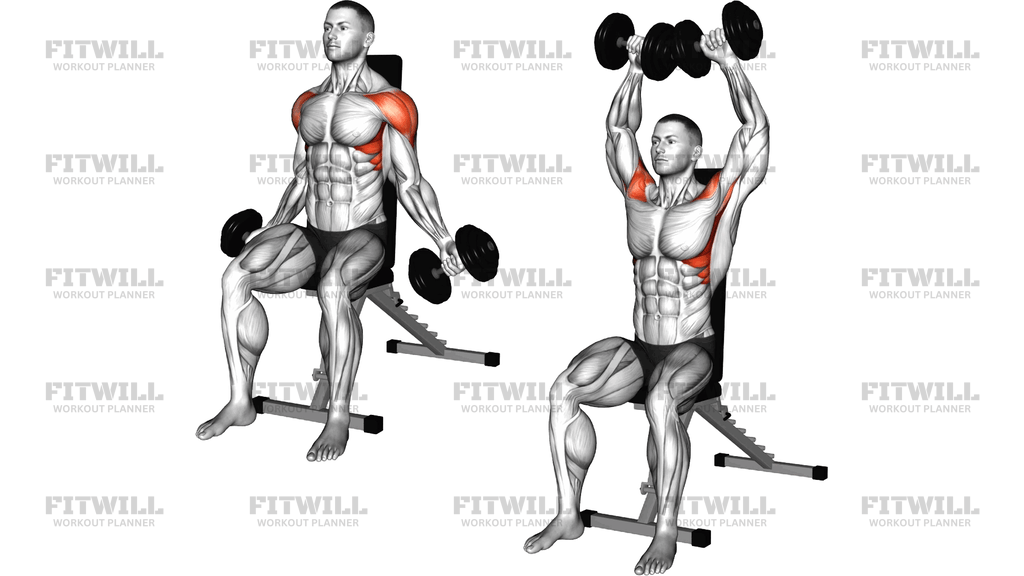
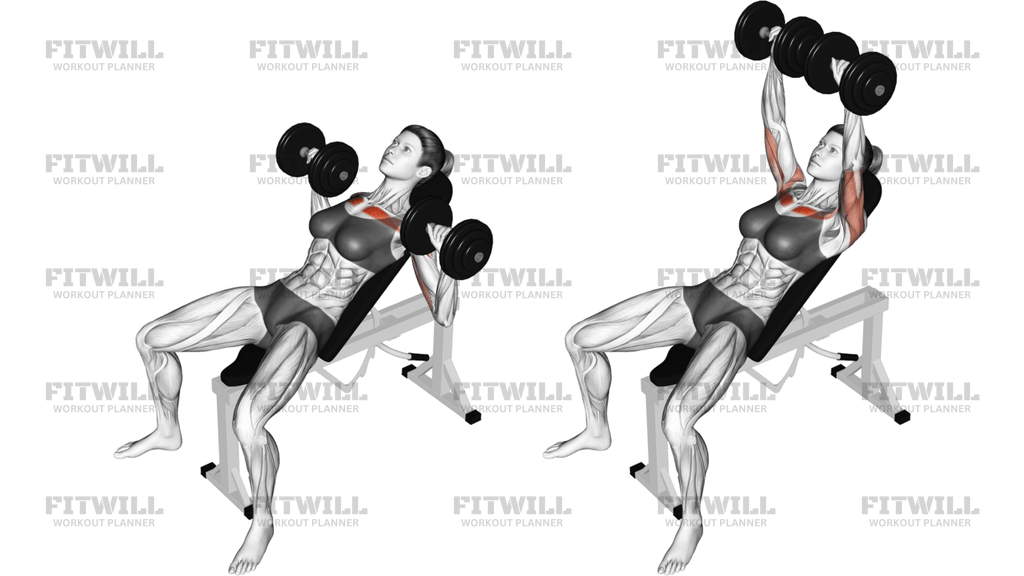
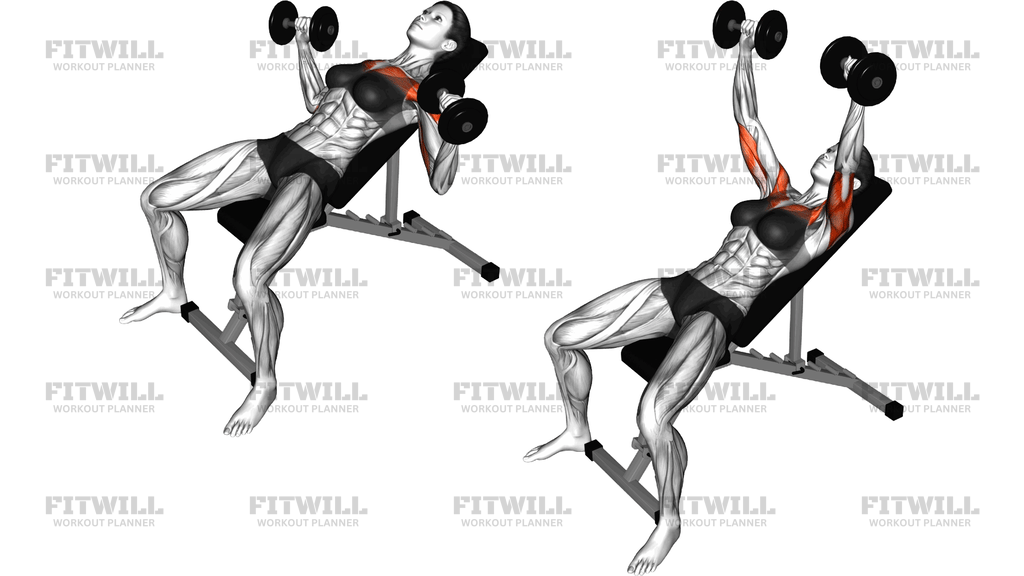
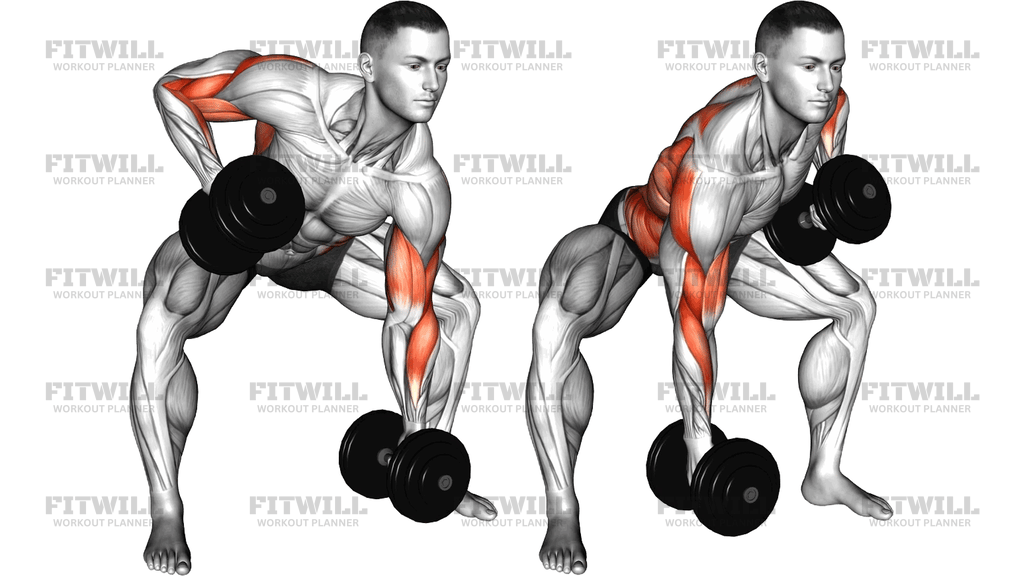
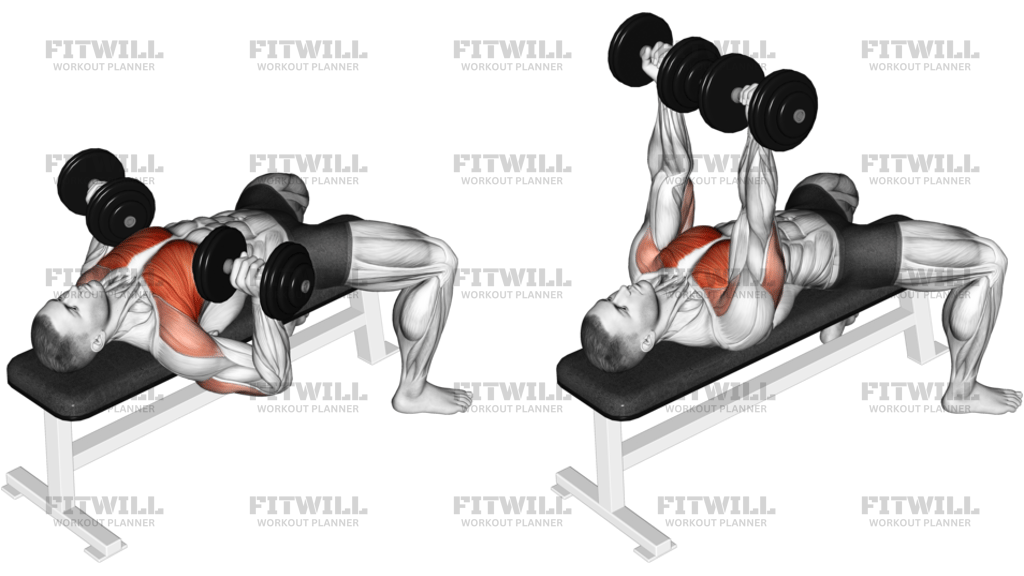
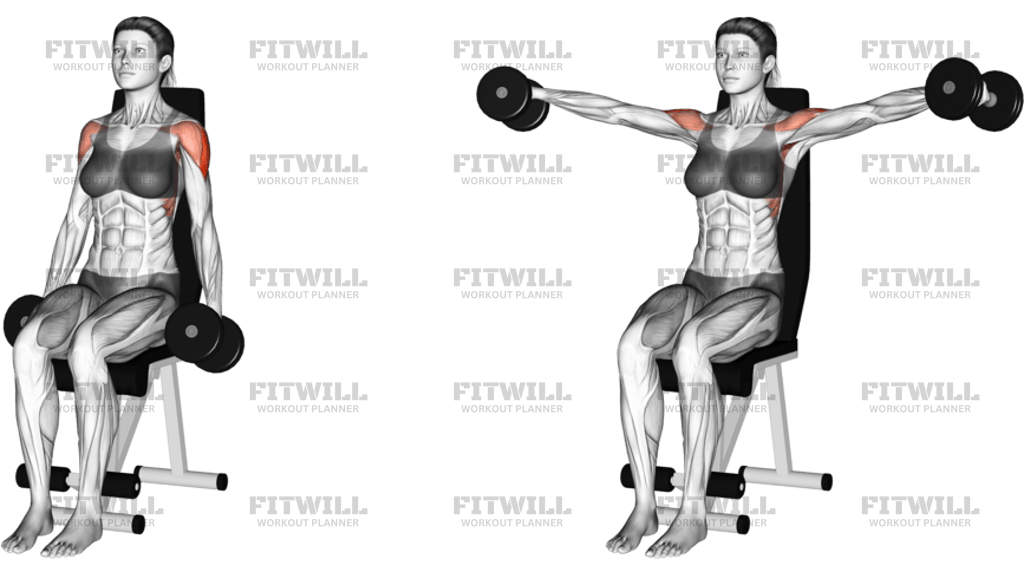
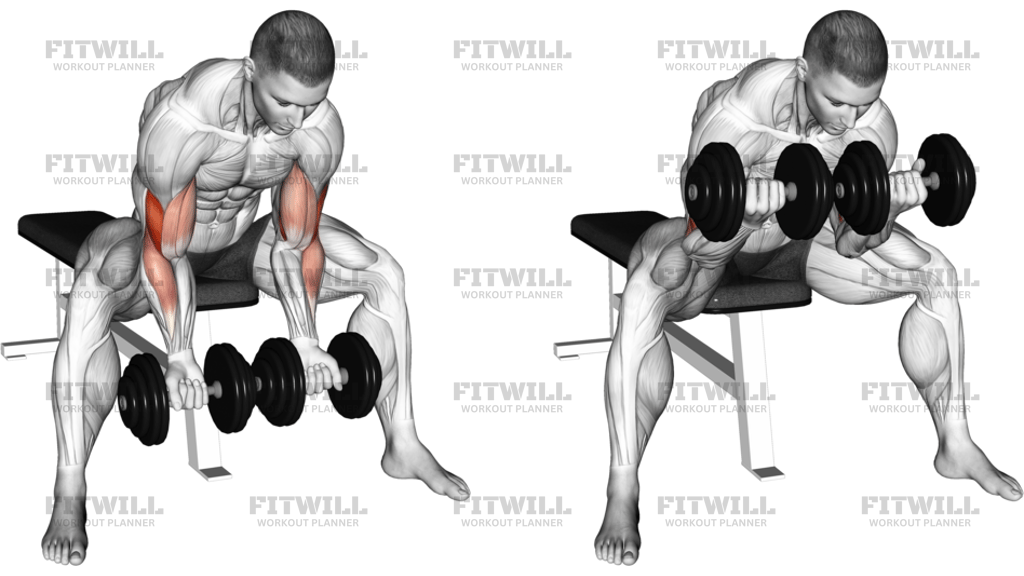
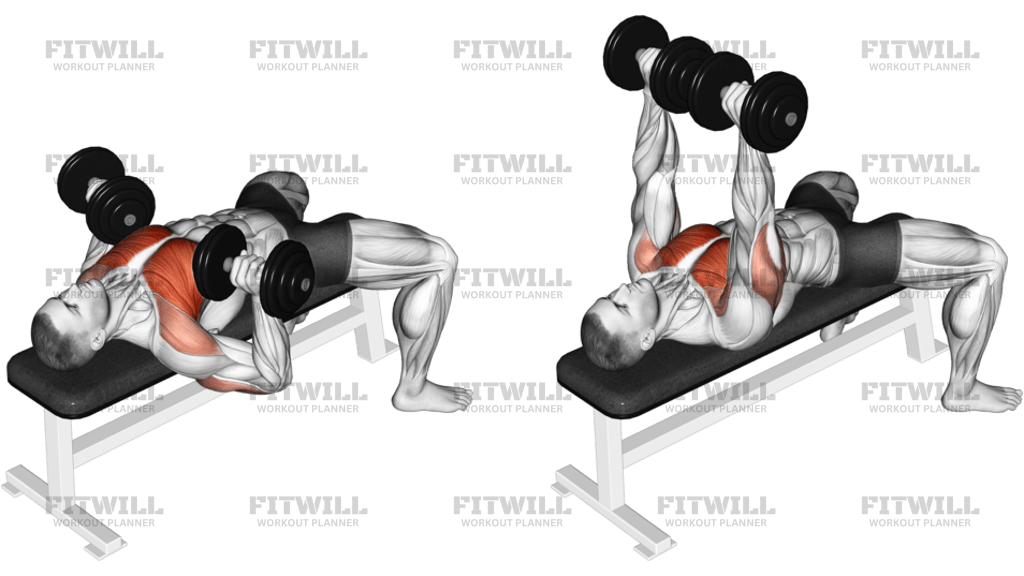
Dumbbell Chest Supported Lateral Raises
Dumbbell Chest Supported Lateral Raises are a shoulder isolation exercise performed lying chest-down on an incline bench while raising a pair of dumbbells out to your sides. Because your torso is pinned against the pad, your body can't swing, lean, or use momentum to move the weight — every rep has to come from the shoulder musculature itself. The setup angles your arms slightly forward relative to your torso, which shifts a good share of the work toward the side delts while still involving the rear delts and upper back.
This variation is especially useful for anyone whose standing lateral raises turn into a full-body heave once the weight gets challenging. Lifters with a strong tendency to shrug, swing, or arch will find that the bench quietly removes all of those escape routes. It's also a smart choice late in a shoulder session, when fatigue makes it hard to keep strict standing form, or during a deload when you want honest feedback on how much weight you can actually control.
The main muscles worked are the lateral deltoids on the outer shoulder, with strong assistance from the posterior deltoids and the mid and upper traps as the arms approach shoulder height. Because the chest stays in contact with the bench, the exercise trains the delts in a slightly different plane than the standing version — the arm path travels more forward and out, which many lifters find hits the shoulder more cleanly than a standard raise.
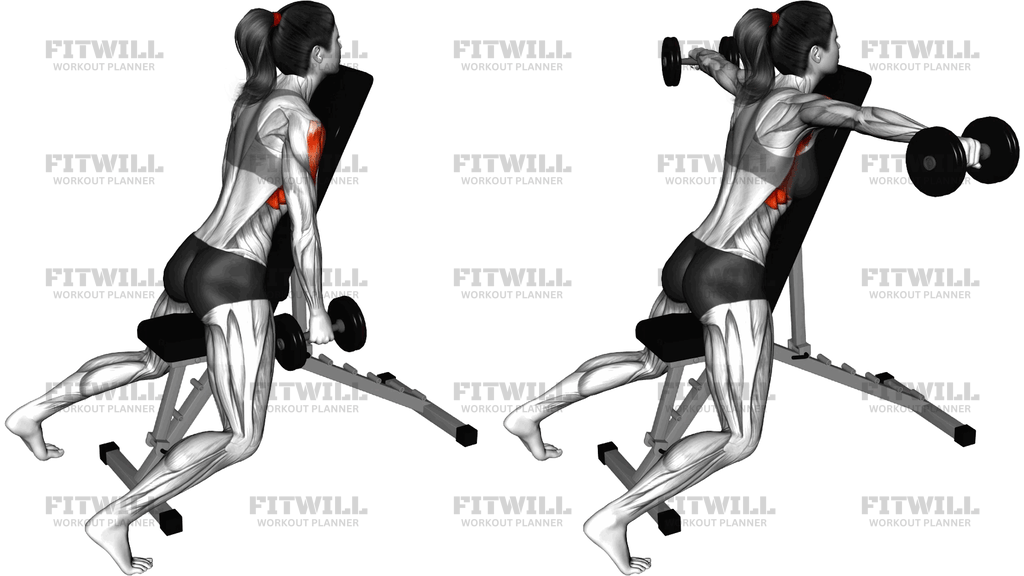
Setup matters here more than in most shoulder exercises. The bench angle, your contact points, and where your arms hang all determine whether the movement feels crisp on the delts or awkward on the shoulder joint. Your chest and the front of your shoulders should rest firmly on the pad, your feet should be planted on the floor behind you in a wide, stable stance, and the dumbbells should hang straight down with your palms facing in before you begin.
To execute the movement well, raise the dumbbells out to the sides in a wide arc until your arms are roughly level with your shoulders or just slightly below, keeping a soft bend in the elbows the whole time. Pause briefly at the top, lower the weights under control over two to three seconds, and resist the urge to let them crash back down. The eccentric is where a lot of the growth stimulus lives, and it's also where the chest support lets you stay honest.
You'll see this exercise used both as a mass builder for shoulder width and as a rehabilitation-friendly option, since the bench removes lower back and hip strain that standing raises can create. Keep the weight modest — this is one of those movements where five extra pounds usually costs you five degrees of quality.
[ Workout Log & Planner ]
Put your next workout in Fitwill
Keep your plan and training log ready when you are.


Instructions
- Set an adjustable bench to an incline of roughly 45 degrees, or slightly higher if that lets your chest rest flush against the pad.
- Straddle the bench facing the backrest so your chest and the fronts of your shoulders rest on the pad, and plant both feet on the floor behind you in a wide, stable stance.
- Pick up a dumbbell in each hand with a neutral grip, palms facing each other, and let your arms hang straight down under your shoulders with a soft bend in the elbows.
- Draw your shoulder blades down and back slightly so you're not starting from a shrugged position, and brace lightly as if preparing to hold the position for a while.
- Raise both dumbbells out to the sides in a wide arc, leading with your elbows rather than your hands, until your arms reach about shoulder height.
- Keep the elbow bend constant throughout — don't straighten the arms at the top or curl the dumbbells back toward your body.
- Pause for a beat at the top position, feeling the outer shoulders working, without letting your chest peel off the pad.
- Lower the dumbbells slowly over two to three seconds until your arms are fully hanging again.
- Exhale as you raise the weights and inhale as you lower them, keeping your breathing steady rather than holding your breath.
- Complete your rep, then set the dumbbells down on the floor one at a time before standing up from the bench.
Tips & Tricks
- If your shoulders pinch or grind at the top, stop the raise slightly below shoulder height instead of forcing the full arc — the chest-supported position changes the overhead clearance compared to a standing raise.
- A common mistake on this setup is letting the chest lift off the pad as you raise the dumbbells; that means the weight is too heavy and you're turning the movement into a row. Drop the load until the pad contact stays constant.
- Watch for the elbows drifting behind the bench line. When the elbows travel too far back, the exercise becomes a rear-delt flye; keep them tracking wide and slightly forward for a true lateral raise path.
- Avoid squeezing the shoulder blades together hard at the top. Unlike a rear-delt row, this movement should come mostly from the arm rotating away from the body, not from retracting the scapula.
- Keep the wrists neutral and the palms facing the floor-ish direction at the top. Turning the thumbs up mid-rep changes which fibers do the work and shifts tension away from the lateral deltoid.
- Don't start each rep from a dead hang with a shrug. Reset your shoulders down before lifting, or you'll spend the first inch of every rep on your traps.
- Because you're lying face down, blood pressure spikes are more noticeable — exhale on every raise instead of holding your breath through the sticking point.
- If the bench pad is too high on your chest and your arms can't hang freely, adjust the incline lower rather than hunching your shoulders forward to reach the dumbbells.
- Choose a weight you can pause at the top for a full second. If the dumbbells want to fall back down, you're riding momentum even in this supported position.
Frequently Asked Questions
What muscles do Dumbbell Chest Supported Lateral Raises work?
The primary muscles are the lateral deltoids on the outer shoulder. The posterior deltoids, middle traps, and upper back assist, especially as your arms reach shoulder height.
How is the chest-supported version different from standing dumbbell lateral raises?
Lying chest-down on the incline bench removes all ability to swing, lean, or use leg drive, so the delts do the work alone. The slightly forward arm path also changes the angle of resistance compared to a standing raise.
What bench angle should I use for Dumbbell Chest Supported Lateral Raises?
Around 45 degrees works for most people. The goal is for your chest and the fronts of your shoulders to rest flat on the pad while your arms hang straight down without hitting the bench.
Why do I feel this more in my rear delts than my side delts?
Your elbows are likely traveling too far behind your body, turning the movement into a rear-delt flye. Keep the elbows wide and slightly forward of the torso line so the raise stays lateral.
Is this exercise good for beginners?
Yes, and it's often better than standing lateral raises for beginners because the bench enforces strict form. Start with very light dumbbells and focus on a smooth arc with a controlled lowering phase.
How heavy should I go on Dumbbell Chest Supported Lateral Raises?
Use noticeably less weight than your standing lateral raises. If your chest lifts off the pad or the dumbbells drop back down, the load has exceeded what your delts can control.
Can I do this exercise without an adjustable bench?
A flat bench set low won't give you the right angle, but you can lean chest-down against a high incline bench or use a padded preacher bench set at an angle. Without any bench, a prone version on a low bench or stability ball is a rough substitute, though setup is less stable.
Should my elbows be bent or straight during the raise?
Keep a small, constant bend in the elbows, around 10 to 20 degrees. Fully straight arms stress the elbow joint, and bending more than that shortens the lever and reduces the delt work.
Is it safe to hold my breath while lying face down on the bench?
It's better not to. Exhale as you raise the dumbbells and inhale on the way down, since the chest compression against the pad plus breath-holding can make you light-headed.
Can I train one arm at a time on this exercise?
Yes, single-arm reps work fine and can help you notice and correct side-to-side differences. Just keep your torso square against the pad so the working side doesn't rotate off the bench.