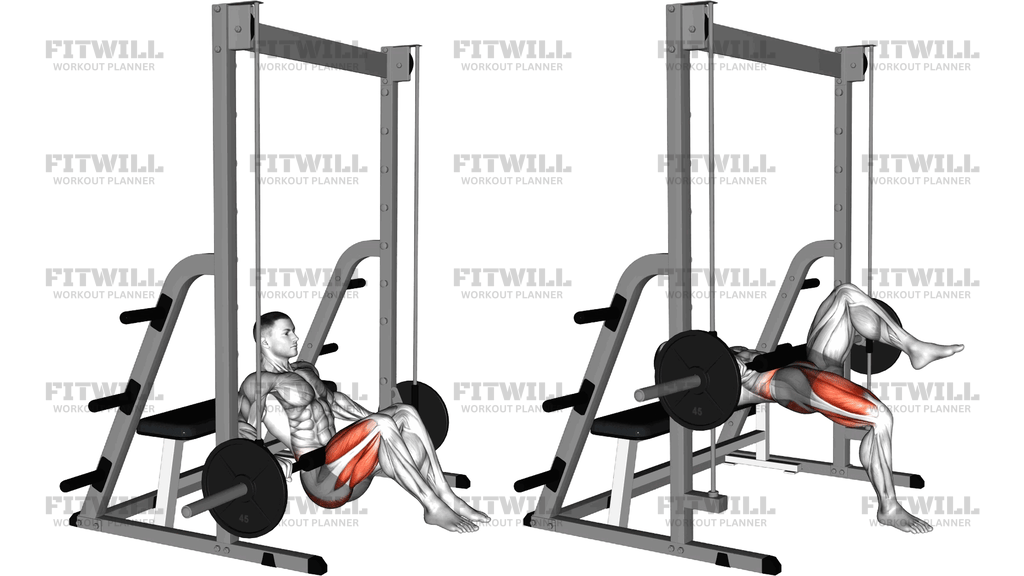
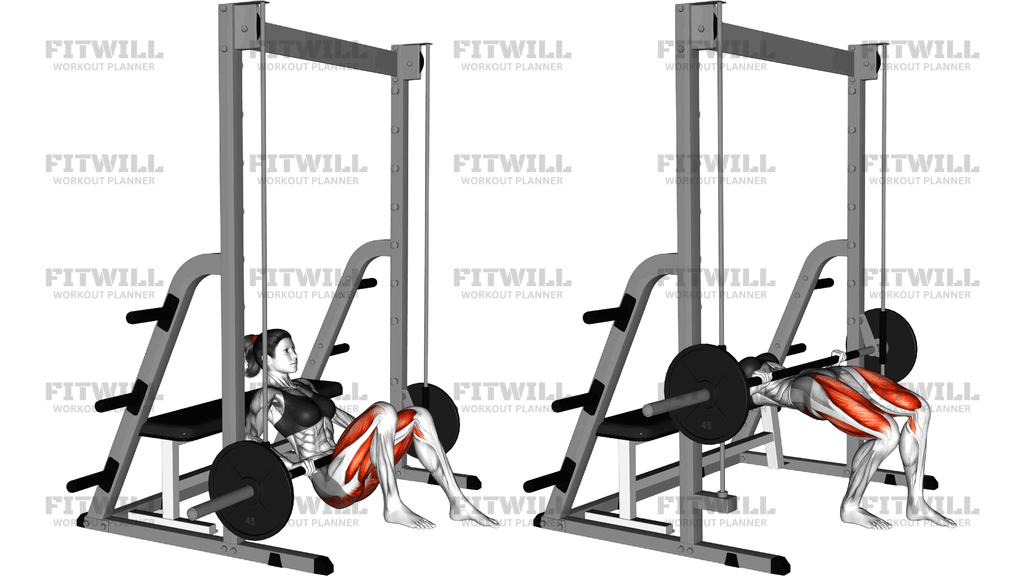
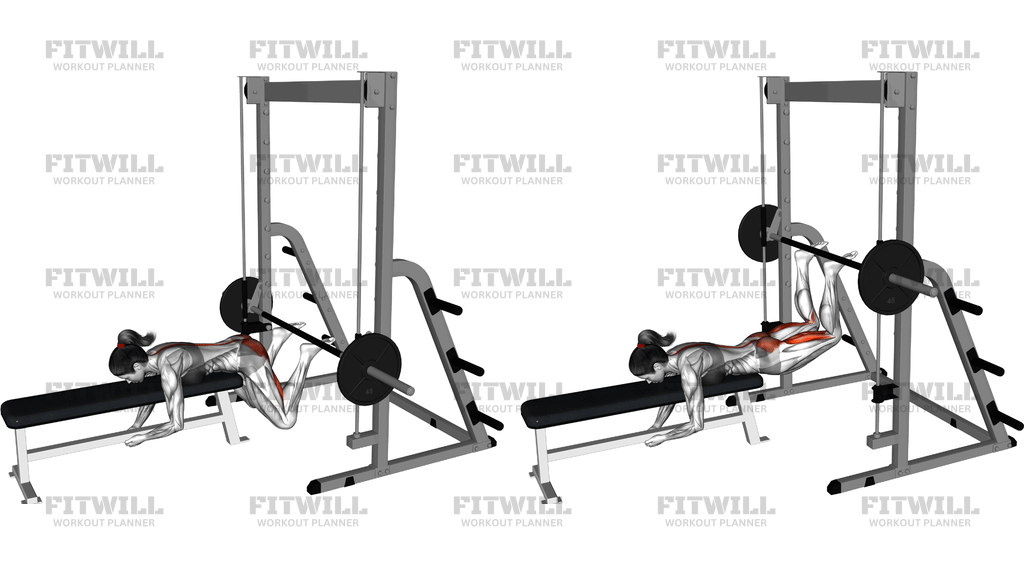
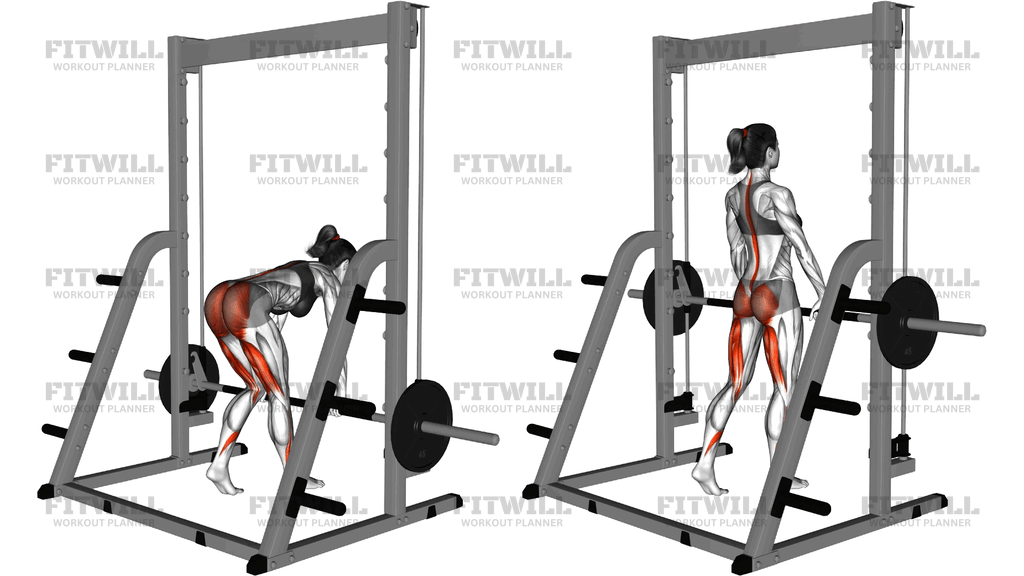
Smith Split Squat
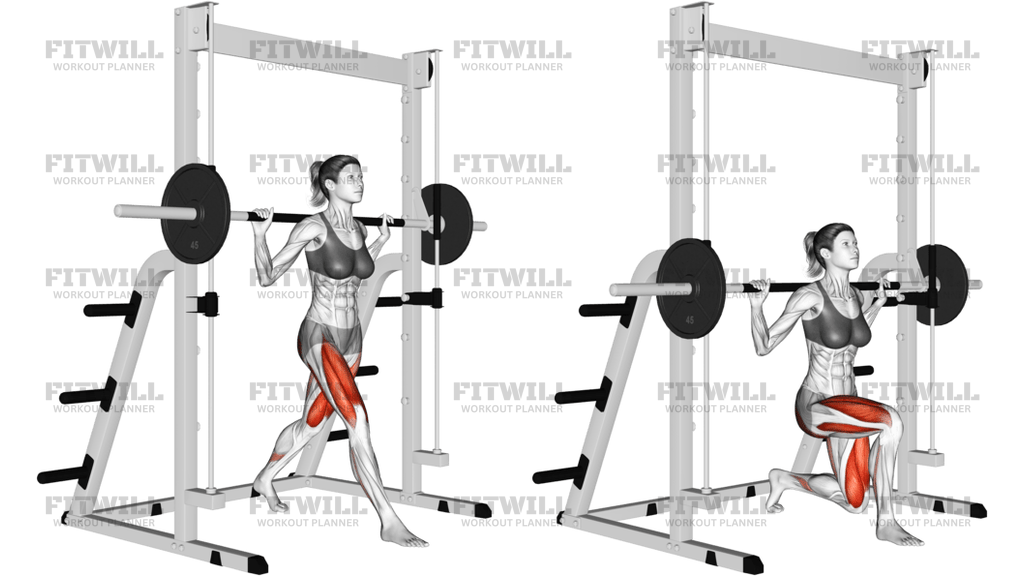
Smith Split Squat is a guided single-leg squat variation performed with the barbell resting across the upper back inside a Smith machine. It puts most of the work on the front leg while the rear leg acts as a long support and balance point, which makes the exercise useful for building leg strength, hip control, and lower-body coordination without needing to balance a free barbell.
Because the Smith machine locks the bar into a fixed path, the setup matters more than it does in a free-weight split squat. The front foot needs to be far enough forward that your front heel stays down and your torso can lean slightly without collapsing, while the rear foot sits back on the ball of the foot so the back knee can travel toward the floor. When that stance is right, the exercise feels loaded through the front thigh, glute, and hip rather than jammed into the knee or lower back.
A well-executed Smith Split Squat should look smooth and deliberate. Lower under control until the back knee is close to the floor, keep the front knee tracking in line with the toes, and keep pressure through the whole front foot instead of shifting onto the toes. The fixed bar path can make the exercise feel stable, but it can also force you into a bad line if you stand too close to the bar or crowd the front foot under your body.
This movement is a strong accessory for leg training because it lets you work one side at a time without the coordination demands of a free barbell lunge or split squat. That makes it helpful for lifters who want more front-leg work, want to address side-to-side differences, or need a lower-skill single-leg option in a hypertrophy or strength block. It can also be a practical choice when the gym is busy and a barbell rack is unavailable.
The main safety points are to keep the bar secure on the upper traps, set the stance before adding load, and stop the set if the front heel lifts, the rear knee slams into the floor, or the lower back starts to overarch. If you want more quad emphasis, shorten the stance slightly and let the front knee travel forward as long as the heel stays planted. If you want more glute emphasis, take a longer stance and keep the torso angled slightly forward while maintaining control through the bottom of each rep.
[ Workout Log & Planner ]
Put your next workout in Fitwill
Keep your plan and training log ready when you are.


Instructions
- Set the Smith machine bar across your upper traps, step one foot forward, and place the other foot back on the ball of the foot with enough space to lower the rear knee toward the floor.
- Square your hips and torso to the front, keep your front foot flat, and adjust your stance until the front shin can travel forward without the heel lifting.
- Unrack the bar, stand tall with most of your weight on the front leg, and keep your ribs stacked over your pelvis before the first rep.
- Bend both knees and lower straight down under control, letting the back knee travel toward the floor while the front knee tracks over the toes.
- Keep pressure through the heel and midfoot of the front leg as you descend, and let the rear heel stay lifted behind you.
- Pause briefly near the bottom when the rear knee is close to the floor and the front thigh is loaded without losing balance.
- Drive through the front foot to stand back up, finishing the rep with the hips and knee fully extended on the front side.
- Reset your stance only if needed, then repeat for the planned reps before stepping carefully back into the hooks.
Tips & Tricks
- If the front heel pops up, move the front foot slightly farther forward so the Smith bar is not forcing you onto your toes.
- A longer stance usually shifts more work toward the glute and hip; a shorter stance usually puts more tension on the front thigh.
- Do not let the bar drift forward onto your neck or too low onto the shoulders; it should stay stable across the upper back the whole set.
- Keep the rear foot light and relaxed; the back leg is there to guide balance, not to push the rep up.
- Let the front knee travel forward, but keep it tracking in the same line as the second or third toe instead of caving inward.
- If the Smith machine path feels awkward, reposition your front foot before adding load rather than trying to fix the line mid-set.
- Use a slow descent so the bottom position stays controlled instead of bouncing off the rear knee or stretching the hip too fast.
- Stop the set if your lower back arches hard at the bottom, which usually means the stance is too short or the load is too heavy.
Frequently Asked Questions
What muscles does the Smith Split Squat work most?
It mainly loads the front leg, especially the quadriceps and glutes, with the rear leg and trunk helping to stabilize the split stance.
Is the Smith Split Squat good for beginners?
Yes, because the Smith machine removes some balance demand. Beginners should start with a short range and a light load until they can keep the front heel down and the bar path smooth.
How far forward should my front foot be on the Smith Split Squat?
Far enough that your front heel stays flat when you lower and your torso can stay slightly inclined without collapsing. If you feel jammed at the knee, step the foot forward a little more.
Why does the rear knee get so close to the floor in the Smith Split Squat?
That bottom position lets the front leg work through a fuller range of motion. You should still control the descent and avoid slamming the back knee into the floor.
Should my torso stay upright or lean forward in the Smith Split Squat?
A small forward lean is normal, especially with a longer stance. Keep the torso stacked and controlled rather than folding at the lower back.
Can I use the Smith Split Squat to bias quads or glutes?
Yes. A slightly shorter stance and more knee travel usually emphasize the quads, while a longer stance and a little more hip hinge usually shift more work to the glutes.
Why do I feel the Smith Split Squat in my front foot so much?
Most of the load should stay through the front foot. If the toes are doing all the work, shift your stance so the heel and midfoot can stay planted and share the load.
What is the safest way to finish a set of Smith Split Squats?
Complete the last rep, stabilize at the top, then carefully re-center your stance before racking the bar. Do not twist out of the split position while the bar is still loaded.