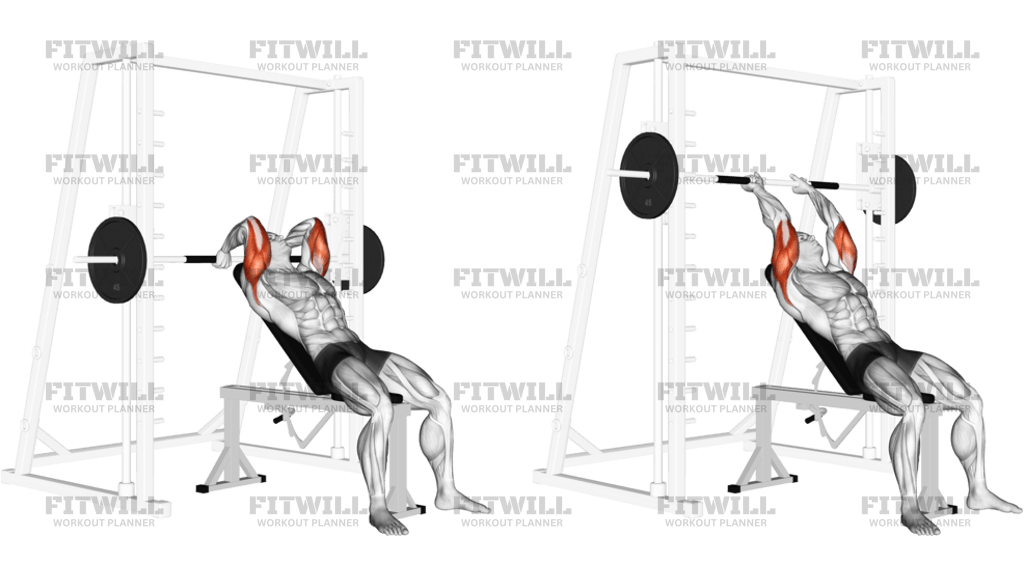
Smith Machine Incline Tricep Extension
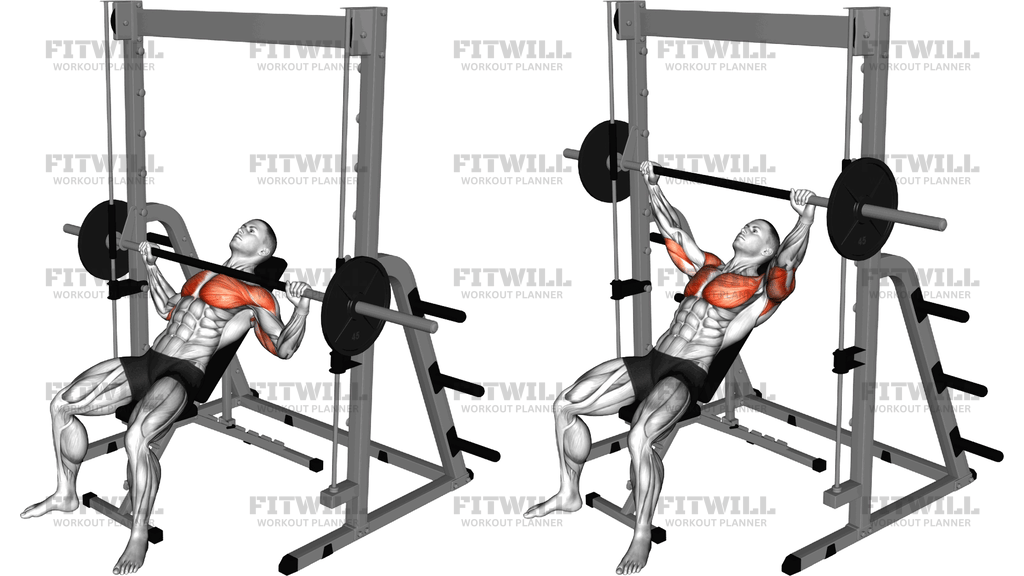
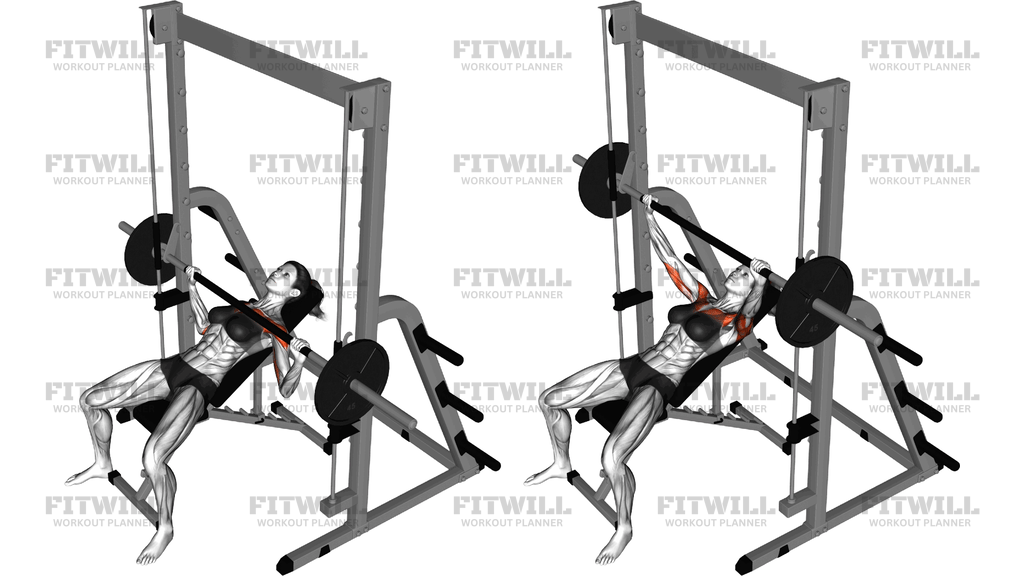
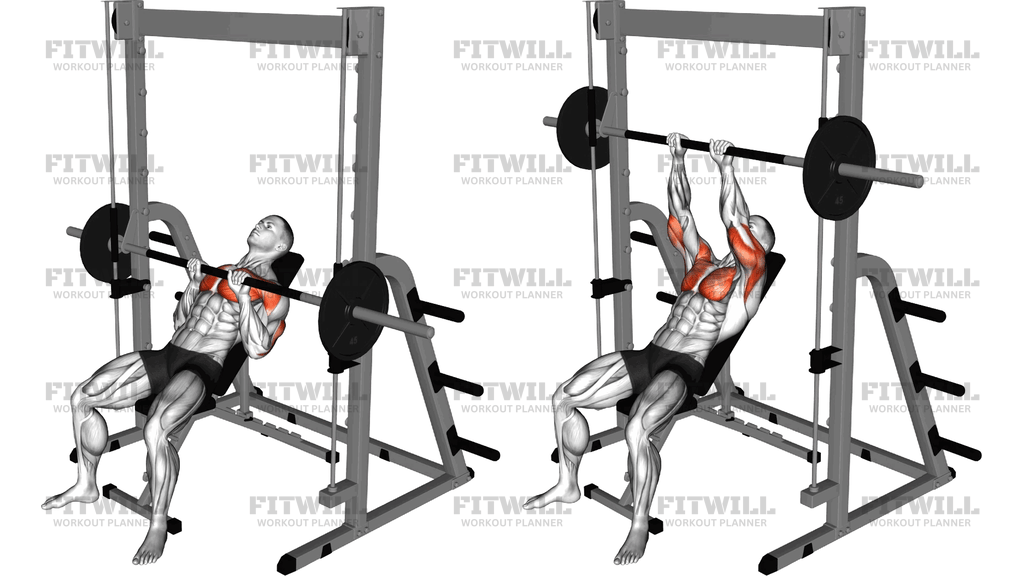
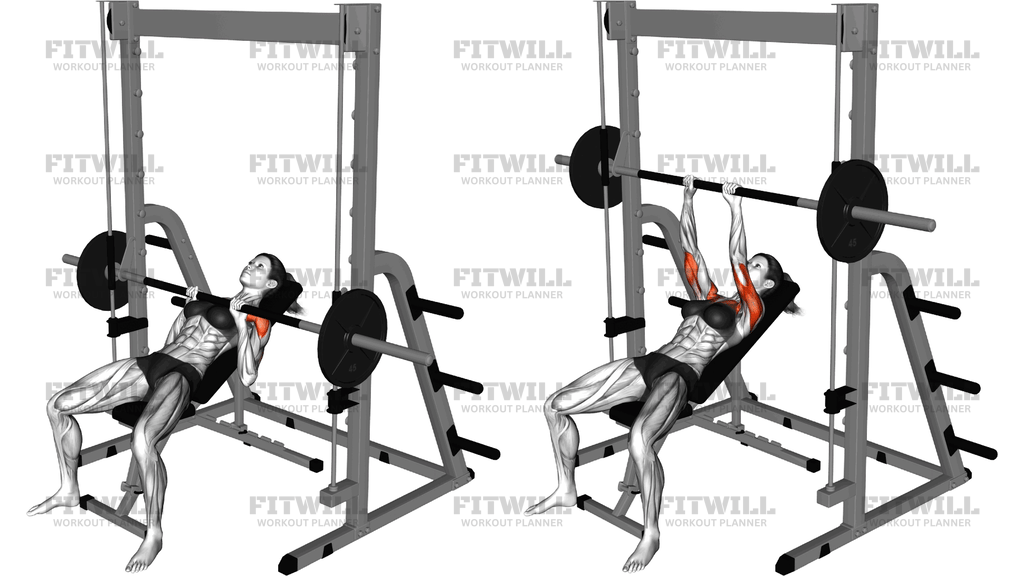
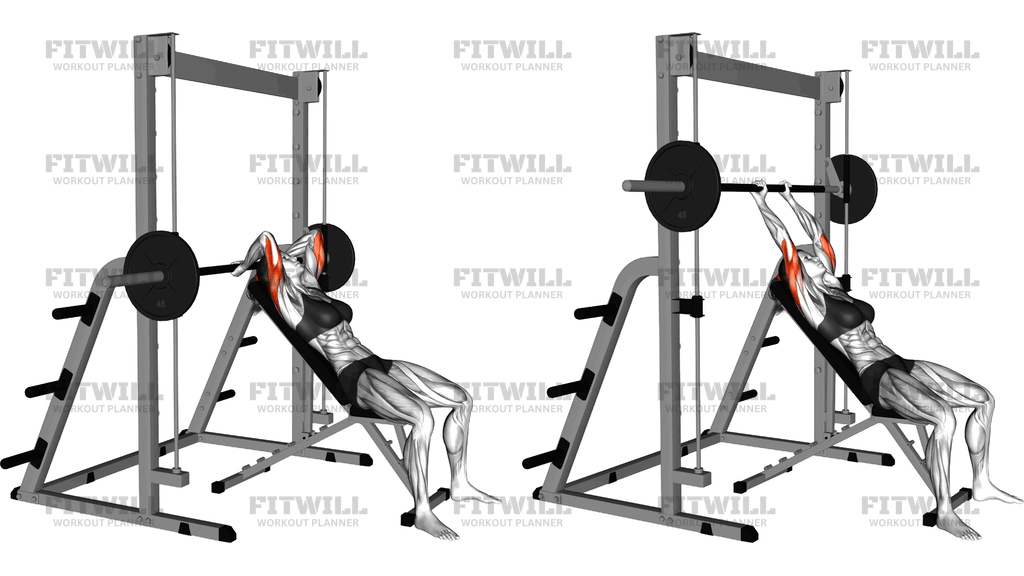
The Smith Machine Incline Tricep Extension is a free-weight-style triceps exercise performed on an incline bench positioned inside a Smith machine. You lie back against the pad with the barbell held at arm's length overhead, then bend only at the elbows to lower the bar behind your head before pressing it back to full extension. Because the Smith machine bar travels on a fixed vertical path and can be locked out at any point with a simple wrist turn, it gives you the loading of a barbell extension with a much easier bail-out than a dumbbell or EZ-bar version.
This movement primarily targets the triceps, with particular emphasis on the long head. Lying on an incline with the arms drifting back behind the head puts the shoulder in flexion, which stretches the long head of the triceps across both of its joints. That stretched position is what makes incline extensions feel noticeably different from a flat-bench skullcrusher or a pushdown, and it is a strong option once your elbows tolerate it comfortably. The front delts and forearms contribute as stabilizers but should not take over the work.
The Smith machine setup matters more than people expect. The bench angle should sit around 30 to 45 degrees, and the bench needs to be placed so the bar tracks just behind the top of your head rather than crashing into it. Because the bar is fixed to its rails, you cannot drift it forward or backward to find a comfortable groove the way you can with free weights, so getting your body positioned correctly before unracking is the whole game. Feet planted, back and head against the pad, grip set slightly narrower than shoulder width.
To execute it well, think of your upper arms as fixed pointers aimed toward the ceiling and slightly back. All motion happens at the elbow joint. Lower the bar under control until you feel a solid stretch along the back of the arms, pause briefly, then drive the bar back up by squeezing the triceps until the elbows are fully extended without being aggressively locked. Keep the wrists straight and stacked over the elbows at the top so the load passes through the triceps instead of bending the joints sideways.
This exercise suits lifters who already have some triceps training history and want a heavier, stable loaded stretch for the long head, or anyone who likes the safety of a self-racking bar for arm work done alone. It fits well as a second or third triceps movement on an arm or push day, after pressing work has already warmed the elbows. Start light to learn where the bar passes relative to your head and shoulders, and treat any sharp elbow or shoulder discomfort as a signal to reduce the range, narrow the grip, or switch to a more elbow-friendly variation.
[ Workout Log & Planner ]
Put your next workout in Fitwill
Keep your plan and training log ready when you are.


Instructions
- Set an incline bench to roughly 30-45 degrees and slide it under the Smith machine bar so the bar will track just behind the top of your head when your arms are extended.
- Set the bar's safety stops or hooks low enough that a failed rep cannot drop onto your face or throat, then load a light starting weight on each side.
- Sit on the bench, grip the bar with an overhand grip slightly narrower than shoulder width, then lie back so your head, shoulders, and upper back stay in contact with the pad.
- Press the bar up and rotate the hooks to unrack it, holding it directly over your upper chest with arms straight and wrists stacked.
- Brace your core and plant your feet flat on the floor so your body stays anchored while the bar moves behind your head.
- Keeping your upper arms angled slightly back toward your ears, bend only at the elbows to lower the bar in a slow arc behind your head until you feel a deep triceps stretch.
- Pause for a beat at the bottom, then extend your elbows to press the bar back along the same path until your arms are straight over your chest.
- Exhale as you press up and inhale as you lower the bar behind your head.
- Complete your reps, then rotate the bar to re-rack it in the hooks before sitting up, keeping at least one hand on the bar until it is secured.
- Reset your grip and head position between sets rather than letting your posture slide as fatigue builds.
Tips & Tricks
- The most common mistake is turning this into a shoulder press by letting the upper arms swing forward as you press. Pin your elbows in place and only the forearm should move.
- Lowering the bar too fast is how elbows get irritated on this exercise. The incline angle loads the long head in a stretched position, so the descent should take a full two seconds or more.
- If the bar path feels like it is heading toward your face, you set the bench too far forward. Shift the bench back slightly so the bar clears the crown of your head at the bottom.
- Flaring the elbows outward shifts stress to the shoulders and reduces triceps tension. Keep them tracking close to your body line throughout the arc.
- Bending your wrists back as the weight gets heavy is a sign the load is too high. Straight, neutral wrists keep the force on the triceps and off the forearms and elbows.
- Going to complete failure alone on this movement is unnecessary. The Smith machine lets you re-rack with a wrist turn, but plan your set to end one or two reps before form breaks.
- A shoulder-width or slightly narrow grip usually feels best here. Extremely narrow grips twist the wrists and add nothing for the triceps.
- Warm up your elbows with pushdowns or light extensions before your first working set, since the stretched incline position is demanding on the joint when cold.
- If your lower back arches off the pad, pull your ribs down and brace harder, or place your feet on the bench frame to settle your torso.
Frequently Asked Questions
Which head of the triceps does the Smith Machine Incline Tricep Extension work hardest?
The incline position places the arms behind the head, which lengthens the long head of the triceps across the shoulder joint, so it contributes heavily. The lateral and medial heads still work to extend the elbows, but the long head gets the strongest stimulus from the stretch.
Why use a Smith machine instead of dumbbells or an EZ bar for this extension?
The fixed vertical bar path removes balance demands and lets you re-rack the bar at any point by rotating your wrists, which makes solo training safer. It also makes it easier to keep the movement identical from rep to rep so you can focus purely on triceps tension.
What bench angle should I use for the Smith Machine Incline Tricep Extension?
Around 30 to 45 degrees works for most people. A lower angle feels more like a flat skullcrusher, while a steeper angle increases the long-head stretch but also demands more shoulder mobility.
Is this exercise suitable for beginners?
It can be, but beginners usually progress faster starting with pushdowns or flat skullcrushers first to build basic elbow tolerance. If you try it, use a very light weight and spend a few sessions learning where the bar travels behind your head.
Where exactly should the bar end up at the bottom of the rep?
It should descend behind and slightly above the crown of your head, low enough that you feel a clear triceps stretch but with room to re-rack if needed. If it passes near your face, your bench is positioned too far under the bar.
Why do my shoulders take over when I do this exercise?
Your upper arms are probably drifting as fatigue sets in, turning the movement into a partial press. Lock your elbows in a fixed position aimed slightly back toward your ears and reduce the weight until only your forearms move.
Can I substitute this if my elbows bother me during the stretch?
Yes. A flat-bench Smith machine skullcrusher with a shorter range, a cable rope pushdown, or an overhead cable extension with a neutral grip all train the triceps with less joint stress at the stretched position.
How should I set the safety stops in the Smith machine for this movement?
Place them just below the lowest point the bar reaches behind your head. That way a missed rep bottoms out on the stops instead of continuing toward your head or shoulders.
How many sets and reps work well for the Smith Machine Incline Tricep Extension?
Three to four sets of 8 to 15 reps fits well as a secondary triceps movement after pressing or pushdown work. Because the stretch position is demanding, err toward moderate loads and clean reps rather than grinding heavy singles.