Smith Decline Close Grip Bench Press
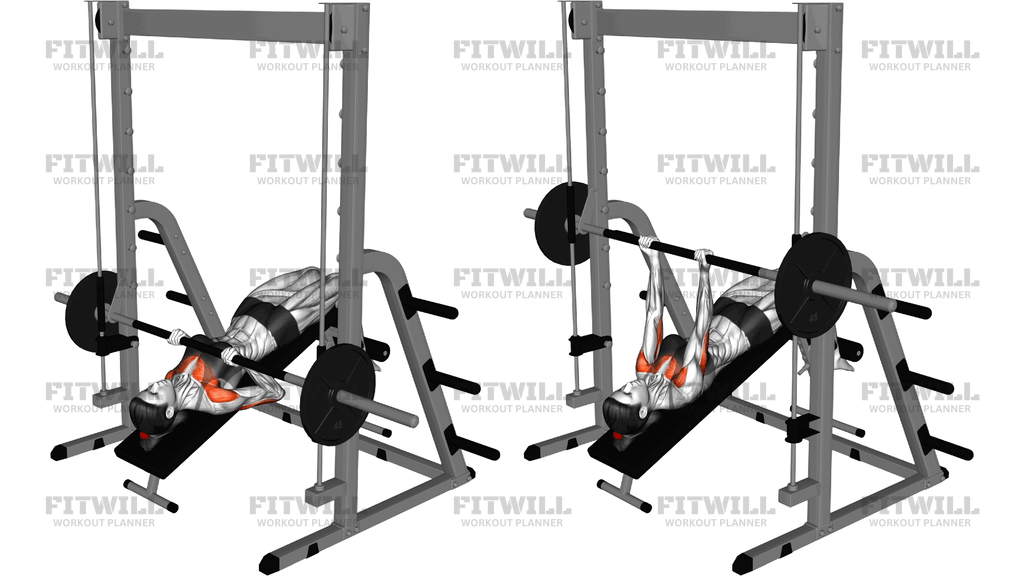
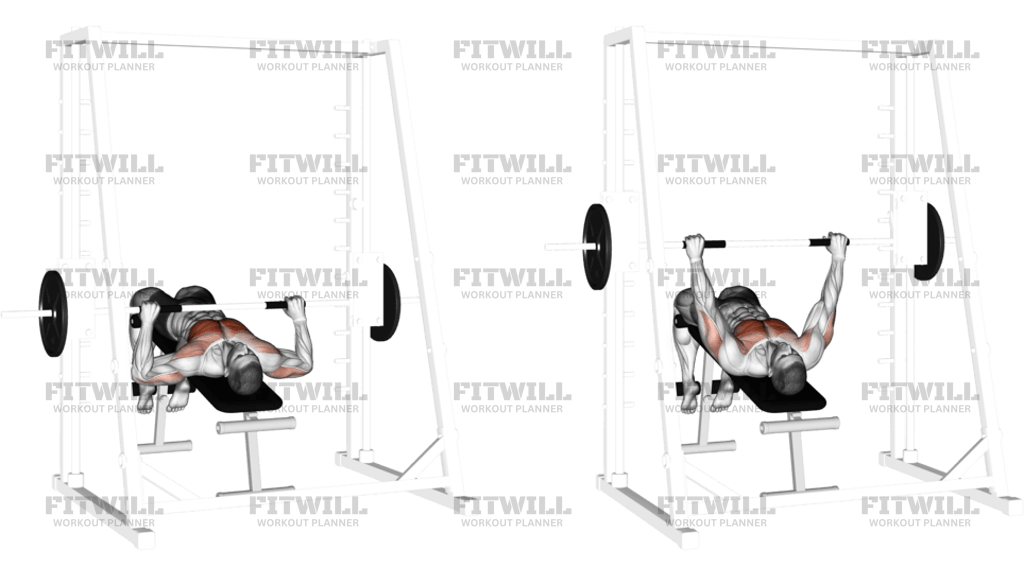
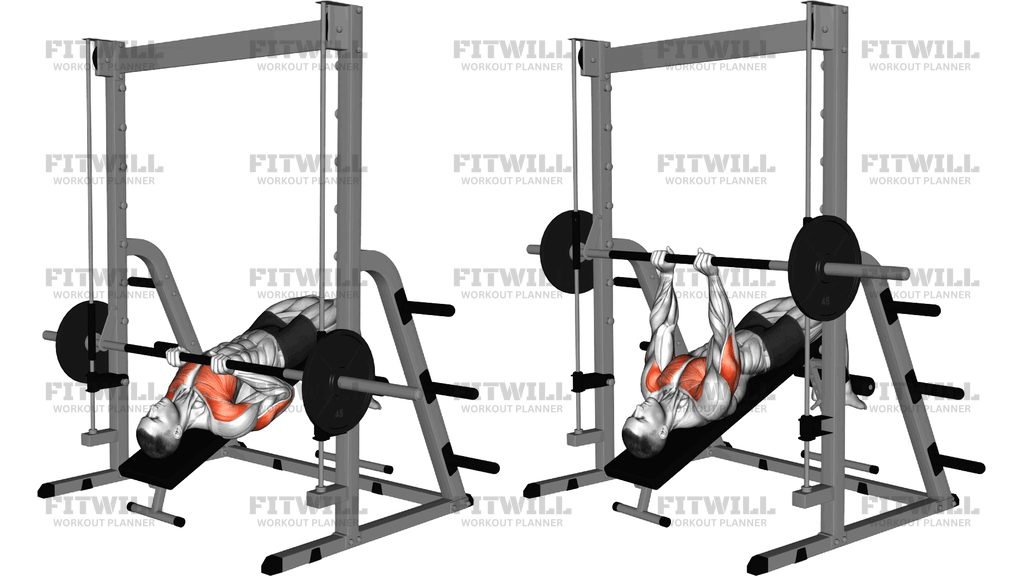
The Smith Decline Close Grip Bench Press is a fixed-bar pressing variation performed on a decline bench set inside a Smith machine. You lie back on the bench with your head lower than your hips, take a shoulder-width or slightly narrower grip on the bar, and press it up over your lower chest before lowering it back down under control. Because the Smith machine bar travels on a fixed vertical path, you can concentrate entirely on pressing hard instead of balancing the weight.
This movement combines two ideas into one: the decline angle biases the work toward the lower portion of the chest, and the close grip shifts a meaningful share of the load onto the triceps. Lifters who want to bring out the lower chest line, or who are building triceps strength for pressing sports or heavier benching, get a lot out of this combination. It is also a practical choice for people who train alone, since the fixed bar path and rotating safety catches make it easier to bail out safely than with a free-weight decline press.
The setup matters more than it might seem. The bar should touch down along the lower chest, just below the nipple line, which means the decline bench needs to be positioned so the fixed bar meets your body exactly there. If the bench sits too high or too low in the frame, you will either reach awkwardly for the bar or press with your elbows flared into an uncomfortable position. Take a minute to adjust the bench before loading plates, and unrack by rotating the bar forward to release the hooks.
To execute the press well, keep your feet secured under the bench pads or planted firmly, squeeze your shoulder blades back and down, and lower the bar in a straight line toward the bottom of your chest with your elbows tucked close to your torso. Pause briefly without bouncing, then drive the bar back up until your arms are extended without locking out aggressively. Breathe in on the way down and exhale as you press. The fixed path means there is nowhere to hide sloppy tracking, so if the bar drifts toward your face or hips, reset your position before continuing.
A common use case is as an accessory lift after a heavier flat or incline press, using moderate loads for 8 to 15 reps. It also works as a main lower-chest builder on days dedicated to the pressing muscles. Keep in mind that the decline angle plus the close grip puts noticeable stress on the elbows, so warm up the elbows and shoulders with lighter sets first, and avoid loads that force your wrists to bend backward.
One final safety point specific to this lift: on a decline bench, gravity pulls the bar toward your neck and throat if you lose control. Always verify that the Smith machine safety stops are set just below your chest touch point before your first working set, and never hook your thumbs on the same side as your fingers around the bar.
[ Workout Log & Planner ]
Put your next workout in Fitwill
Keep your plan and training log ready when you are.


Instructions
- Position a decline bench inside the Smith machine so that the fixed bar lines up with the lower portion of your chest when you lie back; the bar should be at roughly the level of your lower ribcage.
- Set the safety stops just below the bar's lowest point so a failed rep cannot press down into your chest or throat.
- Load plates evenly on both sides of the bar and confirm the collars are secure.
- Sit back on the bench, hook your legs securely under the leg pads, and lie down with your head resting fully on the pad.
- Grip the bar with an overhand grip about shoulder-width apart or slightly narrower, then rotate the bar forward to unrack it and hold it over your lower chest with arms extended.
- Pull your shoulder blades back and down into the bench, brace your core, and take a breath in.
- Lower the bar in a controlled vertical path until it touches the bottom of your chest, keeping your elbows tucked close to your sides rather than flared wide.
- Pause for a beat at the bottom without bouncing the bar off your chest.
- Press the bar back up along the same path while exhaling, extending your arms without snapping the elbows into a hard lockout.
- Complete your reps, then rotate the bar back onto the hooks and confirm it is fully racked before letting go and sitting up.
Tips & Tricks
- If the bar touches your sternum at an angle that feels off, nudge the bench a few centimeters up or down the frame before adding weight; a two-inch misalignment changes the whole pressing line.
- Do not chase maximum narrowness with your grip. Going past shoulder-width into a very narrow hold forces the wrists to bend and irritates the elbows on this decline angle.
- Keep your thumbs wrapped around the bar. On a decline bench the bar sits over your throat, so a false grip is a real risk here, not just a form nitpick.
- Because the Smith bar cannot move forward, many lifters flare the elbows to find a comfortable groove. Fight this by actively driving your elbows toward your hips as you press.
- Use a deliberate pause on the chest each rep. The decline angle plus the fixed bar makes it tempting to bounce, and a bounce takes the work away from the lower chest and triceps.
- Start lighter than you think you need. The fixed path removes stabilizing contributions, so the pressing muscles handle slightly more load per rep than with a free barbell at the same weight.
- If your shoulders roll forward at the bottom, shorten the range so the bar stops just above the lower chest rather than being pulled into it, and work on chest and shoulder mobility separately.
- Check that your hips stay in contact with the bench throughout the set. Bridging up off the decline flattens the angle and turns the exercise into something closer to a flat close grip press.
Frequently Asked Questions
Which muscles does the Smith Decline Close Grip Bench Press work?
The primary muscle is the lower chest, specifically the sternal head of the pectoralis major. The close grip makes the triceps a strong secondary mover, with the front delts assisting on the press.
Why use a close grip instead of a regular grip on the decline press?
Bringing your hands to shoulder-width or slightly narrower increases elbow tuck, which shifts more of the pressing work to the triceps while still loading the lower chest. It is a good way to train both areas in one exercise.
Is the Smith Decline Close Grip Bench Press safe to do alone?
It is one of the safer decline pressing options for solo training because the bar can be rotated to re-rack at any point in the rep. Set the safety stops below your chest touch point and keep your thumbs wrapped around the bar.
Where exactly should the bar touch on my chest?
On the lower chest, just below the nipple line, close to the bottom of the sternum. If the bar lands on your upper chest or stomach, adjust the bench position in the frame rather than changing your arm path.
Can beginners do this exercise?
Yes, as long as they start light and learn the touch point first. The fixed bar path removes balance demands, which makes it friendlier for beginners than a free-weight decline press, but decline positioning still needs care.
What is the most common mistake on this lift?
Letting the elbows flare out wide as the bar descends. This turns it into a general chest press, strains the shoulders, and defeats the point of the close grip; cue the elbows to stay tucked near your ribs.
How does the Smith machine version differ from a free-weight decline close grip press?
The bar travels on a fixed vertical rail, so stabilizer demand drops and the load concentrates on the chest and triceps. You lose the bar path control practice of a free barbell but gain safety and easier bailouts.
What can I use if my gym has no decline bench for the Smith machine?
You can place a flat bench on a slight decline using a low step under one end, or substitute a close grip press on the flat bench in the Smith machine, which shifts emphasis somewhat toward the mid-chest while still hitting the triceps.
How many sets and reps should I use?
For muscle growth in the lower chest and triceps, 3 to 4 sets of 8 to 15 reps with a controlled tempo works well. Go heavier only after your touch point and elbow tracking are consistent.
Why do my elbows hurt after this exercise?
The decline angle with a narrow grip places high stress on the elbow joints, especially if the grip is too narrow, the wrists bend backward, or the elbows lock out hard each rep. Widen your grip slightly, keep wrists stacked over elbows, and leave a soft bend at the top.