Barbell Back Wide Shrug
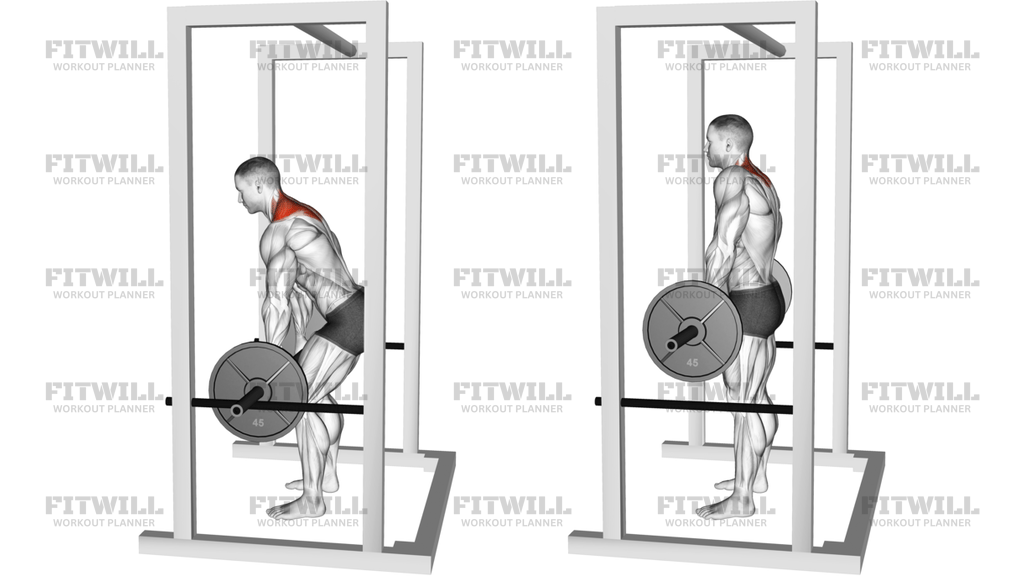
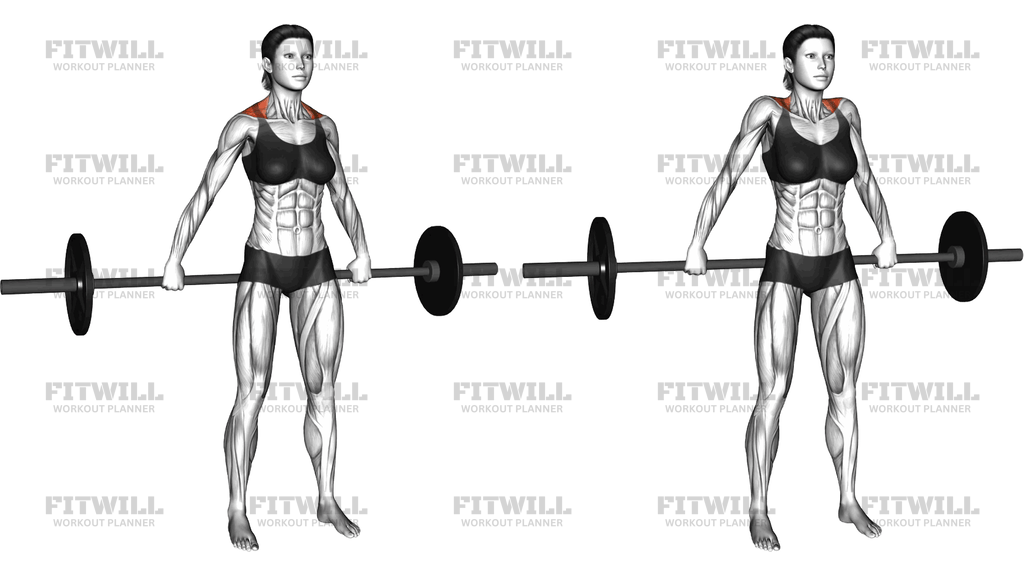
The Barbell Back Wide Shrug is a behind-the-back shrug performed with a wider-than-shoulder grip on the bar. Instead of holding the weight in front of your thighs, you let the barbell hang behind your hips and elevate your shoulders straight up toward your ears. The wide grip changes the pull slightly compared to a standard shrug, encouraging the shoulders to stay open rather than rolling forward, and shifting some of the work across the middle trapezius along with the upper traps.
This movement is useful for lifters who want to build the top of the trapezius and the muscles that tie the neck, shoulders, and upper back together. Because the bar sits behind your body, it is harder to cheat the rep with forward shoulder rolling or excessive leaning, which makes it a good teaching variation for people whose front shrugs tend to turn into messy upright rows. Powerlifters and Olympic lifting enthusiasts often use behind-the-back shrugs as an accessory for deadlift lockout and pulling strength.
The main muscles at work are the upper trapezius, with support from the middle trapezius and rhomboids as the shoulder blades lift and slightly retract. Your forearms and grip work statically the entire set to hold the bar, and the lower back and core stabilize your torso against the pull of the weight behind you.
Setup matters more here than in a front shrug. The bar needs clearance behind your body, so your stance and arm position determine whether the plates hang freely or drag against your legs and glutes. A wider grip shortens the effective range slightly and keeps the bar path close to your spine rather than your hamstrings. Setting up inside a rack with the bar at hip height, or taking the bar off a deadlift, saves your back and your energy for the shrugs themselves.
Execution is deliberately simple but easy to rush. Keep your arms long and relaxed, brace your torso, and drive your shoulders vertically upward as high as they will travel without bending the elbows. Pause at the top, lower the bar under control, and let the traps stretch briefly at the bottom before starting the next rep. Bouncing the weight turns this into a hip and lumbar exercise very quickly, so treat the tempo as part of the lift.
You will most often see this movement in upper-body or pull-focused sessions, typically for sets of eight to fifteen reps with a moderate load. It pairs well with rows and pulls, and it is also a practical choice for lifters who find that a front-held barbell bothers their shoulders or pulls them into a slouched posture. Start lighter than you think you need to, since the behind-the-back position gives you less feedback on the bar than a shrug in front of the mirror.
[ Workout Log & Planner ]
Put your next workout in Fitwill
Keep your plan and training log ready when you are.


Instructions
- Set a loaded barbell in a rack at about hip height, or deadlift it from the floor to a standing position with the bar behind your glutes.
- Take a grip wider than shoulder width, arms fully extended and hanging behind your body, with the plates clear of your legs and your feet set roughly hip-width apart.
- Stand tall with your chest open, chin level, and a neutral spine; brace your core lightly so the weight does not pull your torso backward.
- Let your shoulders relax down for a moment to establish the starting position, keeping your elbows straight and the bar resting against your fingers rather than squeezing it tightly.
- Exhale and shrug your shoulders straight up toward your ears as high as possible without bending your elbows or leaning your torso.
- Hold the top position for a beat, feeling the contraction across the top of your shoulders and upper back.
- Inhale as you lower the bar slowly back down until your shoulders return to a relaxed, slightly stretched position.
- Pause briefly at the bottom so each rep starts from a dead stop rather than a bounce.
- Complete your set, then either lower the bar to the floor with a hinge or return it to the rack hooks; avoid dropping it from the behind-the-back position.
Tips & Tricks
- If the plates brush your glutes or hamstrings, widen your grip another inch or two rather than pushing your hips forward, which arches your lower back.
- A common mistake is bending the elbows to gain extra height; this turns the rep into a partial behind-the-back row and takes load off the traps, so keep the arms locked out and long.
- Do not roll your shoulders backward or forward in circles. Straight up and straight down trains the upper traps cleanly and spares your shoulder joints.
- Because you cannot see the bar, film a set from the side occasionally to check that the bar stays vertical and your torso does not sway back.
- Use lifting straps once grip becomes the limiting factor. The point of the exercise is trap work, not a grip test, but keep raw holds in your program if grip strength matters to you.
- Chalk your hands or use a firm finger grip, since a bar slipping forward out of the behind-the-back position is the main safety risk of this setup.
- Keep the pause at the bottom honest. Lifters who cut the stretch short usually end up bouncing the bar off their own momentum within a few reps.
- If your lower back feels loaded instead of your shoulders, the weight is likely too heavy or you are leaning back at the top; lighten the load and brace your abs harder.
- Start with a load you could cleanly deadlift for ten reps. The behind-the-back position offers less control than a front shrug, so build up over several sessions.
Frequently Asked Questions
Which muscles does the Barbell Back Wide Shrug work?
The upper trapezius is the primary mover, with the middle trapezius and rhomboids assisting as the shoulder blades lift. Your forearms and grip hold the bar statically, and the lower back and core stabilize your torso.
Why use a wide grip for the Barbell Back Wide Shrug instead of a normal shrug grip?
The wider grip keeps the bar clear of your glutes and legs in the behind-the-back position and spreads the work slightly wider across the upper back. It also makes it easier to keep your shoulders open instead of rounding forward.
Is the Barbell Back Wide Shrug suitable for beginners?
Yes, provided you start light and learn the movement from a rack set at hip height rather than deadlifting a heavy bar into place. Beginners should master the basic front shrug first if the behind-the-back position feels awkward.
How high should I shrug my shoulders in the Barbell Back Wide Shrug?
Shrug as high as you can with straight elbows and a still torso, then pause at the top. If height only comes from bending your elbows or leaning back, the extra range is not coming from your traps.
What is the most common mistake in the Barbell Back Wide Shrug?
Bouncing the bar off the bottom to generate momentum. The stretch at the bottom should be brief but controlled, and each rep should start from a near-dead stop so the traps, not momentum, do the lifting.
Can I do the Barbell Back Wide Shrug if I have grip or forearm fatigue from deadlifts?
Yes, lifting straps are a reasonable fix when grip is the limiting factor. Alternatively, use a lighter bar and higher reps so the strap question does not come up.
What can I substitute for the Barbell Back Wide Shrug?
A standard barbell front shrug, a Smith Machine behind-the-back shrug, or dumbbell shrugs all train the upper traps. The Smith Machine version is the closest match because the bar path behind your body is fixed and easier to control.
How should I get the bar into position for the Barbell Back Wide Shrug safely?
Set it up in a rack at hip or thigh height and step to the bar, or deadlift it cleanly with a flat back and let it settle behind your glutes. Never try to swing or maneuver a heavy bar into the behind-the-back position.
How many reps should I do for the Barbell Back Wide Shrug?
Sets of eight to fifteen reps with a controlled tempo work well for most lifters. Because the position limits how heavy you can safely go, moderate loads with strict form beat maximal singles here.
How often should I include the Barbell Back Wide Shrug in my program?
One to two sessions per week is enough for most people, usually after rows, pulls, or deadlifts. Treat it as a targeted accessory rather than a main lift, and progress the load gradually.