Lever One Arm Low Row (Plate Loaded)
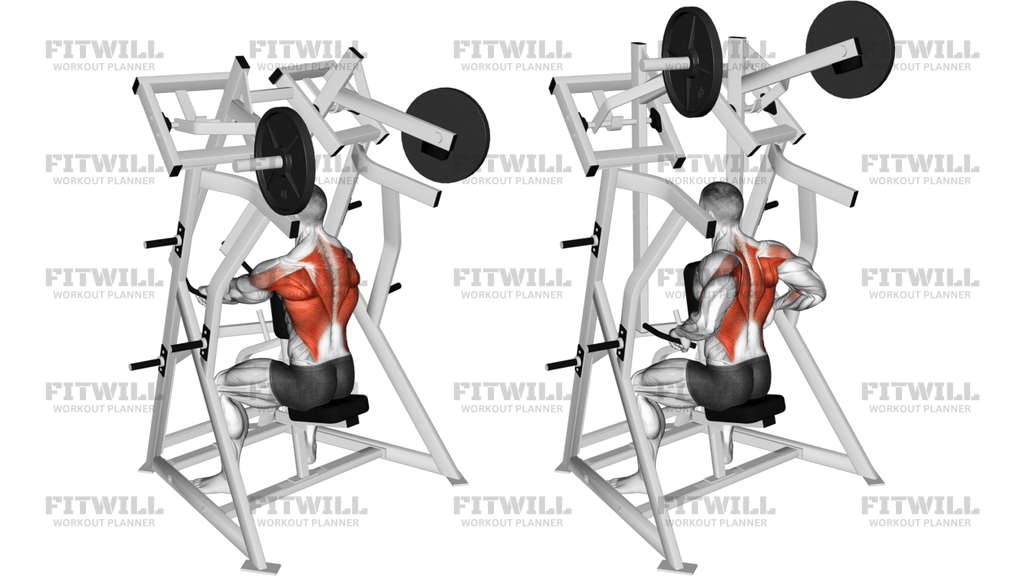
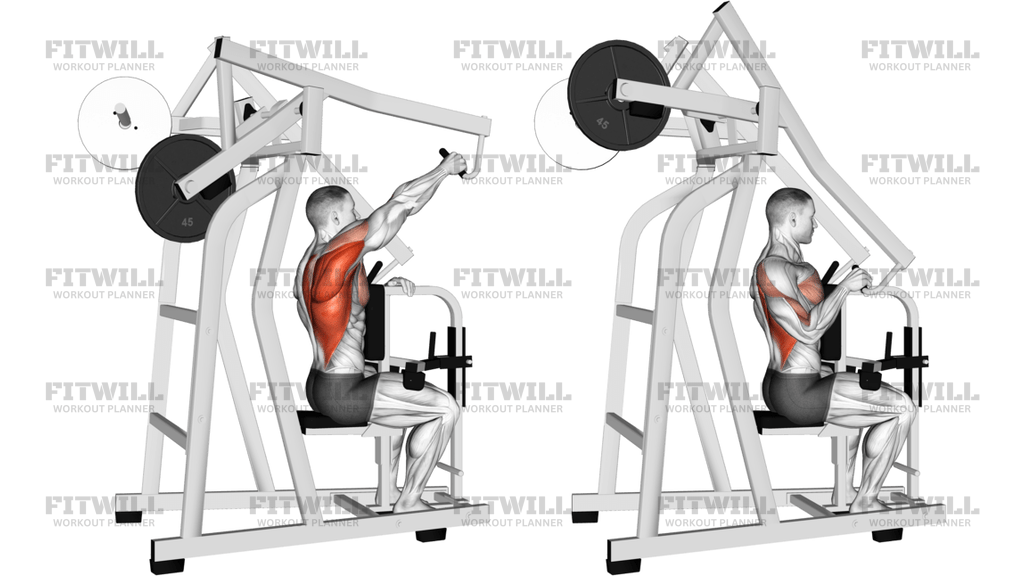
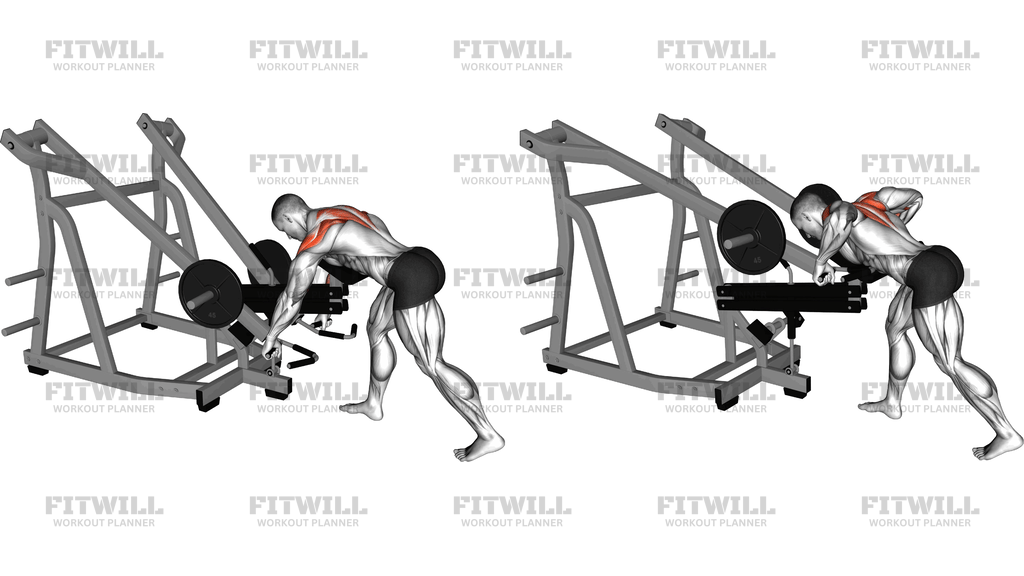
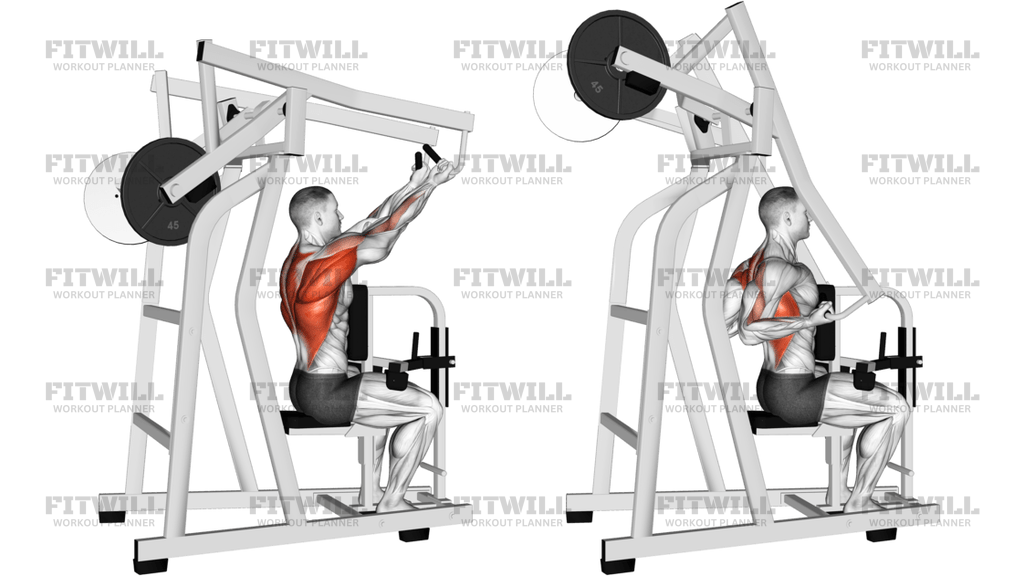
The Lever One Arm Low Row (Plate Loaded) is a seated rowing movement performed on a plate-loaded leverage machine, one side at a time. You sit facing the machine with your chest against the vertical pad, reach forward with one hand to grab the handle, and pull it back along a fixed arc until your hand is level with your lower ribs or hip. Because the handle rides on a lever arm loaded with weight plates, the resistance follows a set path, which makes it easier to stay controlled and feel the target muscles working than on a free cable or dumbbell row.
This exercise primarily trains the lats, with strong support from the rhomboids, mid and lower traps, and the rear delt of the working side. The biceps and forearm flexors assist on every pull, and the lats and upper back on the opposite side work to keep your torso square against the pad. Training one arm at a time exposes left-to-right strength differences that a two-arm row can hide, and it lets you turn slightly toward the working side to get a longer stretch and a fuller contraction if that fits your goals.
The setup matters more than people expect. Sit with your chest firmly against the pad and your feet flat on the floor or foot pegs so your lower body anchors you; if your hips slide back or your chest peels off the pad, the weight is pulling your torso instead of your arm. Adjust the seat so the handle lines up roughly with your lower chest to mid-torso at full reach, then load plates evenly on the machine's pegs according to its design. A pad height that is too low turns the movement into a shrug-heavy pull, while a seat that is too high forces an awkward angle at your shoulder.
To execute well, start each rep from a full stretch with your arm extended and shoulder blade reaching slightly forward. Pull by driving your elbow back and down, letting the shoulder blade retract naturally at the end rather than yanking with the arm. Pause briefly when the handle is close to your torso, then lower it under control until the arm is extended again. The fixed lever path is a benefit here, but only if you let the back do the steering instead of the biceps.
This movement fits well as a main back builder in machine-based programs, as an accessory after heavier barbell or cable rows, or in unilateral work where one side needs focused attention. It is also a practical choice for people rehabilitating or managing grip fatigue, since the handle support removes some of the demand that dumbbell and barbell rows place on the grip. Keep loads moderate at first: because each side works alone, the stabilizing muscles around the spine and pelvis are challenged more than you might expect from a supported, seated exercise.
[ Workout Log & Planner ]
Put your next workout in Fitwill
Keep your plan and training log ready when you are.


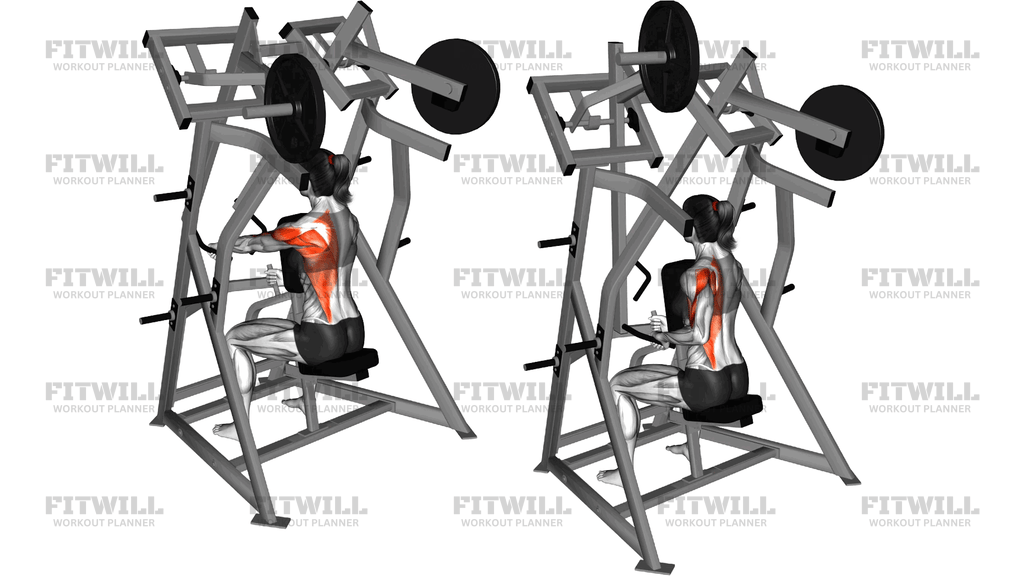
Instructions
- Sit on the machine's seat facing the lever arm with your chest pressed against the vertical chest pad.
- Adjust the seat height so that when you extend one arm, your hand meets the single handle at roughly lower-chest to torso level, and place your feet flat on the floor or foot pegs.
- Grip the handle with one hand using a neutral or overhand grip, and reach your arm fully forward so you feel a stretch across the back of your working shoulder.
- Brace your core and press your chest lightly into the pad so your hips stay planted and your torso does not rotate as you pull.
- Pull the handle back by driving your elbow toward your hip, keeping it close to your body rather than flaring it wide.
- Finish the pull with your hand near your lower ribs and your shoulder blade drawn back and down; hold that position for a brief pause.
- Lower the handle slowly along the lever's path until your arm is fully extended and your shoulder blade reaches slightly forward.
- Exhale as you pull the handle toward you and inhale as you let it travel back to the start.
- Complete all reps on one side, then switch hands and match the repetitions on the other arm.
- Release the handle with your arm extended and the weight stack or lever settled before standing up from the seat.
Tips & Tricks
- If your torso twists toward the handle on each rep, the load is too heavy or you are pulling with momentum; lighten the plates and keep your chest glued to the pad.
- Do not let the working shoulder shrug toward your ear as you pull — think about pulling the elbow toward your back pocket to keep the lats engaged instead of the upper traps.
- Stop the range where your hand naturally reaches your side; pulling the elbow far behind your torso usually means the pad is no longer supporting your chest.
- Squeeze the handle firmly, but avoid letting your forearm and biceps take over — the elbow should lead the movement, not the hand.
- If you feel the stretch only in the back of your shoulder and not your back, your arm may be rotating at full extension; keep the shoulder stable as you reach forward.
- Because the machine loads each side independently, start with the weaker arm and match that rep count on the stronger side to keep development even.
- Keep a slight bend in the non-working arm or rest the free hand on the machine's frame to help you stay square to the pad.
- Lower the handle over two to three seconds; dropping it back quickly wastes the stretch portion of the rep where much of the lat work happens.
- Wipe sweat from your hand or use chalk if the handle slips — a losing grip on a one-arm row makes you squeeze harder and loses back tension.
Frequently Asked Questions
Which muscles does the Lever One Arm Low Row (Plate Loaded) work?
The lats are the prime mover, supported by the rhomboids, mid and lower traps, and rear delt of the working side. The biceps and forearm flexors assist each pull, and the opposite side of your back stabilizes you against the pad.
Why should I row one arm at a time instead of using both handles?
Unilateral rowing reveals and corrects side-to-side strength differences, and it often produces a stronger mind-muscle connection because you can focus entirely on one working side. It also allows a slightly longer stretch through the lats at full reach.
Is the Lever One Arm Low Row (Plate Loaded) suitable for beginners?
Yes, it is beginner-friendly because the fixed lever path removes balance demands and the chest pad helps enforce good torso position. Start with a light load to learn the elbow-driven pull before adding plates.
How should my chest and hips be positioned on the machine?
Your chest should stay in firm contact with the vertical pad for the entire set, and your feet should be planted flat on the floor or foot pegs. If your hips slide back or your chest lifts off, reduce the weight.
What is the most common mistake on this exercise?
Turning the rep into a biceps curl by yanking with the arm and shrugging the shoulder. Fix it by leading with the elbow toward your hip and keeping the shoulder blade moving back and down rather than up toward the ear.
How does the plate-loaded lever differ from a cable low row?
The lever arm locks the handle into one fixed arc, so the resistance direction is the same on every rep and requires no path correction. A cable allows more freedom of movement, which can be useful for advanced lifters but is harder to control for beginners.
What can I use if my gym has no plate-loaded row machine?
A single-arm cable row with a handle, a dumbbell row on a bench, or a seated machine row done one side at a time are all reasonable substitutes. Each keeps the unilateral pull that makes this exercise valuable.
Where should the handle end up at the top of each rep?
Near your lower ribs or hip, with your elbow close to your body and your shoulder blade retracted. Pulling the elbow much further back usually involves hyperextension or losing chest contact with the pad.
How many sets and reps should I do per side?
Three to four sets of 8 to 12 reps per arm works well for general back development. Always start with your weaker side and match those reps on the stronger arm.
Are there any safety points to keep in mind with this machine?
Set the plates securely on the pegs, keep your arm extended and the lever settled before releasing the handle, and avoid sudden jerking starts that slam the lever into its stops. If you have a shoulder injury history, use a moderate range and stop short of any pinching sensation.