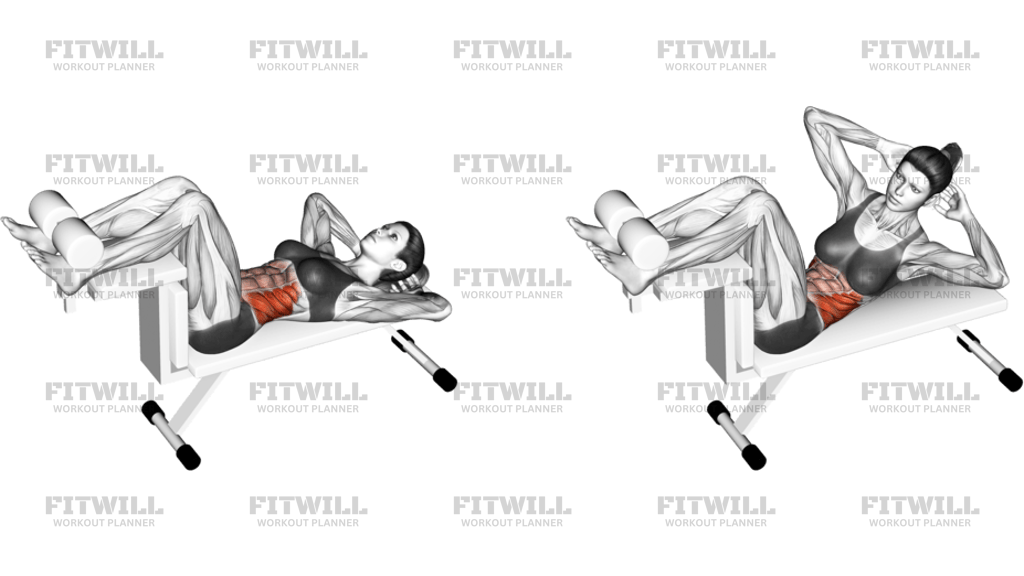
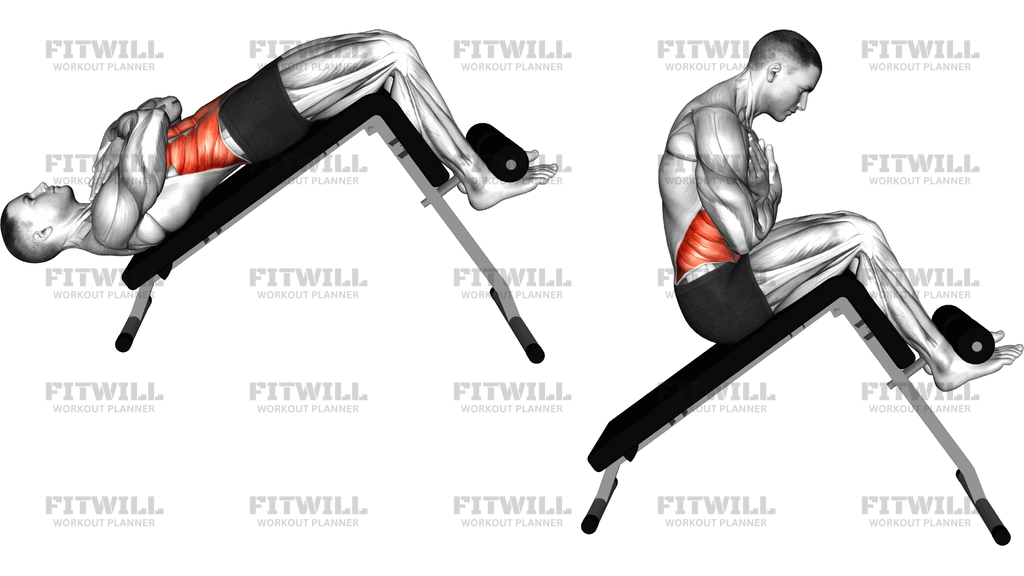
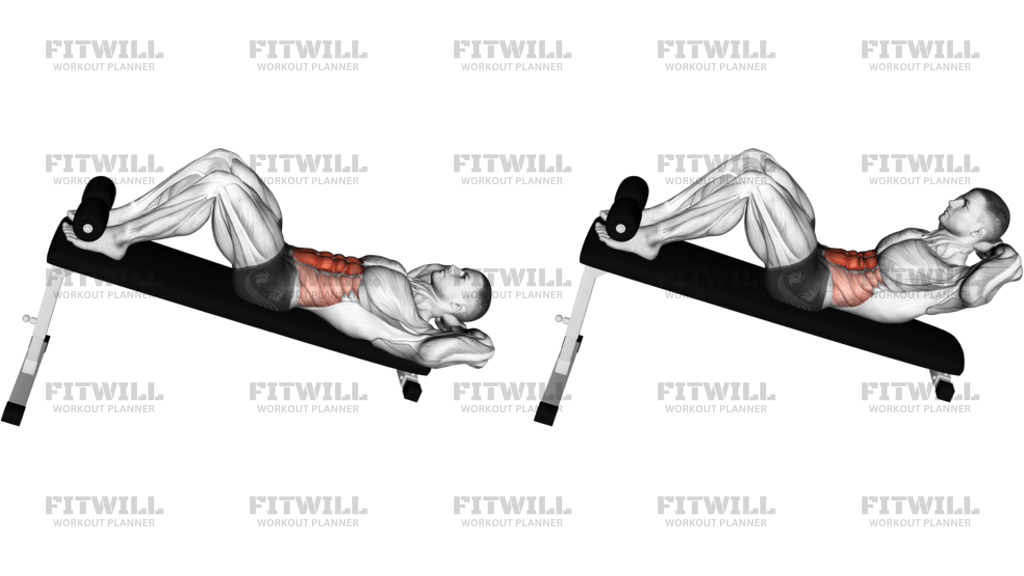
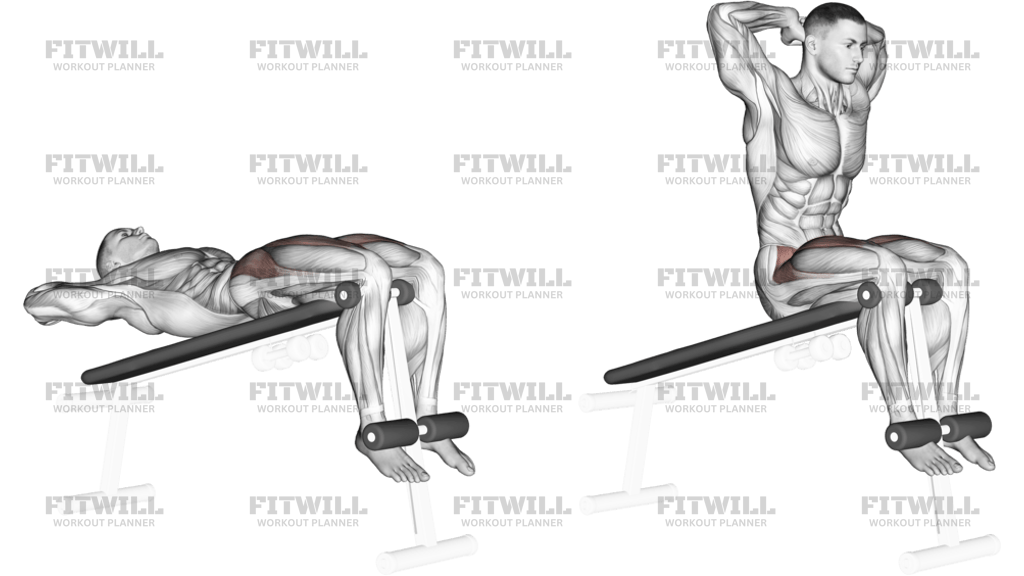
Decline Sit Up
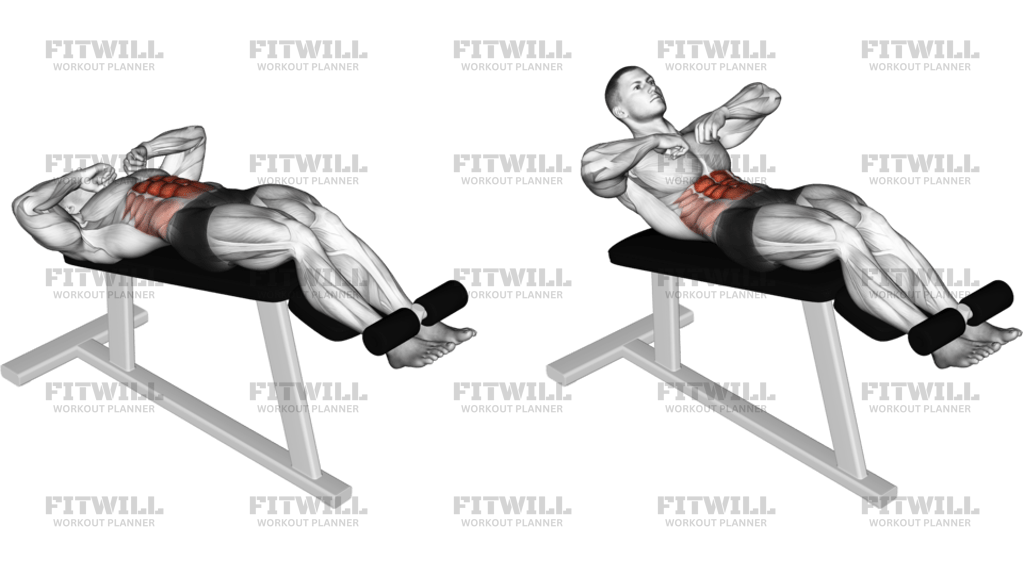
The Decline Sit Up is a trunk-flexion exercise performed on a decline bench, where your head sits lower than your hips and your ankles are anchored under the padded rollers at the elevated end. Because gravity pulls your torso down the slope, your abdominal muscles have to work noticeably harder than they do in a flat sit-up, making this a natural progression once floor crunches feel easy.
The main target is the rectus abdominis, the sheet of muscle running down the front of your belly, with extra demand placed on the lower fibers because the decline position lengthens the range of motion. Your hip flexors assist as you rise toward the knees, and the obliques work to keep your torso from twisting as you move. Anchoring the feet means the legs are stabilized, so most of the challenge lands on the trunk rather than on balance.
Setup matters more on this bench than on the floor. Your buttocks and lower back should stay in contact with the pad, your knees bent comfortably, and your ankles hooked securely under the rollers so they hold you without pinching. If the bench angle is too steep for your current strength, your neck and hip flexors will take over before your abs get much out of the rep.
To perform it well, curl your torso up by peeling your shoulder blades off the bench and rounding through the spine, rather than yanking yourself up with your hands behind your head. At the top you can sit fully upright or stop at a strong crunch height; on the way down, lower back by back until your whole trunk is stretched along the decline. That slow return is where a lot of the benefit lives, so resist the urge to drop.
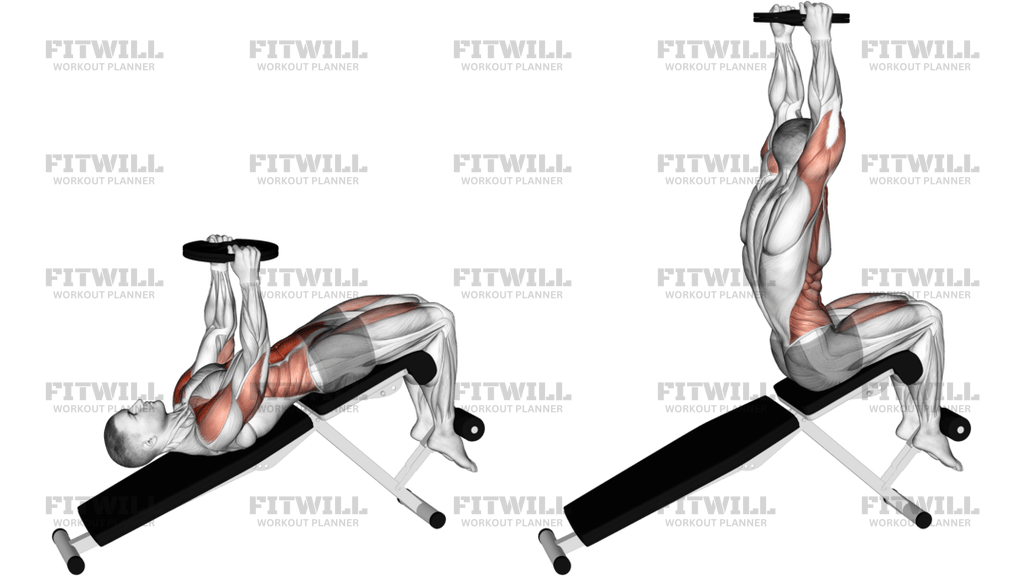
This movement suits intermediate trainees who have already built some core strength with floor crunches, as well as anyone training at home or in a gym with an adjustable or dedicated decline bench. It is common in ab-focused sessions, boxing and martial arts conditioning, and as a base exercise to make harder by holding a weight plate at the chest. Keep the reps smooth and controlled, stop short of any lower-back discomfort, and treat the decline angle as something to earn gradually rather than max out on day one.
[ Workout Log & Planner ]
Put your next workout in Fitwill
Keep your plan and training log ready when you are.


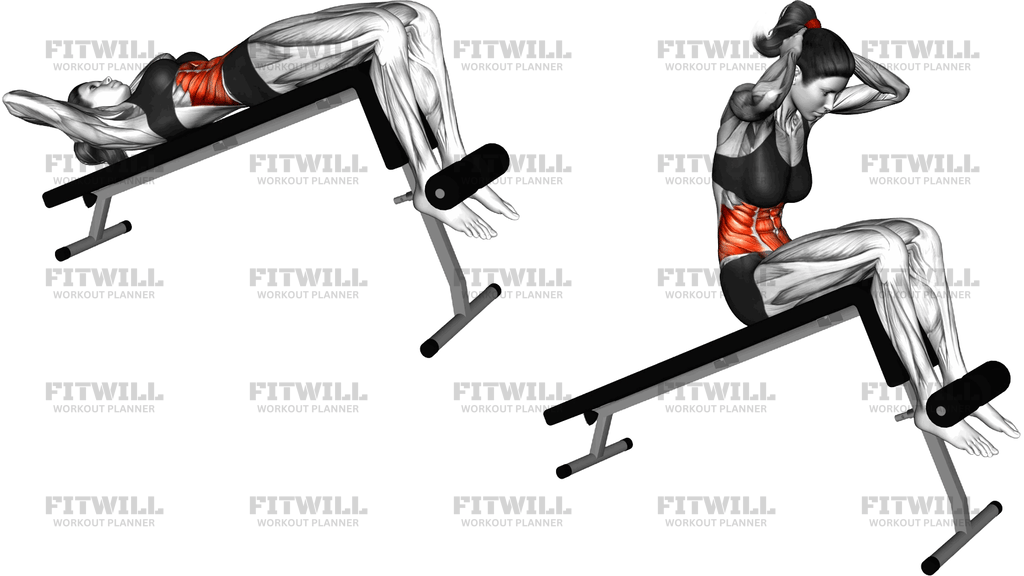
Instructions
- Set the decline bench to your chosen angle and hook your ankles securely under the padded rollers at the high end, knees bent.
- Sit on the bench first, then walk your hips back so your glutes and lower back rest fully against the pad before lowering your torso down.
- Place your hands lightly behind your head with elbows flared out, or cross them over your chest if that helps you avoid pulling on your neck.
- Brace your abdominal muscles and gently tuck your chin so there is a small gap between chin and chest before you start the rep.
- Curl your torso up by rounding your spine off the bench, leading with your shoulders and exhaling as you rise toward your knees.
- Continue until your torso is near upright or you feel your abs fully contracted, keeping your hips and glutes planted on the pad.
- Pause briefly at the top, then lower yourself back down vertebra by vertebra, inhaling as you return along the slope.
- Extend back until your head and shoulders are below your hips and you feel a mild stretch across the abdominals, without bouncing at the bottom.
- Complete your set, then sit up, unhook your ankles from the rollers, and step off the bench carefully.
Tips & Tricks
- Do not interlace your fingers behind your head and pull; the hands are only there to support the skull, and pulling is the fastest way to strain your neck on this bench.
- If your feet pop out of the ankle rollers mid-set, the angle is too aggressive or you are thrusting with your hips; reduce the decline and re-anchor before continuing.
- Watch that your lower back does not arch off the pad at the bottom — stopping just short of a full stretch keeps tension on the abs instead of loading the lumbar spine.
- A common mistake is letting the hip flexors dominate by sitting straight up like a hinge; think curl and round rather than lift and fold.
- Start with a shallow decline and full sit-ups, then progress to a steeper angle or a plate held at your chest before adding anything heavier.
- Keep your elbows wide and moving back toward your knees; elbows collapsing forward usually means momentum, not muscle, is doing the work.
- Exhale on the way up and inhale on the way down; holding your breath through the whole rep is common on decline work and makes the set feel far harder than it should.
- Because the decline stretches the abs more than floor work, cut your usual floor-crunch rep count roughly in half when you first try this exercise.
Frequently Asked Questions
What muscles does the Decline Sit Up work?
The rectus abdominis, especially the lower fibers, does most of the work, while the hip flexors assist and the obliques stabilize your torso. Because your head is lower than your hips, the abs handle more load than in a flat sit-up.
Is the Decline Sit Up suitable for beginners?
It is best treated as a step up from floor crunches, since the decline angle significantly increases the difficulty. Beginners can start on a very shallow decline or a flat bench and progress once they can control the full range smoothly.
Should I do a full sit-up or stop at a crunch on the Decline Sit Up?
Both work; stopping at a strong crunch height keeps the emphasis almost entirely on the abdominals, while sitting fully upright brings the hip flexors in more. Choose based on whether you want pure ab work or a slightly broader movement.
Why do my hip flexors burn during Decline Sit Ups?
The hip flexors help lift your torso from the stretched decline position, so some involvement is normal. If they dominate completely, you are likely sitting up as a rigid block instead of curling through the spine — slow down and lead with the shoulders.
How do I keep my feet secure in the ankle rollers?
Hook the top of your feet under the pads with knees bent so the shins angle into the roller, and keep your hips pressed back against the bench so your body weight anchors the ankles. If they still slip, the decline is too steep for your current strength.
Can I hold a weight during the Decline Sit Up?
Yes, a plate or dumbbell held at the chest is a common progression once bodyweight reps feel easy. Keep the weight close to your torso and avoid extending your arms overhead, which puts extra stress on the shoulders and lower back.
What can I substitute if I do not have a decline bench?
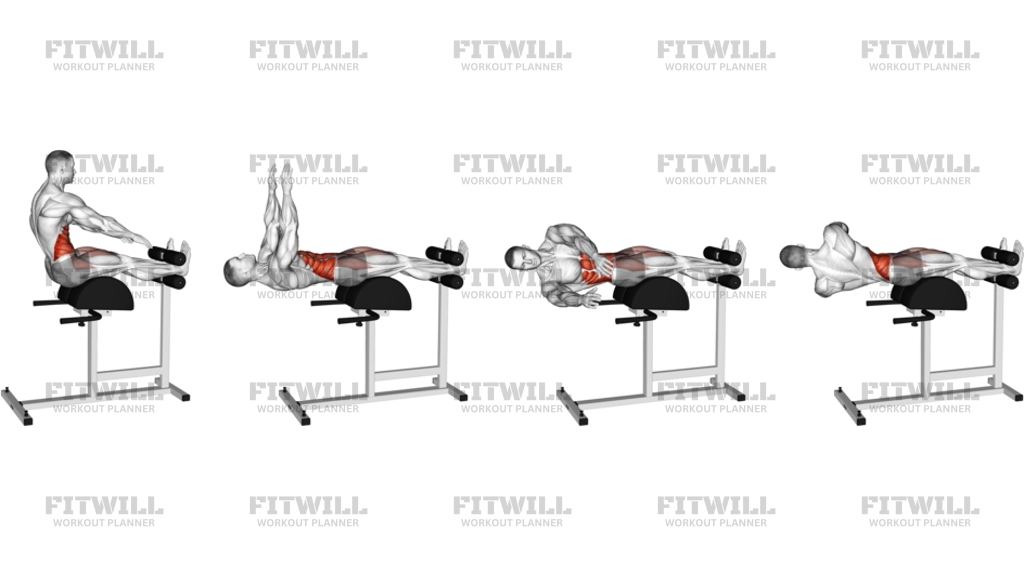
A stability ball with feet braced, a Roman chair, or slow controlled crunches with a resistance band anchored behind you all train the abs through a similar challenge. Decline bench work is convenient but not the only route to a harder trunk flexion exercise.
Is it bad for my lower back to go all the way down on this bench?
The stretched bottom position is demanding on the lumbar spine, so lower only as far as you can control without your back arching off the pad or any discomfort appearing. A slightly shortened range with steady tension is a safer and equally effective choice for most people.
How many reps of the Decline Sit Up should I do?
Because the decline adds load, sets of roughly 8 to 15 controlled reps are a practical starting point. If you cannot slow the lowering phase down, the set is too heavy or too long — quality of the return matters more than the count.