Smith Rack Pull
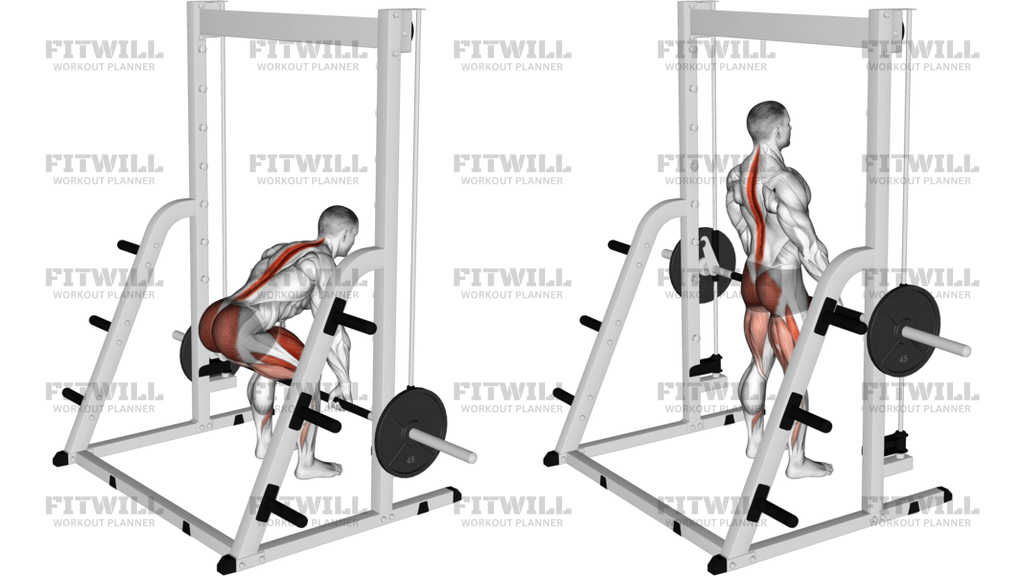
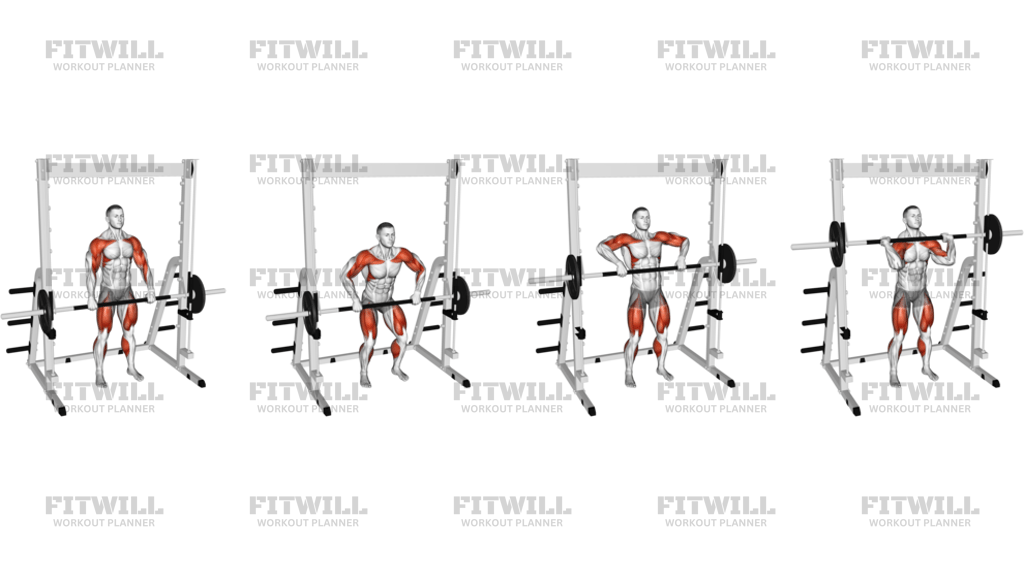
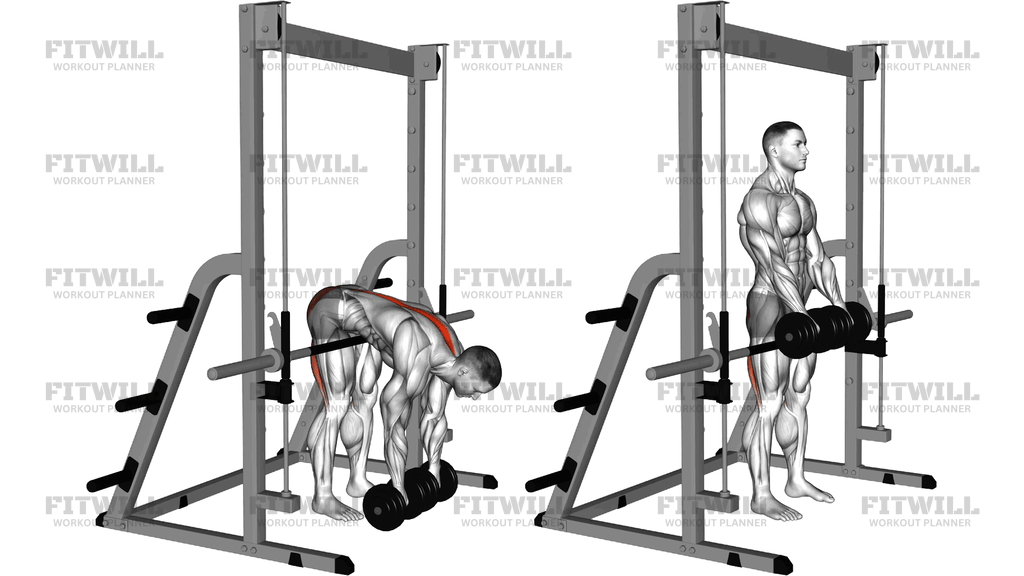
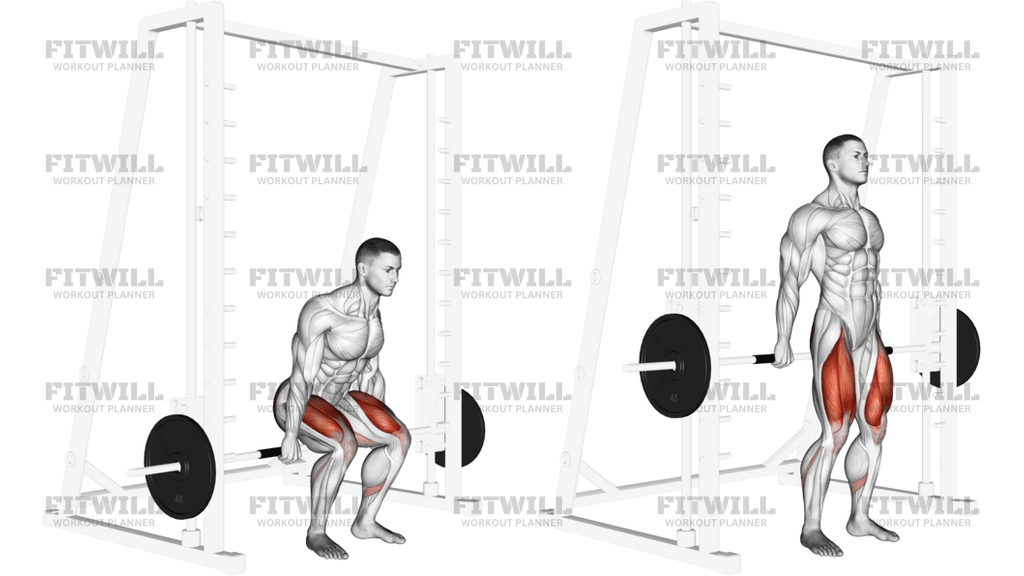
The Smith Rack Pull is a hip-hinge pulling exercise performed with the bar of a Smith machine, which runs on fixed vertical rails. You start standing tall with the bar at thigh level, unhinge at the hips with only a slight bend in the knees, lower the bar along the front of your legs to about mid-shin, then drive your hips forward to stand back up. Because the bar cannot drift forward or backward, all of your attention goes into the hinge itself, which makes this a very focused posterior chain movement.
The main work is done by the hamstrings, which stretch under load as you lower the bar and contract to bring you back upright. The glutes extend the hips at the top of each rep, and the muscles of the lower back work hard to hold your spine in a neutral position throughout. Your forearms and grip handle the bar, and the upper back helps keep your chest proud as you fold forward.
This movement suits two groups particularly well. Lifters who struggle to feel conventional deadlifts or barbell stiff-leg deadlifts in their hamstrings often get much better feedback here, since the fixed bar path removes the balance demands and lets you concentrate on pushing the hips back. It is also a useful option for people training without a spotter who still want to load a heavy hinge pattern, because the Smith machine's safety catches can be set just below the bottom position.
Setup matters more than most people expect. Set the bar stops at roughly hip height so you can unrack by simply rotating the bar out of the hooks, and position your feet a few inches in front of the bar so it tracks in a straight line close to your shins. If your feet sit too far back under the bar, the plates will scrape your legs or pull your weight onto your toes; too far forward and you lose tension in the hamstrings at the bottom.
Execution quality comes down to one thing: the hips and the bar move in opposite directions. As the bar travels down your thighs, your hips travel back and slightly up, with the knees staying softly bent but not bending further. Keep the chest open and the spine long rather than rounding to reach lower, and stop the descent when your hamstrings hit their workable stretch — usually around mid-shin — rather than chasing the floor.
Use the Smith Rack Pull as a primary hinge on lower-body days, typically for sets of 8 to 15 reps with a deliberate lowering phase. Because the eccentric is where the hamstrings do most of their lengthening under tension, resist the urge to drop the bar quickly. Treat it as a strength and muscle-building tool, and progress the load only as long as you can keep the same neutral spine and controlled tempo on every rep.
[ Workout Log & Planner ]
Put your next workout in Fitwill
Keep your plan and training log ready when you are.


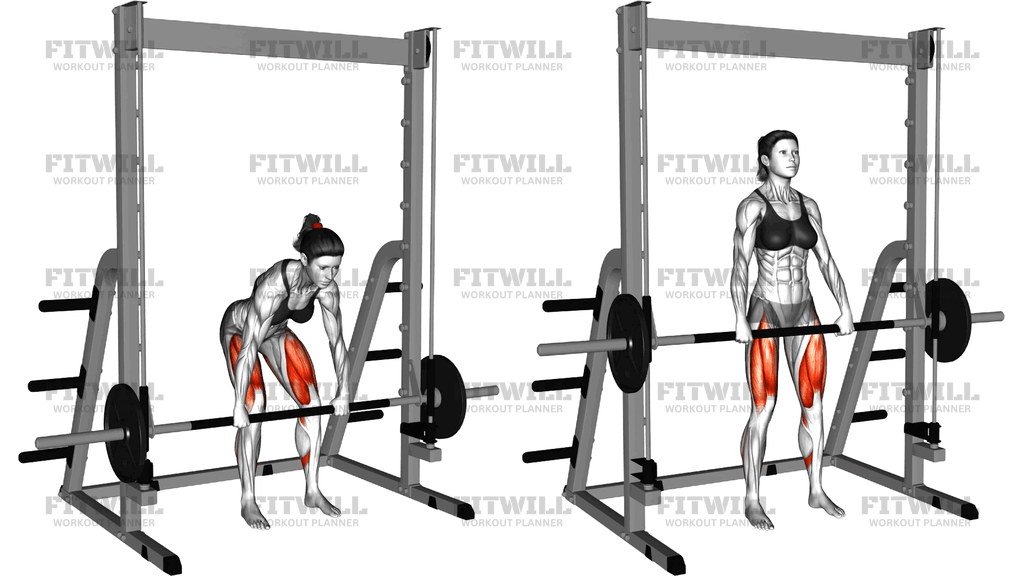
Instructions
- Set the Smith machine bar stops around hip height and load the bar evenly on both sides, then stand facing the machine with your feet about hip-width apart and a few inches in front of the bar.
- Grip the bar just outside your thighs with an overhand or mixed grip, then rotate the bar to unrack it and let it hang at arm's length against the front of your thighs.
- Stand tall with your chest up, shoulders pulled back, and a slight bend in both knees; this is your starting position.
- Brace your core as if bracing for a light punch, and keep your spine in a neutral line from head to tailbone.
- Push your hips straight back and let the bar slide down the front of your legs, keeping the knees at the same soft bend instead of squatting down.
- Lower the bar along a vertical path until it reaches roughly mid-shin level or until you feel a strong but comfortable stretch across the back of your thighs.
- Pause for a beat at the bottom, then drive your hips forward and squeeze your glutes to pull the bar back up your legs to standing.
- Exhale as you pull up, and inhale at the top before beginning the next lowering phase.
- Finish the set by rotating the bar back into the hooks and confirming the safety catches are positioned just below your working range before going heavier.
Tips & Tricks
- If the bar catches or scrapes your shins at the bottom, your feet are too close to the machine — step them forward an inch or two so the rails stay clear of your legs.
- The most common error is turning this into a squat: if your knees keep bending as you lower, cue yourself to push the hips back instead of sitting down.
- Rounding the lower back to reach deeper is a habit worth breaking early; stop the descent at mid-shin and let the hamstring stretch, not the floor, determine your range.
- Keep the bar in light contact with your legs through the whole rep — letting it drift away shifts load from the hamstrings onto the lower back.
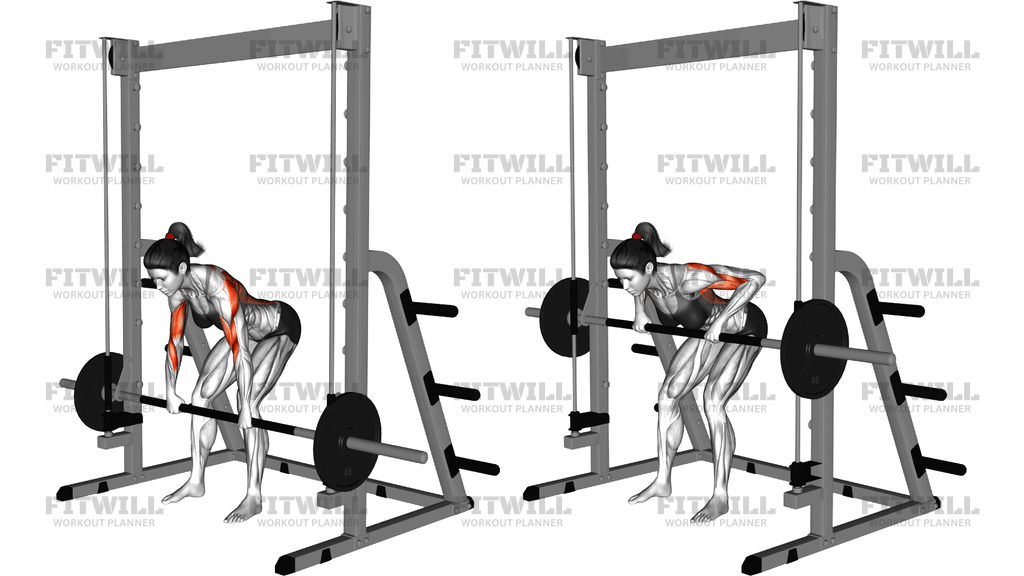
- Drive the movement from the hips, not the arms; the hands are only hooks, and pulling with the elbows bends them and turns it into a partial row.
- Do not lock the knees hard at the top or hyperextend backward — finish tall with the glutes squeezed, ribs down, and the spine neutral.
- Set the Smith machine safety stops just below your lowest rep depth so a failed rep can simply be released onto the catches.
- Lower the bar over two to three seconds; the controlled eccentric is what makes the Smith Rack Pull feel different from a fast deadlift variation.
- If you feel it mostly in the low back, reduce the weight and check that your hips are actually traveling backward rather than your chest simply dropping forward.
Frequently Asked Questions
What muscles does the Smith Rack Pull work?
The hamstrings are the primary movers, with the glutes extending the hips at the top and the lower back muscles stabilizing the spine. The forearms and upper back assist by holding the bar and keeping your chest open.
Why use a Smith Machine for this pull instead of a barbell?
The fixed rails remove front-to-back balance demands, so you can focus entirely on the hip hinge and hamstring stretch. It also lets you set safety catches, which makes heavy hinge training more practical without a spotter.
Where should my feet be placed in the Smith Rack Pull?
Stand with feet hip-width apart and roughly two to four inches in front of the bar so it hangs close to your shins. If the plates catch your legs or your weight shifts to your toes, adjust your foot position first before changing anything else.
How low should I lower the bar?
Lower until the bar reaches about mid-shin or until you feel a strong hamstring stretch, whichever comes first. Going deeper by rounding your lower back adds risk without adding useful tension.
Can beginners do the Smith Rack Pull?
Yes, and the fixed bar path actually makes it a good teaching tool for the hip hinge. Start with a light weight or just the bar, master the hips-back pattern, and add load only when the spine stays neutral through every rep.
How is this different from a Smith machine stiff-leg deadlift?
They are nearly the same movement pattern — both are hip hinges in the Smith machine — but the Rack Pull is typically set up from the top hook position with the emphasis on a controlled pull back to standing. The knees stay softly bent in both versions.
Should my knees bend during the descent?
Keep a slight, constant bend in the knees from start to finish, but do not bend them further as you lower. If your knees keep flexing, the set has drifted into a squat and the hamstrings stop doing their job.
What is the most common mistake on this exercise?
Rounding the lower back to chase a deeper range, usually combined with letting the bar drift away from the legs. Both errors shift stress from the hamstrings to the spine, so stop at your workable stretch and keep the bar tracking down the front of your thighs.
What can I substitute if my gym has no Smith Machine?
A barbell stiff-leg deadlift or dumbbell Romanian deadlift trains the same hinge pattern. Expect to spend a little more attention on balance and keeping the bar close to your body, since nothing guides the path for you.
Is the Smith Rack Pull safe for the lower back?
When performed with a neutral spine, a controlled tempo, and a range limited to your hamstring stretch, it is a standard hinge exercise. Keep your bracing consistent, avoid jerking the bar off the bottom, and progress the load gradually.