Bodyweight Patrick Step From Stepbox
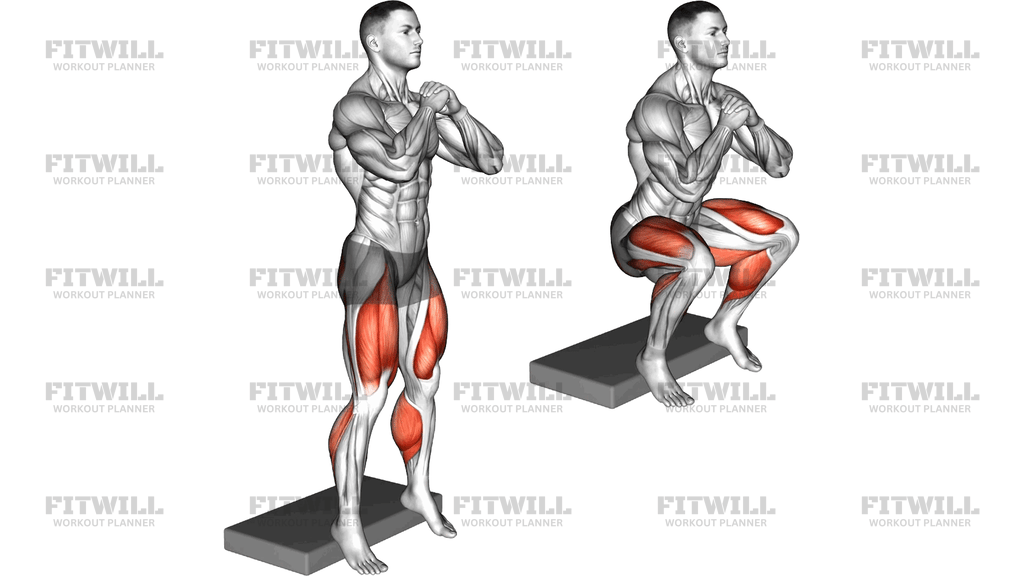
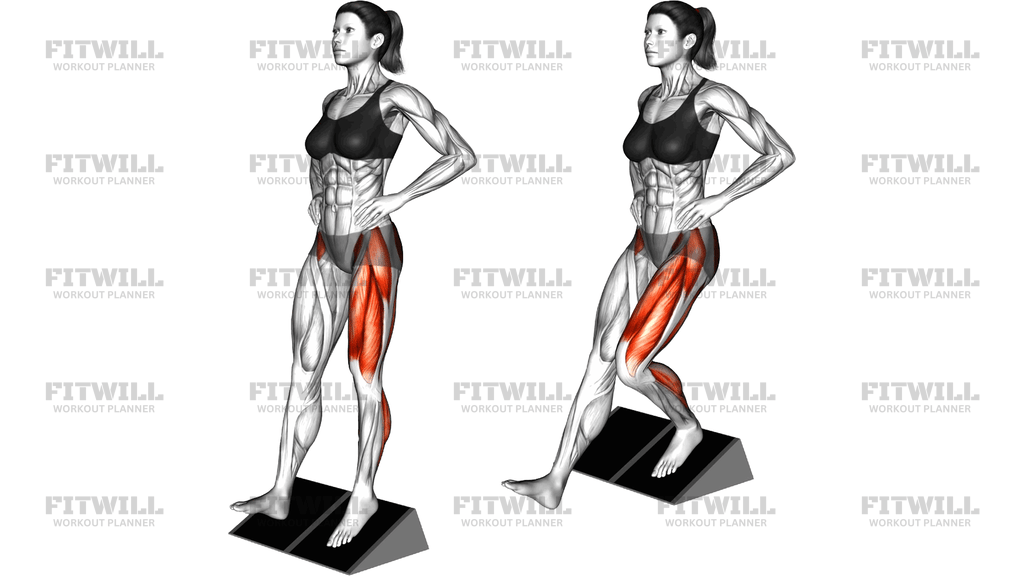
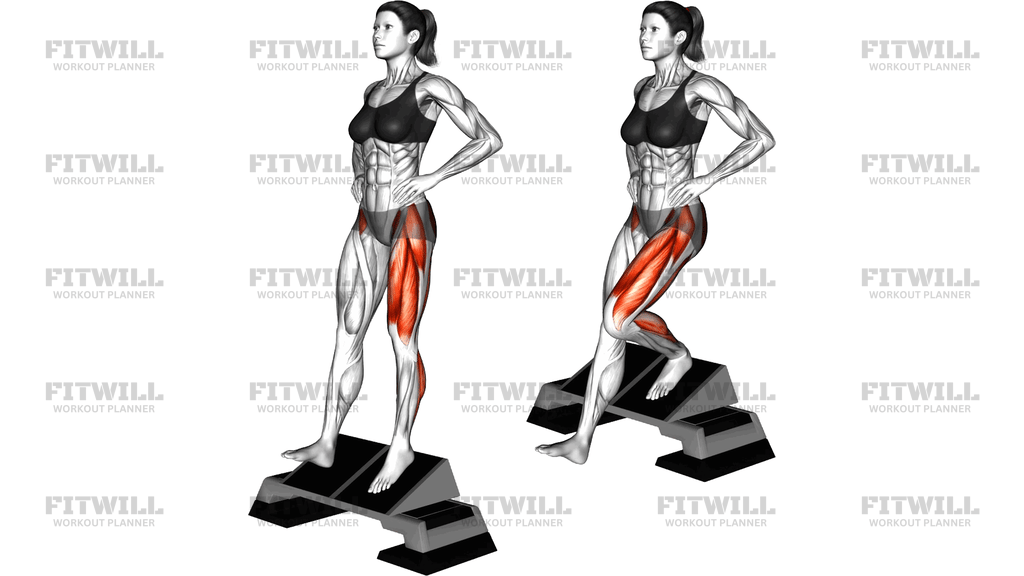
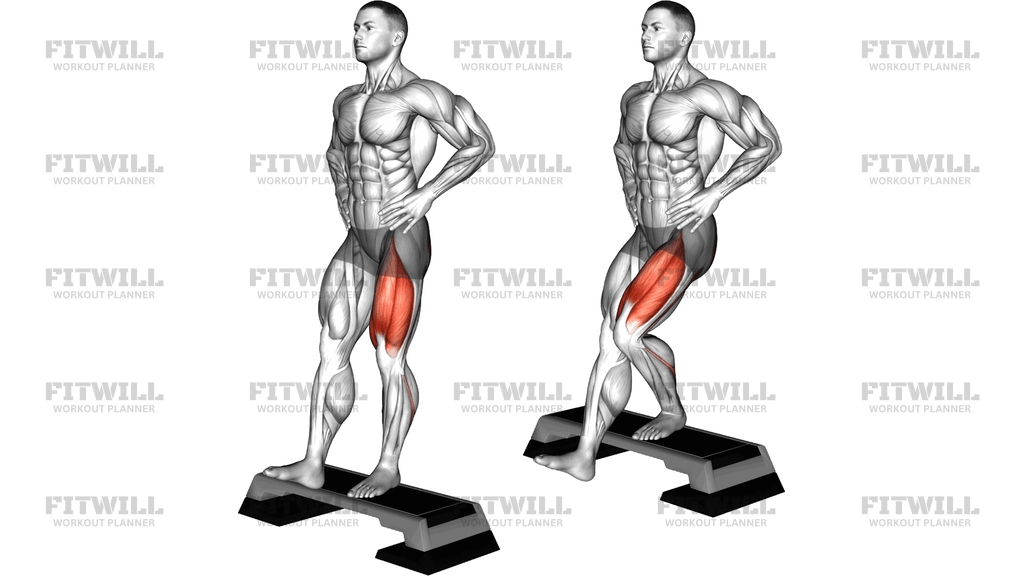
The Bodyweight Patrick Step From Stepbox is a single-leg step-down where you stand on one leg on top of a step platform and lower your free foot toward the floor behind you by bending only the knee of your working leg. Unlike a regular step-up or step-down, the trailing leg never takes your weight — it simply hovers or lightly taps the ground, which forces the front leg to handle the entire load through a deep knee bend. The knee is allowed and even encouraged to travel forward over the toes, making this one of the most direct ways to strengthen the quads and the tissues around the knee joint through a full range.
This movement has become a staple in knee health and return-to-sport programs because it loads the quadriceps, patellar tendon, and surrounding stabilizers in a slow, controlled manner without external weight. It is especially useful for runners, jumpers, and lifters who need their knees to tolerate deep flexion under load, as well as anyone rebuilding single-leg strength after long periods of avoided deep knee bending. Because the range is easy to scale with step height, it can meet you wherever your current ability sits.
Setup matters more than it looks. A stable step platform at a modest height lets your free foot reach the floor without you having to slam into the bottom or strain to get back up. Your heel must stay planted on the box for the entire rep; if it lifts, the box is too high or you are rushing. Keep both hips square and level — the moment one hip drops or rotates, the working leg loses tension and the movement turns into a balance wobble instead of a strength exercise.
To perform it well, place one foot fully on the platform with your hands on your hips or lightly on a wall for balance. Shift all your weight onto that leg, let the other foot hang slightly behind you, and begin bending the working knee so it travels forward and slightly outward over the toes. Lower with control until your free foot touches or nearly touches the floor, then press through the whole front foot — big toe, ball, and heel — to straighten the knee and return to standing tall on the box.
Common use cases include knee rehab progressions, single-leg strength work between barbell sessions, warm-ups before squats or lunges, and home training where no equipment beyond a step is available. Start with a low step and a partial range, and only increase height or depth once every rep looks identical to the one before it. If you feel sharp pain rather than working-muscle effort, reduce the range or step height rather than pushing through.
The main safety points are simple: never let the heel peel off the platform, never let the knee cave inward, and never bounce out of the bottom. The value of the Patrick step comes from smooth, identical reps, not from how deep you can go on your best attempt.
[ Workout Log & Planner ]
Put your next workout in Fitwill
Keep your plan and training log ready when you are.


Instructions
- Place a stable step platform on a non-slip floor and stand facing forward with one foot centered on the platform and your hands on your hips.
- Set your free foot so it hangs just behind and below the edge of the box, with the toes relaxed and no weight on it.
- Brace your core, lift your chest, and shift all of your body weight onto the leg on the box until the free foot can hover without touching down.
- Keep the working heel firmly planted and level hips square to the front as you begin bending the working knee.
- Let the knee travel forward over the toes, tracking in line with the second toe rather than caving inward.
- Lower with control until the toes or ball of your free foot lightly touch the floor, stopping before you dump weight onto the back foot.
- Pause briefly at the bottom, then drive through the entire front foot — heel, ball, and big toe — to straighten the knee and rise back up.
- Exhale as you press up and inhale as you lower, keeping the breath steady rather than holding it.
- Finish each rep standing fully tall on the box with the free knee lifted slightly so the hip on the working side stays level.
- Complete all reps on one leg, then reset your stance and switch to the other leg without stepping down mid-set.
Tips & Tricks
- Choose a step height that lets your heel stay flat for every rep — if the heel lifts as you descend, the box is too tall for your current ankle and knee range.
- The most common mistake is secretly loading the back foot at the bottom; test yourself by hovering the free foot a centimeter above the floor instead of resting on it.
- If your knee dives inward as it travels forward, think about spreading the floor with your front foot and steering the kneecap toward your second and third toes.
- Hands on hips works for balance, but if you wobble badly, stand beside a wall and rest fingertips on it lightly — pulling on the support removes the training effect.
- Film yourself from the side: if your torso collapses forward and your hips shoot back, you are turning it into a hip hinge instead of a knee-dominant step-down.
- Move slowly enough that the lowering phase takes two to three seconds; gravity does the work on the way down, but you must own it, not fall through it.
- A slight forward knee travel over the toes is the point of this exercise — do not try to keep the shin vertical, as that defeats the deep knee-flexion loading.
- If the top of the thigh or the area around the kneecap burns but nothing feels sharp or pinching, that is the intended working sensation.
- Keep the toe of the free leg pointed down and slightly behind you; reaching it forward to catch yourself early is a sign the depth or height is too much right now.
- Match reps left to right, and always start with your weaker leg so it sets the standard for the stronger side.
Frequently Asked Questions
Which muscles does the Bodyweight Patrick Step From Stepbox work most?
The quadriceps are the primary movers, with the rectus femoris working through a long range as the knee bends deeply over the toes. The glutes, calves, and ankle stabilizers assist and keep you balanced on the single leg.
Why does the knee travel over the toes in the Patrick Step instead of staying back?
Forward knee travel is deliberate — it lengthens the quads and loads the knee through deep flexion, which is exactly the range many people lack. The key is that the knee tracks over the toes in a straight line and the heel stays down.
Is the Bodyweight Patrick Step From Stepbox suitable for beginners?
Yes, as long as the step is low and the range is shortened to what you can control smoothly. Beginners should master a shallow step-down with light heel contact from the free foot before hovering the foot or increasing box height.
How is a Patrick Step different from a normal step-down?
In a normal step-down the trailing foot reaches forward or to the floor in front and can share the load, while in the Patrick Step the free foot trails behind and never accepts weight. This keeps all the work on the front leg's knee and quads.
How high should the stepbox be?
Start with a low platform, roughly 10 to 20 centimeters, where your heel stays planted and your free foot can reach the floor. Increase height only when every rep at the current height is smooth and identical.
My heel keeps lifting off the box — what should I change?
That usually means the box is too high, you are descending too fast, or your ankle range is currently limited. Lower the step height and slow the descent until the heel stays glued down for full reps.
Can I hold weights while doing the Bodyweight Patrick Step From Stepbox?
You can add light dumbbells once your bodyweight reps are consistent and pain-free, but most people get plenty of challenge from depth and tempo first. Balance tends to fail before strength if you load it too soon.
How many reps and sets should I do?
Two to four sets of five to ten controlled reps per leg is a practical starting range. Prioritize quality and matching reps between legs over chasing higher numbers.
Is it safe if I have knee discomfort?
Mild working-muscle burn is normal, but sharp, pinching, or escalating pain is a signal to stop. Reduce the depth or step height, and consult a qualified professional if discomfort persists or worsens.
What can I use if I don't have a step platform?
A sturdy low stair, a stable aerobic step, or any secure, non-slippery platform of similar height works. Avoid anything that can slide or tip, since you are balancing on one leg throughout the movement.