Bodyweight Step Down
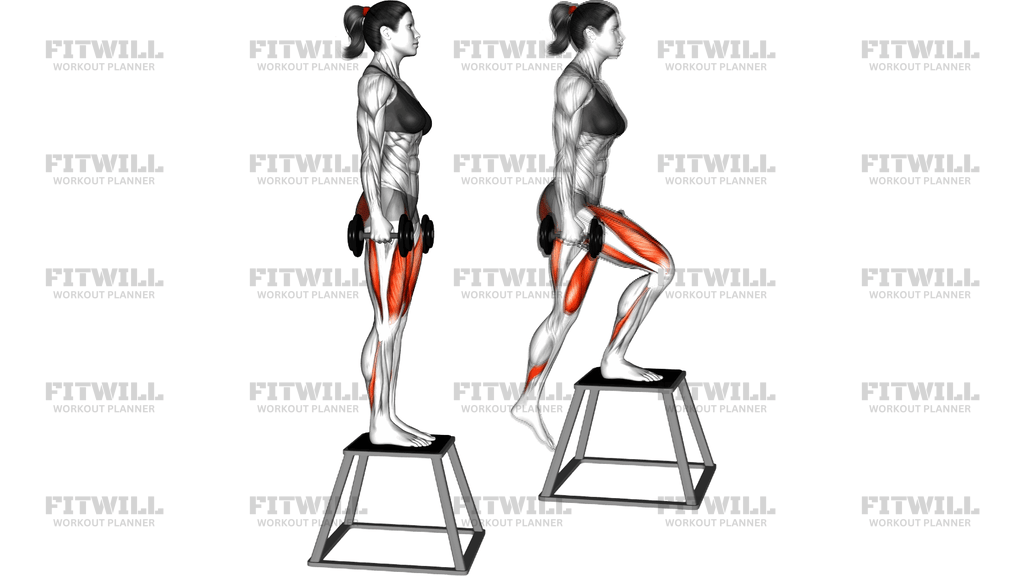
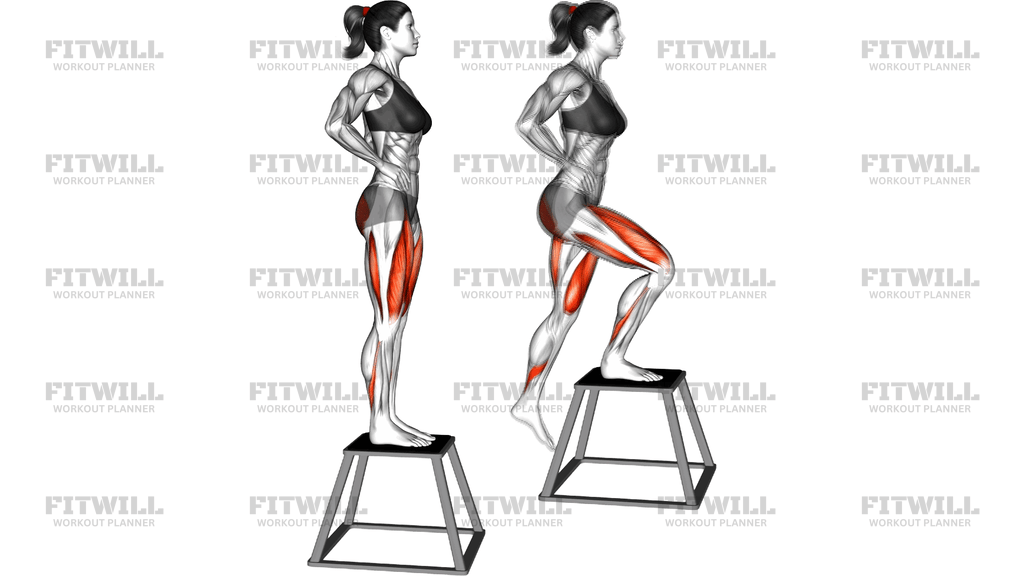
The Bodyweight Step Down is a single-leg lower-body exercise where you stand on top of a step platform or sturdy box and slowly lower one foot to the floor in front of you, then drive back up to the starting position without pushing off the bottom foot. Unlike a step-up, where the emphasis is on climbing, the step down makes you control your body weight on one leg through a full lowering phase, which makes it far harder than it looks.
The standing leg does nearly all the work. Your quads take the brunt of the load as they lower you under control, your glutes stabilize the hip and keep your pelvis level, and the muscles around your knee and ankle work constantly to stop your leg from collapsing inward. Because your hands stay on your hips and nothing is holding you steady, your core also has to stay engaged to keep your torso upright throughout the rep.
This movement is especially useful for building the single-leg strength and knee control that carry over to running, hiking, stairs, and squatting patterns. It is a staple in knee rehabilitation and return-to-sport programs precisely because the load is easy to adjust: a lower step challenges you less, a higher step challenges you more, and you never need any equipment beyond the platform itself.
Setup matters more than most people expect. Choose a step height that lets you lower your heel toward the floor with a soft knee bend, not a depth that forces your standing leg into a deep squat or rounds your lower back. Stand fully on top of the platform with your whole foot supported, and keep your weight over the middle of the standing foot rather than shifting toward your toes.
Execution should feel slow and deliberate. Lower the free foot to lightly touch the floor, resist the urge to bounce or transfer your weight onto it, and press through the standing leg to return to the top. If you cannot lower without your knee caving in, your torso pitching forward, or the free foot slamming down, the step is probably too high or you are moving too fast. Start with a modest height and controlled tempo, and progress by adding depth, reps, or a slow pause before writing the movement off.
[ Workout Log & Planner ]
Put your next workout in Fitwill
Keep your plan and training log ready when you are.


Instructions
- Stand on top of a step platform with both feet fully supported and your body tall, hands placed on your hips.
- Shift your weight completely onto one leg and let the other foot hang just off the edge, toes pointed forward.
- Brace your core and keep your chest lifted so your torso stays upright for the whole set.
- Bend the knee of your standing leg and slowly lower your free foot toward the floor in front of the platform.
- Continue lowering until the heel or toes of the free foot lightly touch the floor, keeping most of your weight on the standing leg.
- Do not rest or push off the bottom foot; instead, press through the entire foot of the standing leg to straighten your knee.
- Return to standing fully upright on the platform with your hips level before starting the next repetition.
- Exhale as you press back up to the top, and inhale as you lower down.
- Complete all reps on one leg, then step off carefully, reset your stance, and switch to the other leg.
Tips & Tricks
- Watch your front knee in the descent: it should track over your toes, not dive inward. If it caves, slow down, shorten the depth, or consciously drive the knee slightly outward.
- A common mistake is dumping weight into the foot on the floor. Tap it lightly and imagine the floor is made of glass so the standing leg keeps doing the work.
- If your torso pitches far forward, the step is likely too high. Lower the height until you can stay tall through your chest and hips.
- Keep both hips facing forward; letting the hip of the free leg drop or rotate means your glutes on the standing side are losing their stabilizing job.
- Take two to three seconds to lower. The slow eccentric is where most of the strength benefit lives, and rushing it turns the exercise into a bounce.
- Position the whole foot on the platform, not just the ball. A partially supported foot makes balance harder and shifts stress to your calf and toes.
- Keep the free leg relaxed below the knee rather than reaching aggressively for the floor; a controlled hover or light tap is enough.
- If you wobble at the top, pause there for a beat each rep. The balance demand at lockout is part of the training effect, not something to skip past.
- Use a wall or rail for fingertip balance only if your form breaks down completely, and wean off it as soon as possible.
Frequently Asked Questions
What muscles does the Bodyweight Step Down work?
The quadriceps of the standing leg do most of the work as they lower you under control. The glutes stabilize the hip and help you rise back up, with supporting effort from the hamstrings, calves, and core.
How high should the step be for the Bodyweight Step Down?
Start with a height around 20 to 30 centimeters that lets your free foot reach the floor with a moderate knee bend. Once you can control every rep without your knee caving or your torso falling forward, progress to a higher step.
Is the Bodyweight Step Down good for beginners?
Yes, as long as the step is low enough. Beginners often benefit more from starting low and slow than from adding load, because the exercise teaches knee tracking and single-leg control that make later squatting and lunging safer.
Why do my knee and hip wobble during Step Downs?
Wobble usually means the stabilizing muscles around the hip and ankle are being challenged for the first time, or the step is too high for your current strength. Reduce the depth, slow the tempo, and the control typically improves within a few weeks.
Should I push off the foot that touches the floor?
No. The bottom foot should only tap the floor for balance or depth reference. If you push off it, the standing leg gets a break and you lose the single-leg training effect, so lighten the tap or shorten the depth until you can rise without it.
How many reps and sets should I do of the Bodyweight Step Down?
Start with 2 to 3 sets of 6 to 10 slow reps per leg. Because the lowering phase is demanding, quality matters more than volume; stop the set when your knee starts drifting inward or your form gets sloppy.
Can I do Step Downs if I have knee discomfort?
Mild muscle work is normal, but sharp or pinching knee pain is a signal to stop. Lower the step height, reduce the depth, slow the tempo, and if the discomfort persists, get it assessed before continuing.
What can I use instead of a step platform?
Any stable, non-slippery surface of the right height works, such as a low box, sturdy bench, or stair. Avoid anything that can slide or tip, and never use a surface so high that your form breaks down.
How is a Step Down different from a Step-Up?
A Step-Up emphasizes pressing up onto the box, while the Step Down emphasizes lowering from it, which loads the standing leg through a longer controlled range. Many people find Step Downs harder at the same height because the eccentric phase demands more strength and control.