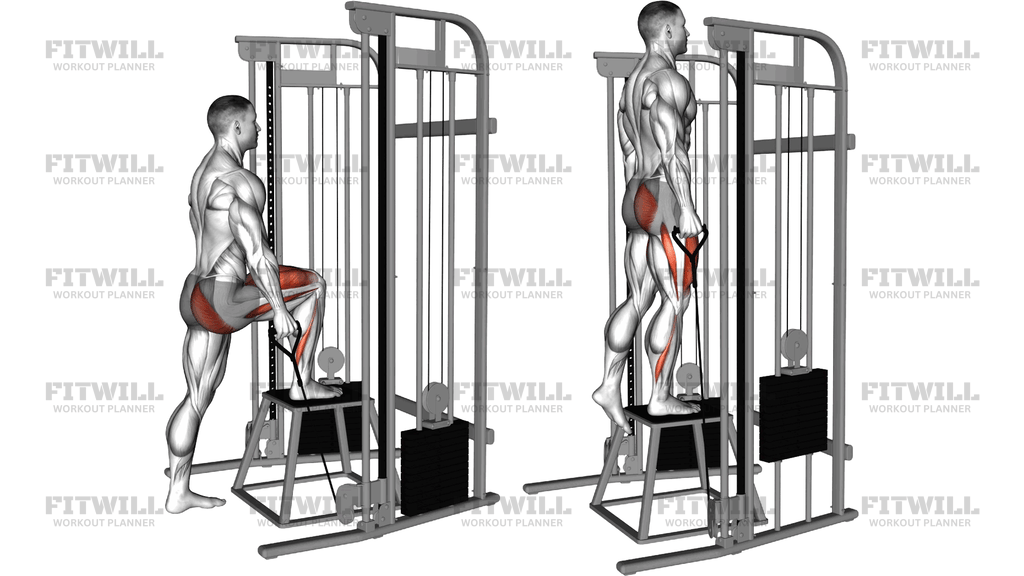
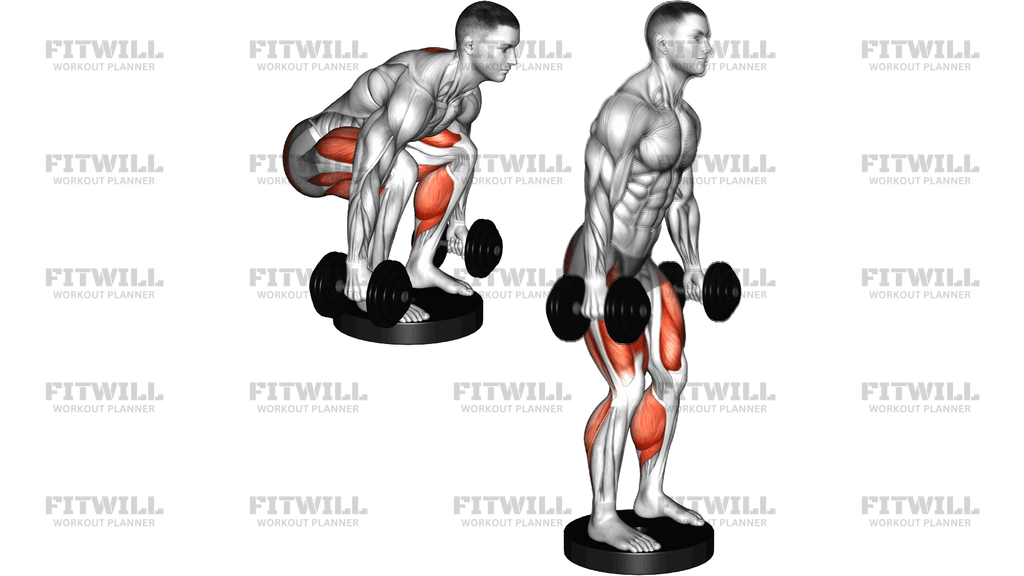
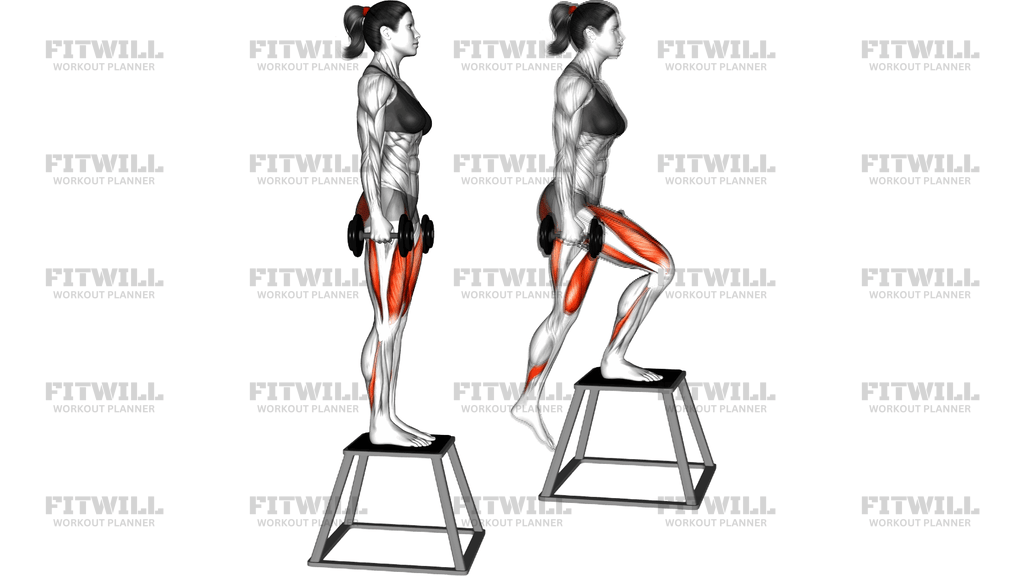
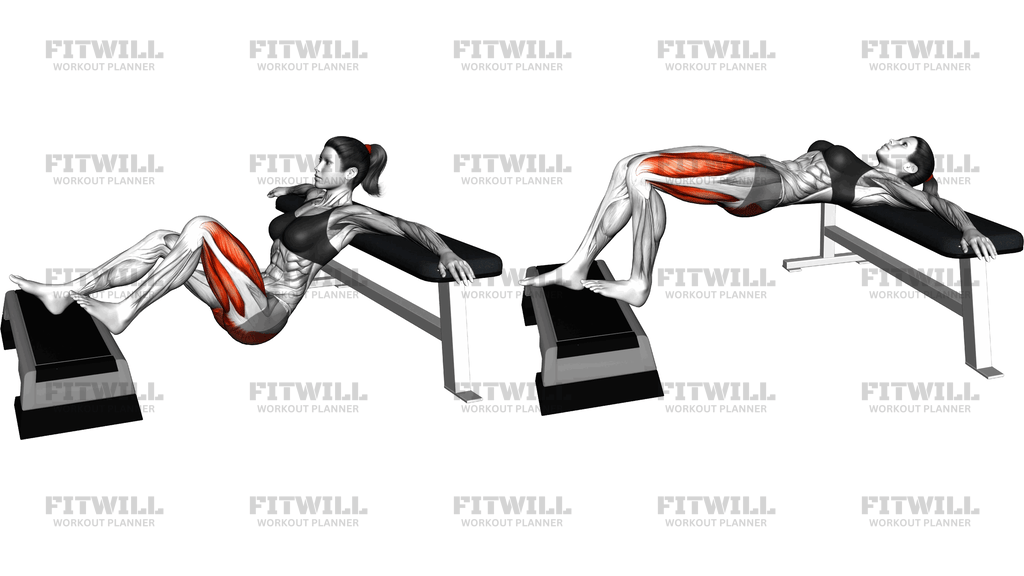
Bodyweight Poliquin Step
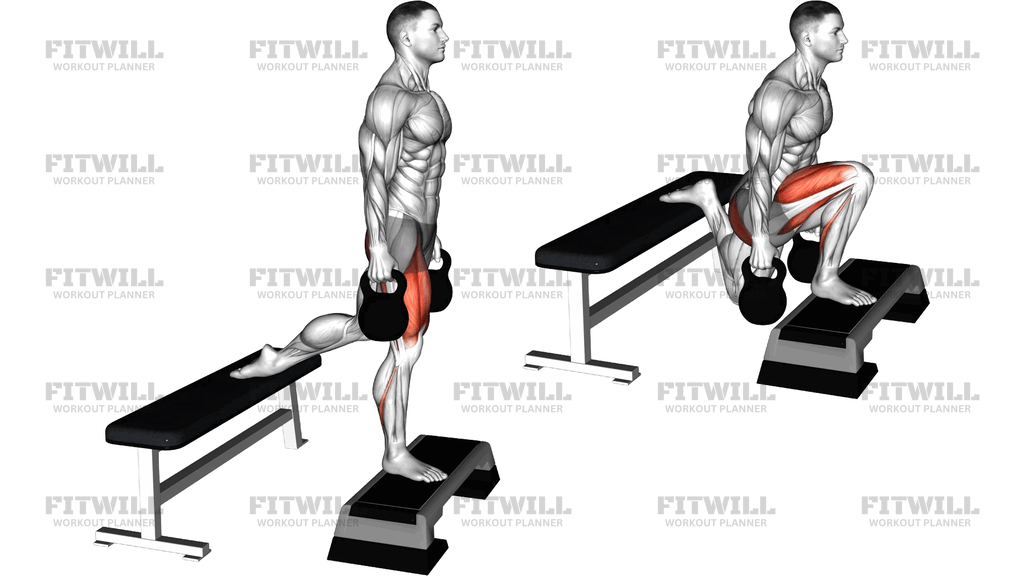
The Bodyweight Poliquin Step is a split-stance step exercise popularized by strength coach Charles Poliquin, built specifically to load the quadriceps — with particular emphasis on the vastus medialis, the teardrop-shaped muscle just above the inside of the knee. You stand with one foot on a sturdy step platform or low slant board and the other foot on the floor behind you, then lower your back heel toward the ground by bending the front knee. Because the front foot is elevated and the rear leg stays straight, most of the work falls on the front leg working through a long range at the knee.
What separates this from a standard step-up or lunge is the position of the torso and the target of the descent. You keep your chest upright and your hips relatively square, which shifts the demand away from the glutes and hamstrings and onto the knee extensors. It is one of the few bodyweight movements that can challenge the quads hard enough to feel like loaded work, which is why it appears in both rehab-informed training and serious leg programs.
This movement is especially useful for lifters who want to strengthen the area around the knee without barbells, for runners and field-sport athletes building knee resilience, and for anyone whose vastus medialis lags behind the rest of their thigh development. Because the load is your own body, you can adjust difficulty easily by changing step height, tempo, or how deep you let the rear heel travel.
Setup matters more here than in most single-leg work. The step should be high enough that your front knee can travel well past a comfortable standing angle, but low enough that your heel stays planted and your knee tracks over your toes without caving inward. Position the feet at roughly hip width from side to side — not directly in line — so you have a stable base and are not balancing on a tightrope.
To execute well, brace your core, rest your hands on your hips or hold a nearby wall for balance, and slowly bend the front knee until your rear heel lightly touches or nearly touches the floor. Pause briefly, then drive through the whole front foot to stand back up. The lowering phase should take two to three seconds; if you drop quickly, the knee takes the stress without the muscle controlling it.
Treat the Bodyweight Poliquin Step as a quality movement, not a speed drill. Stop the set when your knee position changes or your balance degrades, and progress by adding depth, slowing the tempo, or holding a light weight before adding reps endlessly.
[ Workout Log & Planner ]
Put your next workout in Fitwill
Keep your plan and training log ready when you are.


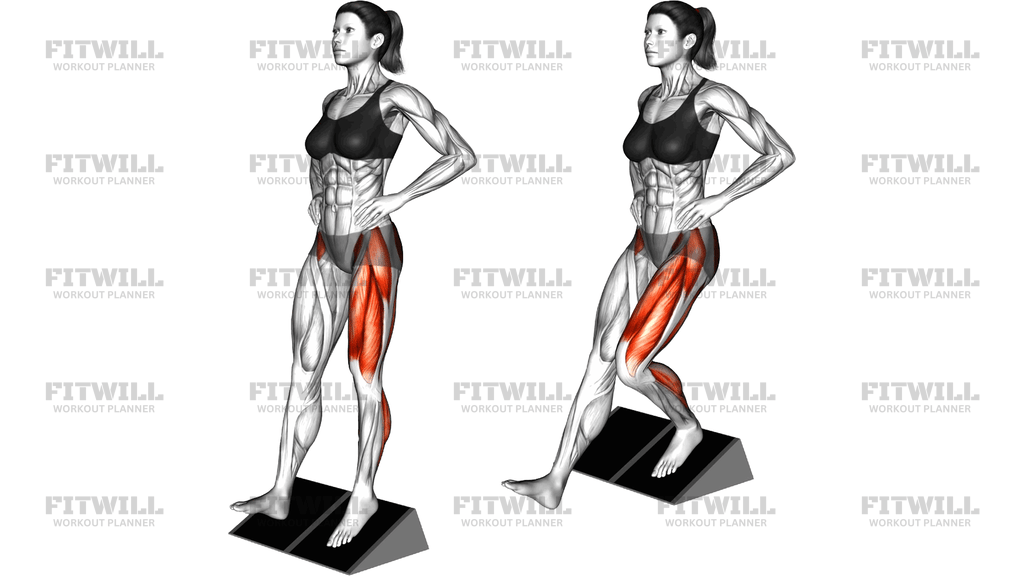
Instructions
- Place a sturdy step platform or low slant board on the floor and stand facing it, about half a foot away.
- Put the ball and mid-foot of one foot flat on the platform and leave the other foot on the floor behind you, with the feet hip-width apart side to side so the base feels stable.
- Set your hands on your hips, or lightly touch a wall or rack nearby if you need balance support.
- Stand tall, brace your abdominals, and keep your chest up and hips square to the front.
- Bend the front knee slowly, letting the knee travel forward over the toes while the rear leg stays straight.
- Lower until the rear heel lightly touches the floor or reaches its lowest point without your front heel lifting.
- Pause for one second at the bottom, keeping the front knee in line with the foot rather than letting it collapse inward.
- Press through the entire front foot to straighten the knee and return to the top, keeping the rear foot where it is.
- Exhale as you rise and inhale as you lower, keeping the descent under control for two to three seconds.
- Complete all repetitions on one leg, then switch legs and repeat on the other side.
Tips & Tricks
- If your front heel lifts off the platform at the bottom, the step is too high — drop to a lower platform so the heel stays planted.
- A knee that dives inward is the most common fault in the Poliquin Step; cue yourself to spread the floor with the front foot and track the knee over the second toe.
- Rushing the descent turns this into a bouncing drill. Count two to three seconds down so the quads, not momentum, control the movement.
- Place your feet hip-width apart rather than heel-to-toe. A tightrope stance makes balance the limiting factor before your quads get challenged.
- Keep your torso upright. Leaning far forward shifts the work toward the hips and reduces the knee-dominant loading this exercise is designed for.
- Only let the rear heel kiss the floor. Slamming the heel down gives a false sense of depth and lets you unload the front leg.
- If balance is shaky, one fingertip on a wall is enough — avoid gripping hard, which pulls your torso out of position.
- Start with a range you can fully control and add depth week by week rather than forcing a deep knee bend on day one.
- Do your weaker leg first and match the repetitions with the stronger leg so side-to-side strength stays even.
Frequently Asked Questions
What muscles does the Bodyweight Poliquin Step work?
The quadriceps do most of the work, with strong emphasis on the vastus medialis just above the inside of the knee. The glutes, hamstrings, and calves of the front and rear legs assist with stability and control.
How is the Bodyweight Poliquin Step different from a regular step-up?
In a regular step-up you drive up onto the platform with both feet finishing elevated. In the Poliquin Step you stay split-stance and lower your rear heel toward the floor, keeping the front knee under continuous tension in a knee-dominant pattern.
How high should the step platform be for this exercise?
Start with a low platform, roughly the height of a weight plate stack or a two-to-four-inch step. The right height lets your front knee bend deeply while your heel stays flat and your knee tracks straight.
Is the Bodyweight Poliquin Step safe for beginners?
Yes, as long as you begin with a low step and a shallow range. Beginners should hold a wall lightly for balance and only lower as far as they can control before progressing.
Why do I feel this on the inside of my front knee area?
The upright torso and elevated front foot place high demand on the vastus medialis, the quad head that stabilizes the kneecap. Mild muscular effort there is the point of the exercise, but sharp joint pain means you should reduce depth or step height.
Can I add weight to the Bodyweight Poliquin Step?
Yes. Once you can control a full range with steady balance, hold a dumbbell in each hand at your sides or a light weight at your chest before adding more repetitions.
Should my rear foot stay on the floor the whole time?
Yes. The rear foot stays planted on the floor with the back leg straight, acting as a kickstand. It only touches down with the heel at the bottom; it never pushes you back up.
How many reps and sets should I do?
Start with two to three sets of eight to twelve controlled reps per leg. Because the movement targets a small stabilizing area of the quad, clean tempo matters more than high rep counts.
What can I use if I don't have a step platform?
A stable low box, a couple of stacked weight plates, or a solid stair will work. Avoid anything that wobbles or slides, since your front foot carries all your weight through the set.