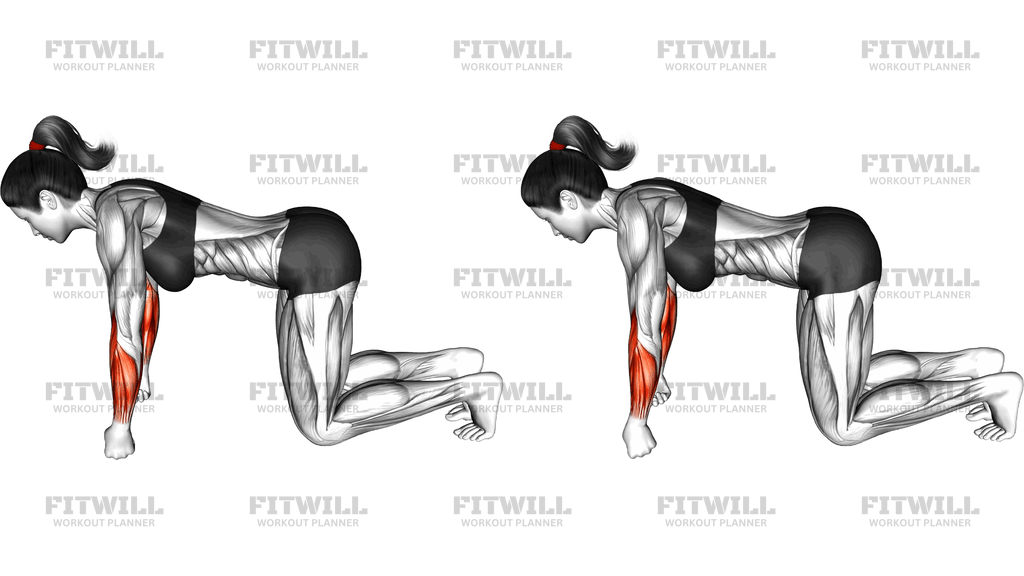
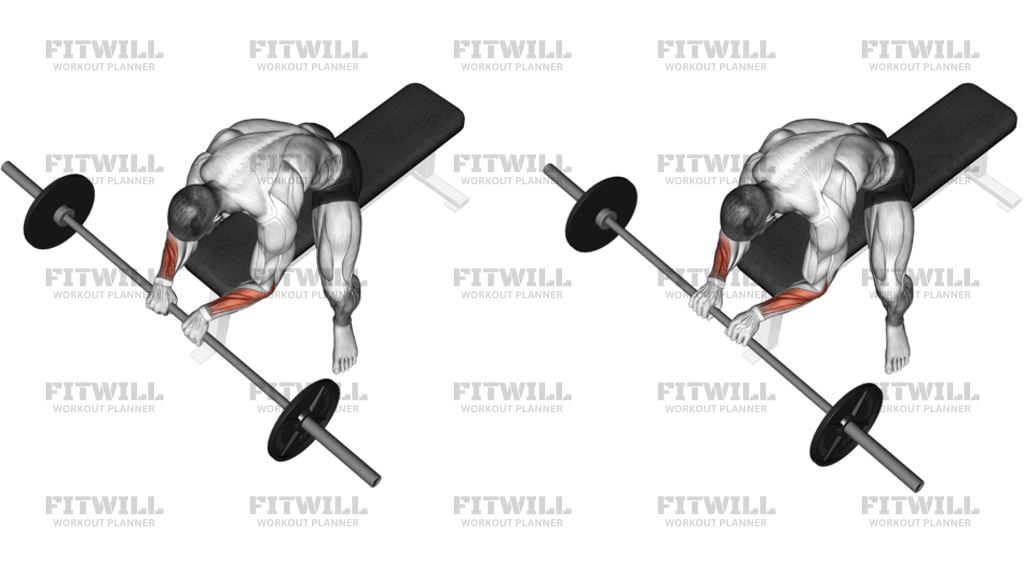
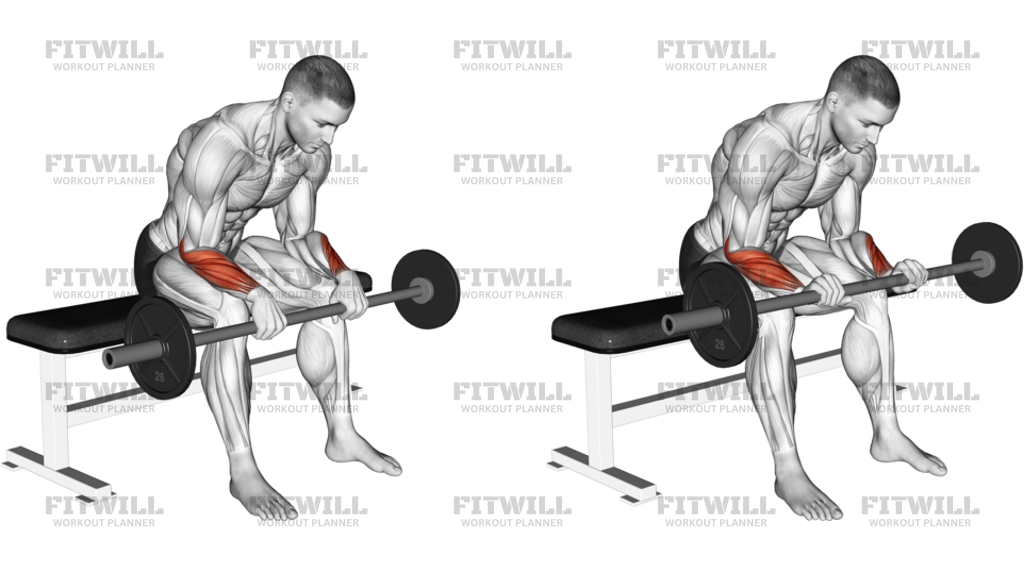
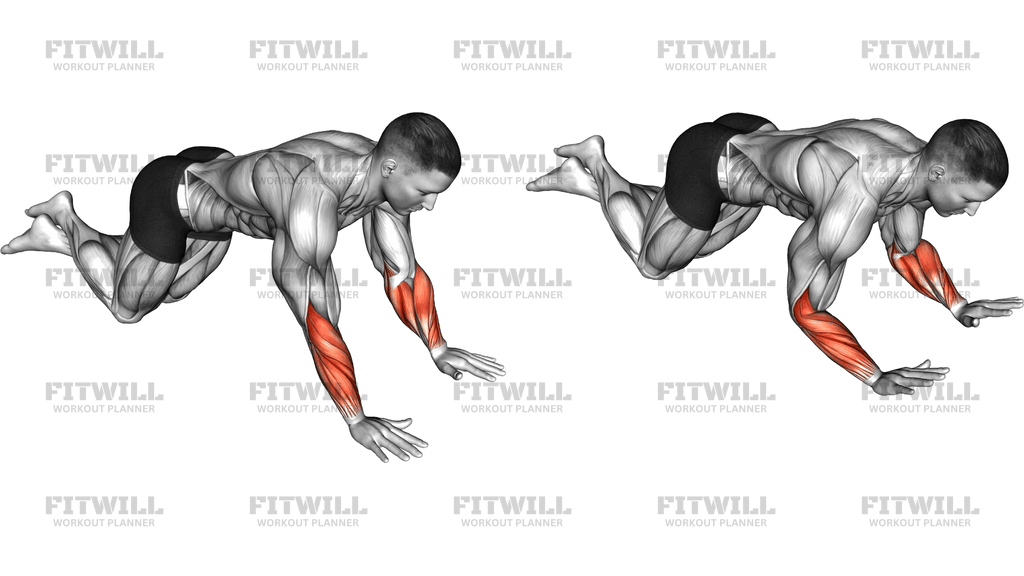
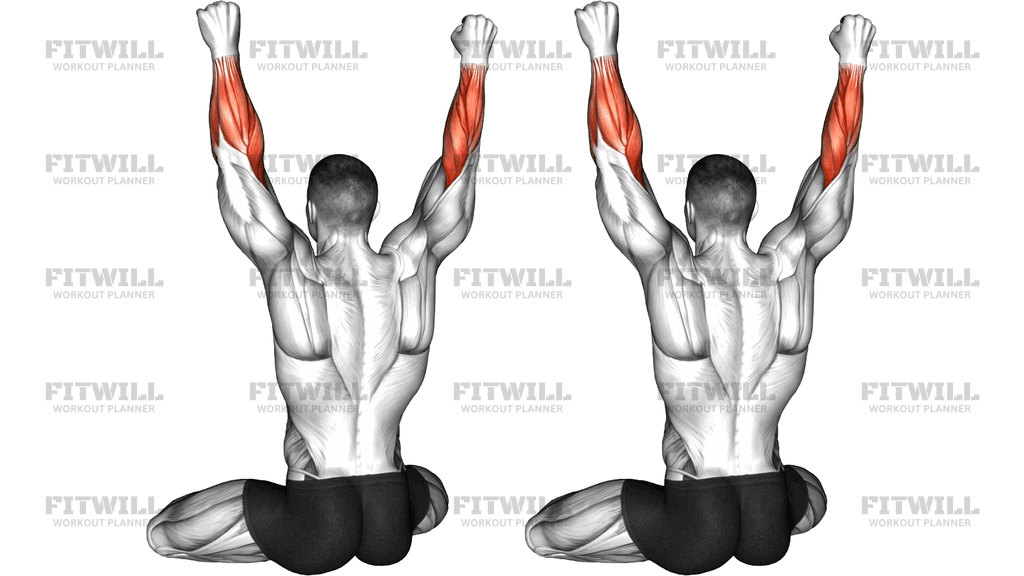
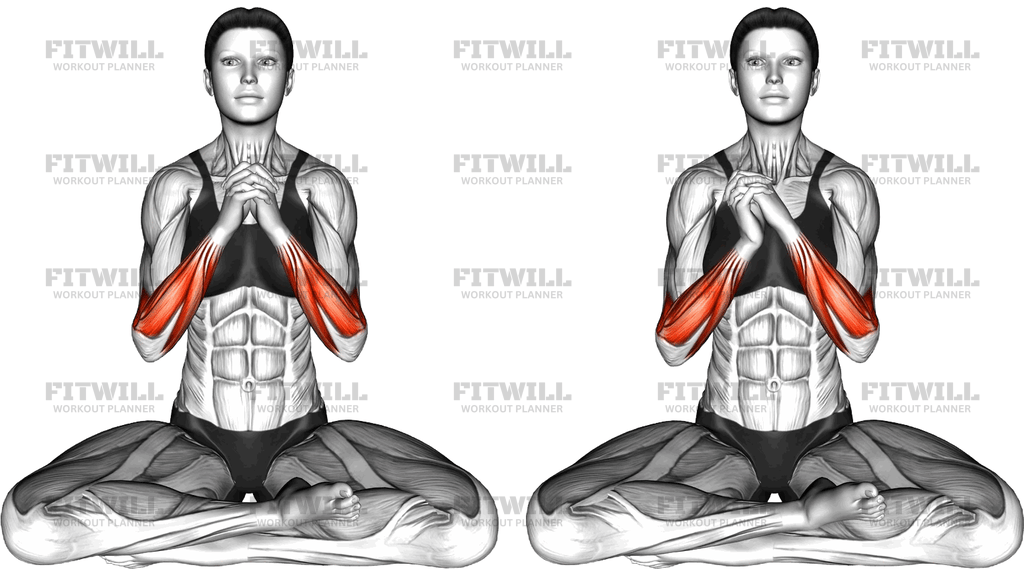
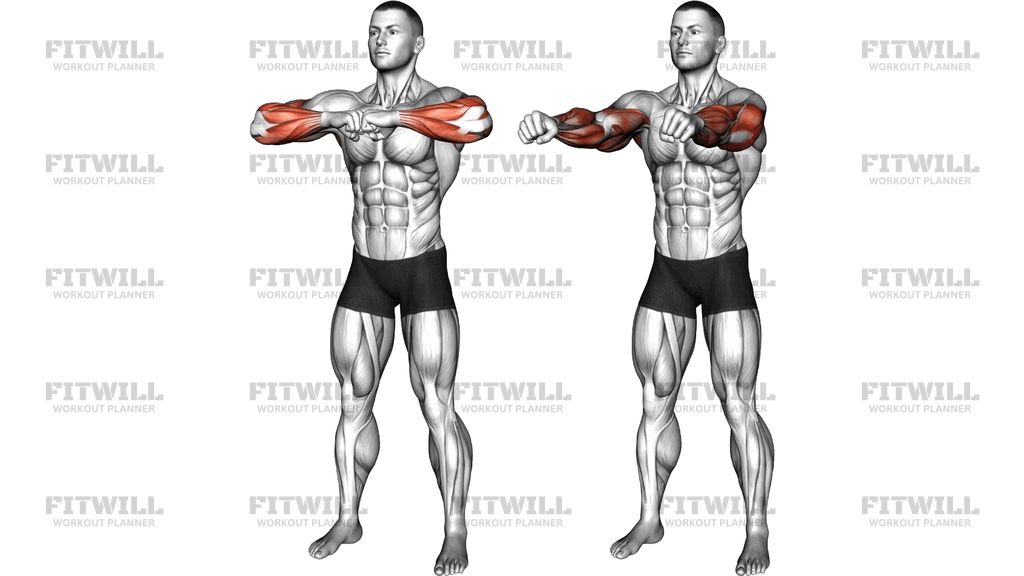
Wrist Extensor Stretch
The Wrist Extensor Stretch is a simple body-weight stretch that targets the muscles running along the top of your forearm, from just below the outside of the elbow down to the wrist. You perform it by extending one arm in front of you with the palm facing down, then using the opposite hand to gently flex the wrist so the back of the hand moves toward the underside of the forearm. It requires no equipment and can be done standing or seated, which makes it one of the easiest stretches to slot into a warm-up, a cooldown, or a mid-day break from typing.
This stretch is especially valuable for anyone whose wrists and forearms take a regular beating. That includes lifters who grip barbells, dumbbells, and pull-up bars; racket-sport players; golfers; climbers; and people who spend long hours at a keyboard. The wrist extensors work hard every time you grip or hold a neutral wrist, and when they get tight, the outside of the elbow often becomes sore and sensitive. Keeping these muscles supple is one of the most practical things you can do for comfortable, strong hands and forearms.
Setup matters more than most people expect. The stretching arm should be straight but not locked, with the palm facing down and the fingers relaxed rather than splayed or clenched. Because the extensors originate near the elbow, keeping that arm extended is what puts the whole muscle group under length. If you let the elbow bend or the shoulder creep up toward the ear, you lose most of the stretch before you even start pulling.
To execute it well, place your stretching hand over the back of the working hand and press down and toward you in a smooth, gradual motion. The sensation should be a clear pull along the top of the forearm and occasionally around the outer elbow, but never sharp pain. Hold the end position for roughly 20 to 30 seconds while breathing steadily, then release slowly and switch arms. Two to three rounds per side is plenty for most people.
A common use case is pairing this stretch with its counterpart for the wrist flexors, since the two sides of the forearm work as a team and tend to tighten together. Doing both after grip-heavy sessions or at the end of a long workday keeps the forearm balanced. If you sit at a desk, setting a reminder to stretch every hour or two can make a noticeable difference in how your wrists feel by the evening.
Two safety points are worth remembering. First, never yank or bounce the wrist into the stretch; the tendons in this area respond far better to slow, sustained pressure. Second, if you currently have elbow or wrist pain that flares with gripping, ease off the intensity and consult a qualified professional before pushing the range further.
[ Workout Log & Planner ]
Put your next workout in Fitwill
Keep your plan and training log ready when you are.


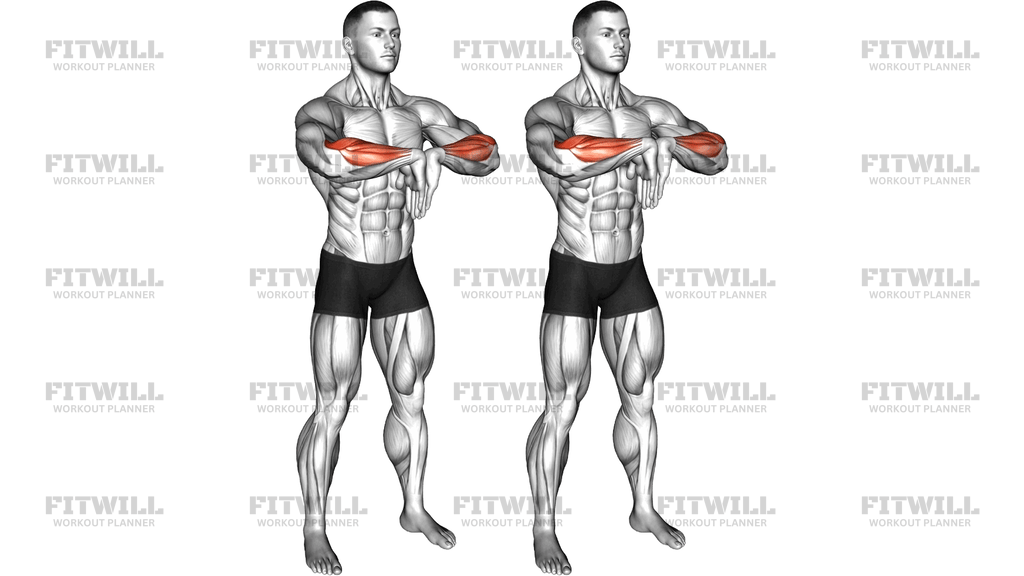
Instructions
- Stand tall with your feet about hip-width apart, shoulders relaxed, and core lightly engaged so your torso doesn't lean as you stretch.
- Extend your right arm straight in front of your chest with the elbow fully but comfortably straight and the palm facing down.
- Keep the fingers of the extended arm soft and together, letting the hand hang naturally rather than forcing it flat.
- Bring your left hand over the back of the right hand so your left palm covers the right knuckles.
- Exhale and use the left hand to pull the right hand down and back toward your body, bending the wrist so the palm turns slightly toward you and the fingertips point toward the floor.
- Stop when you feel a firm, comfortable stretch along the top of the right forearm and near the outer elbow, and hold that position for 20 to 30 seconds.
- Keep the right shoulder down and the arm at chest height the entire time; don't let the elbow bend or drift outward.
- Breathe slowly and evenly throughout the hold, letting the stretch ease slightly on each exhale if it feels intense.
- Release the pressure gradually, return the wrist to neutral, and repeat on the left arm.
- Complete 2 to 3 holds per side, shaking out the hands and wrists between rounds.
Tips & Tricks
- The most common mistake is bending the stretching elbow to make the pull easier; a bent elbow slackens the extensor tendons and kills the stretch, so keep the arm straight from shoulder to wrist.
- Pull from the knuckles, not the individual fingers. Cranking the fingers back one by one stresses the small finger joints instead of lengthening the forearm muscles.
- If you feel the stretch only in the wrist crease, rotate your extended palm slightly toward the floor and re-grip flatter across the back of the hand to move the tension up into the forearm belly.
- Keep the stretch arm at chest height. Holding it too high shrugs the shoulder and too low lets the shoulder roll forward, both of which steal tension from the target muscles.
- Ease in over the first 5 seconds. The extensor tendons are sensitive to sudden loading, and a gradual build-up gets you a deeper, more comfortable end range.
- For a slightly different angle, gently turn the extended palm fully toward the floor and add a small deviation of the wrist toward the pinky side to bias the outer extensors near the elbow.
- Don't clench the stretching hand; squeezing the fingers together while they're being pulled back creates unnecessary joint compression.
- Warm wrists stretch better. If you're doing this first thing in the morning or straight out of a cold car, do 10 to 15 easy wrist circles before stretching.
- Match the hold time on both sides even if one forearm feels tighter; the difference usually evens out over a couple of weeks of consistent stretching.
Frequently Asked Questions
Which muscles does the Wrist Extensor Stretch target?
It primarily lengthens the wrist extensors, the group of muscles along the top of the forearm that includes the extensor carpi radialis and extensor carpi ulnaris. The brachioradialis and tissues around the outer elbow often feel it as well.
Is the Wrist Extensor Stretch good for golfer's elbow or tennis elbow discomfort?
It is commonly used for general forearm tightness and is often paired with the wrist flexor stretch for elbow-area soreness. If you have diagnosed tennis elbow (outer elbow), gentle versions may help; if any stretch reproduces sharp pain, stop and get it assessed.
How long should I hold the Wrist Extensor Stretch?
Aim for 20 to 30 seconds per hold and repeat 2 to 3 times on each arm. If you're doing it after a heavy grip workout, shorter 15-second holds more frequently also work well.
Should I do the Wrist Extensor Stretch before or after training?
It fits both slots. Use a brief, moderate-intensity version in your warm-up to prepare the forearms for gripping, and a longer, deeper hold during your cooldown when the muscles are warm.
Why does my wrist hurt instead of my forearm when I do this stretch?
That usually means you're pulling on the fingers rather than the back of the hand, or you've gone too far too fast. Regrip across the knuckles and back of the hand, reduce the pressure, and build up the range over several breaths.
Can beginners do the Wrist Extensor Stretch?
Yes, it's one of the most beginner-friendly stretches there is. Start with light pressure and a 15-second hold, and let the range improve gradually over a couple of weeks.
Should I do both arms even if only one forearm feels tight?
Definitely. Imbalance between sides is common in racket sports and manual work, and stretching both keeps things even while the tighter side catches up.
What can I use if I can't grip my own hand comfortably for the Wrist Extensor Stretch?
You can press the back of your extended hand against a wall or bench with the fingers pointing down, then lean your body slightly into it. This wall version delivers the same stretch to the top of the forearm without any hand-to-hand grip.
How often should I perform the Wrist Extensor Stretch?
Daily is fine for most people, especially if you type, climb, or lift frequently. On training days, at least one round per side after your session is a good minimum.
Do I need to stretch the wrist flexors alongside the Wrist Extensor Stretch?
It's a smart pairing. The flexors on the underside of the forearm balance the extensors, and stretching both directions keeps the wrist mobile and evenly loaded during gripping tasks.