Seated Fist Pulse
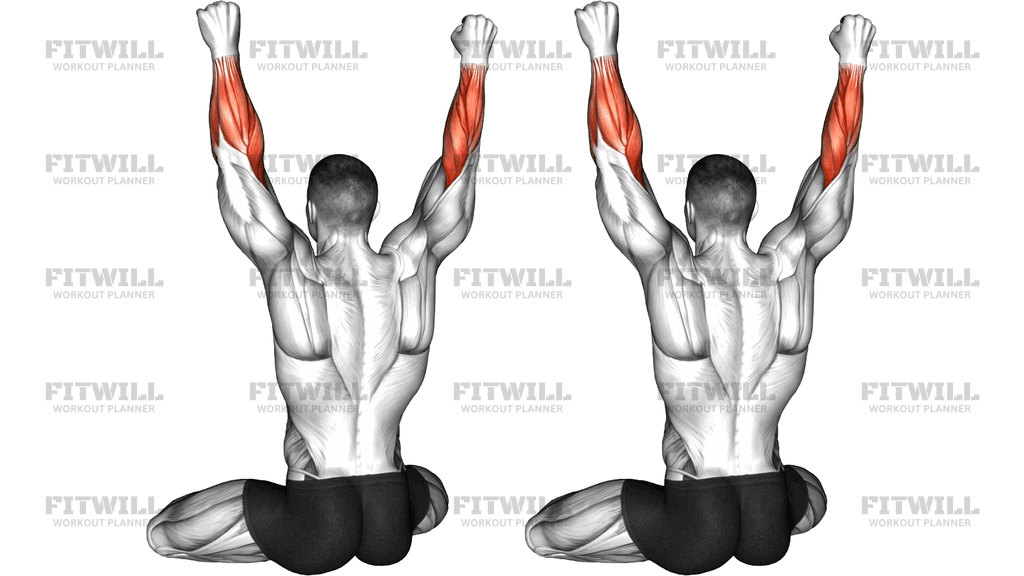
The Seated Fist Pulse is a simple body-weight drill that targets the forearms and grip through small, rhythmic pulsing motions with the arms locked out overhead. You sit on the floor, clench both hands into tight fists, extend your arms straight above your head, and drive repeated short pulses upward from the wrists and forearms. Because there is no external load, all of the work comes from sustained muscular tension, which makes the forearm muscles work hard despite the tiny range of motion.
This movement is especially useful for anyone whose grip gives out before their bigger muscles do. Climbers, martial artists, and lifters who struggle to hold onto a bar during heavy rows or deadlifts all benefit from dedicated forearm work like this. It is also a low-stress option for people recovering hand strength after time away from training, or for office workers who spend long hours typing and want to build endurance in the wrist flexors and extensors without equipment.
The seated setup matters more than it looks. Sitting on the floor with your hips grounded removes momentum from the legs and trunk, so the only way the fists keep rising is through the forearm muscles themselves. If you perform the same pulsing action standing, it is tempting to bounce from the shoulders and cheat the arms. The seated position also encourages a tall spine and stacked shoulders, which keeps the overhead position comfortable and teaches you to hold your arms up without shrugging.
To execute the movement well, keep the elbows locked and the upper arms still while the pulses come from a short, sharp squeeze of the fists and a small drive of the hands upward. The motion is only a few inches at most, and the fists should never drift behind your head or collapse inward. Breathe steadily rather than holding your breath, since breath-holding is a common reflex when the hands are clenched hard for time.
Most people use the Seated Fist Pulse as a finisher at the end of an upper-body session, or as a short standalone pump when the forearms feel tight and underused. Because the tension is self-generated, you can scale the difficulty simply by pulsing for longer, clenching harder, or slowing each pulse down. Stop the set when your fists can no longer stay fully clenched or your arms begin to drop from the overhead position, as these are the first signs the working muscles are spent.
[ Workout Log & Planner ]
Put your next workout in Fitwill
Keep your plan and training log ready when you are.


Instructions
- Sit on the floor with your legs folded beneath you, resting your weight on your heels, and sit up tall through the spine.
- Clench both hands into tight fists and raise your arms straight overhead so the fists point toward the ceiling, slightly wider than shoulder width.
- Pull your shoulders down away from your ears and lock the elbows out fully before starting the pulses.
- Brace your trunk lightly and keep your ribs stacked over your hips so your torso does not lean back as the arms work.
- Drive both fists upward in a short, sharp pulse of a few inches, squeezing the fists harder as the hands rise.
- Let the fists settle back down under control to just below the top position without bending the elbows or dropping the arms.
- Continue the up-and-down rhythm smoothly, keeping the pulses equal on both sides and the upper arms motionless.
- Exhale on each upward pulse and inhale as the hands settle, keeping the breath continuous throughout the set.
- When you finish, open the hands, lower the arms slowly to your sides, and shake out the wrists and fingers before the next set.
Tips & Tricks
- The most common breakdown is elbow drift: as the forearms fatigue, the elbows bend and the pulses turn into small presses. Check that your arms stay fully locked from start to finish.
- If your shoulders creep up toward your ears, the upper traps are taking over. Reset by actively pulling the shoulder blades down before resuming the pulses.
- Clench the fists with real intent. A loose grip turns this into a shoulder endurance drill and robs the forearm muscles of the tension that makes the exercise work.
- Keep the pulses small. If your fists are traveling more than a few inches, momentum from the shoulders is doing the job the forearms should be doing.
- Lean back to rest mid-set rather than letting the arms sink behind your head, or simply end the set. Overhead positions punish sloppy posture once fatigue sets in.
- If kneeling on the floor bothers your knees or ankles, sit cross-legged on a folded mat instead; what matters is that the hips are fixed and the spine stays tall.
- Time your sets rather than counting reps. Because each pulse is tiny, a 20 to 40 second window gives a much clearer picture of forearm endurance than a rep count.
- Open and close the hands fully between sets. Repeated hard clenching without release can leave the fingers stiff and tight for the rest of your session.
Frequently Asked Questions
What muscles does the Seated Fist Pulse work?
The primary work comes from the forearm muscles, including the wrist flexors and extensors, along with the gripping muscles of the hand. The shoulders and upper back work isometrically to keep the arms held overhead.
Why is the Seated Fist Pulse done with the arms overhead instead of at chest height?
Holding the arms overhead forces the shoulders and trunk to stabilize while the forearms work, and it removes the chance to rest the hands on your lap between pulses. The position also trains shoulder endurance that carries over to pressing and carrying.
Is the Seated Fist Pulse suitable for beginners?
Yes. Because the resistance comes only from squeezing your own fists, the load is gentle and easy to regulate. Beginners should start with shorter sets of 15 to 20 seconds and focus on keeping the elbows locked and the fists fully clenched.
How long should each set of the Seated Fist Pulse last?
Twenty to forty seconds per set works well for most people. Stop the set when you can no longer keep the fists tightly clenched or the arms locked overhead, since those are the first signs of forearm fatigue.
Can I do the Seated Fist Pulse every day?
For most people, yes. The self-generated tension is low impact, and forearm and grip muscles generally recover quickly. If your hands or wrists feel sore or stiff the next day, take a rest day and open and close the hands gently to loosen them.
What is the most common mistake in the Seated Fist Pulse?
Bending the elbows and letting the pulses grow large enough that the shoulders start bouncing. Both errors shift the work away from the forearms. Keep the arms rigid and the pulses to a few inches, and stop when that becomes impossible to hold.
Can I substitute the Seated Fist Pulse with wrist curls or gripper work?
Wrist curls and grippers are good alternatives when you have equipment available. The Seated Fist Pulse remains valuable because it also trains overhead shoulder endurance and requires no equipment, making it easy to do anywhere.
My shoulders ache before my forearms fatigue during the Seated Fist Pulse. What should I do?
Your overhead shoulder endurance is likely the limiting factor. Lower the arms slightly, check that you are not shrugging, and shorten the sets. If overhead positions are uncomfortable in general, spend time building basic shoulder mobility before pushing this exercise.
Should I keep my fists clenched the entire set?
Yes. The hard clench is what creates the tension the forearm muscles work against. If your fists loosen mid-set, that is a signal the working muscles are spent and it is time to rest.