Lever Lateral Pulldown (Plate Loaded)
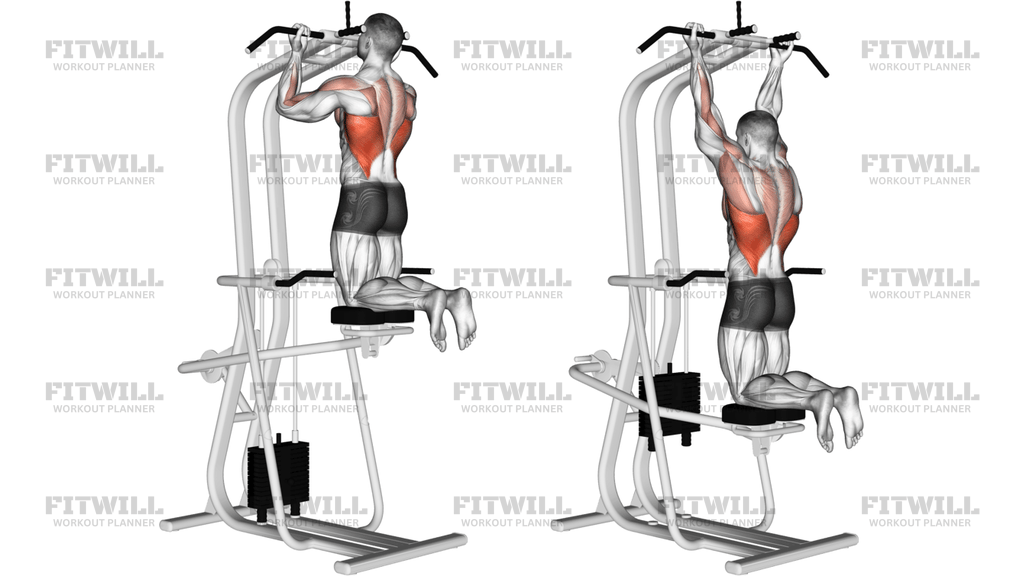
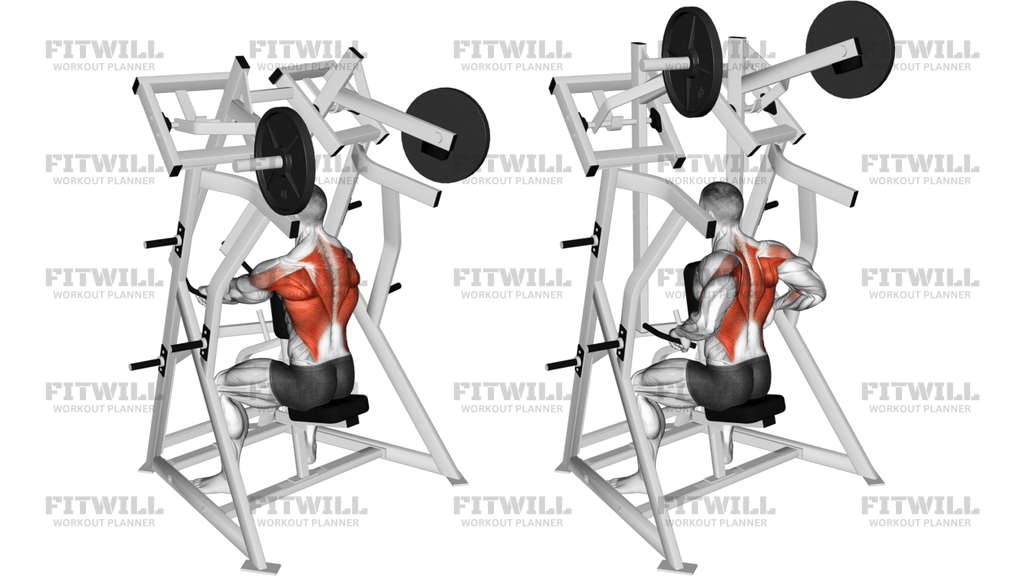
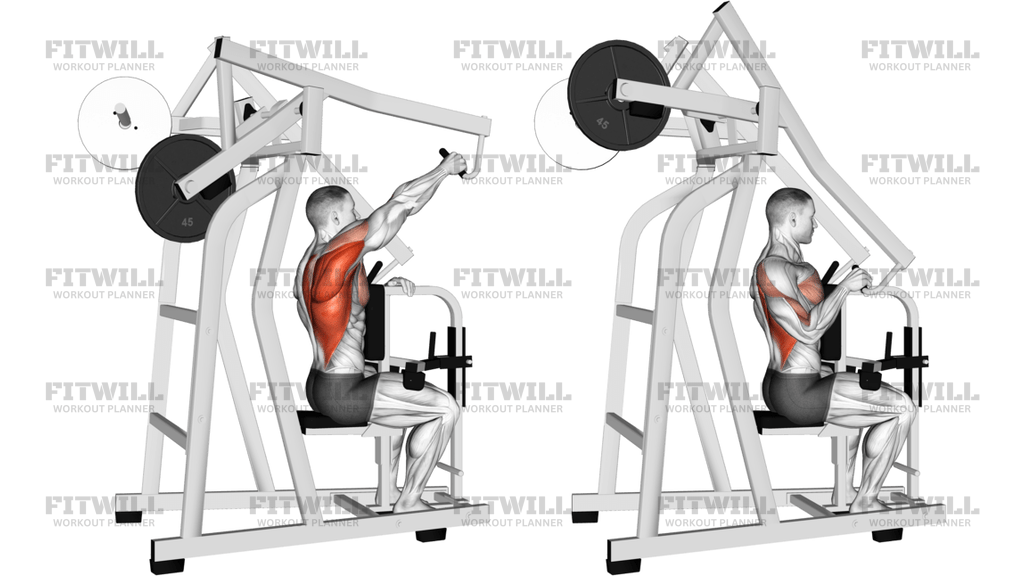
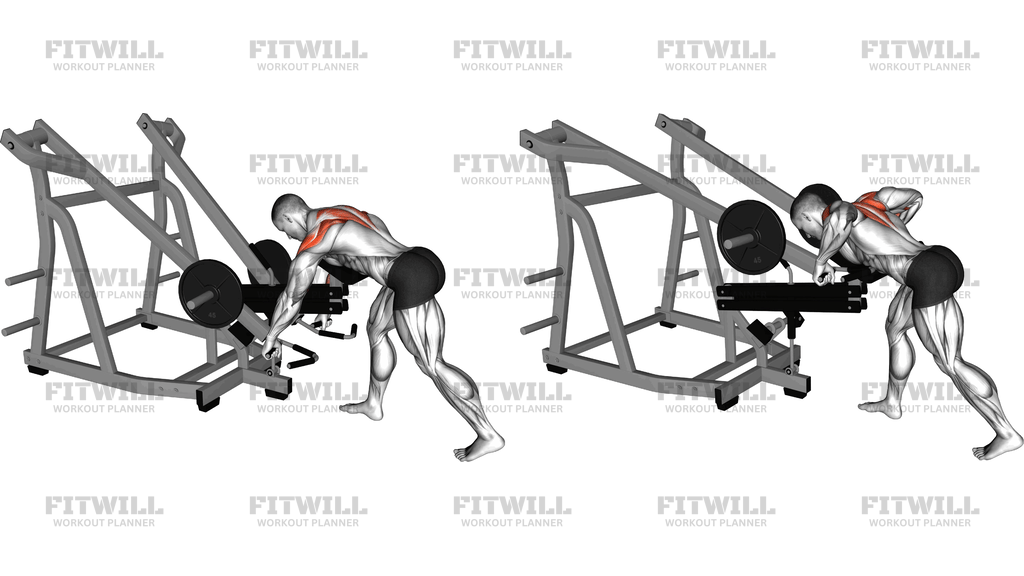
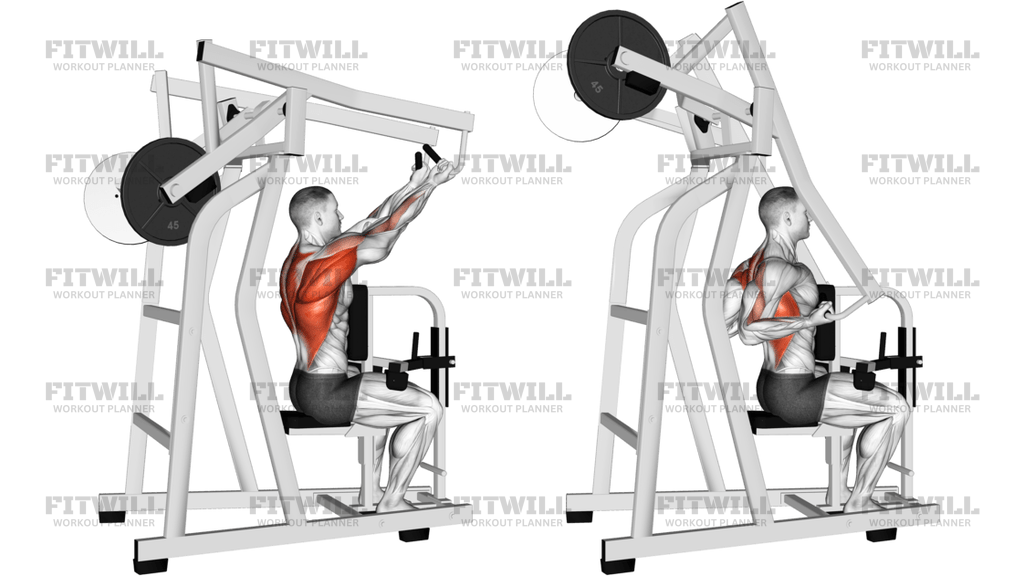
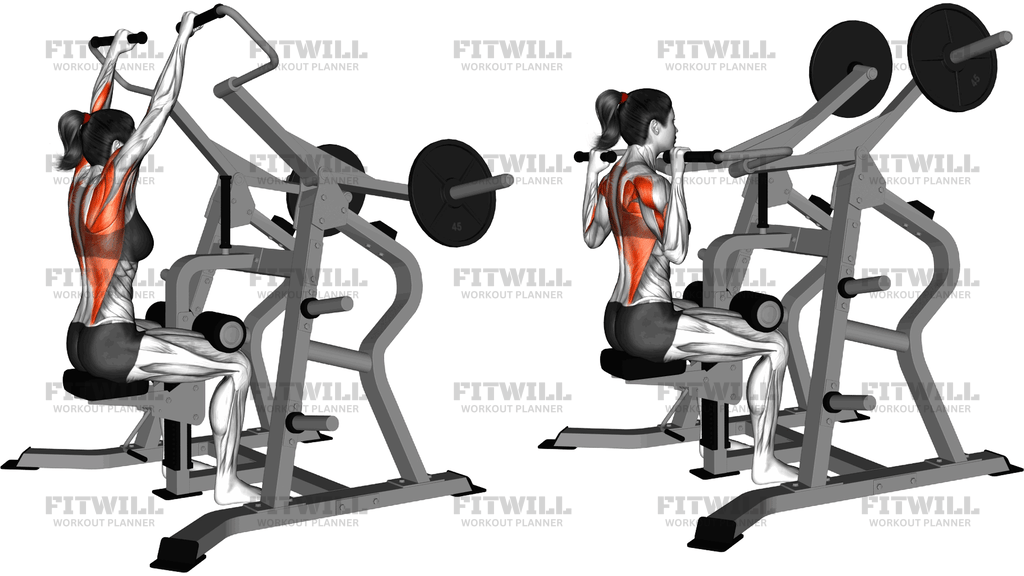
The Lever Lateral Pulldown (Plate Loaded) is a machine-based vertical pull performed on a lever-arm pulldown station that you load with weight plates rather than a selectorized stack. You sit on the built-in seat, anchor your legs under the thigh rollers, and pull two wide overhead handles down along converging paths toward your upper chest. Because the handles ride on fixed lever arms, the movement is stable and predictable, which makes it one of the most reliable ways to train the lats hard without needing the coordination a barbell or bodyweight pull demands.
The primary target is the latissimus dorsi, the large muscle that gives the back its width. Working alongside the lats are the teres major, rhomboids, and middle traps, which pull the shoulder blades down and together as you draw the handles toward you, plus the rear delts and the biceps, which bend the elbows through the pulling portion. This spread of work makes the exercise a solid main pull on back day or an accessible companion to pull-ups and barbell rows.
Setup matters more on this machine than people expect. The seat height determines where the handles track relative to your shoulders, and the thigh pad pressure determines whether your torso stays planted or drifts back as the weight gets heavy. Take a minute to adjust both before your first set: you want the handles reachable with slightly bent elbows at full stretch, and the leg rollers snug enough over your thighs that your hips cannot lift off the seat.
Execution is straightforward but worth doing deliberately. Start each rep from a full overhead stretch, drive the elbows down and slightly out so the handles travel toward your upper chest, pause briefly at the bottom when your shoulder blades are squeezed together, then let the handles rise under control until the lats are fully lengthened again. Keeping the chest up and the lean minimal turns this from a partial arm exercise into a true back builder.
This movement suits a wide range of lifters. Beginners use it to learn the vertical pulling pattern with the safety of a guided path, and experienced lifters use it to push close to failure without a spotter, since there is no bar to get pinned under. It is also a practical option for anyone with grip or shoulder limitations who finds hanging from a pull-up bar uncomfortable, and for bodybuilders looking to add volume to the lats after heavier free-weight pulling.
For safety, keep the weight within a range you can lower slowly for every rep. Dropping the lever arms back to the top with a clatter robs the lats of the stretch portion of the rep and can jar the shoulders at the top end. If you feel the work shifting into your arms or the front of your shoulders, reduce the load slightly and refocus on driving the elbows toward your hips rather than pulling with your hands.
[ Workout Log & Planner ]
Put your next workout in Fitwill
Keep your plan and training log ready when you are.


Instructions
- Sit on the machine's seat and slide your thighs under the round leg rollers so they rest snugly on the tops of your thighs, feet flat on the floor.
- Adjust the seat height so you can reach the wide overhead handles with your arms almost straight and a slight bend in the elbows at the top.
- Load the weight plates evenly on the machine's plate pegs and secure the retaining pin if the machine has one.
- Grip the two angled handles with an overhand, wider-than-shoulder grip and sit tall with your chest lifted.
- Brace your core and lean back only a few degrees, keeping your ribs down and your hips pressed into the seat.
- Pull the handles down along the machine's converging path toward your upper chest, leading with your elbows rather than your hands.
- Continue until the handles reach about collarbone height and your shoulder blades are drawn down and together; pause for a beat.
- Slowly let the handles rise back up, resisting the weight until your arms are extended overhead and the lats are fully stretched.
- Exhale as you pull down and inhale as you return to the top.
- Complete your set, then re-rack or lower the plates safely before standing up from under the thigh rollers.
Tips & Tricks
- Think 'elbows to back pockets' instead of 'pull with your hands' — this keeps the tension on the lats instead of turning the rep into a biceps curl.
- If your torso swings far back as you pull, the load is too heavy or your thigh pad is too loose; add leg pad pressure or drop a plate before your lower back starts doing the work.
- Let the shoulder blades lift slightly at the top of each rep so the lats get a full stretch, then initiate the pull by pulling the shoulders down first.
- Avoid pulling the handles to your stomach — this machine's path is designed for the handles to arrive near your upper chest, and chasing a lower finish rounds the shoulders forward.
- Keep your wrists neutral and stacked over the elbows; bending the wrists back over the handle shifts stress into the forearms at the same grip width.
- Use a one-second pause at the bottom rather than bouncing out of the stretch — the pause is where you will actually feel the lats working.
- Check your seat height before adding plates: if the handles start behind your head or far in front of your face, the seat is off by a notch or two.
- Lower the handles over two to three seconds. A fast, uncontrolled return is the most common reason lifters stop feeling this machine in their back.
- If one side fatigues before the other, watch for a twisting torso; keep both hips on the seat and pull both handles down evenly.
Frequently Asked Questions
Which muscles does the Lever Lateral Pulldown (Plate Loaded) work?
The lats are the main mover, with strong contributions from the rhomboids, middle traps, and rear delts as the shoulder blades pull down and together. The biceps assist by bending the elbows during the pull.
Is this machine a good substitute for pull-ups?
Yes. It trains the same vertical pulling pattern with a fixed path and adjustable load, which makes it especially useful if you cannot yet do bodyweight pull-ups or want to add volume without hanging from a bar.
How wide should my grip be on the handles?
Take the widest comfortable position on the angled handles, roughly outside shoulder width. Going wider than that strains the shoulders without adding meaningful lat work.
Should I lean back while pulling the handles down?
A small, fixed lean of a few degrees is fine and helps you keep your chest up. If your torso rocks backward with every rep, the weight is too heavy or the thigh rollers are not holding you down.
Why do my biceps fatigue before my lats on this exercise?
You are likely pulling with your hands instead of driving your elbows down. Grip more lightly, focus on elbow drive, and consider finishing a couple of sets with a lighter load done purely for lat feel.
How is a plate-loaded lever pulldown different from a cable pulldown?
The lever arms provide a fixed, converging path and a consistent resistance profile, while cables allow more freedom of movement and a slightly different strength curve. Both build the lats well; the machine is simpler to control and progress.
Where should the handles finish at the bottom of each rep?
Around your upper chest or collarbone height, with elbows pointing down and shoulder blades squeezed together. Pulling to the stomach or behind the head changes the path the machine was designed for and can irritate the shoulders.
Can beginners use this machine on their first back session?
Absolutely. Start with a light load you can control for ten to twelve slow reps, focus on the setup steps — seat height, thigh pad contact, chest up — and build the load gradually from there.
Is it safe to do this exercise without a spotter?
Yes, since there is no free bar over your body and the lever arms return under your control. The main safety points are lowering the handles smoothly and releasing the grip carefully rather than letting the arms snap back to the top.
How does this fit into a back workout alongside rows?
Pair it with a horizontal row such as a seated or barbell row: the pulldown builds lat width through vertical pulling, while rows build thickness through the mid-back. Doing the heavier free-weight row first and the machine pulldown second works well for most lifters.