Kettlebell Rear Lunge
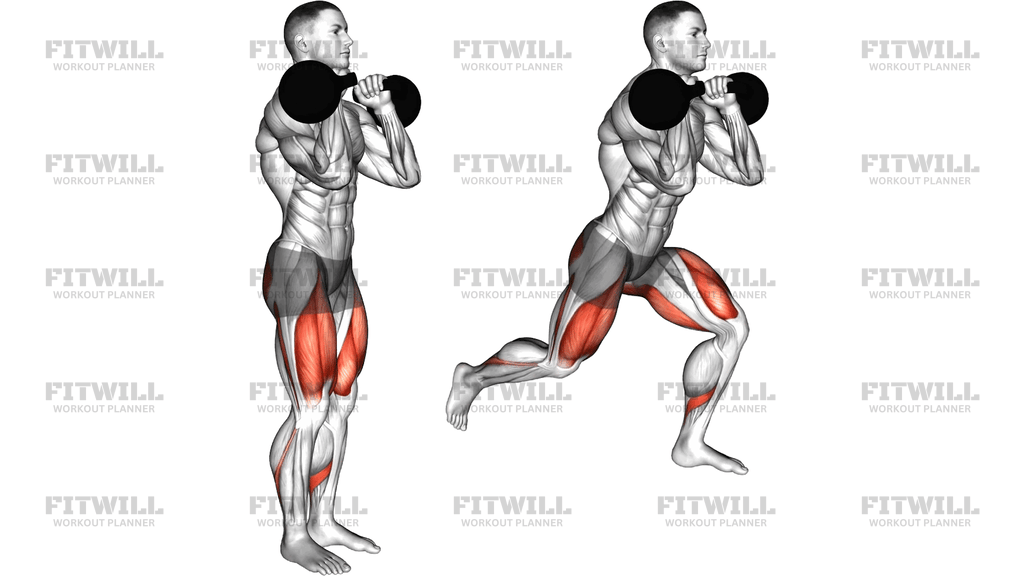
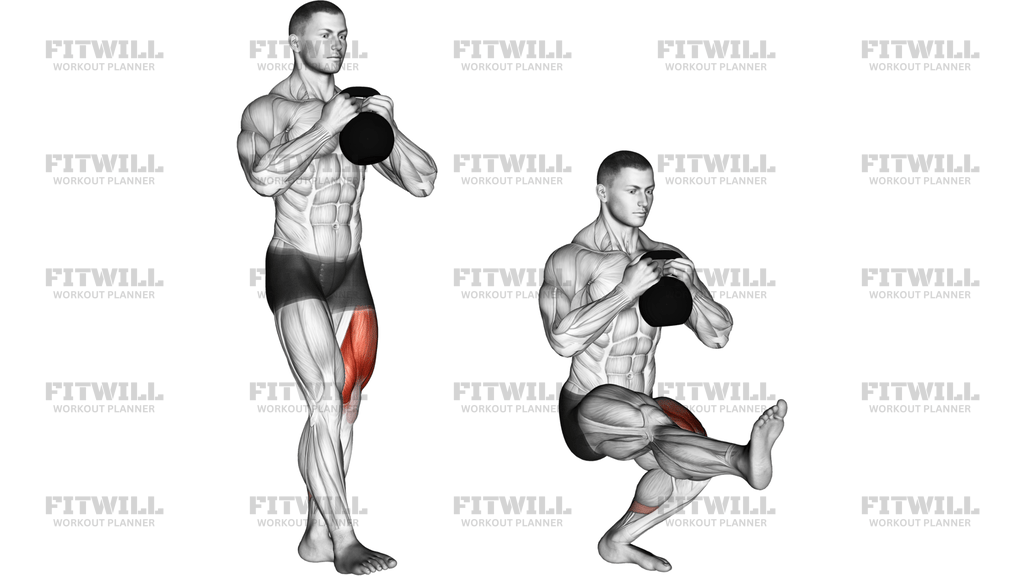
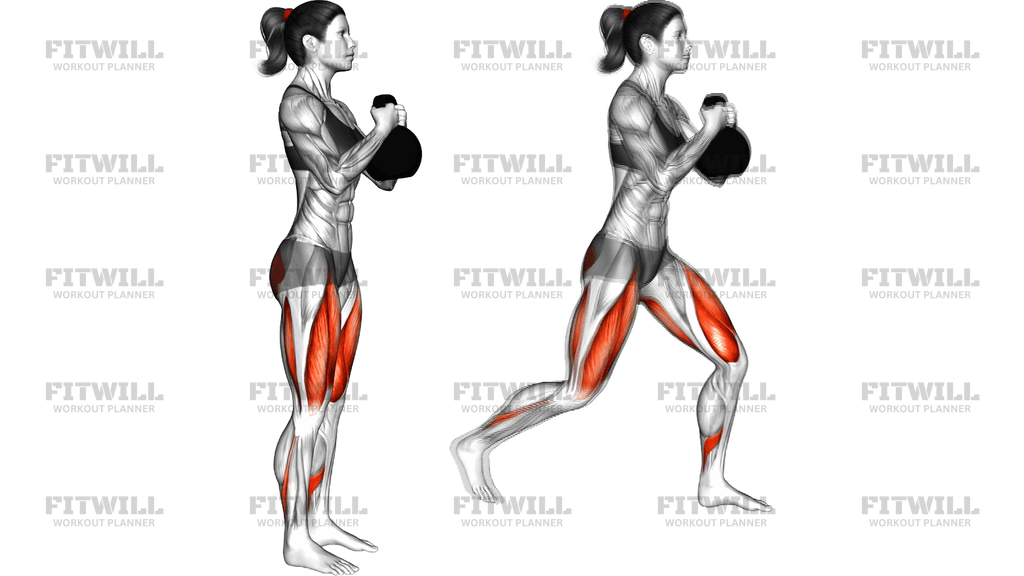
The Kettlebell Rear Lunge is a reverse lunge performed with a kettlebell held at chest height, usually in the goblet position with both hands cradling the bell against your sternum. Instead of stepping forward like a traditional lunge, you step one foot backward, lowering your body until both knees form roughly 90-degree angles, then drive through the front foot to return to standing. Stepping backward shifts much of the braking stress away from the front knee, which makes this version friendlier to the knee joint while still loading the quads, glutes, and hamstrings hard.
This movement suits a wide range of lifters. Beginners appreciate the balance and stability the goblet hold provides, since the weight sits close to your center of mass and helps you feel an upright torso. More experienced trainees use it as a single-leg strength builder, a warm-up for heavier lower body work, or a high-rep conditioning tool. Because each leg works independently, it also exposes and gradually corrects side-to-side strength differences that bilateral squats can hide.
The kettlebell held at the chest does more than add resistance. It acts as a counterbalance that encourages a tall spine and a braced core, and your forearms and grip work the entire time to keep the bell secured. As you lower into the lunge, the front hip, knee, and ankle all flex under load, and the rear leg's hip flexors get a dynamic stretch that many people find valuable for loosening tight hips from sitting.
Setup matters because a reverse lunge rewards accuracy of foot placement. If you step back too narrowly, you wobble; too wide, and you lose depth. Aim for a step back long enough that your front shin stays close to vertical and your back knee can travel toward the floor just behind your hip. Keep your torso upright and let the kettlebell rest against your chest rather than letting it drift away as you descend.
To execute well, think about dropping straight down rather than lunging forward. Lower until the back knee hovers just above the floor, then push the floor away with your whole front foot to stand back up. Control the return so the working leg does the lifting, not momentum. Alternate legs rep by rep, or complete all reps on one side before switching, depending on your goal.
You will see this exercise in strength programs, general fitness classes, and rehabilitation-style lower body routines where knee-friendly unilateral work is needed. The main safety points are simple: keep the front knee tracking over or slightly inside the toes, never let it cave inward, and choose a kettlebell weight you can hold at your chest without your upper back rounding forward.
[ Workout Log & Planner ]
Put your next workout in Fitwill
Keep your plan and training log ready when you are.


Instructions
- Stand tall with your feet hip-width apart and hold a kettlebell by the horns with both hands at your chest, elbows tucked close to your ribs.
- Set your gaze on a fixed point ahead, roll your shoulders back, and take a breath to brace your core before you move.
- Shift your weight onto one foot, then step the other foot straight back onto the ball of that foot, keeping your hips squared forward.
- Bend both knees and lower your hips straight down until your back knee is just above the floor and your front thigh is near parallel to the ground.
- Keep the kettlebell pressed lightly against your chest and your torso upright; avoid leaning over the front leg as you descend.
- Check that your front knee stays stacked over your ankle and points in the same direction as your toes, without collapsing inward.
- Press through the heel and midfoot of the front leg to drive your body back up, pulling the rear foot forward to return to standing.
- Exhale as you rise, then reset your stance, re-brace, and step back with the opposite leg, or finish all reps on one side before switching.
Tips & Tricks
- If you wobble on every rep, your step back is probably too narrow. Step back slightly wider than hip-width so your feet ride on two train tracks instead of a tightrope.
- A common mistake is slamming the back knee into the floor. Lower with control until it hovers just above the ground; the hover, not the tap, is where the rear leg gets its work.
- Do not let the kettlebell drift away from your chest as you fatigue. When the bell pulls you forward, your lower back compensates, so either re-tuck the elbows or use a lighter bell.
- Short steps turn this into a shallow knee-dominant dip. Lengthen the step back until you can reach full depth while keeping the front heel glued to the floor.
- If your front heel lifts as you descend, your stance or mobility is limiting you. Widen your stance slightly and only lower as far as you can with the heel down.
- Alternate legs rep for rep if your goal is balance and coordination; work one side at a time if you want a targeted strength or muscle stimulus.
- Keep the back toes tucked under with the heel high so the rear leg contributes a stable kickstand rather than collapsing flat.
- Squeeze the glute of the moving leg at the top of each rep instead of simply standing up and shuffling your feet together.
- Start with a light kettlebell, even 8 to 12 kilograms, until your footwork is consistent; the balance demand of a rear lunge arrives before the strength demand.
Frequently Asked Questions
Which muscles does the Kettlebell Rear Lunge work?
The quads and glutes of the front leg do most of the work, with the hamstrings and calves assisting. Holding the kettlebell at your chest also keeps your core, grip, and upper back engaged throughout the set.
Why step backward instead of forward for this lunge?
Stepping back places less braking force on the front knee, so the movement generally feels smoother on the knee joint. It also makes it easier to keep your torso upright with the kettlebell at your chest.
How should I hold the kettlebell during the Kettlebell Rear Lunge?
Grip the horns with both hands and rest the bell against your sternum with elbows pointing down and tucked in. This goblet-style hold keeps the load close to your center of mass and helps you stay tall.
How deep should I lower in the Kettlebell Rear Lunge?
Lower until your back knee is just above the floor and your front thigh is at or near parallel to the ground. If depth costs you an upright torso or lifts your front heel, reduce the range until both hold.
Is the Kettlebell Rear Lunge good for beginners?
Yes, and many coaches teach it before the forward lunge because the backward step is gentler on the knees and the chest-held kettlebell acts as a counterbalance. Start with a light bell or body weight only to learn the footwork.
My front knee caves inward on the lunge. How do I fix that?
Slow the descent down and consciously push your knee toward your pinky toe as you lower. Strengthening the glutes with this very exercise, plus a slightly wider step back, usually resolves it over time.
What can I use instead of a kettlebell for this exercise?
A single dumbbell held vertically at the chest works almost identically, and a pair of dumbbells at your sides is another option. With no equipment at all, the body weight reverse lunge remains an effective variation.
Should I alternate legs or complete all reps on one side?
Alternating legs each rep keeps you balanced and symmetric and works well for conditioning. Completing all reps on one side before switching creates a focused strength stimulus and makes it easier to feel each leg working.
How heavy should the kettlebell be?
Choose a weight you can hold at your chest for all your reps without your shoulders rounding or the bell drifting forward. Once your footwork is solid, progress by adding reps before adding load.
Is it safe to do the Kettlebell Rear Lunge every day?
The movement itself is low impact and knee friendly, but your legs still need recovery from loaded work. Two to four sessions per week with rest days between hard sets is a sustainable rhythm for most people.