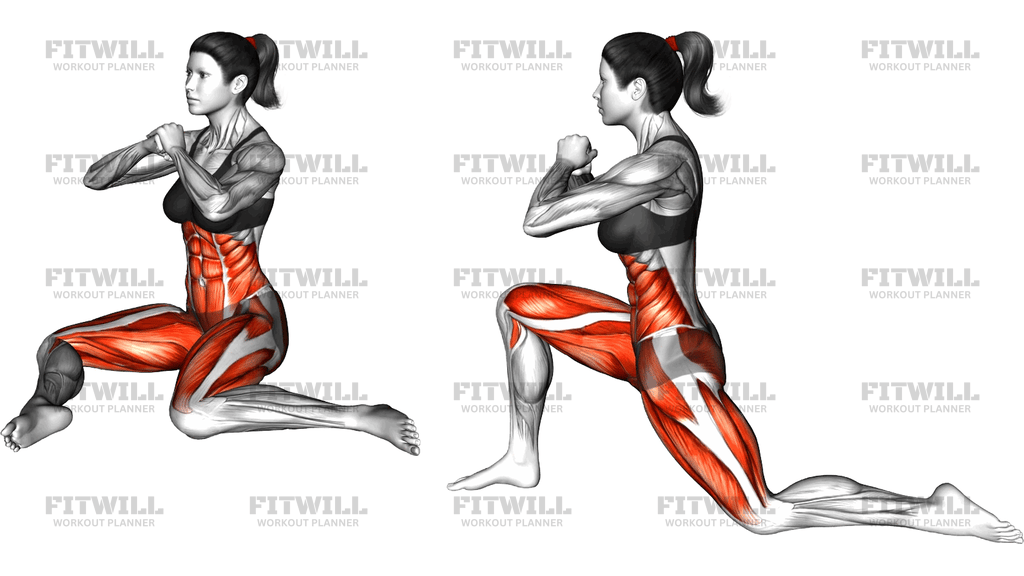
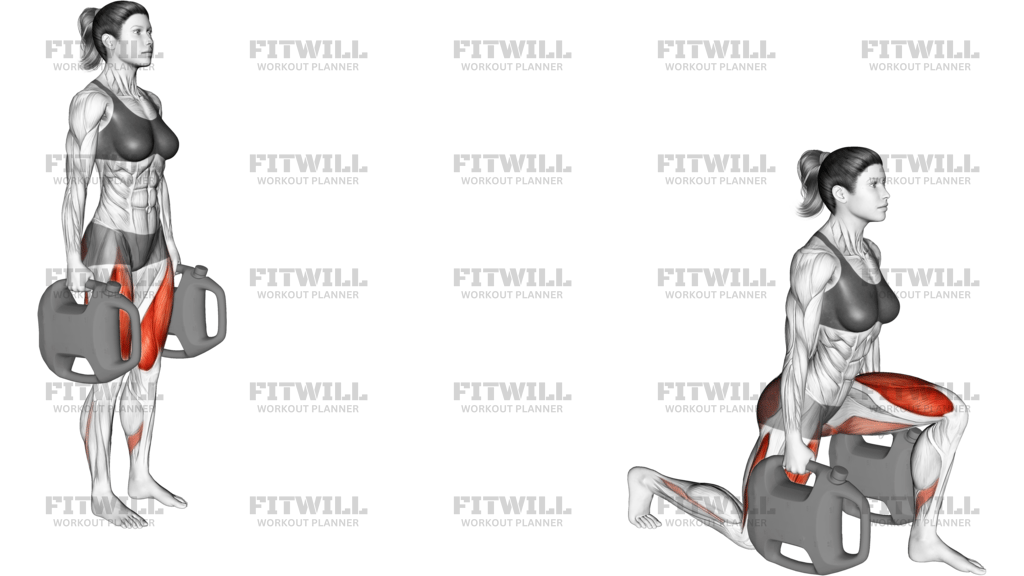
Weighted Sandbag Forward Lunge
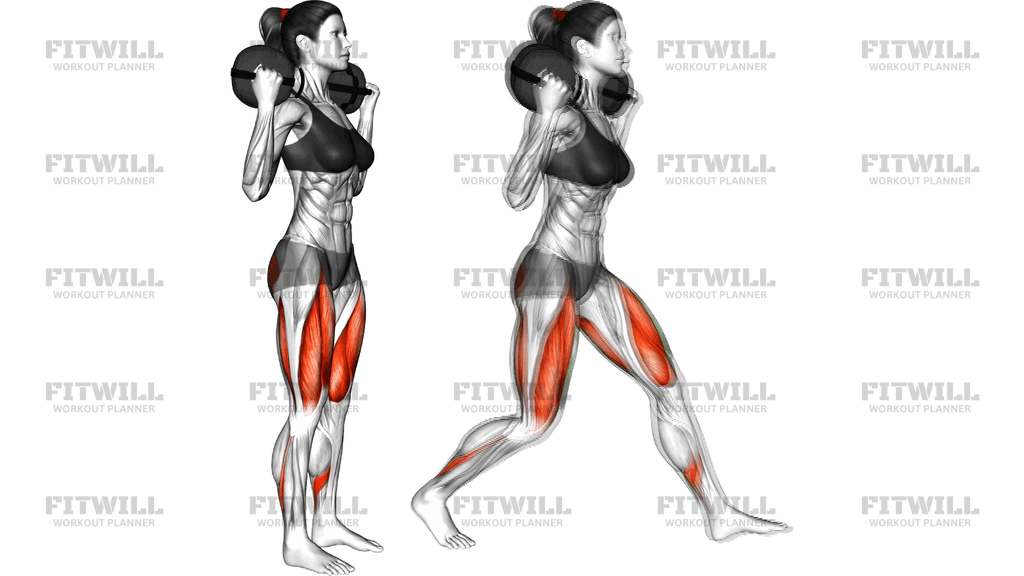
The Weighted Sandbag Forward Lunge is a single-leg strength exercise performed by stepping forward into a long stride and lowering your back knee toward the floor while holding a sandbag across your upper back and shoulders. The sandbag sits behind your neck in a position similar to a barbell back squat, with both hands gripping the handles or the bag itself to keep it stable. This placement loads the spine directly, making the movement noticeably more demanding than a front-held or suitcase-style sandbag lunge.
This exercise is a strong choice for lifters who want to build unilateral leg strength with minimal equipment. Because each leg works independently, it exposes and helps correct side-to-side strength differences that bilateral lifts like squats can hide. The forward step also adds a braking demand: your front leg has to decelerate your body as the foot lands, then drive you back to the start, which challenges the quadriceps through both lowering and pushing phases.
The primary muscles at work are the quadriceps of the front leg, with strong contributions from the glutes and hamstrings as you control the descent and stand back up. The rear leg's hip flexors and the calf of the trailing foot help stabilize through the stride. Holding the bag on your upper back means your core, upper back, and shoulder girdle work the entire time to keep your torso tall and prevent the bag from shifting as you move.
Setup matters more with this variation than with bodyweight lunges. A sandbag is an unbalanced, shifting load, so where you place it on your back determines whether the set feels controlled or like a constant fight against the weight. Rest the bag high on the trapezius muscles, pull your elbows down and in, and stand with feet hip-width apart before you step. A bag that slides to one side will pull your torso with it, so take a moment to center it before every rep.
To perform the movement well, step forward far enough that your front shin stays roughly vertical and your knee tracks over your mid-foot without shooting past your toes. Lower under control until your back knee is just above the floor, then push through the whole front foot to return to standing. Keep your chest up and your gaze forward rather than letting the load fold you over.
In practice, this exercise fits well as a main lower-body lift in home or minimalist training programs, a warm-up or accessory movement for barbell squat days, or a conditioning tool when performed for higher reps or walking sequences. Start with a light bag and prioritize balance and stride length before adding load, since the forward step punishes rushed, sloppy reps more than most lunge variations.
[ Workout Log & Planner ]
Put your next workout in Fitwill
Keep your plan and training log ready when you are.


Instructions
- Center the sandbag across your upper back and trapezius, behind your neck, and grip the bag or its handles firmly with both hands so it cannot slide to one side.
- Stand tall with feet hip-width apart, toes pointing forward, and enough clear floor space ahead of you for a long step.
- Draw your shoulder blades down, brace your abdominal wall, and take a breath to set a rigid torso before you move.
- Step one leg forward into a long stride, planting your whole front foot flat and keeping your torso upright as you transfer weight onto that leg.
- Lower straight down by bending both knees until your back knee is just above the floor, letting the back heel rise naturally.
- Check that your front knee stays stacked over your mid-foot and your chest remains tall rather than collapsing toward the thigh.
- Drive through the heel and mid-foot of the front leg to push your body back up and return the stepping foot to the starting stance.
- Exhale as you step forward and lower, and inhale as you drive back to standing.
- Re-center the sandbag on your upper back, reset your stance, and repeat on the other leg, alternating sides for the desired number of reps.
Tips & Tricks
- If the bag drifts to one side mid-set, your elbows have probably flared out; squeeze them down and inward to create a shelf on your traps.
- A common mistake is stepping too short, which forces the front knee far past the toes and drives you up onto the ball of the foot; lengthen the stride until the shin stays close to vertical.
- Avoid letting the torso lean forward as you lower; the bag behind the neck amplifies any forward collapse, so keep the ribs stacked over the hips.
- Do not slam the back knee into the floor; lower until it hovers just above the ground so the front leg stays under tension and your joint stays protected.
- Alternate legs rep by rep rather than completing all reps on one side if balance is the limiting factor; switch to same-side sets once you are steady.
- Because the sandbag shifts, breathe with a braced torso on each rep instead of holding your breath through an entire set.
- If your front heel lifts during the descent, your stance is too narrow or the step is too short; reset wider and step farther forward.
- Keep your head neutral and eyes forward; looking down at your feet tilts the upper forward and makes the bag slide toward your neck.
- Wipe or clear the floor of any slippery spots before starting, since a planted front foot is critical when loaded from behind.
Frequently Asked Questions
Which muscles does the Weighted Sandbag Forward Lunge target most?
The quadriceps of the front leg do most of the work, with the glutes and hamstrings assisting through the lowering and drive-back phases. Holding the sandbag on the upper back also keeps the core and upper back engaged for the entire set.
Why hold the sandbag behind the neck instead of in front of the chest?
The back-held position loads the spine directly and forces the torso to stay tall without counterbalance, making the legs and core work harder. A front-held bag is easier to balance but reduces the demand on the upper back and trunk.
Is the Weighted Sandbag Forward Lunge suitable for beginners?
Yes, as long as beginners start with a very light bag or master the bodyweight forward lunge first. The forward step requires more balance and braking control than a reverse lunge, so building the unloaded pattern first is a smart progression.
How long should my forward step be?
Step far enough that your front shin stays close to vertical and your knee tracks over your mid-foot at the bottom. A short step pushes the knee past the toes and shifts stress toward the knee joint and the ball of the foot.
What is the most common mistake with this exercise?
Allowing the torso to lean forward as the sandbag shifts, often paired with a too-short stride. Fix it by bracing hard before each step, keeping the elbows pulled down, and lowering with control rather than dropping into the bottom.
Can I do walking lunges instead of stepping back to the start?
Yes, the same back-held sandbag position works for walking lunges. Just bring the rear foot forward into the next stride instead of pushing back to the starting stance, and keep the bag re-centered between steps.
What can I use if I do not have a sandbag?
A barbell across the upper back, two dumbbells at the shoulders, or a single dumbbell or kettlebell held goblet-style are all workable substitutes. The sandbag's shifting nature is part of the challenge, so expect the alternatives to feel more stable.
How do I keep the sandbag from sliding around on my back?
Rest it high on the trapezius, grip the bag or handles firmly, and pull your elbows down and inward so your arms form a shelf. Re-center the bag before every rep rather than trying to correct it mid-lunge.
Is it safe for my knees?
Performed with a controlled tempo, a long stride, and a knee that tracks over the mid-foot, this is generally well tolerated. If you have a current knee issue, reduce the load, shorten the depth, or speak with a qualified professional before training through discomfort.