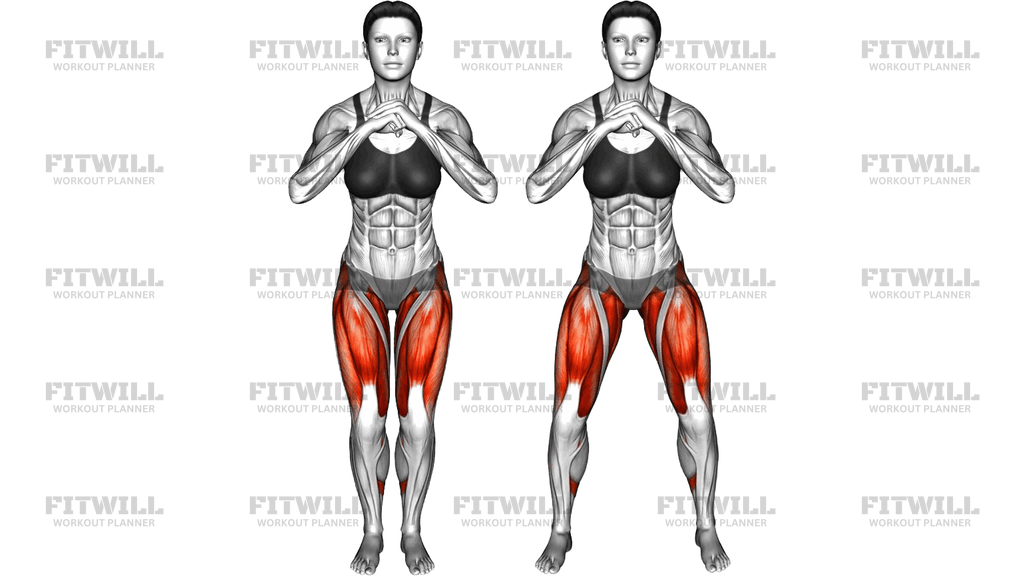
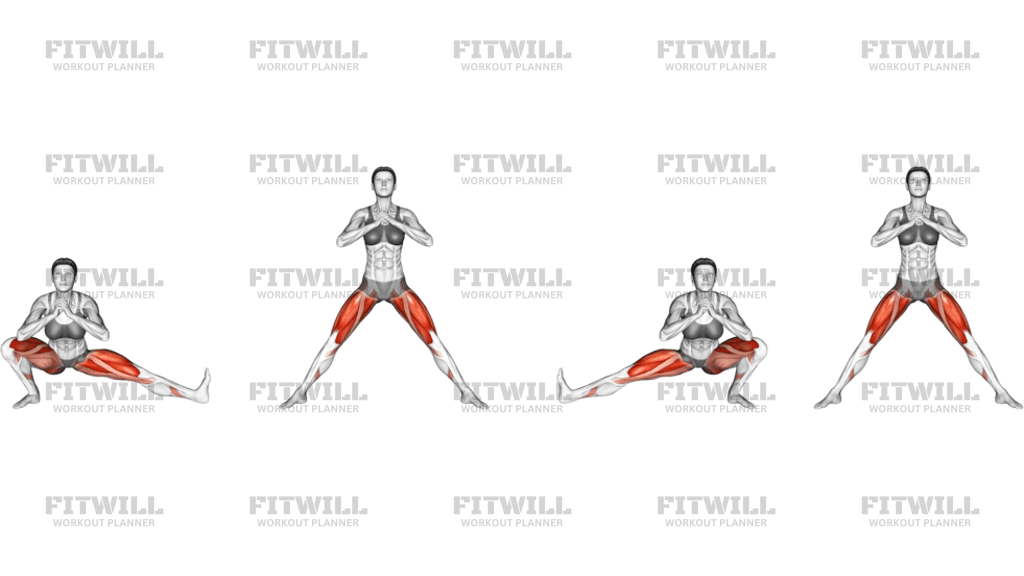
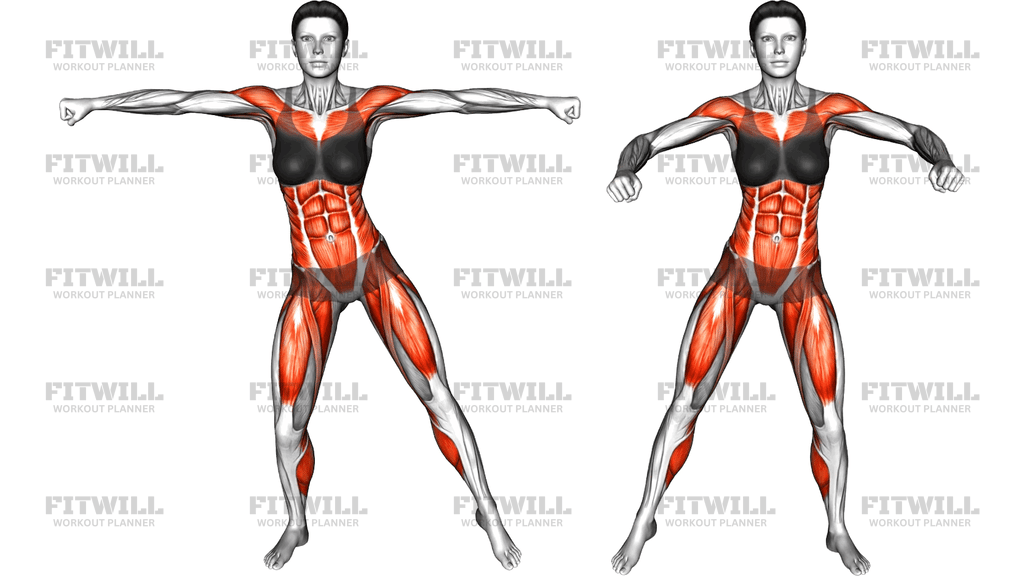
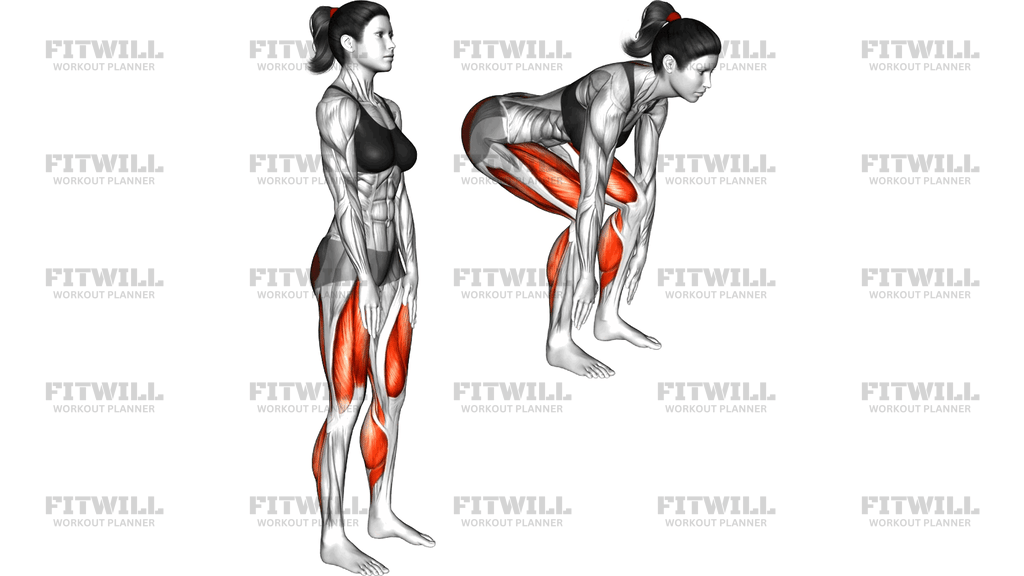
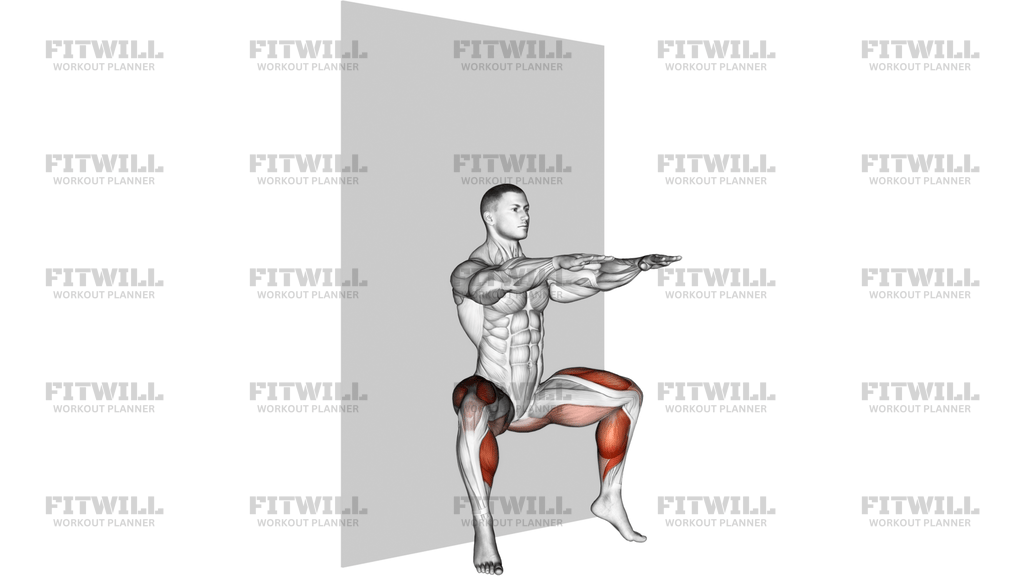
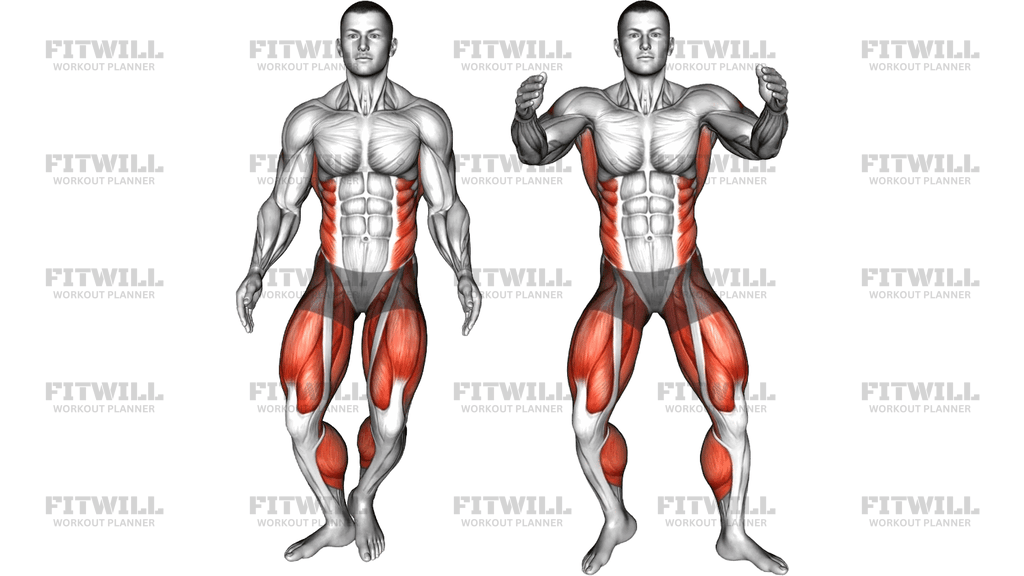
Slight Squat Front Punch
Slight Squat Front Punch is a body weight combination movement that pairs a shallow, wide-stance squat with alternating straight punches thrown from guard position at the chest. One half of the body holds the squat position while the other half extends into a punch, so your legs work isometrically the entire time your shoulders and arms are moving. It looks simple, but the constant hold on the lower body is what makes it surprisingly demanding.
This exercise is useful for anyone who wants to build squat-endurance and upper-body pressing power at the same time without equipment. It fits well into warm-ups, conditioning circuits, boxing-inspired fitness sessions, and fat-loss workouts where you want a full-body effect from a single standing drill. Because the squat is only slight and the punch is unloaded, it is also approachable for beginners who are still learning to brace their trunk and coordinate limbs together.
The main muscles working are the quads and inner thighs, which hold the wide, bent-knee stance isometrically. The glutes support the hip position, the front shoulders and triceps drive each punch, and the abs and obliques rotate the torso and keep the ribs stacked over the pelvis. Holding a stable lower body while the arms move also trains the core's ability to resist unwanted sway, which carries over to punching, throwing, and pressing movements.
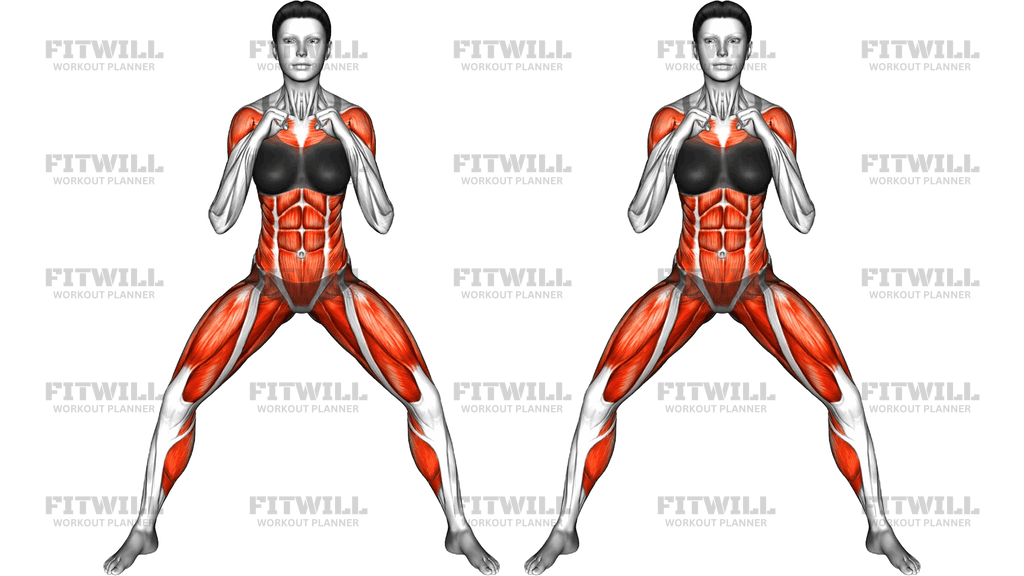
Setup matters more than it appears to. A stance that is too narrow turns this into a different exercise and stresses the knees; a squat that is too deep fatigues the legs before the shoulders get any meaningful work. Feet wider than shoulder width with toes turned slightly out, knees tracking over the toes, and a shallow bend at the hips and knees puts you in the position shown for this movement. Fists start at chin or upper-chest height with elbows tucked close to the body, protecting the shoulders and keeping the punches short and controlled.
To execute it well, sink into the slight squat and stay there. Punch one arm straight out at chest or chin height, rotate the fist so the palm turns downward at full extension, and retract it immediately to guard. Alternate arms with a steady rhythm, keeping the hips level and the torso mostly facing forward — a small rotation from the waist is fine, but the knees should not collapse inward or drift with each punch. Exhale sharply through the mouth on each punch, like a boxer, and breathe in on the retract.
Use Slight Squat Front Punch for time intervals of 20 to 40 seconds rather than counting reps, since the isometric leg hold is the limiting factor. If your knees ache, reduce the width of the stance or the depth of the squat. If your shoulders fatigue first, punch lower and slower, or shorten the interval. As with any standing punch drill, keep the punching hand relaxed until impact extension and never lock the elbow aggressively at full reach.
[ Workout Log & Planner ]
Put your next workout in Fitwill
Keep your plan and training log ready when you are.


Instructions
- Stand with your feet roughly one and a half shoulder widths apart, toes turned out about 15 to 30 degrees.
- Clench your fists and raise both hands to chin height, elbows tucked in close to your ribs in a guard position.
- Push your hips back slightly and bend your knees into a shallow squat, keeping your knees lined up over your toes and your weight spread across the whole foot.
- Brace your abs as if expecting a light tap to the stomach, and keep your chest tall and your gaze forward.
- Exhale sharply and punch one fist straight forward at chin or chest height, rotating the forearm so the palm faces down at full extension.
- Retract the punching hand immediately back to guard while the other arm begins its punch, alternating in a smooth, rhythmic sequence.
- Keep the hips level and the squat depth unchanged throughout — do not rise up, lean back, or let the knees drift inward as the arms move.
- Inhale during the retract phase and exhale forcefully with each punch to keep the breathing steady under the leg hold.
- Continue for the desired time or repetitions, then stand up fully, shake out the legs, and reset your stance before the next set.
Tips & Tricks
- If your knees cave inward as you fatigue, consciously screw your feet into the floor — this recruits the glutes and re-aligns the knees over the toes.
- The most common mistake is standing taller with each punch. Pick a mirror or window reflection and check that your hip height stays exactly the same from the first punch to the last.
- Keep the non-punching hand glued to your face. Dropping the guard hand is a boxing habit flaw that also lets your shoulder roll forward on that side.
- Do not snap the elbow into a hard lock at full extension. Stop the punch just short of full lockout so the joint stays protected at speed.
- If you feel the burn in your thighs before your shoulders, that is correct — the wide isometric hold is the point of the exercise, not a flaw.
- Punch at about 70 to 80 percent speed. Fully relaxed, whip-fast punches are hard to control without a target, especially when your legs are already working.
- Your torso can rotate a few degrees from the waist with each punch, but if your whole upper body is swinging, reduce the punch speed and re-brace the abs.
- Start with 20-second intervals and build up. Most people's quads give out before their arms, and sloppy knee position under fatigue is the main safety risk here.
- Perform this drill barefoot or in flat shoes. Cushioned, unstable soles make the wide static stance harder to hold and blur feedback from your feet.
Frequently Asked Questions
What muscles does Slight Squat Front Punch work?
The quads and inner thighs work isometrically to hold the wide, slightly bent-knee stance, while the front shoulders and triceps drive each punch. The glutes, abs, and obliques stabilize the hips and rotate the torso throughout.
Why does Slight Squat Front Punch use such a wide stance?
The wide stance with toes turned out places the inner thighs and quads under a static hold and gives the hips a stable base, so the torso can rotate slightly with each punch without the knees or pelvis shifting around.
Is Slight Squat Front Punch suitable for beginners?
Yes, because the squat is shallow and there is no load. Beginners should start with 15 to 20 second intervals and prioritize keeping the knees over the toes and the guard hands up rather than punching hard.
How deep should the squat be during this exercise?
Only slight — roughly a quarter of the way down, with a small bend at the hips and knees. If you go much deeper, your legs will fatigue before your shoulders and arms get adequate work, and knee alignment becomes harder to hold.
Should I hold a squat the entire time or rise between punches?
Hold the squat the entire set. Rising up between punches turns the movement into a regular punch drill and removes the isometric leg work that defines this exercise.
How fast should I punch in Slight Squat Front Punch?
Use a controlled, rhythmic pace at about 70 to 80 percent of maximum speed. This keeps the elbows safe at extension and makes it easier to keep the hips and squat depth steady.
What can I use instead of Slight Squat Front Punch if I have knee discomfort?
Narrow your stance slightly, reduce the squat depth, or perform the same alternating punches from a normal standing position. If discomfort persists with any knee bend, consult a qualified professional before continuing.
How should I breathe during this exercise?
Exhale sharply through the mouth with each punch, similar to boxing, and inhale as the hand retracts to guard. This keeps the abs braced and prevents you from holding your breath while the legs are under tension.
How many sets and how long should each set be?
Time-based sets of 20 to 40 seconds work best, for 2 to 4 sets, resting 30 to 60 seconds between them. Because the static thigh hold is the limiting factor, most people benefit from extending the duration gradually rather than adding many sets at once.
Can I add dumbbells or wear weighted gloves for this drill?
Small wrist weights or light weighted gloves are reasonable once your form is consistent, but they increase stress on the elbow at full extension. Keep the punches slower and stop short of lockout if you add any load.