Sit Squat
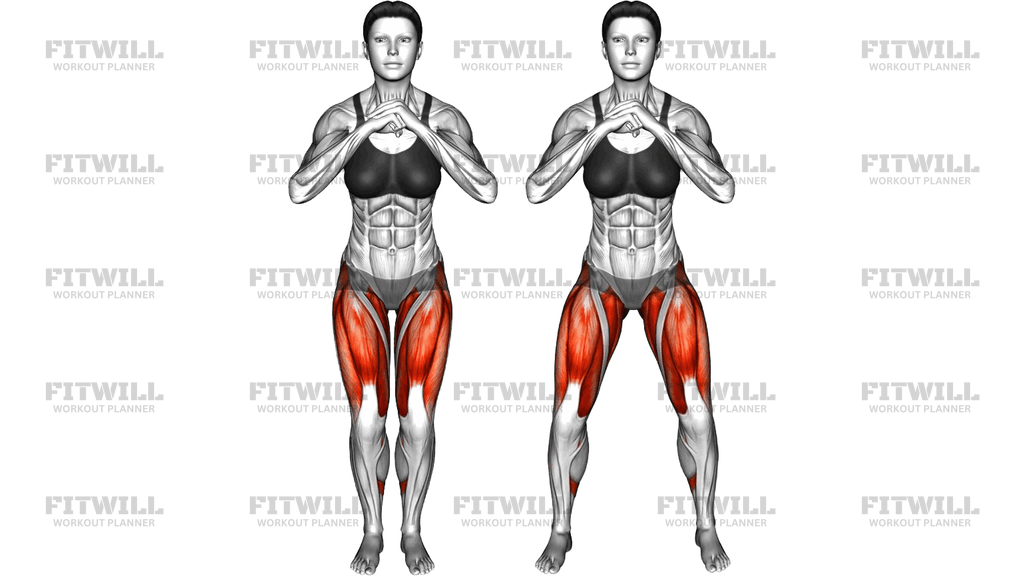
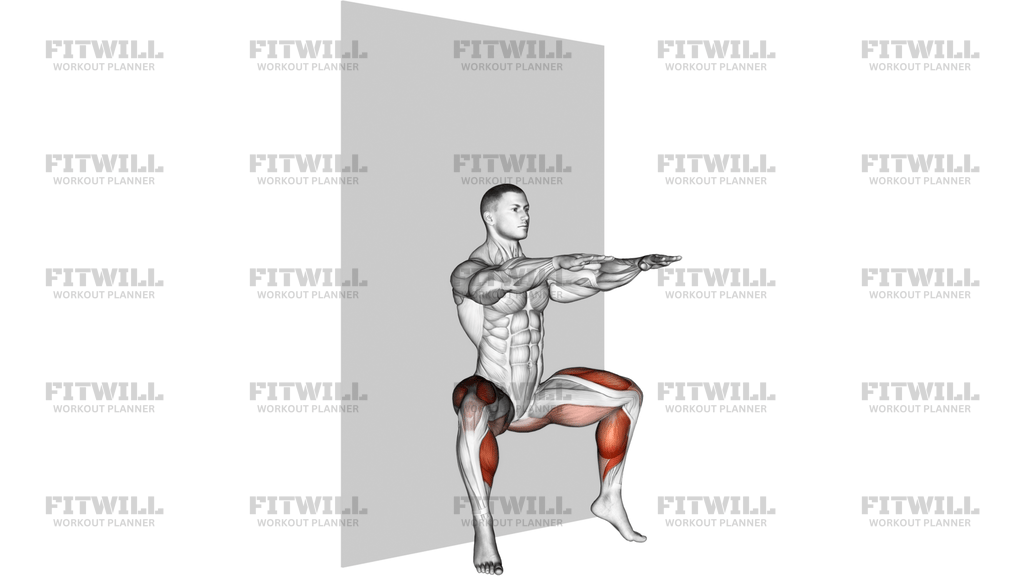
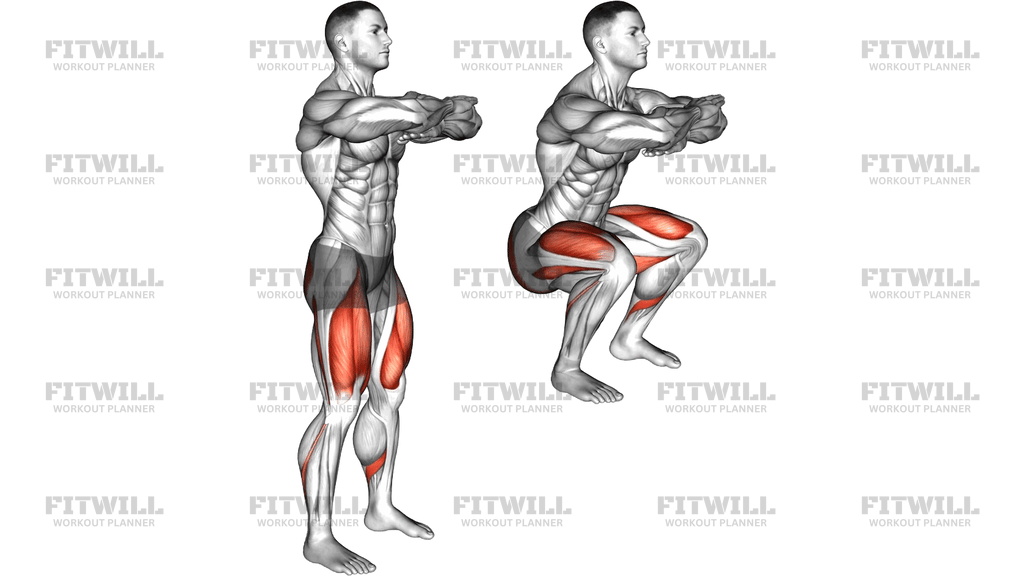
Sit Squat is a bodyweight squat pattern built around sitting the hips down between the feet while keeping the torso organized and the feet planted. The image shows a standard squat with the arms held forward for balance, which helps counter the bodyweight shift as you descend and makes it easier to stay upright through the mid-range. It is a simple exercise on paper, but the quality of each repetition depends heavily on stance, depth, and how well you control the descent.
The main training emphasis is on the thighs, especially the quads, with glutes, adductors, calves, and trunk muscles helping to stabilize and drive the movement. That makes Sit Squat useful for general lower-body strength, warmups, bodyweight training, and conditioning work when you want a squat pattern without external load. Because the exercise uses your own body as resistance, the goal is not to force depth at any cost; it is to move smoothly through a range you can own.
The setup matters. A stance that is too narrow can make balance and depth difficult, while a stance that is too wide can turn the movement into a hip-dominant hinge. The best version usually starts with feet about shoulder-width apart, toes slightly turned out, weight distributed across the whole foot, and the arms extended forward. From there, you lower by bending the knees and hips together, keeping the chest lifted and the knees tracking in the same direction as the toes.
At the bottom, the hips should sit as low as your mobility and control allow without the heels lifting, the lower back rounding sharply, or the knees collapsing inward. On the way up, drive the floor away through the midfoot and heels and stand tall without leaning back or locking the knees hard. Breathing should stay steady: inhale on the way down, brace lightly through the bottom, and exhale as you stand.
Sit Squat works best when you treat every rep as a clean practice of the squat pattern rather than a speed drill. It is especially useful if you want to reinforce posture, leg drive, and lower-body control before moving to weighted squats or more advanced variations. If the movement feels unstable, shallow the depth, slow the tempo, and keep the arms forward until the path feels smooth and repeatable.
[ Workout Log & Planner ]
Put your next workout in Fitwill
Keep your plan and training log ready when you are.


Instructions
- Stand tall with your feet about shoulder-width apart and your toes turned slightly out.
- Extend both arms straight forward at shoulder height to help counterbalance the squat.
- Plant your whole foot on the floor and keep your weight centered over the midfoot.
- Brace your trunk lightly, then start the descent by bending the knees and hips together.
- Sit your hips down and back between your heels while keeping your chest lifted.
- Let the knees travel in line with the toes instead of collapsing inward.
- Lower until your thighs reach a comfortable depth without the heels lifting or the lower back rounding hard.
- Drive through the midfoot and heels to stand back up, finishing tall without leaning backward.
- Inhale on the way down, exhale as you rise, and repeat for the planned reps.
Tips & Tricks
- Think about sitting between your heels, not folding your torso over your thighs.
- Keep pressure on the big toe, little toe, and heel so the foot stays stable.
- If your knees drift inward, slow the descent and cue them out over the second toe.
- Use the outstretched arms as a counterbalance instead of swinging them for momentum.
- A slightly wider stance often makes the bottom position feel more natural.
- Stop the rep when your heels start to peel up or your pelvis tucks under sharply.
- A slower lowering phase makes it easier to keep the torso and knees in the right path.
- If depth is inconsistent, use a box or target height as a temporary range guide.
Frequently Asked Questions
What muscles does Sit Squat work most?
The quads do most of the work, with the glutes, adductors, calves, and core helping stabilize and drive the squat.
Why are the arms held forward in the squat image?
The arms act as a counterbalance so you can stay more upright and control the descent more easily.
How deep should I go in Sit Squat?
Go as low as you can while keeping the heels down, the knees tracking well, and the lower back controlled.
What stance works best for this bodyweight squat?
Start around shoulder-width with the toes slightly turned out, then adjust until the squat feels balanced and comfortable.
Is Sit Squat suitable for beginners?
Yes. It is one of the easiest squat patterns to learn, especially if you keep the range shallow at first and move slowly.
What is the most common mistake in Sit Squat?
Letting the knees cave inward or losing foot pressure at the bottom are the biggest form breakdowns.
What should I do if my heels lift?
Widen the stance slightly, turn the toes out a bit more, and reduce the depth until the full foot stays planted.
How can I make Sit Squat harder without adding weight?
Slow the lowering phase, add a pause near the bottom, or use a deeper, cleaner range while keeping the same mechanics.