Kettlebell Incline Row
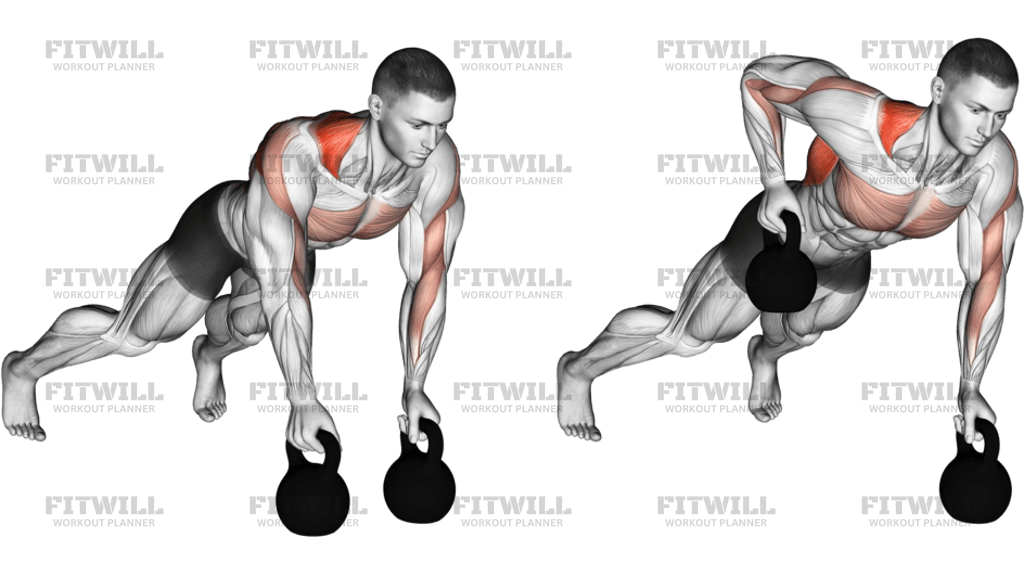
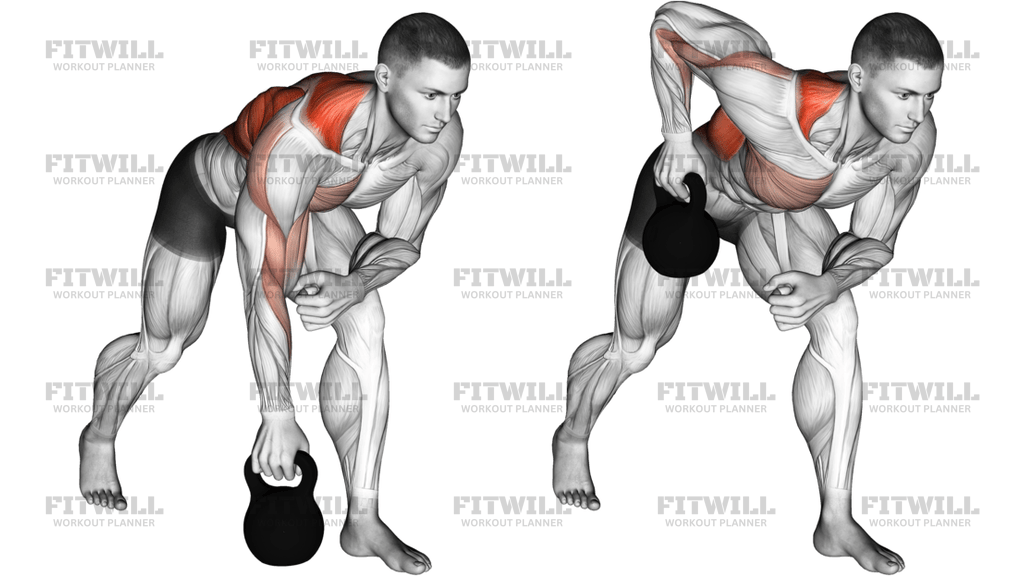
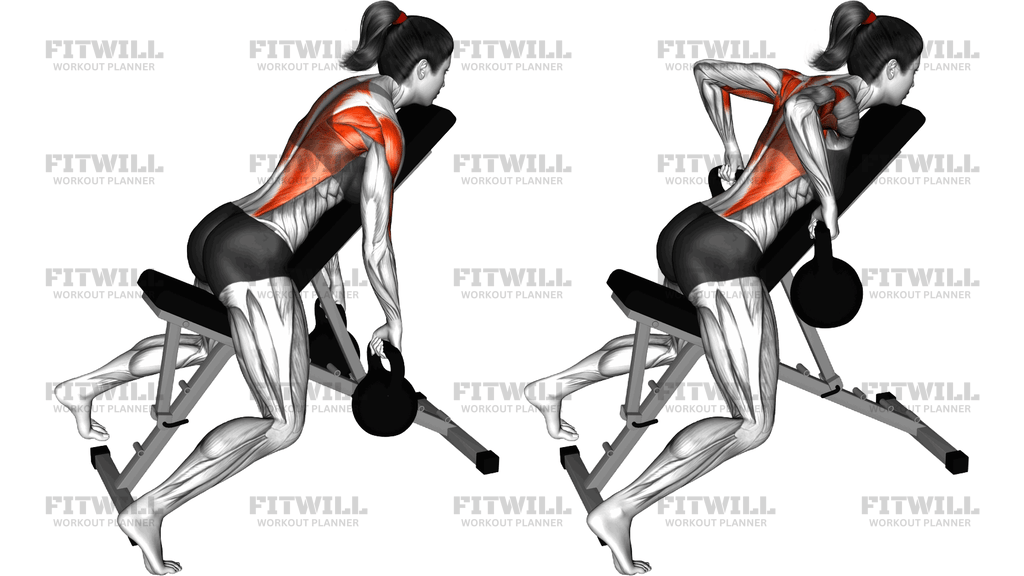
The Kettlebell Incline Row is a chest-supported rowing exercise performed while lying face down on an incline bench, pulling a kettlebell from a hanging position up toward your ribs. Because the bench supports your torso at an angle, your lower back and core no longer have to hold you upright the way they do in a bent-over row, which lets you focus entirely on driving the elbow back and squeezing the shoulder blade. The kettlebell adds a slightly different feel than a dumbbell: the handle sits above the bell, so the weight hangs a touch lower and pulls the arm into a long, loaded stretch at the bottom of each rep.
This setup makes the movement a strong choice for anyone whose lower back fatigues before their upper back does during traditional rows. Lifters recovering from heavy deadlift or squat days, beginners who have not yet learned to brace a bent-over position, and intermediate to advanced trainees looking for focused back volume all benefit from the chest-supported position. It is also a useful way to address side-to-side differences, since each arm works on its own with no chance of the stronger side taking over.
The primary work comes from the lats and the muscles that pull the shoulder blade back and down, mainly the rhomboids and mid-traps, with the rear delts and biceps assisting on the pull. Your grip works hard the entire set, because the kettlebell handle demands active squeezing, and the back foot and trailing leg stay engaged to keep your body planted on the bench.
Setup matters more here than in most rowing variations. The bench angle should be steep enough that when you press your chest into the pad, your arm hangs fully straight toward the floor without the kettlebell touching the ground or resting against the bench frame. Your chest should stay glued to the pad for every rep; if your torso starts lifting or twisting, the weight is too heavy and the row stops being chest-supported. A slight external rotation of the pulling arm, with the elbow tracking close to the body, keeps the shoulder in a comfortable path.
To execute the row well, think of pulling the kettlebell toward your lower ribs rather than straight up toward your shoulder. Lead with the elbow, pause briefly when the handle reaches your side, and lower the bell under control until the arm is long again. Avoid letting the weight swing or using momentum from the legs.
In practice, this exercise slots into pull days as a secondary back movement after heavier compound lifts, or into hypertrophy blocks where strict, controlled reps matter more than maximum load. Moderate weights in the 8 to 15 rep range per side tend to work best, and pairing sides or alternating arms keeps the set efficient.
[ Workout Log & Planner ]
Put your next workout in Fitwill
Keep your plan and training log ready when you are.


Instructions
- Set an adjustable bench to roughly a 30 to 45 degree incline and place a kettlebell of your chosen weight on the floor beside the low end of the bench.
- Straddle the bench facing the pad and lie face down so your chest and upper abdomen are supported, with your legs extended behind you and the balls of your feet on the floor for stability.
- Reach down with one hand and grip the kettlebell handle with a firm overhand grip, letting the arm hang fully straight toward the floor; shift your body on the bench until the bell clears both the floor and the bench frame.
- Rest your free arm and the side of your head on the top of the pad, and gently brace your stomach to settle your torso firmly against the bench.
- Exhale and pull the kettlebell up by driving your elbow back and up toward your hip, keeping it close to your torso rather than flaring it wide.
- At the top, the handle should be near your lower ribs and your shoulder blade pulled back and down; hold that position for a beat without lifting your chest off the pad.
- Inhale as you lower the kettlebell in a slow, controlled line until your arm is straight and you feel a mild stretch across the upper back.
- Complete all repetitions on one side, then switch the kettlebell to the other hand and match the rep count.
- When finished, set the kettlebell down on the floor before swinging your leg off the bench to stand up.
Tips & Tricks
- Pick a bench angle that lets your arm hang vertical with the kettlebell fully clearing the floor at the bottom; if the bell scrapes the ground, the angle is too shallow or the bench needs repositioning.
- The most common fault is turning the row into a back extension: the chest peels off the pad as the load gets heavy. If this happens, drop the weight and imagine pressing your sternum into the pad throughout the set.
- Do not shrug the kettlebell up with your upper trap. If you feel the pull creeping into your neck, start each rep by lightly drawing the shoulder blade down before bending the elbow.
- Keep the elbow traveling toward your hip, not out to the side. A wide elbow path shifts work toward the rear delt and away from the lats and mid-back.
- Squeeze the handle the whole time. A loose grip on a kettlebell lets the bell rotate and pull your wrist into awkward angles, especially at the stretched bottom position.
- Control the descent instead of letting gravity drop the bell; the lowering phase is where much of the mid-back work happens, and rushing it turns the set into a partial-effort swing.
- If your trailing leg drifts or your hips rotate, widen your foot stance slightly and press the balls of your feet into the floor to lock the pelvis in place.
- For a stronger lat bias, think about pulling with the pinky side of your hand leading slightly; for more upper-back emphasis, let the elbow flare a touch and pull toward the lower chest.
- Start lighter than you think you need. The chest-supported position removes momentum, so loads feel heavier here than in a comparable bent-over kettlebell row.
Frequently Asked Questions
Which muscles does the Kettlebell Incline Row target the most?
The lats do the bulk of the pulling, with the rhomboids and mid-traps working hard to retract the shoulder blade. The rear delts, biceps, and forearms assist, and your grip stays active through the whole set.
Why lie on an incline bench instead of doing a regular bent-over kettlebell row?
The pad supports your torso, so your lower back and core do not have to fight gravity to keep you upright. This lets you fatigue the upper back fully without your hinge position breaking down.
Is the Kettlebell Incline Row suitable for beginners?
Yes, and it is actually one of the friendliest rowing variations to learn because the bench removes the need to hold a bent-over position. Start with a light kettlebell and focus on keeping the chest glued to the pad.
What bench angle works best for the Kettlebell Incline Row?
Around 30 to 45 degrees works for most people. The key test is that your arm hangs straight down with the kettlebell clearing both the floor and the bench frame at full extension.
My chest keeps lifting off the pad during the row. What should I change?
That usually means the load is too heavy or you are pulling toward the shoulder instead of the ribs. Reduce the weight and cue the elbow toward your hip so the shoulder blade does the work rather than torso extension.
Can I use a dumbbell instead of a kettlebell for this exercise?
Yes, a dumbbell is a fine substitute and the movement pattern is nearly identical. The kettlebell simply hangs slightly lower from the handle, which gives a marginally longer stretch at the bottom of each rep.
Should I do both arms at the same time or one arm at a time?
One arm at a time is the standard approach and makes it easier to keep your torso square on the pad. Alternating arms with no rest between sides keeps the set efficient while letting each side recover briefly.
Is it safe for the lower back and shoulders?
For most trainees it is one of the lower-stress ways to row because the bench takes the lower back out of the stabilizing role. Keep the elbow close to the body, avoid yanking the weight from the hang, and stay within a range where your chest stays on the pad.
How many reps and sets should I use for the Kettlebell Incline Row?
Two to four sets of 8 to 15 reps per side covers most goals, with strict control mattering more than load. Because the position limits momentum, expect to use noticeably less weight than in a supported machine row or bent-over row.