Machine Inner Chest Press
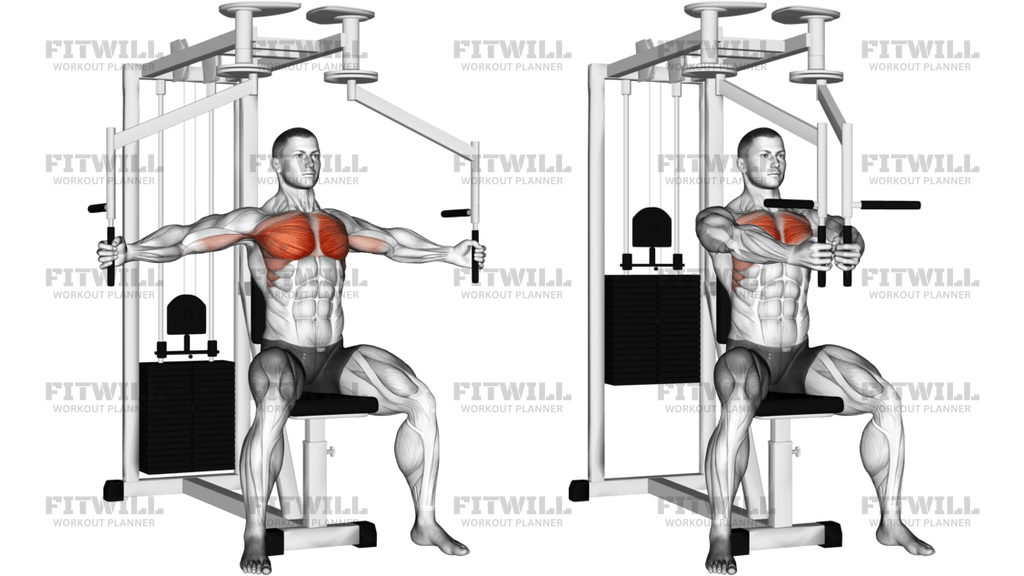
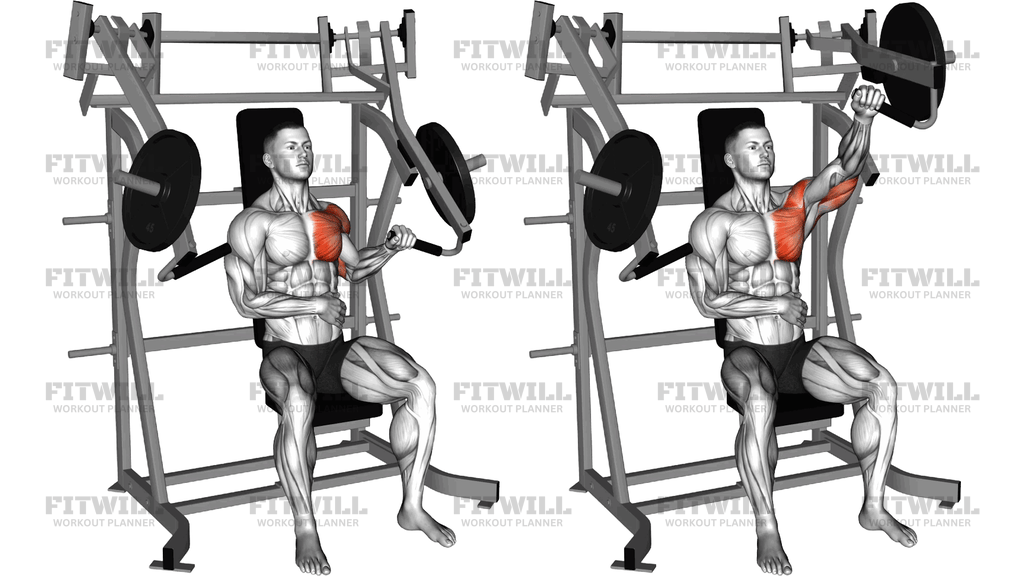
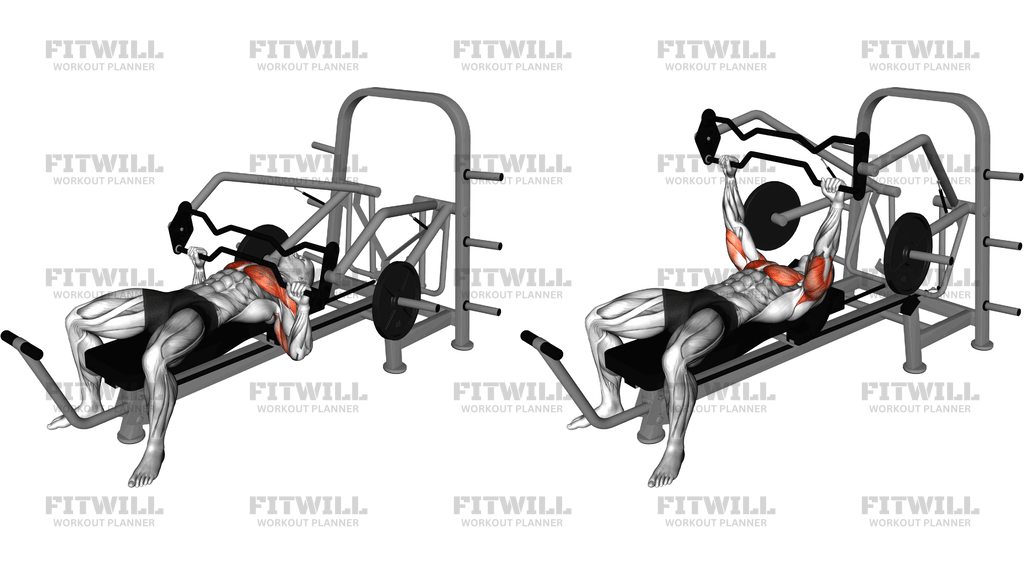
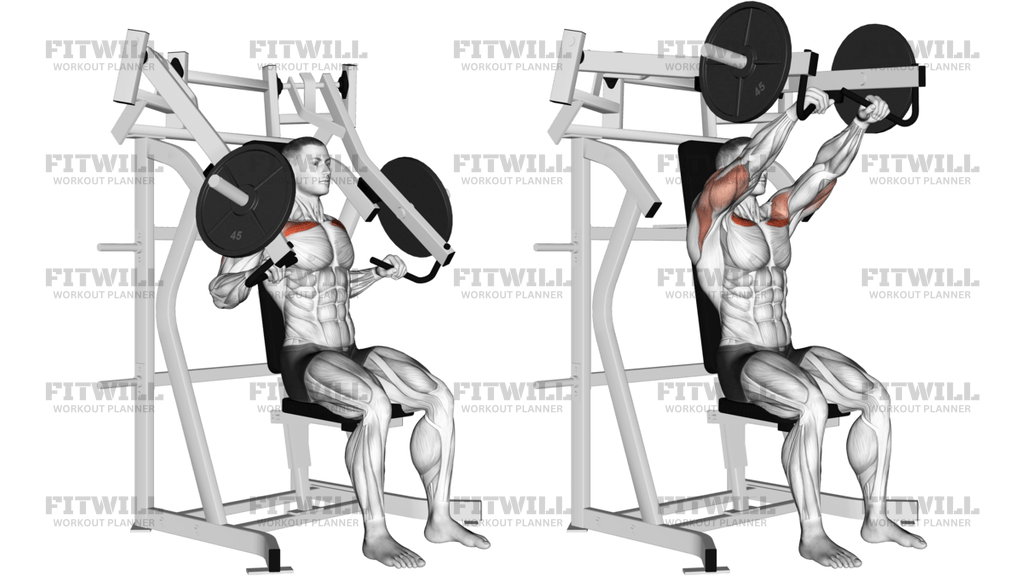
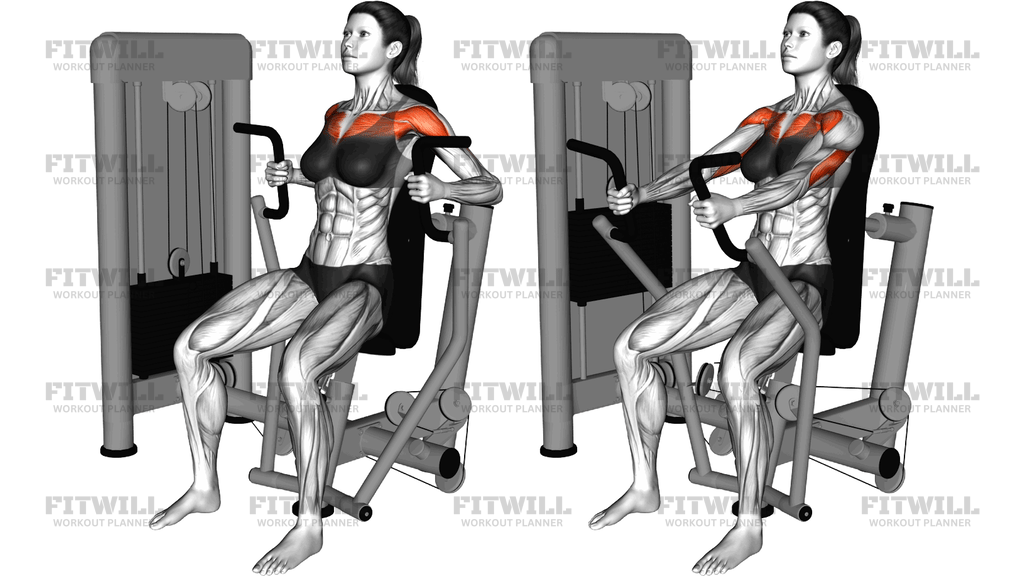
The Machine Inner Chest Press is a seated, selectorized machine movement in which you press two angled handles from a wide position at your sides forward and inward until they nearly meet in front of your chest. Because the handles travel on a converging path, your hands finish closer together than they started, which places extra emphasis on the inner portion of the pectorals compared with a straight-line chest press.
This is a useful lift for anyone who wants a controlled, joint-friendly way to train the chest without having to balance a barbell or dumbbells. The backrest pins your torso in place, the weight stack provides smooth resistance throughout the stroke, and the fixed arc removes the stability demands that make free-weight pressing harder to learn. Beginners can use it to build pressing strength safely, while more experienced lifters often use it as a finishing movement after heavy presses, when fatigue makes free weights feel wobbly but the chest still has work left in it.
The primary muscles worked are the pectorals, with particular attention to the sternal or mid-chest fibers as the arms squeeze together. The front shoulders assist strongly on the drive, and the triceps extend the elbows to lock out the press. Holding the endpoints briefly reinforces the adduction role of the chest, which is what gives this machine its reputation for inner-chest focus.
Setup matters more than people expect. Adjust the seat so the handles sit at mid-chest height with your elbows roughly level with your torso, and keep your back, shoulders, and head in contact with the pad throughout the set. If the seat is too low, your elbows drift up and the front shoulders take over; too high, and the press angles downward and shortens the chest's range. Grips should be firm but not strangled, and your feet planted flat so your lower body stays quiet.
To execute it well, press with your elbows rather than just your hands, imagining you are pushing the two handles toward each other rather than away from the stack. Drive forward on an exhale until the arms are nearly straight, pause for a beat to feel the pecs compress, then let the handles travel back with control until you feel a mild stretch across the chest. Stopping the return just before the weights fully settle keeps tension on the muscles from rep to rep.
A few practical safety points: keep your elbows from flaring past the backrest line at full stretch, avoid bouncing out of the bottom, and choose a weight you can stop mid-rep if needed. Because the machine guides the path, most people can push intensity here without much risk, but the shoulders still appreciate a warm-up and a range of motion that stays comfortable at the stretch.
[ Workout Log & Planner ]
Put your next workout in Fitwill
Keep your plan and training log ready when you are.


Instructions
- Sit on the chest press machine with your back, shoulders, and head flat against the backrest, and adjust the seat height until the handles line up with mid-chest.
- Grip the vertical handles with your palms facing inward, elbows bent to about 90 degrees and tucked slightly below shoulder level at the wide starting position.
- Plant both feet flat on the floor about hip-width apart and brace your core so your torso stays pressed into the pad for the whole set.
- Inhale and take a light tension pull on the handles before pressing to remove any slack in the weight stack.
- Exhale as you press the handles forward and inward along the machine's converging path, driving your elbows toward the midline of your body.
- Finish with your arms nearly extended in front of your chest, handles close together, without locking or snapping the elbows hard.
- Hold the squeezed position for one to two seconds so the inner chest does the final work of the press.
- Inhale as you let the handles travel back along the same path until your elbows are roughly in line with your torso and you feel a stretch across the chest.
- Stop the return just before the weight stack touches down, then begin the next press to keep tension on the chest.
- After your final rep, guide the handles back fully, let the stack settle, release your grip, and stand up only once the weights are at rest.
Tips & Tricks
- Think of pushing the handles toward each other, not just away from you; the inward convergence is what separates this machine from a standard chest press.
- If your elbows ride up toward your ears at the start of the press, the seat is usually too low - raise it until the handles sit at mid-chest height.
- Keep your shoulder blades resting back on the pad; if your upper back lifts off as you press, the weight is likely too heavy or you are reaching too far forward with your shoulders.
- Do not let the weight stack slam down between reps - hovering the plates keeps the chest under continuous tension and protects the shoulders at the stretch.
- Squeeze the handles isometrically for a second at full extension rather than rushing through lockout; that endpoint is where the inner-chest focus lives.
- If your wrists bend backward during the press, line your knuckles up with your forearms and grip with the whole hand instead of just the fingers.
- Use this machine after heavy free-weight presses rather than before; your stabilizers are fresh early in the session and the guided path is more valuable as a finisher.
- A partial set in the second half of the range - from mid-press to full squeeze - can extend a set safely once full reps become too hard, since the machine supports the load at every angle.
- Keep your lower back from arching off the pad; if it does, shorten the range at the stretch point slightly and check that your feet are not sliding forward.
Frequently Asked Questions
Which muscles does the Machine Inner Chest Press target?
It primarily trains the pectorals, especially the sternal or inner-chest fibers as the handles converge. The front shoulders and triceps assist with the pressing phase.
Why does this machine press inward instead of in a straight line?
The converging handle path mimics the chest's natural adduction movement, bringing your arms together in front of you. That squeeze at the end of the press is what shifts emphasis toward the inner portion of the chest.
Is the Machine Inner Chest Press good for beginners?
Yes. The backrest and fixed movement path take balance and stabilization out of the equation, so a beginner can focus on feeling the chest work and learning pressing mechanics before moving to free weights.
How should I set the seat height on the Machine Inner Chest Press?
Sit down and check that the handles align with mid-chest and your elbows stay level with or slightly below your shoulders in the wide start position. Adjust the seat up or down until that is true before adding weight.
What is the most common mistake on this machine?
Turning it into a pure elbow extension by pushing only with the hands and rushing the lockout. Drive with your elbows toward the midline and pause at the squeeze so the chest, not just the triceps, finishes each rep.
Can I use the Machine Inner Chest Press instead of a barbell bench press?
It can replace pressing work temporarily, but it is not a full substitute long-term because the machine stabilizes the load for you. It works best alongside or after free-weight pressing rather than as the only chest exercise.
How far back should I let the handles travel?
Return until your elbows are roughly in line with your torso and you feel a comfortable stretch across the chest. Going much deeper tends to pull the shoulder blades off the pad and stress the front of the shoulder.
Should my hands overlap at the end of the press?
Aim for the handles to come close together in front of your chest without clanging them together or letting your shoulders roll forward. The squeeze matters more than the exact endpoint.
What can I do if my gym has no converging chest press machine?
A pec deck or cable crossover used with a pressing-to-squeeze focus covers similar ground, and a dumbbell press with a strong inward squeeze at the top is a good free-weight substitute.
How should I breathe during the Machine Inner Chest Press?
Exhale as you press forward and inhale on the controlled return. Keeping a steady breath prevents you from straining or holding tension in your neck and shoulders.