Bodyweight Lying Decline Bench Reverse Hyperexten
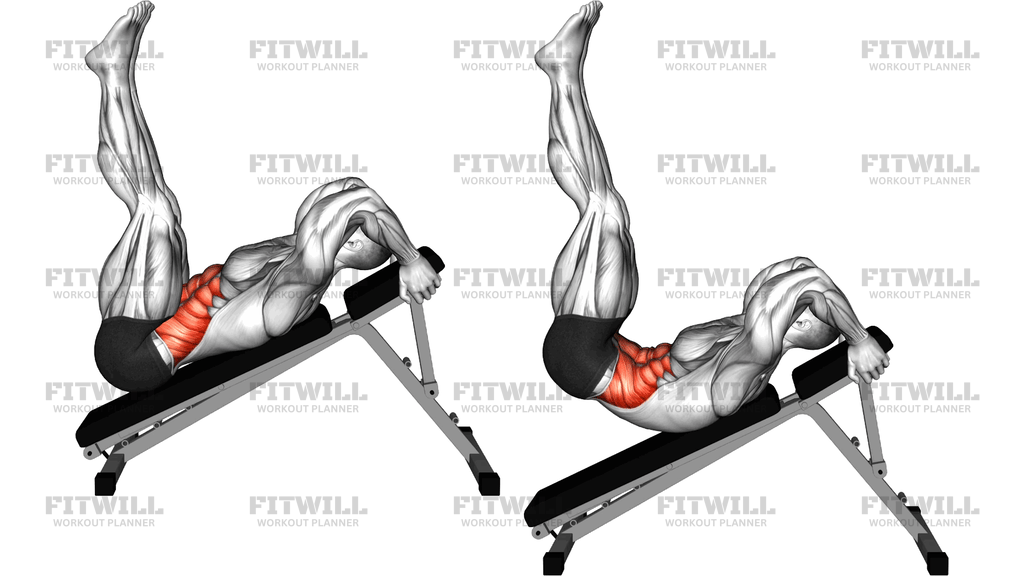
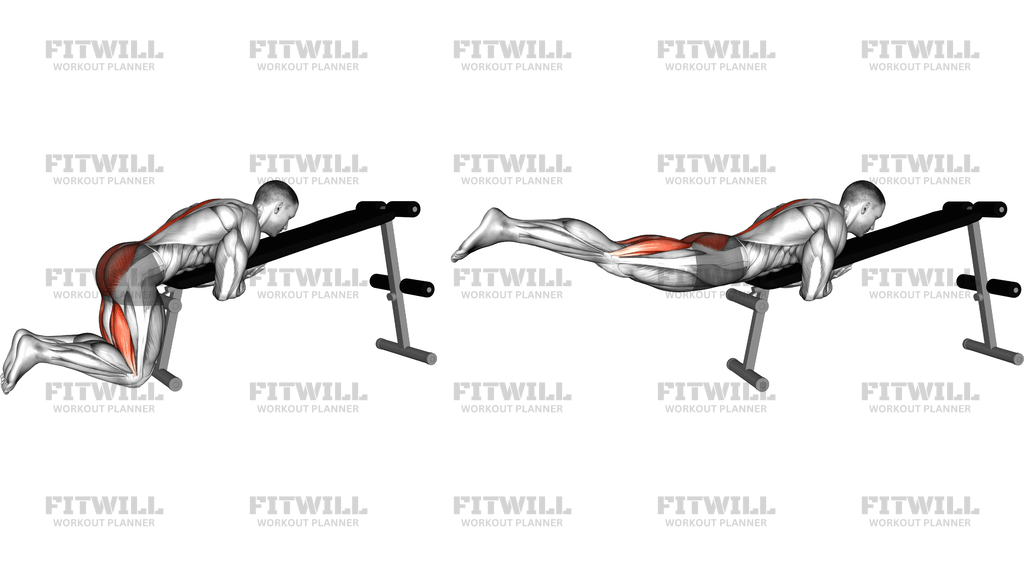
The Bodyweight Lying Decline Bench Reverse Hyperextension is a posterior-chain movement performed face down on a decline bench, with your torso supported on the pad and your hips positioned right at the lower edge. From a hanging start, you raise your straight legs up to hip level by squeezing the glutes and extending through the hips, then lower them back down under control. Because your upper body is anchored and your legs are free, the hip extensors do the work without any load passing through the spine.
This exercise is a solid choice for anyone who wants to train the glutes and hamstrings in a lengthened, stretched position without barbells or machines. It suits lifters who sit a lot and need direct hip-extension work, people rebuilding tolerance in the posterior chain after lower-back irritation, and athletes who want extra hip-extension volume after squats or deadlifts. Since it is bodyweight only, it is easy to scale by adjusting tempo, range, or reps.
The main muscles worked are the glutes, with strong assistance from the hamstrings, which lengthen as the legs drop below the bench and contract to help lift them. The erector spinae work isometrically to hold your torso and pelvis steady on the bench, and the grip and shoulders stay active as you hold onto the pad. Compared with floor-based reverse hypers, the decline setup lets the legs travel below hip level at the start, which extends the working range of motion.
Setup matters more than it looks. Your hip crease should sit right at the edge of the pad so your pelvis can tilt freely without pressing into the bench. If your hips are too far back on the bench, your range gets cut short; if you slide too far forward, your lower back has to arch to lift the legs, which is where most form problems start. Hold the bench firmly and keep your chest and ribs settled before every rep.
To execute it well, think of the lift as a hip hinge in reverse: the legs rise because the hips extend, not because you swing or kick. Lift only to the point where your legs are level with your torso or slightly above, squeeze the glutes for a beat, and lower slowly so the legs finish hanging straight down rather than dropping with momentum. Breathing out as you lift and in as you lower helps keep the trunk braced.
A common use case is as an accessory movement for 2 to 4 sets of 10 to 20 controlled reps, placed after heavy lower-body work or on a separate posterior-chain day. Because the load is light relative to maximal hip-extension strength, the emphasis should stay on tempo and squeeze rather than chasing height. Stop the set when you notice yourself swinging or arching to finish reps, and reset your grip and pelvic position between sets.
[ Workout Log & Planner ]
Put your next workout in Fitwill
Keep your plan and training log ready when you are.


Instructions
- Set a decline bench so the high end supports your chest and upper abdomen, with the low end facing away from you.
- Lie face down on the bench with your hip crease right at the lower edge of the pad and your legs hanging straight down toward the floor.
- Grip the sides or underside of the bench with both hands and pull your elbows in so your torso feels locked to the pad.
- Rest your feet on the floor or lightly on your toes, straighten your knees, and settle your ribs down so your lower back is not already arched.
- Brace your trunk, then squeeze your glutes and raise both straight legs together until they are level with your torso or just slightly higher.
- Hold the top position for one to two seconds and feel the contraction in your glutes rather than straining to lift your feet higher.
- Lower your legs slowly back to the hanging start position, taking two to three seconds and keeping your knees straight the whole way.
- Breathe out as you lift your legs and breathe in as you lower them, keeping your trunk braced on the bench throughout.
- Pause briefly at the bottom of each rep to kill any swinging, then start the next lift from a still position.
- Finish the set by bringing your feet to the floor one at a time and sitting up slowly, as blood pressure can shift when you come off the bench.
Tips & Tricks
- If your hips slide forward on the pad as you lift, walk yourself down slightly so only the very edge of the bench sits at your hip crease — this keeps the movement at the hips instead of the lower back.
- Kicking the legs up with momentum is the most common fault here; if your feet flick at the start, drop the tempo and deliberately pause at the bottom before each rep.
- Keep your neck neutral by looking down at the floor beside the bench rather than craning up, which helps your upper back stay relaxed while your hips work.
- Do not chase maximum leg height. Lifting far beyond hip level usually means your lower back is arching to finish the range, which shifts work away from the glutes.
- If your hands slip on a smooth pad, position your grip so you can hook the edge of the bench rather than just pressing flat palms against it.
- Squeeze one glute at a time mentally during the top hold — if one side lags and your legs drift unevenly, slow down and even out the lift before adding reps.
- Tight hamstrings can limit the hanging start position. Bend your knees very slightly or place your feet on a low step to shorten the drop until your flexibility improves.
- Treat the lowering phase as half the exercise: a slow, controlled descent with straight knees builds more usable strength than a fast lift-and-drop.
- Warm up with a few sets of bodyweight glute bridges or hip hinges first so the glutes are responsive before you hang into the stretched start position.
Frequently Asked Questions
What muscles does the Bodyweight Lying Decline Bench Reverse Hyperextension work?
The glutes are the primary movers, with the hamstrings assisting strongly as they contract from a stretched position. The erector spinae work isometrically to hold your torso steady on the bench.
Why does the decline bench allow a bigger range than doing reverse hypers on the floor?
Because your torso is elevated on the pad, your legs can hang below hip level at the start and travel through a longer arc before reaching the top. On the floor, your legs stop as soon as they touch the ground.
How far up should I raise my legs on the Bodyweight Lying Decline Bench Reverse Hyperextension?
Lift to about hip level or just slightly above, where your body forms a straight or slightly extended line. Going much higher usually comes from arching the lower back rather than extra glute work.
Is this exercise safe for people with a sensitive lower back?
It is often well tolerated because the torso is supported and the load is only your legs, but start with a short range and slow tempo. If you feel pinching or sharp discomfort in your lower back, reduce the height of the lift or consult a qualified professional before continuing.
Where exactly should my hips sit on the bench?
Your hip crease should rest right at the lower edge of the pad so your pelvis can tilt freely. Too far onto the bench shortens the range, and too far off means your lower back arches to lift the legs.
How many reps and sets should I do?
Two to four sets of 10 to 20 slow, controlled reps works well as an accessory movement. Since the resistance is fixed, progress by slowing the tempo, adding a pause at the top, or adding reps before adding sets.
Can beginners do the Bodyweight Lying Decline Bench Reverse Hyperextension?
Yes, and it is actually a beginner-friendly way to learn hip extension. Beginners should start with a smaller range — lifting the legs only partway up — and master the slow lower before using the full hanging start.
What can I use if I do not have a decline bench?
A flat bench with a folded towel under your chest so your hips hang off the edge, a stability ball, or a Roman chair all allow a similar movement. The key is having your hips free to extend while your torso is supported.
Should my knees be bent or straight during the lift?
Keep your knees straight or only very slightly bent. Bending the knees turns it into a leg-curl pattern and shifts effort toward the hamstrings at the expense of the glutes.
Why do my legs swing between reps, and how do I stop it?
Swinging happens when you start the next rep before the legs have fully settled. Bring your feet to a brief stop at the bottom of each rep, or lightly touch your toes to the floor before lifting again.