Resistance Band Frog Hip Thrust
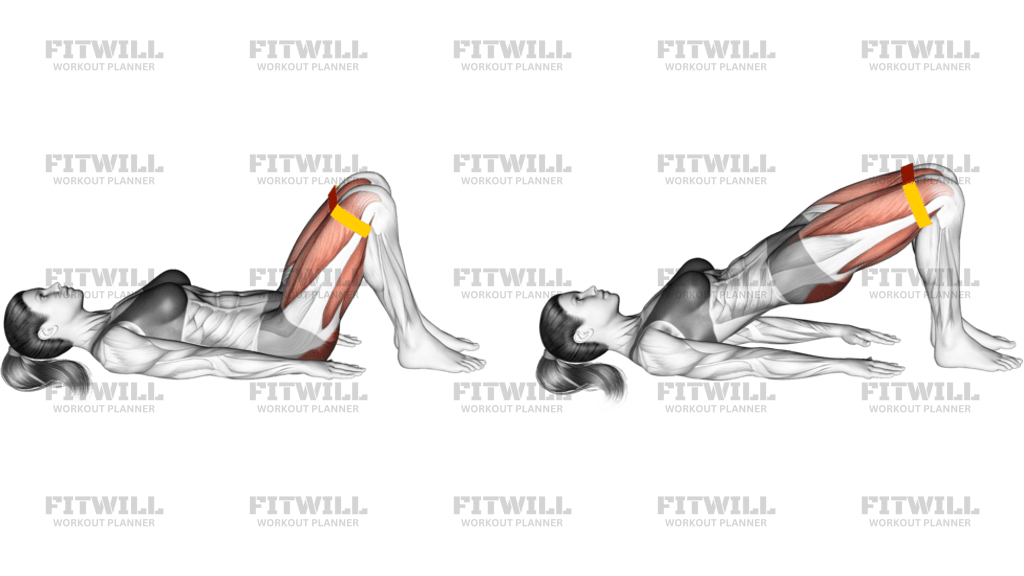
The Resistance Band Frog Hip Thrust is a floor-based glute exercise performed lying on your back with the heels drawn in close to the body and a loop band wrapped around the thighs just above the knees. From that position you drive the hips up toward the ceiling while pressing the knees outward against the band's tension, then lower back down under control. The combination of hip extension and outward knee pressure makes it different from a standard glute bridge: you are training the glutes to both straighten the hip and hold the femur in external rotation at the same time.
This movement is especially useful for people whose glutes struggle to fully engage during regular bridges or thrusts. The frog-style setup, with the knees bent and pushed wide, biases the gluteus maximus and the deep hip rotators rather than letting the quads and lower back dominate. It is a common warm-up or activation drill before squats, deadlifts, and barbell hip thrusts, and it also works well as a standalone exercise for home training because all you need is a band and a small patch of floor.
The main muscles worked are the glutes, with strong involvement from the outer hip muscles that pull the knees apart against the band. The hamstrings assist with hip extension, the adductors work dynamically to control the knees, and the core stays active to keep the ribs and pelvis stacked as the hips rise. Because the band constantly tries to pull your knees inward, the outer glutes never get a chance to switch off, even at the bottom of each rep.
Setup matters more here than in most floor exercises. If the heels sit too far from the hips, the hamstrings take over and the range shortens; if the band sits too low toward the knee joint, the pull changes angle and the knees collapse. Loop the band above the knees, place the heels roughly under the bent knees with the feet turned slightly outward, and keep the arms relaxed on the floor beside you for balance only.
Execution should feel like a squeeze, not a launch. Push through the heels and the outer edges of the feet, press the knees wider as the hips rise, and stop when the body forms a straight line from shoulders to knees. Pause briefly at the top to feel the glutes contract, then lower the hips slowly while keeping tension on the band the whole way down. Bouncing off the floor or letting the knees snap together between reps removes most of the benefit.
Keep the movement controlled and stay within a range where the lower back stays neutral. If you feel the work shifting into your lower back, reduce the band tension or shorten the range at the top. As with any band exercise, check the band for wear before use so it does not snap mid-rep.
[ Workout Log & Planner ]
Put your next workout in Fitwill
Keep your plan and training log ready when you are.


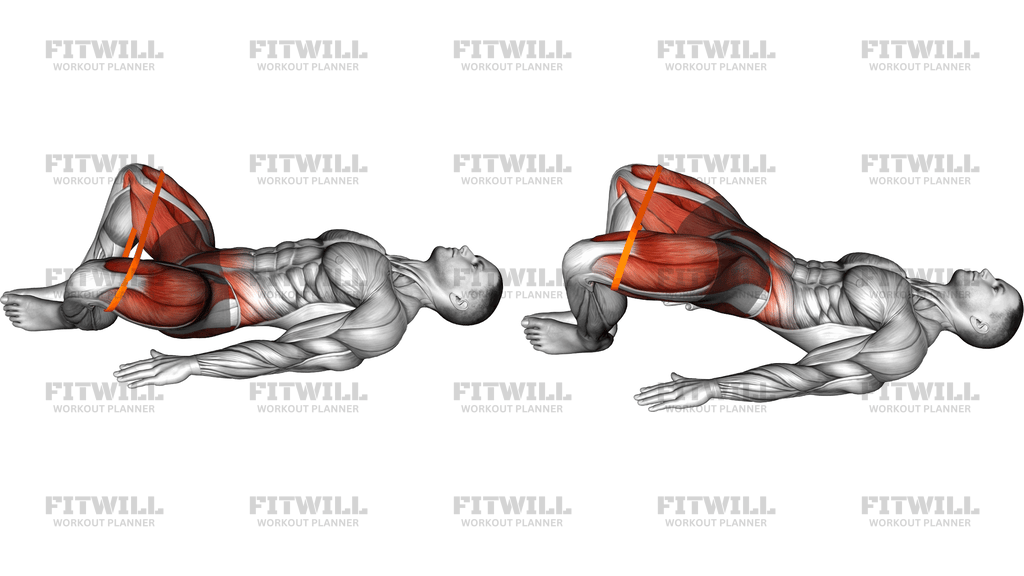
Instructions
- Place an exercise mat on the floor and lie on your back with your knees bent and your arms resting at your sides, palms down.
- Loop a resistance band around both thighs just above the knees and slide your heels in close toward your hips so the feet sit roughly under the knees, toes turned slightly out.
- Draw your ribs down, brace your abdominal muscles lightly, and press your lower back gently toward the floor so the pelvis starts in a neutral position.
- Push your knees outward against the band until you feel the outer glutes engage, and keep that outward pressure without letting the feet lift.
- Exhale and drive through your heels and the outer edges of your feet to lift the hips toward the ceiling until your body forms a straight line from shoulders to knees.
- At the top, squeeze the glutes hard and hold for one to two seconds while continuing to press the knees wide against the band.
- Inhale as you lower the hips back down slowly, resisting the band's pull so the knees do not collapse inward.
- Stop just before the hips touch the floor, keep the knees pressed out, and start the next rep from that loaded position.
- After the final rep, let the hips rest on the floor first, then release the knee pressure and slide the band off your legs.
Tips & Tricks
- If your knees drift inward on the way up, the band is too strong for your outer glutes right now, so drop to a lighter loop and rebuild the outward press before progressing.
- Heels placed too far forward turns this into a hamstring-dominant bridge; tuck the heels in closer until you feel the contraction in the glutes at the top.
- Do not over-arch at the top by pushing the ribs toward your chin; the lift ends when the shoulders, hips, and knees line up, not when the back is at maximum extension.
- Keep the feet flat and weight balanced across the whole foot; rolling onto the toes shifts the effort away from the glutes and strains the ankles.
- A common mistake is losing the knee press at the bottom of each rep; hold outward tension through the entire set so the outer hips stay loaded.
- If the band rolls or pinches behind the knees, move it a little higher on the thighs where the circumference holds it in place.
- Use this as a pre-workout activation for two to three sets of twelve to fifteen slow reps before barbell hip thrusts or squats, rather than rushing through it for burn.
- Drive the knees out and down slightly toward the floor as the hips rise; thinking knees-up-only usually causes the pelvis to tilt and the lower back to take over.
- On a slippery floor, place the feet on a mat or towel so the heels stay anchored while the knees press wide.
Frequently Asked Questions
What muscles does the Resistance Band Frog Hip Thrust work?
The glutes are the primary movers, with the gluteus maximus driving hip extension and the outer hip muscles holding the knees out against the band. The hamstrings assist on the lift and the core stabilizes the pelvis throughout.
Why are the knees pressed outward instead of kept straight ahead?
Pressing out against the band puts the hips in external rotation and keeps the outer glutes under constant tension, which many people find makes the glutes work harder than a straight-knee bridge. It also trains knee control that carries over to squats and deadlifts.
Is the Resistance Band Frog Hip Thrust good for beginners?
Yes, it is very beginner friendly because the floor supports the spine and the band provides light, adjustable resistance. Start with a thin loop band and focus on feeling the glutes before moving to thicker bands or adding a barbell hip thrust later.
Where exactly should the resistance band sit on the legs?
Just above the knees is the standard placement. Higher on the thighs reduces pinching at the knee joint and keeps the pulling angle directed at the hips rather than twisting the knees.
How is the Resistance Band Frog Hip Thrust different from a regular glute bridge?
The frog-style setup pulls the heels in close and angles the knees out, which shortens the hamstring contribution and biases the glutes and hip rotators. The band adds constant abduction tension that a plain glute bridge does not have.
How many reps and sets should I do?
For activation before a lower-body workout, two to three sets of twelve to fifteen slow reps with a one-second pause at the top works well. As a standalone glute exercise, aim for three to four sets and progress to a heavier band over time.
Why do I feel this exercise in my lower back instead of my glutes?
This usually means the hips are over-extending at the top or the ribs are flaring, which shifts load to the lumbar muscles. Stop the lift at the straight-line position, re-brace the abs, and shorten the range until you can keep the pelvis neutral.
What can I use if I do not have a resistance band?
You can perform the frog setup without a band by actively holding the knees wide, though the outer glutes will get less tension. A light mini loop or even a soft strap looped above the knees restores the outward resistance.
Should my hips touch the floor between reps?
Lower until the hips are just above the floor, then start the next rep while the knees are still pressed out. Fully resting and relaxing between reps lets the glute tension drop and makes each set less effective.
Is it safe to do this exercise every day?
Because the load is light and the movement is low impact, most people tolerate frequent use well, especially as a warm-up. If the outer hips or knees feel sore rather than worked, give them a rest day and check that the band is not forcing the knees beyond a comfortable range.