Kettlebell Clean And Press
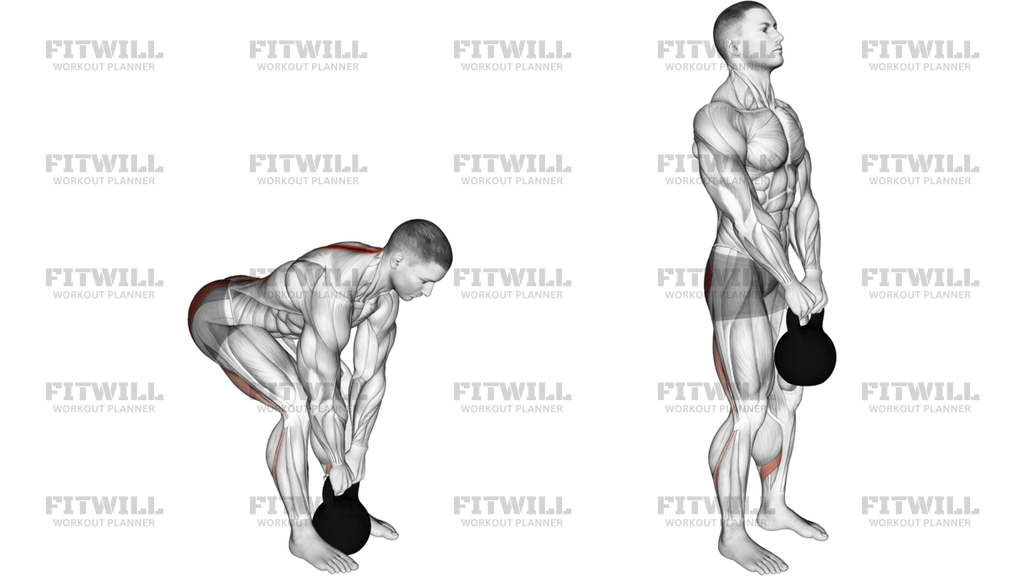
The Kettlebell Clean And Press is a two-part compound lift that takes the kettlebell from the floor to overhead in one continuous flow. First, the clean drives the bell from a hip hinge up into the rack position at your shoulder, then the press pushes it straight overhead. Because the legs generate the power for the clean and the shoulders finish the press, nearly every major muscle group gets involved in a single repetition.
This movement suits lifters who want a lot of training effect from minimal equipment and time. It is a staple in kettlebell training because it builds explosive hip extension, a stable rack position, and overhead pressing strength all at once. Athletes use it for conditioning circuits, general strength work, or as a stepping stone toward more technical kettlebell lifts like the jerk and snatch.
The main working muscles are the shoulders and triceps during the press, supported strongly by the glutes, hamstrings, and quads during the clean. Your upper back and traps control the bell as it flips into the rack, your forearms and grip handle the kettlebell through the transition, and your core and lower back keep your spine braced from the hinge to the lockout.
Setup matters more than most people expect. The depth of your hinge determines how much leg drive you can put into the bell, and where you place your hand on the handle determines whether the kettlebell rolls cleanly around your wrist or slams into your forearm. A loose, well-timed clean sets up a strong press; a jerky, arm-dominated clean leaves you off-balance before the press even begins.
To execute it well, think of the clean as a jump-and-hinge pattern, not an arm curl. The bell should float up as your hips extend, then settle into the rack with your elbow tucked against your ribs and your wrist neutral. From there, dip slightly, brace, and press the bell to a locked-out position overhead with your bicep near your ear. Reverse the press under control, let the bell swing down, and catch it in the hinge to reset for the next rep.
Common use cases include full-body strength days, high-rep conditioning intervals, and low-rep heavy practice for power. Keep the weight honest: if you cannot rack the bell cleanly or hold your rib position overhead, drop to a lighter kettlebell before adding reps.
[ Workout Log & Planner ]
Put your next workout in Fitwill
Keep your plan and training log ready when you are.


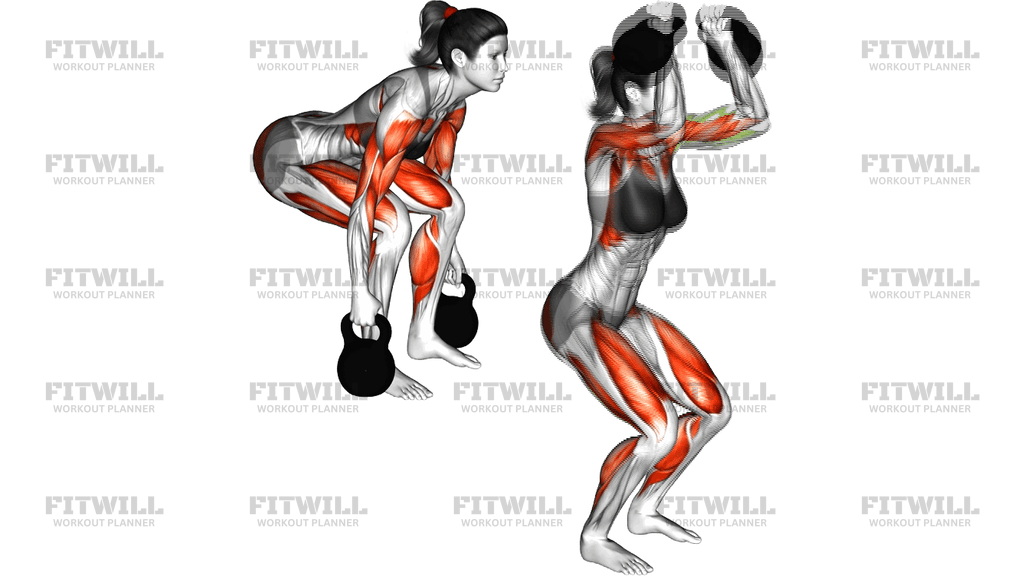
Instructions
- Place one kettlebell on the floor between your feet, which are set about hip-width apart with the toes turned out slightly.
- Hinge at the hips and take the handle with a downward-inward grip on one hand, shoulders slightly higher than your hips, back flat and lats engaged.
- Hike the kettlebell back between your legs like a football snap, keeping your weight over your midfoot and your free arm balanced out to the side.
- Exhale sharply and snap your hips forward, letting the leg drive float the kettlebell up rather than lifting it with your arm.
- As the bell rises, guide the handle so it rolls around the outside of your wrist, letting your hand slide through to the corner of the handle as it lands in the rack.
- Catch the bell at shoulder height with your elbow tucked against your ribs, wrist straight, and forearm vertical.
- Take a small dip by bending the knees slightly, then drive up and press the kettlebell overhead until your arm is locked out with your bicep close to your ear.
- Lower the kettlebell under control back to the rack, absorb it with a small dip, then swing it down between your legs and catch it in the hip hinge.
- Inhale at the hinge as the bell swings back, exhale on the drive and press, and reset your brace before starting the next repetition.
- Complete all repetitions on one side, set the bell down in the hinge position, then switch hands.
Tips & Tricks
- If the kettlebell smacks your forearm during the clean, your hand is gripping too tightly and too centered on the handle. Hold the corner of the handle and let the bell roll around your wrist instead of flipping over it.
- Avoid cleaning with your arm. If your elbow bends early and pulls the bell up, think of your arm as a rope and put all the effort into an aggressive hip snap.
- Do not let your lower back round at the bottom of the hinge. If you cannot reach the bell with a flat back, set it on a slightly elevated surface or work on your hip hinge separately.
- In the rack, keep your elbow against your ribs rather than flared out to the side. A floating elbow makes the press start from a weak position and strains the shoulder.
- Keep your ribs down when the bell is overhead. Leaning back and flaring the ribcage turns the press into a lower back exercise and reduces core stability.
- Let the bell swing down in a straight path close to your body. A wide arc swings the kettlebell away from you and drags your shoulders forward.
- For heavy presses, use a short knee dip before pressing rather than muscling the bell up with the shoulder alone. Dip, drive, and press in one rhythm.
- Grip fatigue usually causes the clean to fail before the legs or shoulders do. Chalk your hand and relax your grip during the swing phase so your forearms do not burn out early.
- Practice the clean alone until the bell lands quietly in the rack. A loud, slapping landing means the timing is off and the press will start from a compromised position.
Frequently Asked Questions
What muscles does the Kettlebell Clean And Press work?
The shoulders and triceps do the pressing, while the glutes, hamstrings, and quads power the clean. Your traps, forearms, core, and lower back stabilize the bell through the rack and the overhead lockout.
Is the Kettlebell Clean And Press good for beginners?
Yes, once you can perform a solid hip hinge and a strict overhead press. Beginners should learn the kettlebell deadlift and the clean separately before combining them, starting with a light bell to learn the roll into the rack.
Why does the kettlebell bruise my forearm during the clean?
The bell is flipping over your hand instead of rolling around it. Keep a loose grip, lead with your elbow, and let your hand slide through the handle so the kettlebell settles on the back of your forearm instead of slamming into it.
Should I do the Kettlebell Clean And Press with one kettlebell or two?
Start with one kettlebell so you can focus on the clean timing and rack position without fatigue masking your form. Double clean and press is a valid progression once single-arm technique is consistent and your rack position feels secure.
How heavy should the kettlebell be for this exercise?
Choose a weight you can clean to a quiet rack position and press for your target reps with a stable torso. If your lower back takes over during the hinge or your ribs flare overhead, the bell is too heavy for quality reps.
Can I squat instead of hinging during the clean?
A small knee dip is fine for catching the bell and for the press, but the clean itself should come from a hip hinge. Squatting the kettlebell up turns the movement into a deadlift variation and reduces the hip snap that floats the bell into the rack.
What can I substitute if I do not have a kettlebell?
A single dumbbell works for a similar clean and press, though the head of the dumbbell changes the rotation into the rack. For pure overhead work, a barbell or dumbbell press combined with a swing substitute covers much of the same ground.
How many repetitions should I do of the Kettlebell Clean And Press?
For strength, work in sets of 3 to 5 presses per side with a heavy bell and full rest. For conditioning, use a lighter bell for timed sets of 30 to 60 seconds, keeping the clean crisp even when tired.
Is the Kettlebell Clean And Press safe for the lower back?
It is safe when the hinge is flat-backed, the brace is set before each swing, and the weight is appropriate. Most lower back complaints come from rounding at the bottom of the hinge or letting the bell pull the torso forward, so keep those two points strict.