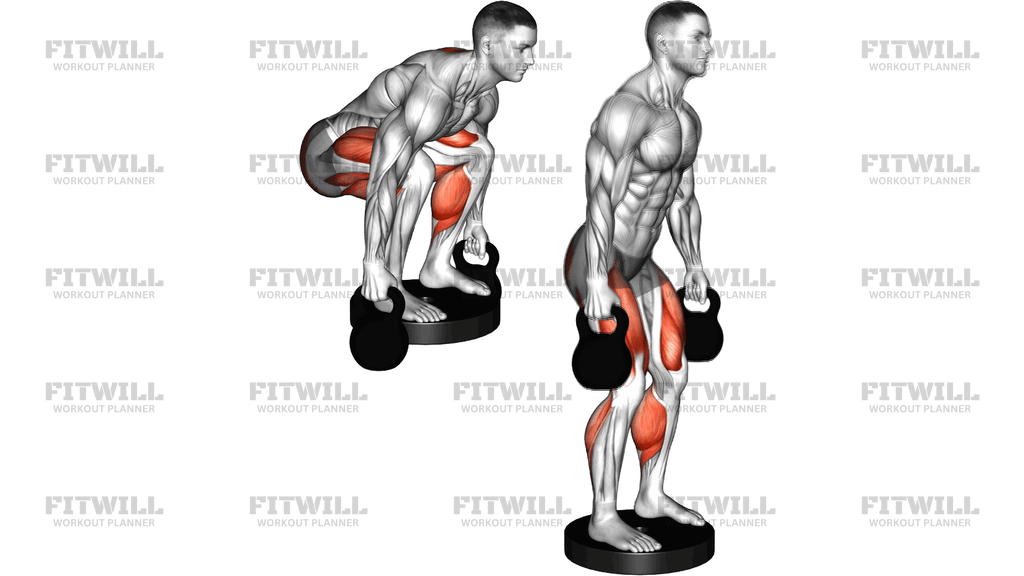
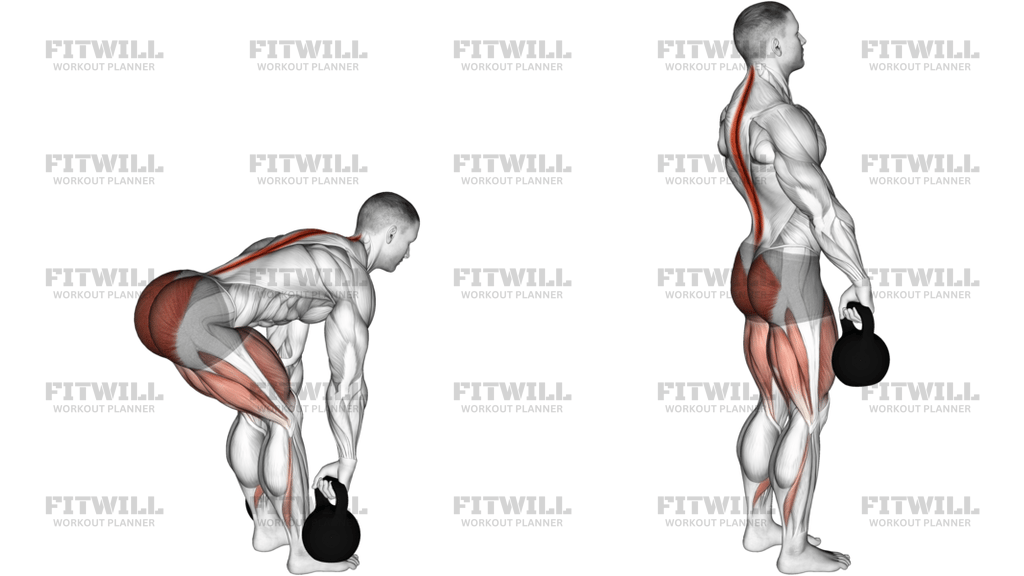
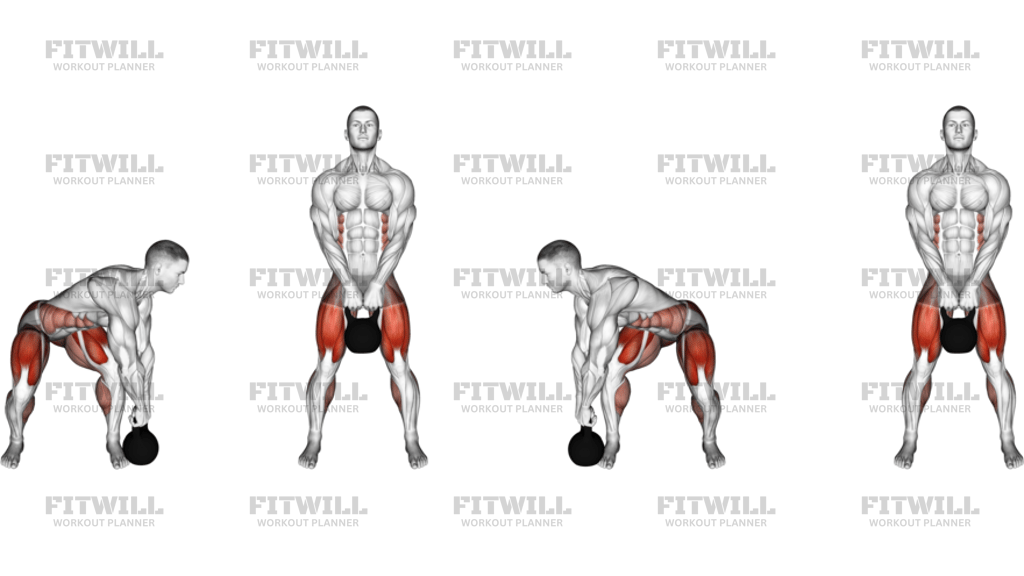
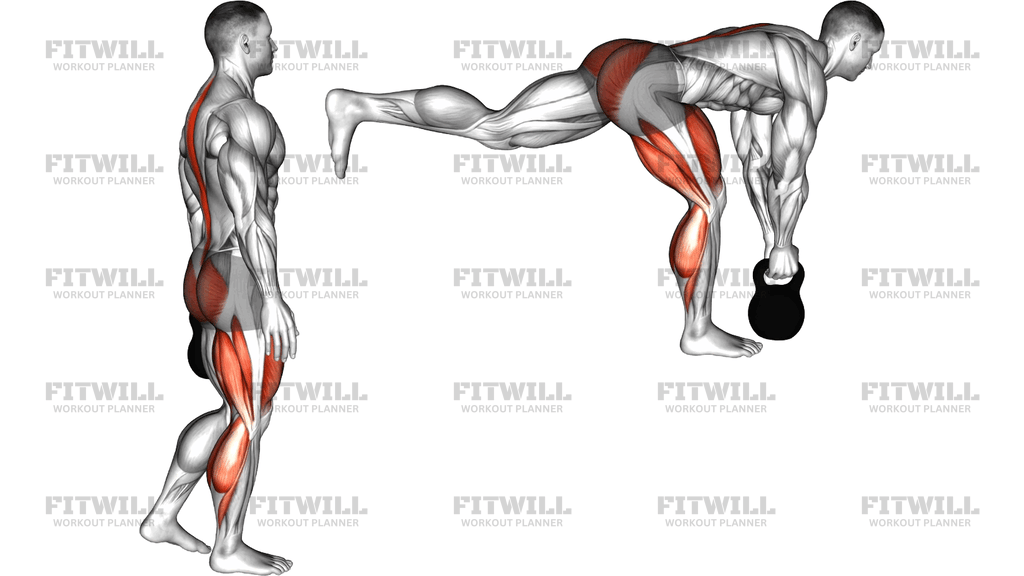
Kettlebell Good Morning
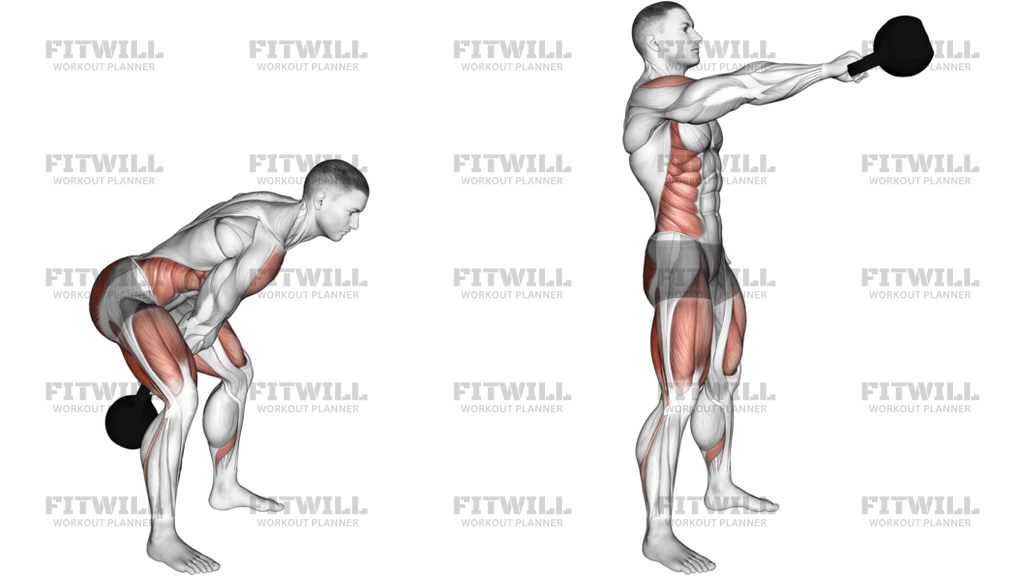
Kettlebell Good Morning is a loaded hip-hinge exercise that targets the hamstrings and glutes while teaching you to keep the trunk braced as the hips travel back and forward. In this kettlebell variation, the weight is held with both hands in front of the body, so the lift is driven by a controlled hinge rather than by dropping into a squat. That makes it useful for building posterior-chain strength, rehearsing pelvic control, and improving the position you need for other hinge-based lifts.
The setup matters because the kettlebell should stay close to the body and the feet should stay rooted while the hips do the work. A small knee bend lets the hamstrings lengthen without turning the rep into a knee-dominant pattern. Keep the ribs stacked over the pelvis, the shoulders packed down, and the neck long so the torso moves as one solid unit instead of folding at the lower back.
On each repetition, hinge until you feel a strong stretch in the back of the thighs, then drive the hips forward to return to standing. The kettlebell should travel in a straight, controlled line and stay close to the shins and thighs. If the load pulls you forward, if your back rounds, or if the knees keep drifting deeper, the range is too large or the weight is too heavy.
This exercise works well as an accessory hinge, a warm-up for lower-body training, or a technique drill when you want hamstring loading without impact. It responds best to moderate reps, deliberate tempo, and a load that lets you repeat the same torso angle on every rep. Use it to build clean hinge mechanics, not to chase speed or range. Finish the set as soon as you lose the ability to keep the spine neutral and the pressure balanced through the feet.
[ Workout Log & Planner ]
Put your next workout in Fitwill
Keep your plan and training log ready when you are.


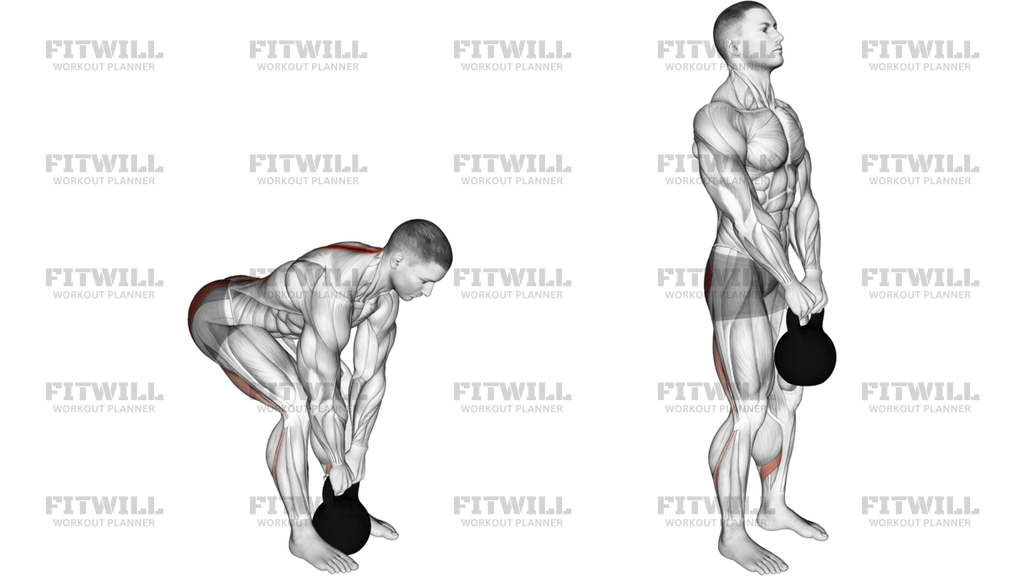
Instructions
- Stand with your feet about hip-width apart and hold the kettlebell with both hands in front of your thighs, arms straight and shoulders relaxed.
- Soften your knees slightly, brace your midsection, and keep your weight balanced through the whole foot before you move.
- Push your hips back and let your torso tip forward as one unit while the kettlebell travels down close to your legs.
- Keep your shins nearly vertical and stop lowering once you feel a strong hamstring stretch without losing your back position.
- Keep the kettlebell under control; do not let it swing away from the body or drift in front of your toes.
- Pause briefly in the bottom if you need to reset your posture, then exhale and drive the hips forward to stand back up.
- Finish tall with the glutes tight, ribs stacked over the pelvis, and no lean-back at the top.
- Repeat for the planned reps, resetting your brace before every hinge.
Tips & Tricks
- Keep the kettlebell close to your thighs and shins so the hinge stays balanced and the lower back does not take over.
- Use a light to moderate load first; the hamstrings get challenged quickly in a good morning pattern.
- If the movement starts to feel like a squat, reduce knee bend and send the hips farther back.
- Think about reaching your hips behind you rather than dropping your chest toward the floor.
- Keep your gaze a few feet in front of you so the neck stays long and the upper back stays organized.
- Lower for a slow count and stand up with control instead of snapping the hips through the top.
- Stop the set when your spine starts to round or when the kettlebell pulls your shoulders forward.
- A small pause at the bottom can help you feel the hamstrings and reset your brace before each rep.
Frequently Asked Questions
What muscles does the kettlebell good morning train most?
The main work comes from the hamstrings and glutes, with the spinal erectors and core helping you keep the hinge stable.
How low should I lower the kettlebell?
Lower only until you feel a strong hamstring stretch and can still keep your back neutral and the weight close to your legs.
Should my knees bend a lot during this movement?
No. Keep only a soft bend so the exercise stays a hip hinge instead of turning into a squat.
Where should the kettlebell stay during the rep?
It should stay close to your thighs and shins, not swing away from the body or drift forward.
Is this a beginner-friendly exercise?
Yes, if you start with a light kettlebell and keep the hinge small enough to stay in control.
What is the most common form mistake?
Rounding the lower back or turning the hinge into a squat are the two biggest issues to watch for.
Should I feel my lower back working?
You will feel it stabilize, but the main effort should stay in the hamstrings and glutes. If the low back dominates, shorten the range or lighten the load.
How can I make the exercise harder?
Increase the kettlebell gradually, slow down the lowering phase, or add a brief pause in the stretched position without losing posture.