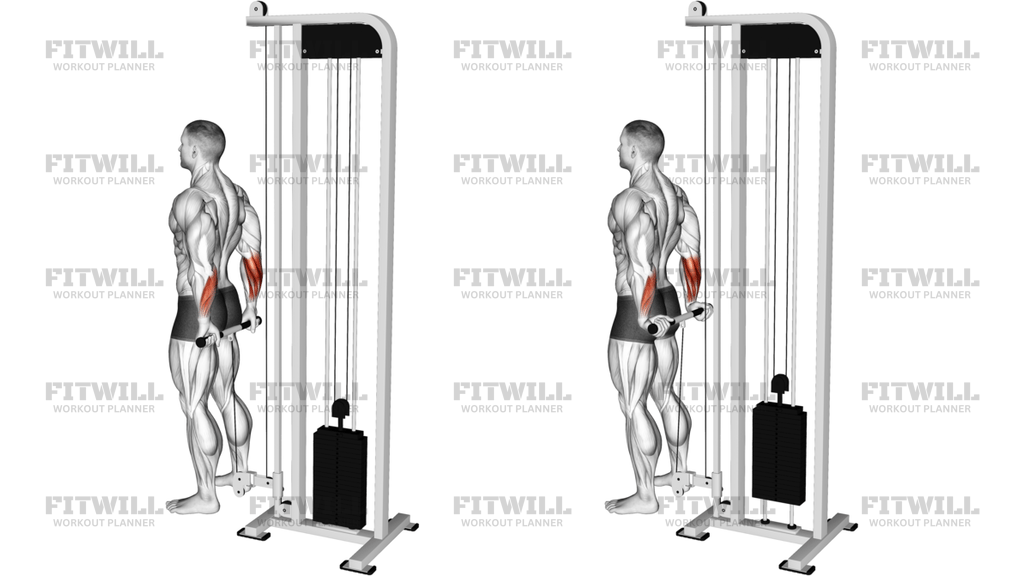
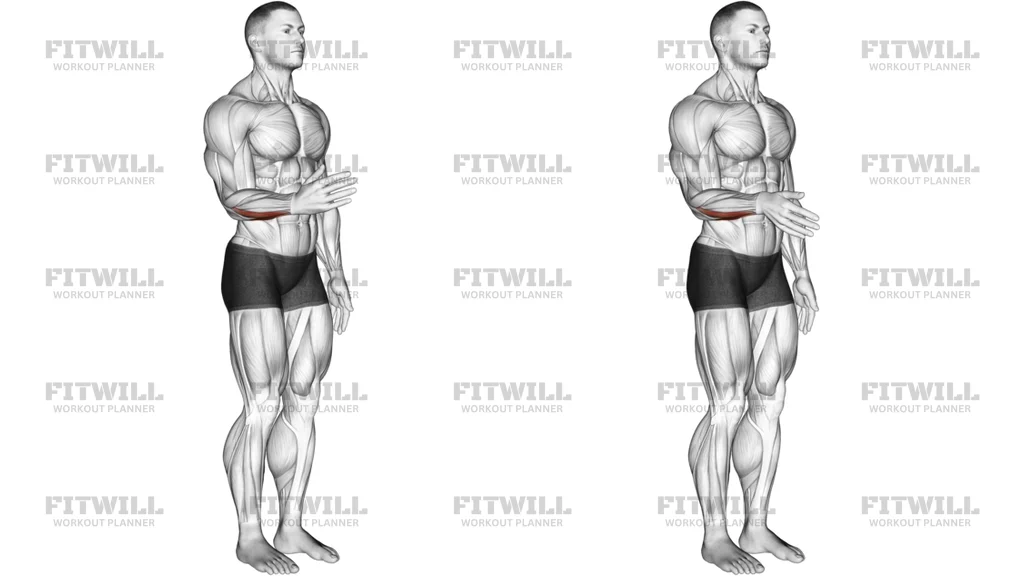
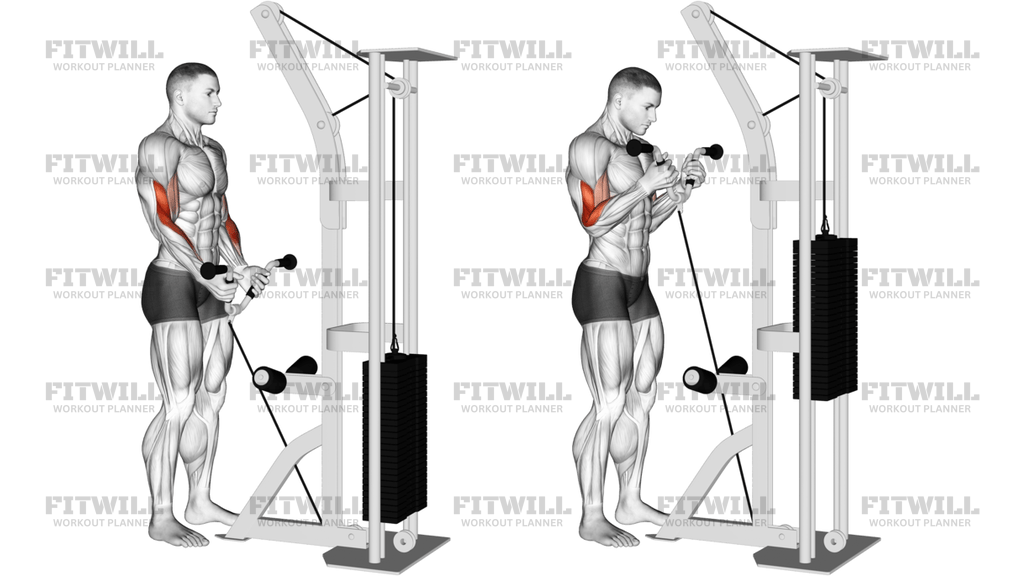
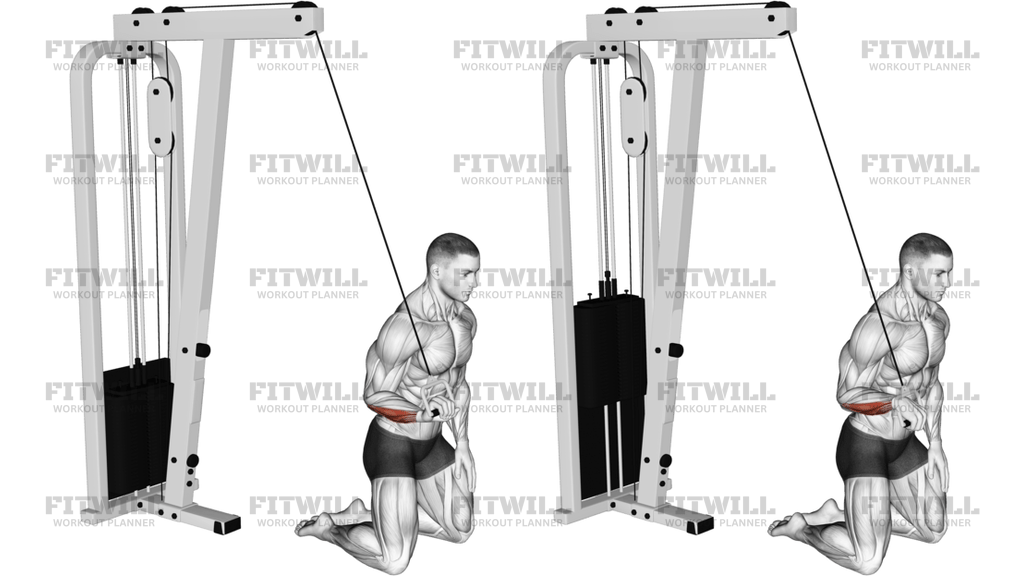
Cable Reverse Wrist Curl
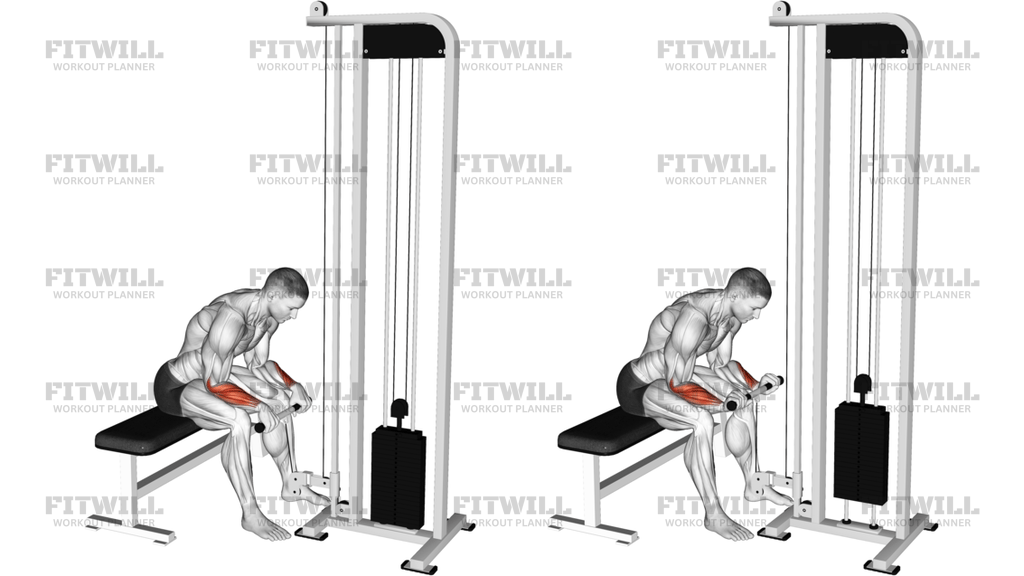
The Cable Reverse Wrist Curl is a forearm isolation exercise performed seated at a low cable pulley with a straight bar attachment. You sit on a bench facing the cable, rest the backs of your forearms on your thighs with your wrists hanging past your knees, and hold the bar with an overhand (pronated) grip. From there, you extend your wrists upward against the cable's resistance and lower them back down under control. The constant tension of the cable is what separates this version from the classic barbell reverse wrist curl, because the resistance does not disappear at the top or bottom of the movement.
This movement targets the muscles on the top of the forearm, primarily the wrist extensors, with the brachioradialis and grip muscles working to hold onto the bar. Because it works the extensors rather than the flexors, it balances out all the pulling, curling, and gripping work that tends to dominate most programs. People who climb, play racket sports, golf, or spend long hours typing often find this area tight and undertrained, and building it up supports both performance and everyday wrist comfort.
Setup matters a lot with this exercise. The bench position should put your forearms flat against your thighs with only your hands extending past the knees, so the wrists can move freely through their full range without the forearms lifting or the elbows drifting. If you sit too far back, the cable angle pulls your hands forward and the forearms lose contact with your legs; if you sit too close, the range gets restricted. Take a minute to adjust your distance from the pulley before your first working set.
Execution is deliberately small and precise. Your wrists hinge up and down while everything else stays still: the elbows stay softly locked near the knees, the shoulders stay relaxed, and the torso stays leaned slightly forward without rounding. The rep range is short by design, so it is easy to let the elbows or upper arms take over if you rush. Moving slowly and pausing briefly at the top keeps the tension on the forearm where it belongs.
You will usually see this exercise used as an accessory movement at the end of an arm or pull session, typically for higher reps of ten to twenty per set. It pairs naturally with the Cable Wrist Curl, which trains the flexor side of the forearm with the palms facing up. Lifters rehabbing or prehabbing the wrist area, grip-focused athletes, and anyone whose forearms fatigue before their back or biceps during pulling work can all benefit from including it regularly.
[ Workout Log & Planner ]
Put your next workout in Fitwill
Keep your plan and training log ready when you are.


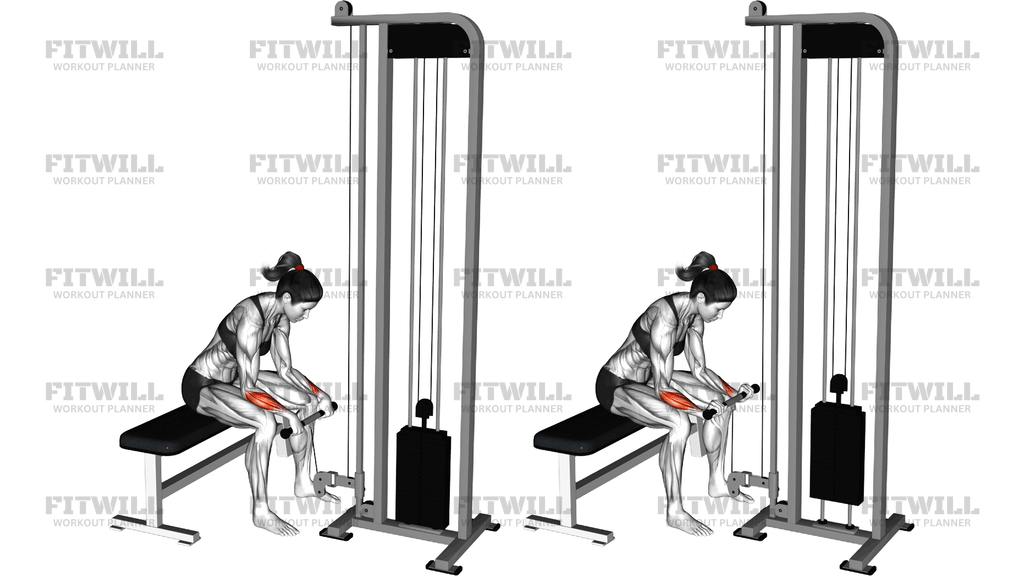
Instructions
- Set a flat bench a short distance in front of a cable machine and attach a straight bar to the low pulley.
- Sit facing the pulley and take an overhand grip on the bar, hands about shoulder-width apart, palms facing down.
- Lean forward and lay the backs of your forearms across your thighs so your wrists and hands extend just past your knees.
- Let your wrists bend downward toward the floor to start, allowing the cable to pull your hands into a slight hang.
- Brace your torso lightly and keep your elbows settled against or near your inner thighs for the whole set.
- Pull the back of your hands up toward your shins by extending at the wrists, moving only at the wrist joint.
- Squeeze briefly at the top when your knuckles are raised as high as they will go.
- Lower the bar slowly by letting your wrists bend back down until you feel a mild stretch across the top of the forearms.
- Exhale as you lift the bar, inhale as you lower it, and keep the tempo smooth rather than jerky.
- Complete your reps, then set the bar down safely before standing up or adjusting the weight.
Tips & Tricks
- If your forearms keep lifting off your thighs during the rep, you are likely sitting too close to the pulley; slide the bench back until only your hands clear your knees.
- A common mistake is turning this into a mini row by bending the elbows; imagine your elbows are glued in place and let the wrists do all of the work.
- The overhand grip fatigues your grip quickly, so use a relaxed but secure hold and re-grip between sets if your fingers start to slip before your forearms are tired.
- Keep the weight light enough that your wrists stay aligned with your forearms; letting the wrists collapse sideways under heavy load is the fastest way to strain them.
- Pause for one second at the top of each rep instead of bouncing; because the cable provides constant tension, momentum steals work from the extensors.
- If your shoulders creep up toward your ears as you fatigue, exhale, drop them down, and shorten the set rather than grinding through with a hunched position.
- Chalk or lifting straps wrapped around the bar can help when grip fails early, but only use them if your forearms, not your hands, are the limiting factor you want to train.
- Start with the weakest range you can control and gradually extend how far your wrists dip at the bottom; forcing a deep stretch with heavy weight on day one is a common cause of wrist soreness.
Frequently Asked Questions
What muscles does the Cable Reverse Wrist Curl work?
It primarily targets the wrist extensors on the top of the forearm, with the brachioradialis and the small muscles of the grip assisting to hold the bar. It is the balancing counterpart to exercises that train the wrist flexors on the underside of the forearm.
Why use a cable instead of a barbell for reverse wrist curls?
The cable keeps steady tension on the wrist extensors through the entire range, including the stretched position at the bottom where a barbell's resistance can fade. It also makes it easy to make small weight jumps, which suits the small muscles involved.
Is the Cable Reverse Wrist Curl suitable for beginners?
Yes, as long as the weight is kept light and the focus is on moving only at the wrists. Beginners often benefit from learning it early because forearm extensor work is frequently neglected.
How far should my forearms hang past my knees?
Your forearms should rest flat on your thighs with only your wrists and hands extending past the knees. This gives the wrists room to hinge fully while keeping the forearms supported and stationary.
What is the most common mistake with this exercise?
Turning it into a rowing motion by pulling with the arms and elbows instead of extending the wrists. If your elbows leave your thighs or your torso rocks back during the rep, the weight is too heavy or the tempo is too fast.
How many reps and sets should I do?
Because the range of motion is short and the muscles are small, higher reps work well, usually 10 to 20 per set for 2 to 4 sets. Place it near the end of your session so it does not compromise your grip for heavier pulling exercises.
Can I substitute the Cable Reverse Wrist Curl with another exercise?
A barbell or dumbbell reverse wrist curl over a bench or your knees trains the same muscles. The cable version simply offers smoother resistance and easier micro-loading of the weight.
My grip gives out before my forearms feel worked. What should I do?
Chalk up, use a slightly thicker or knurled bar if available, or do the exercise in the 10 to 15 rep range so the set ends before grip failure. You can also re-grip and rest briefly between sets.
Is it safe to do the Cable Reverse Wrist Curl every day?
It is a low-load movement, but the wrist extensors still need recovery like any other muscle. Two to three sessions per week with at least a day between them is a sensible starting point.
Should my wrists bend as far as possible at the bottom of each rep?
Lower until you feel a comfortable stretch across the top of the forearms, but do not force maximum flexion under load. A controlled, moderate range keeps tension on the muscles without overloading the wrist joint.