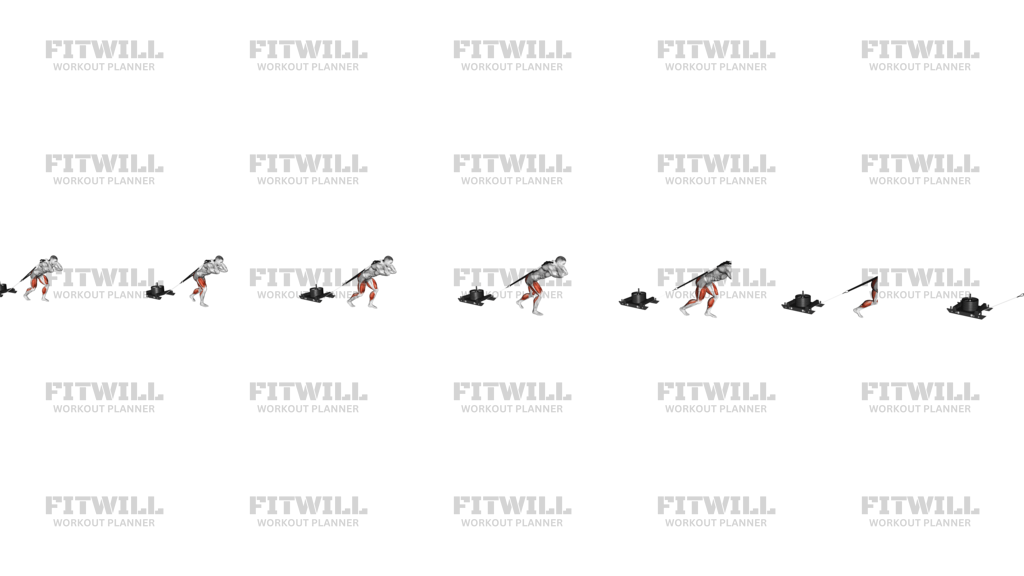
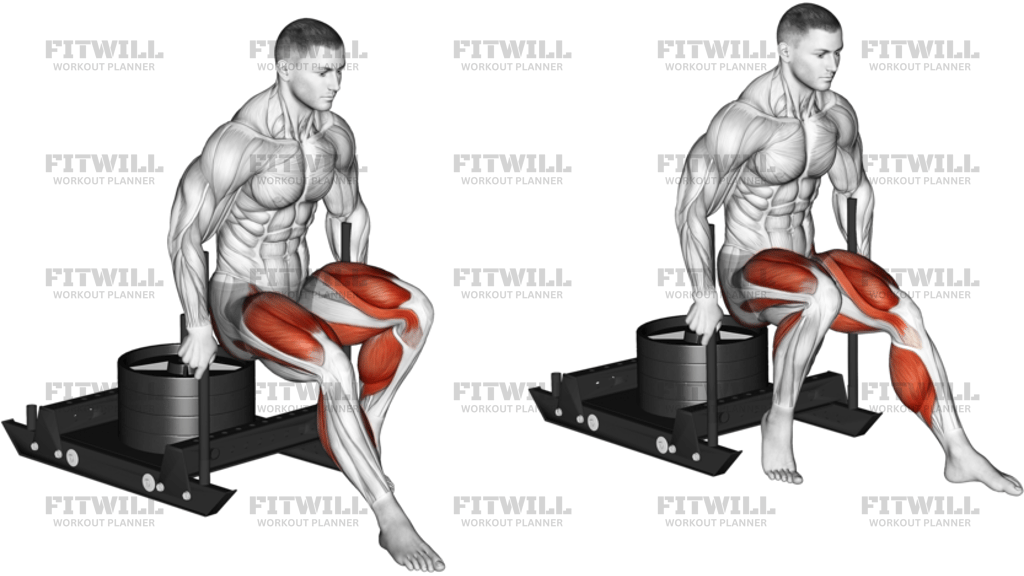
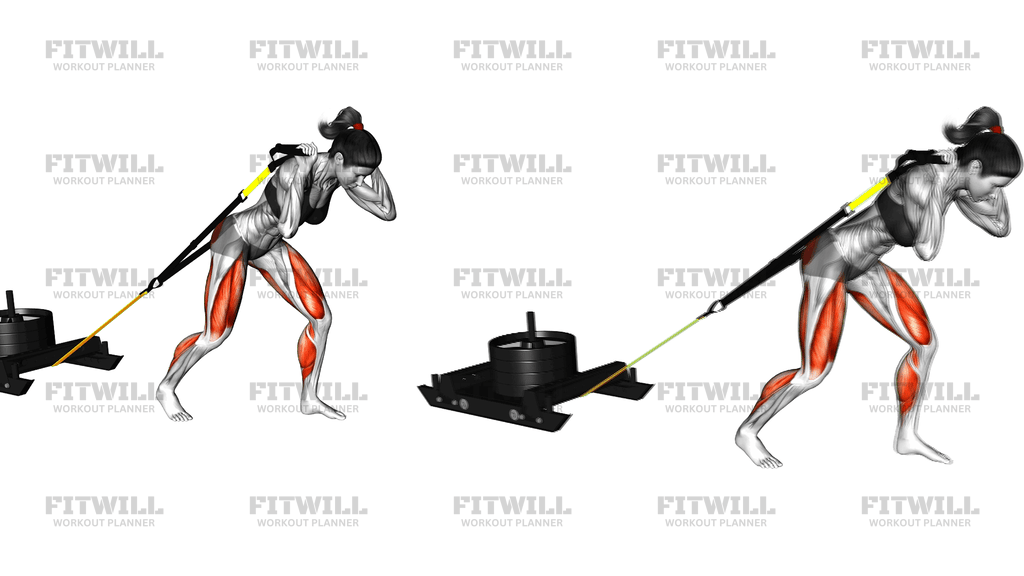
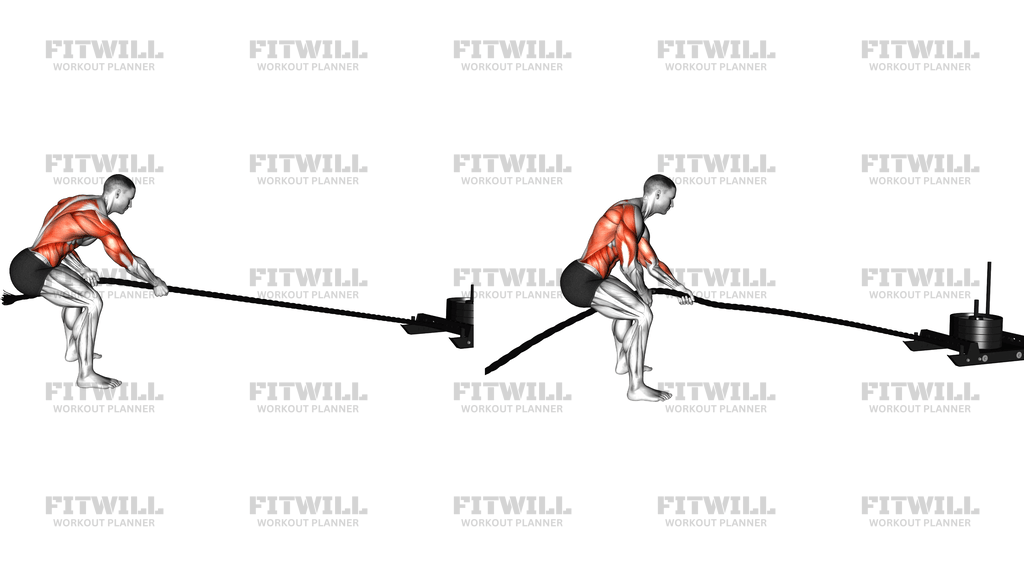
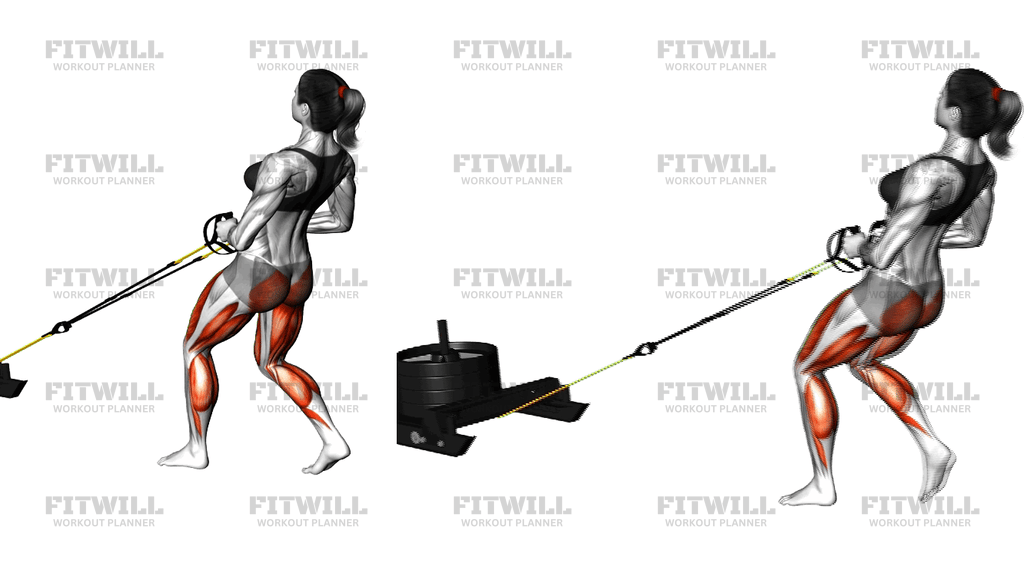
Power Sled Rear Drag (Version 2)
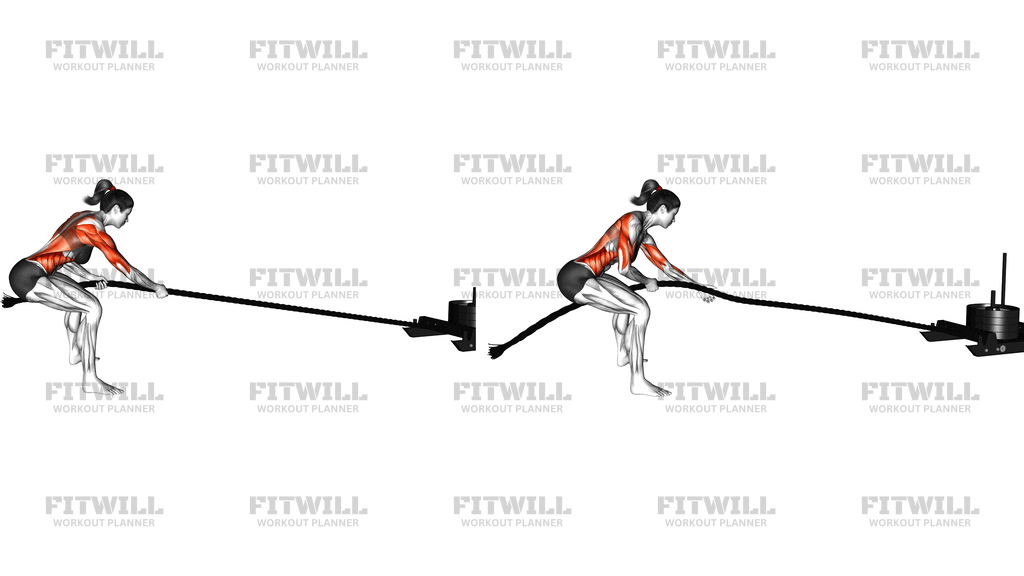
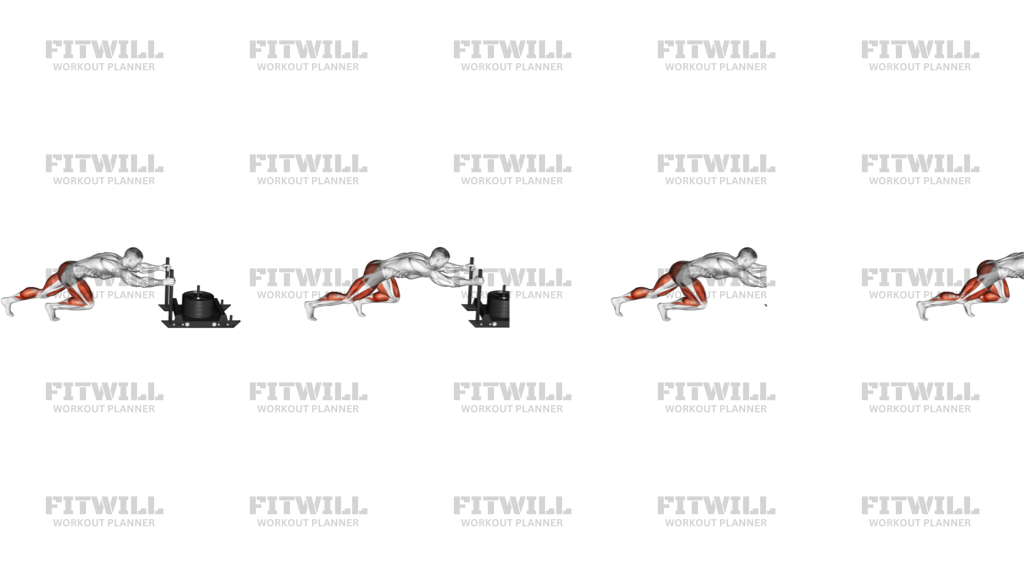
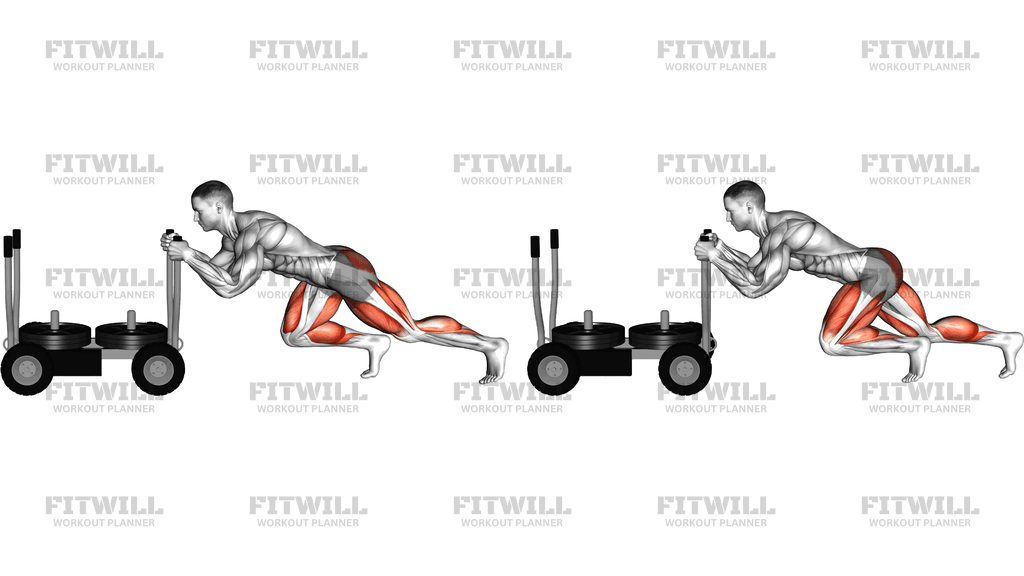
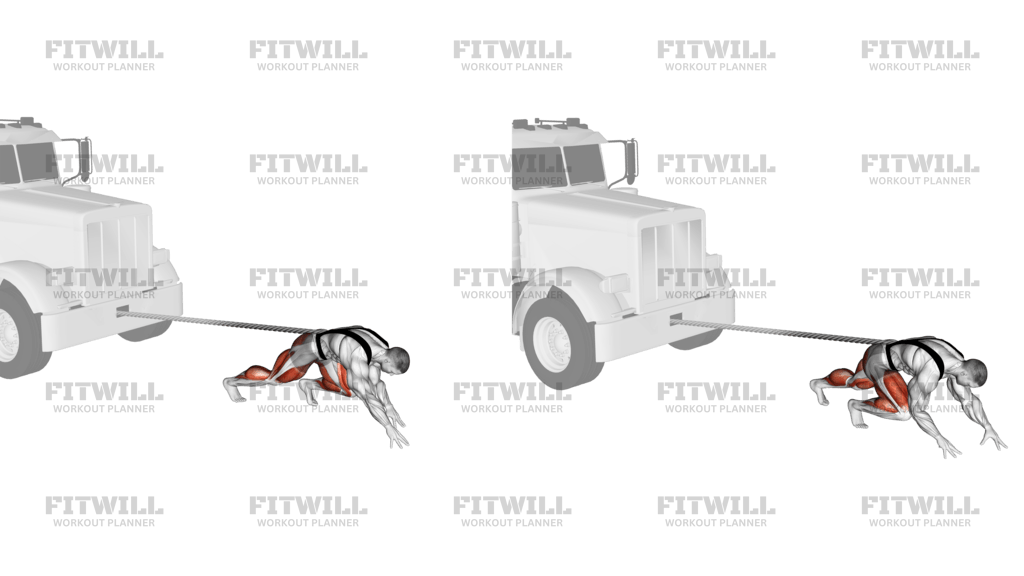
The Power Sled Rear Drag is a loaded sled variation in which you face away from the sled, hold the attached strap or rope handles at your sides, lean your torso slightly forward, and walk or drive forward while the weighted sled drags along behind you. Because the sled is behind your body rather than in front, every step forces your legs to work through a deep, extending stride, and the resistance pulls backward into your hips rather than against your chest.
This movement is a strong builder for the quadriceps, which take on the brunt of each forward drive, but the glutes and hamstrings contribute heavily as your hips extend behind you with each step. The calves work to push off the ground, and your entire trunk has to stay braced to stop the sled from pulling you backward. Compared with a front push, the rear drag places far less stress on the shoulders and arms because you simply hold the handles rather than pressing into the frame.
The setup matters more than most people expect. The strap should run from the sled low to the ground so the pulling angle stays behind your hips, and the handles should be long enough that you can stand upright before leaning into your working position. If the attachment point or handle length forces you to reach or twist, the sled will track sideways and you will lose the clean backward pull that makes this variation effective.
To execute it well, load the sled with a weight that lets you take powerful, deliberate steps rather than tiny shuffles. Grip the handles firmly, hinge slightly at the hips, and drive your legs down and back into the floor with each stride. Your torso angle should stay steady from the first step to the last; if you start standing tall and finish bent over, the weight is too heavy or you are losing your brace.
The Power Sled Rear Drag fits well into lower body strength days, conditioning circuits, and sport preparation programs that emphasize acceleration mechanics, since the backward pull mimics the leg positions of sprinting out of a start. It is also a practical option for people who want heavy leg work with minimal spinal compression, because the load rests on the ground and pulls through the hips instead of loading the spine directly.
Start with a modest weight and a short distance, such as twenty to thirty meters, and focus on consistent foot contacts and a stable torso before adding plates. On turf or rubber flooring the sled will slide smoothly; on rough surfaces you will need less weight to get the same challenge. Stop the set when your torso angle breaks down or your steps shorten noticeably, as sloppy dragging reinforces poor mechanics rather than building strength.
[ Workout Log & Planner ]
Put your next workout in Fitwill
Keep your plan and training log ready when you are.


Instructions
- Load the power sled with the appropriate plates and lay the strap out straight behind it so it will not snag or tangle as the sled follows you.
- Face away from the sled and take a handle in each hand, holding them at your sides with your arms extended and the strap running low behind your hips.
- Walk forward until the strap is taut, then set your feet about hip-width apart and lean your torso forward into a slight forward lean of roughly fifteen to thirty degrees.
- Brace your core and squeeze your shoulder blades down so the backward pull of the sled does not round your upper back or yank your arms behind you.
- Drive forward by planting one foot, pushing the ground away through the ball of your foot, and letting your back leg extend fully behind you with each stride.
- Keep your steps powerful and deliberate, landing each foot under or slightly ahead of your body rather than reaching far forward.
- Breathe steadily throughout, exhaling forcefully on the hardest drive steps and inhaling on the easier recovery strides.
- Continue for the planned distance, keeping your torso angle and stride length consistent from start to finish.
- At the end of the drag, stop with your feet stable, stand tall, let the strap go slack, and turn carefully to reset the sled for the next set.
Tips & Tricks
- The most common mistake with this setup is standing too upright; the sled then pulls you backward and your lower back compensates. Fix it by committing to a forward lean before your first step and holding that angle.
- Short, choppy steps mean the weight is too heavy for your current strength. Reduce the plates until you can take full, driving strides through the entire distance.
- Do not let the handles drift behind your body as you fatigue. Keep them at your sides near your hips so the pull stays symmetrical and your shoulders stay level.
- Watch the strap tracking. If the sled begins swinging side to side, your steps are landing wide or crossing over; aim each foot straight ahead.
- Keep your head in line with your spine instead of craning up to look ahead. Pick a spot on the ground a few meters forward and hold your neck neutral.
- Push through the whole foot, then finish each stride through the toes. Landing on your heels with a stiff knee cuts the quad work and jars the joints.
- Because the sled is behind you, it is easy to lose tension in the strap between steps. Stay leaning into the pull so the sled never catches up and slack develops.
- On your final set, stop when your stride shortens or your torso collapses forward rather than grinding out extra meters with poor mechanics.
Frequently Asked Questions
Which muscles does the Power Sled Rear Drag work the most?
The quadriceps do the bulk of the work on every forward drive, with strong support from the glutes and hamstrings as the hips extend behind you. The calves push off each stride and the core works to resist the sled pulling your trunk backward.
How is a rear drag different from pushing a power sled?
With a rear drag the load pulls behind your hips, so your legs work through long, extending strides and your arms only hold the handles instead of pressing into the frame. Pushing loads the shoulders and triceps more and uses shorter, more compressed steps.
Is the Power Sled Rear Drag suitable for beginners?
Yes, as long as the weight is kept light enough for full, controlled strides. Beginners should start with an empty or lightly loaded sled over a short distance and learn the forward lean and bracing before adding plates.
How heavy should I load the sled for this exercise?
Choose a weight that lets you take powerful, full strides without your torso angle collapsing or your steps shortening into shuffles. If you cannot maintain the same lean and stride length for the whole distance, take a plate off.
Why does my lower back fatigue during the rear drag?
This usually means your torso is too upright or your core is not braced, so the backward pull is being absorbed by your lumbar muscles instead of your legs. Lean in more, tighten your midsection, and keep the strap pulling low behind your hips.
Can I use the Power Sled Rear Drag for conditioning?
Absolutely. Lighter loads over longer distances or in repeated shuttles with short rests create a demanding full-body conditioning effect, while heavier loads over shorter distances build leg strength and acceleration power.
What surface works best for dragging a power sled?
Smooth turf or rubber flooring lets the sled slide freely and keeps the resistance consistent. On rough asphalt or grass the sled creates more friction, so you will need less weight for the same effort.
What can I use if I do not have a power sled?
A weighted tire with a strap, a heavy rope anchored to a plate, or a cable machine with a low attachment and walking range can all approximate the backward pull, though none reproduce the free-moving drag of a sled as precisely.
Is it safe to do the rear drag with a rounded upper back?
No. A rounded upper back lets the sled pull your shoulders forward and shifts stress onto your spine. Keep your chest up, shoulders pulled down, and arms locked at your sides so the pull travels through your hips into your legs.