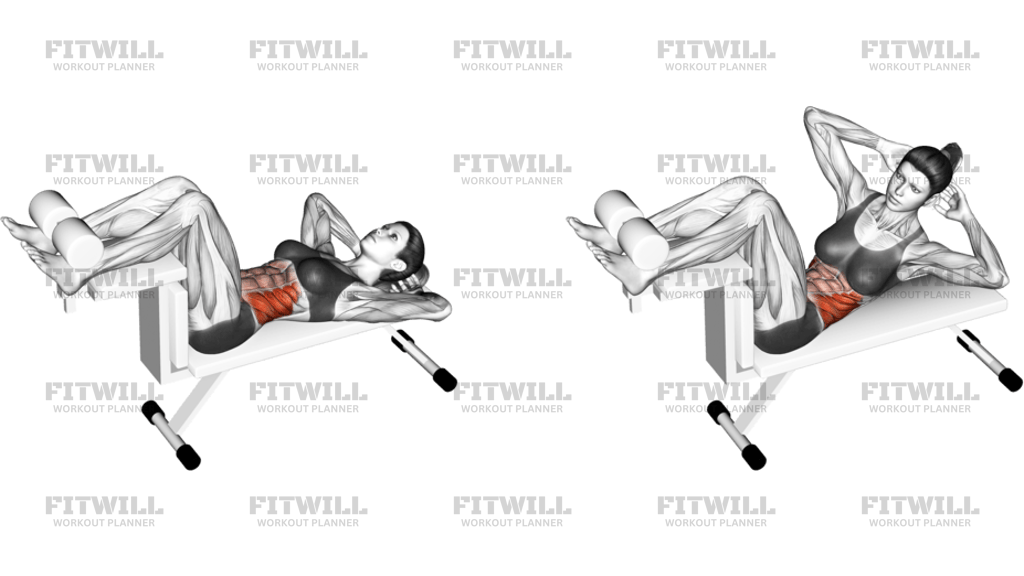
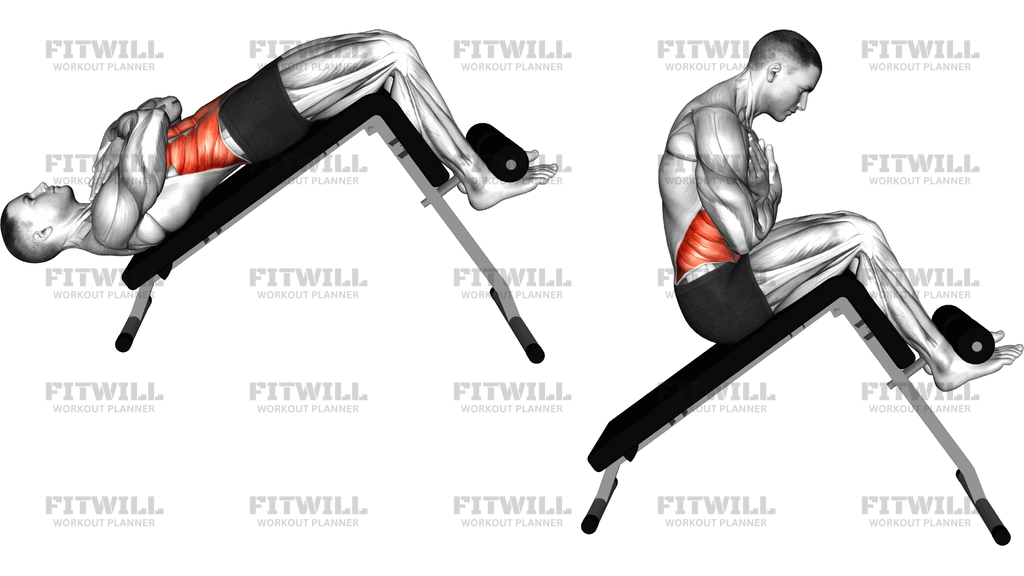
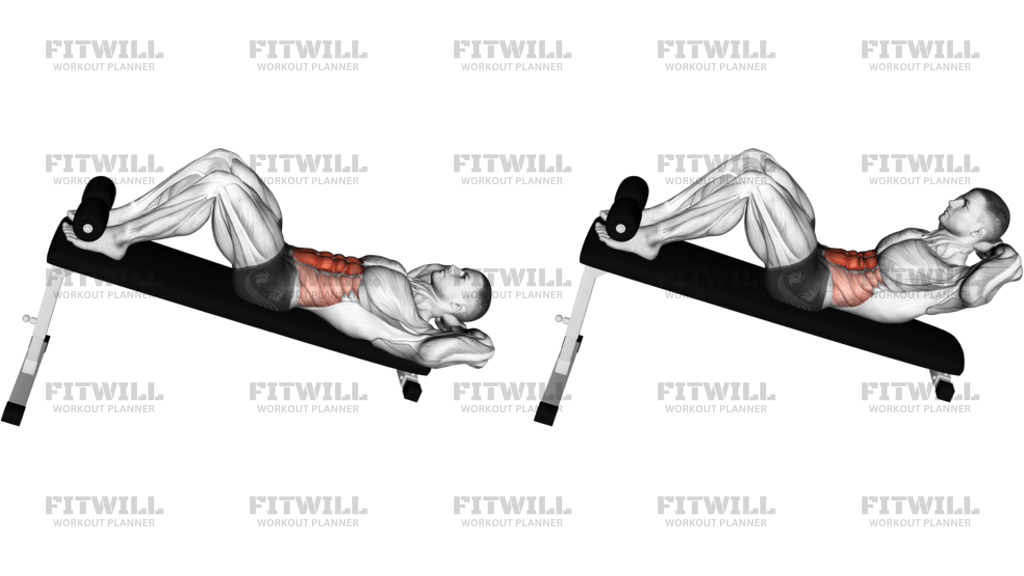
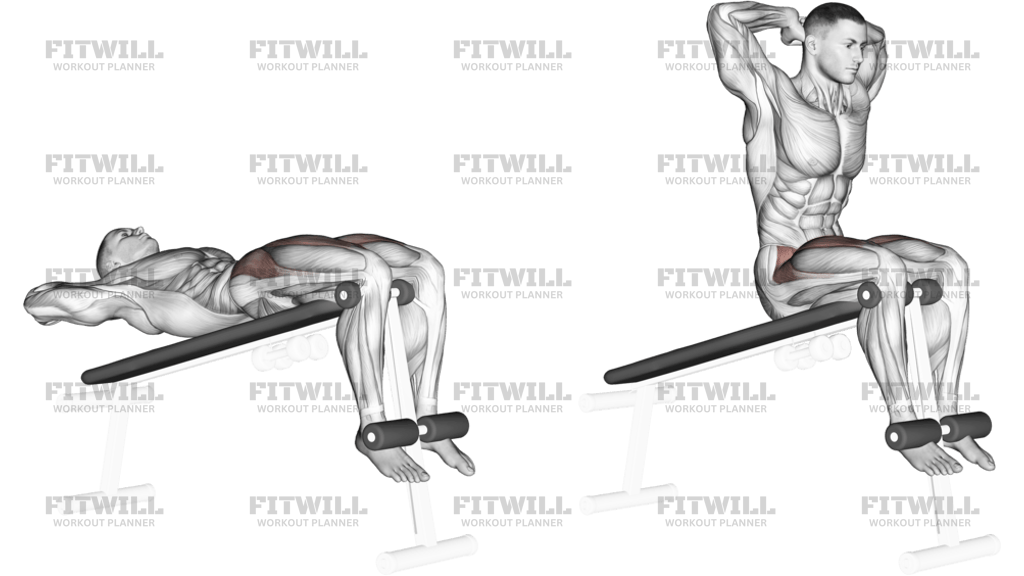
Cable Decline Crunch
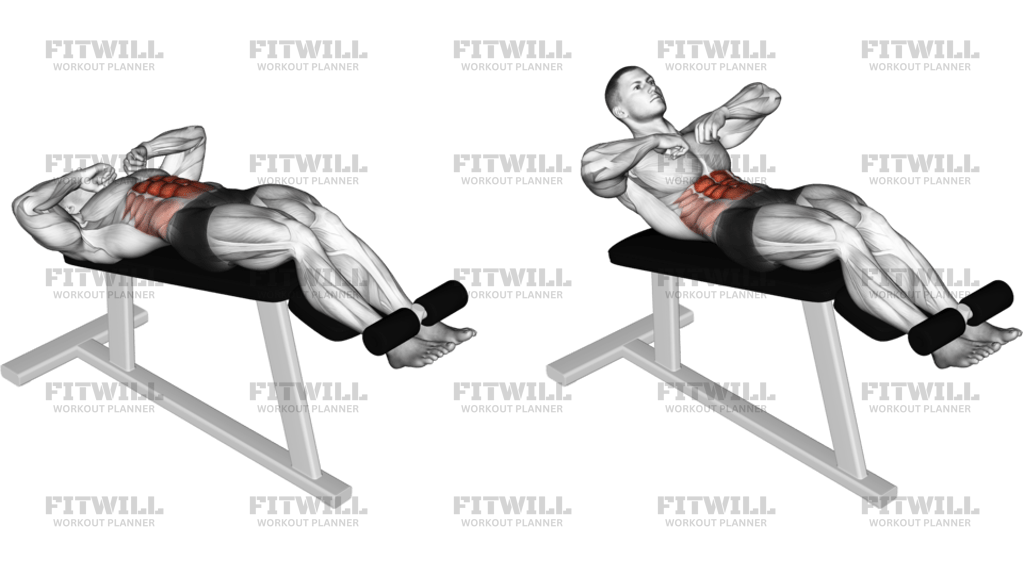
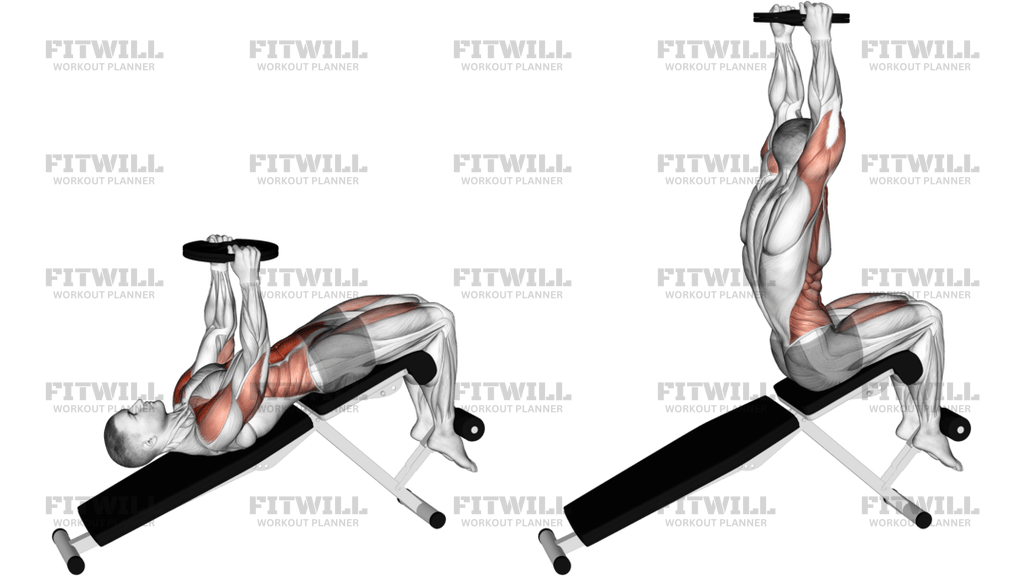
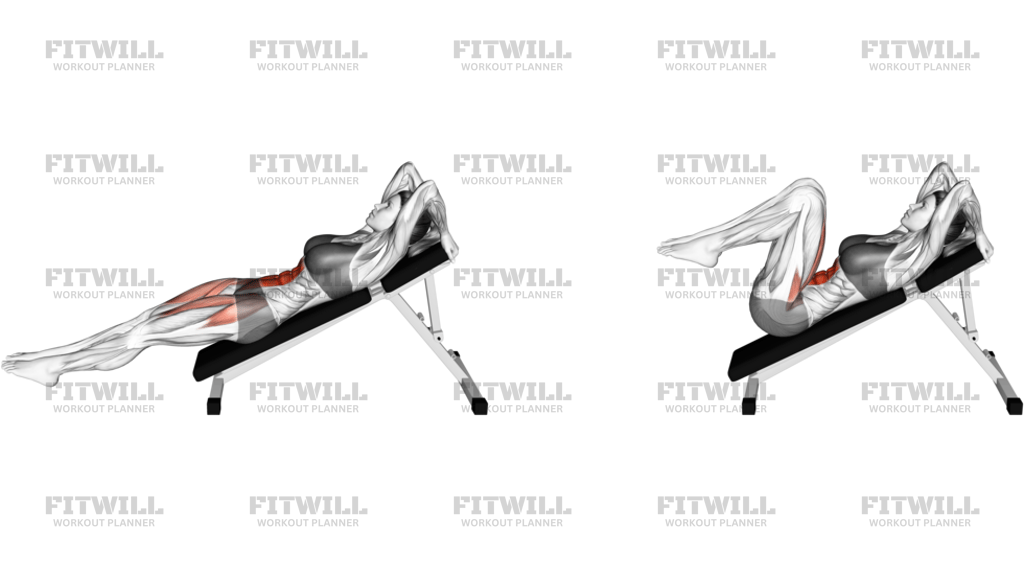
The Cable Decline Crunch combines two of the most effective tools for abdominal training: a decline bench set at a slight angle and a cable stack with a low pulley. You lie back on the bench with your ankles hooked under the roller pads, hold a rope attachment behind your head, and curl your ribcage toward your pelvis against the steady resistance of the cable. Because the cable provides tension through the entire range of motion, the abs work hard both at the bottom of the stretch and at the peak of the contraction, which is difficult to achieve with bodyweight crunches alone.
This movement targets the rectus abdominis, the sheet of muscle running down the front of the abdomen, with the obliques assisting as you flex and slightly rotate the torso. The decline angle increases the range of motion compared to a floor crunch, letting the spine extend a little further at the start so each rep moves through a fuller arc. The hip flexors are involved, but when you focus on curling rather than sitting up, they act mainly as stabilizers for the trunk.
The setup matters more than most people expect. The pulley should be low, the bench angled enough that your head sits above your hips, and the rope held so the hands stay fixed beside or behind your head rather than pulling forward. If the cable path or hand position drifts, the load shifts toward the arms and shoulders and away from the abs, which defeats the purpose of the exercise.
Execution is about spinal flexion, not hip flexion. Think of bringing your sternum toward your pubic bone while your lower back stays in contact with the pad, exhaling as you crunch up and pausing briefly at the top. Lower yourself back with control until your head and shoulders are below your hips, letting the abs stretch under tension before the next rep.
The Cable Decline Crunch suits lifters who have outgrown floor crunches and want progressive overload for the abs, since you can simply add weight to the stack. It fits well at the end of a strength session or as the main abdominal movement on a core-focused day. Start with a light weight until you can keep the neck relaxed and the movement coming purely from the trunk, and stop short of reps that force you to yank the rope or bounce off the bottom.
[ Workout Log & Planner ]
Put your next workout in Fitwill
Keep your plan and training log ready when you are.


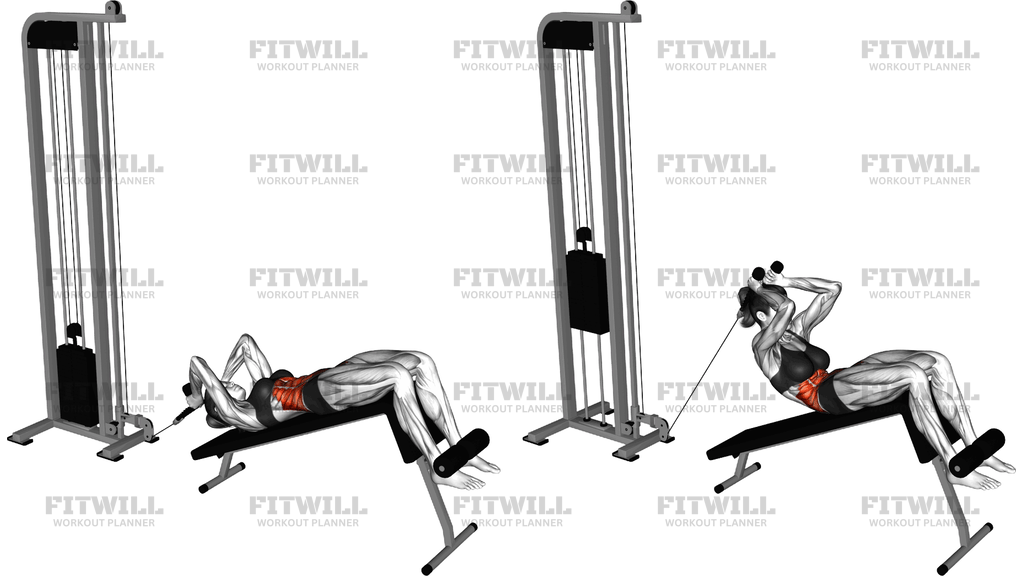
Instructions
- Set a decline bench a few feet in front of a cable machine and attach a rope to the low pulley.
- Sit on the bench, hook your ankles securely under the roller pads, and lie back so your head is above your hips.
- Grab the rope with both hands and place your hands beside or just behind your head, elbows pointing up and out.
- Walk your hips back onto the pad if needed so your lower back is fully supported and the cable runs clear of your body.
- Brace your abs and inhale, letting your torso sink slightly toward the bench to stretch the abdominal wall.
- Exhale and curl your ribcage toward your pelvis, raising your head and shoulders while pressing the lower back into the pad.
- Squeeze briefly at the top, keeping your hands fixed in place so the arms do not pull the rope forward.
- Lower yourself under control until your head and shoulders are below your hips and the abs are stretched under tension.
- Breathe in at the bottom, then begin the next crunch without bouncing off the stretch.
Tips & Tricks
- If your shoulders and biceps fatigue before your abs, the rope is being pulled with the arms. Lock the hands in position beside your head and let the trunk do all the moving.
- Do not sit all the way up. Once your lower back leaves the pad, the hip flexors take over and the abdominal contraction is lost.
- Keep the neck neutral by looking at your knees or the ceiling rather than tucking the chin hard toward the chest, which can strain the neck as the weight gets heavier.
- A common mistake is setting the bench angle too steep too soon. A modest decline keeps the cable path smooth and makes it easier to hold the stretched position at the bottom.
- Move the bench further from or closer to the machine until the rope stays under light tension even when you are fully lowered.
- Pause for a full second at the top of each crunch. Rushed reps turn the exercise into momentum-driven sit-ups.
- If the pads dig into your ankles uncomfortably, tuck the top of your shoes under them or place a small towel around your ankles for padding.
- Progress by adding small increments of weight while keeping the same rep quality, rather than throwing the torso upward with heavier loads.
Frequently Asked Questions
Which muscles does the Cable Decline Crunch work?
The rectus abdominis is the prime mover, curling the ribcage toward the pelvis. The obliques assist in trunk flexion, and the hip flexors help stabilize the trunk, though they should not dominate the movement.
How is the Cable Decline Crunch different from a regular floor crunch?
The decline angle allows a greater stretch at the bottom and a longer range of motion, and the cable keeps constant tension on the abs throughout, whereas a floor crunch loses resistance near the top.
Is the Cable Decline Crunch suitable for beginners?
Yes, but beginners should start with very light weight or even a plain decline crunch first, since the declined position with added load requires decent trunk control to perform safely.
Why should my hands stay fixed on the rope behind my head?
If the hands pull forward, the arms and shoulders contribute and the abs stop working as hard. Treat the rope as an anchor, with all the movement coming from the torso curling.
How far up should I crunch on the Cable Decline Crunch?
Only far enough that your lower back stays pressed into the pad and your shoulder blades lift off the bench. Sitting all the way up shifts the work to the hip flexors.
What is the most common mistake with this exercise?
Turning it into a weighted sit-up by yanking the rope and flexing at the hips. The fix is to cue a curl of the ribcage toward the pelvis and keep the lumbar spine on the bench.
What can I use instead of a decline bench if my gym does not have one?
A cable crunch performed kneeling on the floor uses a similar low-to-high pulling pattern, or you can do stability ball crunches for a comparable stretched range of motion.
How heavy should I go on the Cable Decline Crunch?
Choose a weight that lets you complete all reps with a clear pause at the top and a controlled lower. If you have to fling your torso or pull with the arms to finish a rep, the load is too heavy.
Is it safe for the lower back and neck?
For most people it is, provided the movement stays smooth and the lower back remains supported on the pad. Keep the neck relaxed, avoid jerking the rope, and stop if you feel anything more than muscular effort in the trunk.