Smith Wide Grip Decline Bench Press
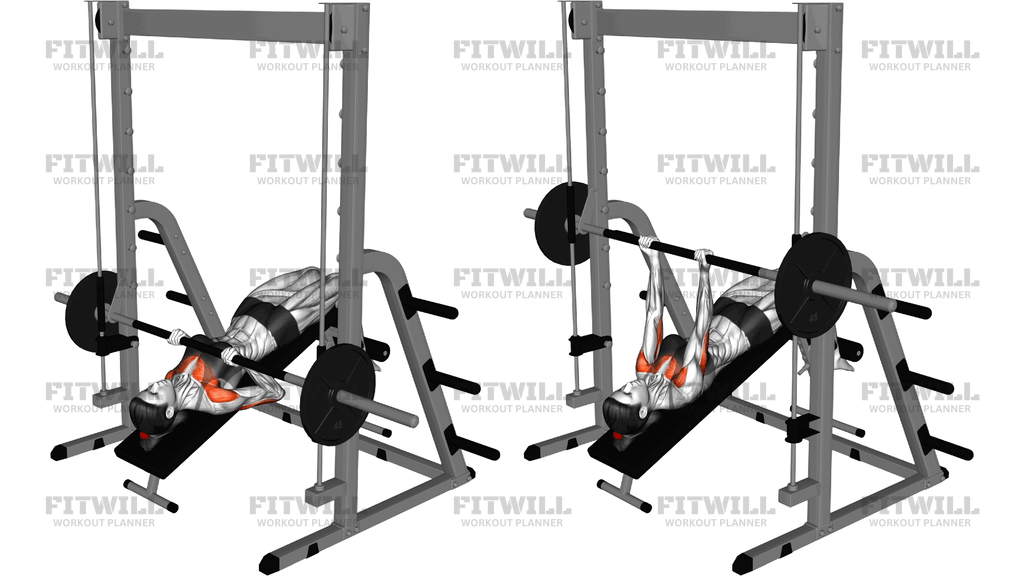
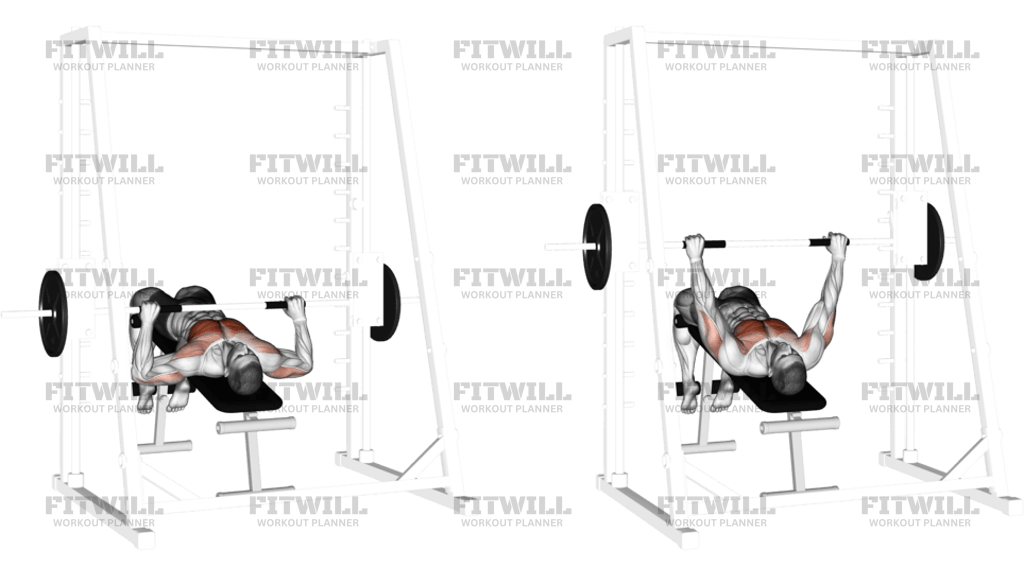
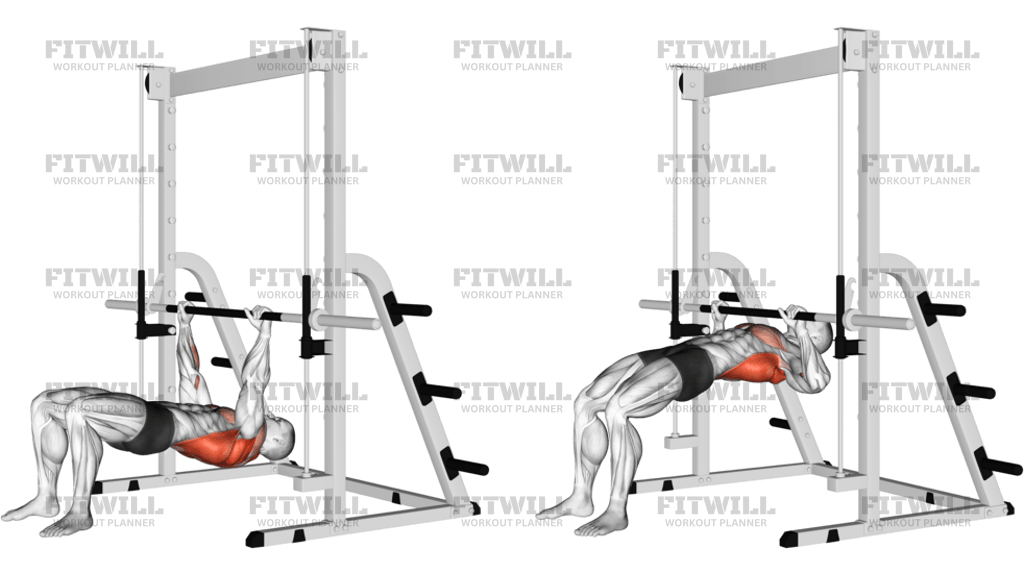
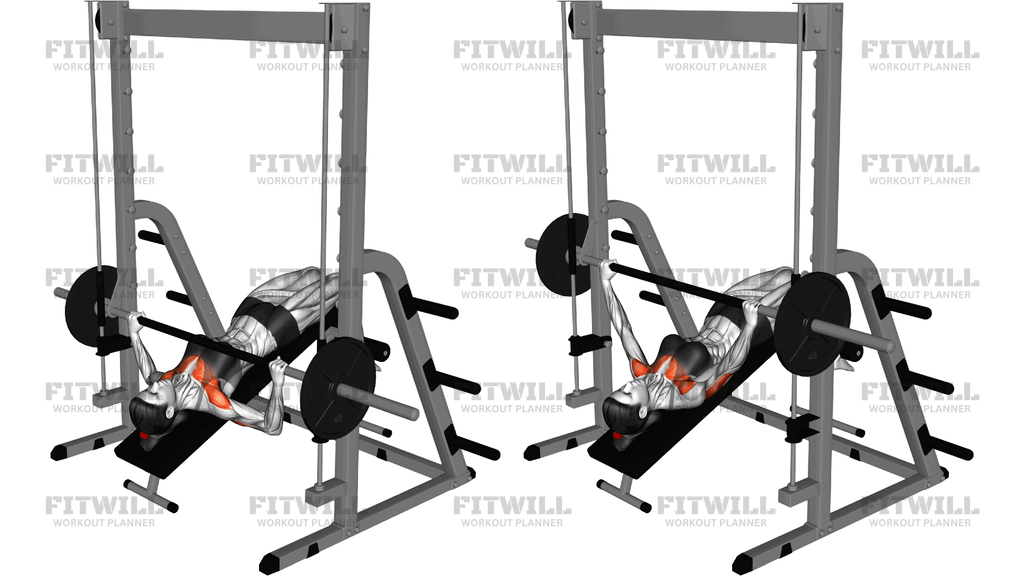
The Smith Wide Grip Decline Bench Press is a guided barbell press performed on a decline bench set inside a Smith machine. Your head sits lower than your hips, and you press the fixed barbell upward from a wide, overhand grip until your arms are fully extended over your lower chest. The Smith machine's vertical track removes the need to balance the bar, so you can focus entirely on pressing hard with the chest while the machine and safety stops handle stability.
This movement places the emphasis on the lower portion of the chest, specifically the sternal head of the pectoralis major, which works hardest when the arms press on a downward-to-upward angle. The triceps finish each lockout and the front shoulders assist through the middle of the press. The wide grip shifts a little more work to the outer chest and shortens the range slightly compared to a shoulder-width press, which many lifters find friendlier on the elbows at the bottom.
It suits a few groups well. Lifters training chest without a spotter get the pressing stimulus of a heavy decline press with the safety of rotating hooks and adjustable stops. Intermediate and advanced lifters can use it to isolate the lower chest with controlled tempo work, and beginners often appreciate the fixed bar path while they learn what a decline press should feel like.
Setup matters more here than most people expect. The bench must be positioned so the bar meets your lower chest, not your neck or mid-torso, and because the Smith machine bar only moves vertically, the bench cannot be a few inches off. Set it, lie back, unrack, and check where the bar touches before adding weight. If the bar tracks toward your throat, reposition the bench lower.
To execute well, lower the bar under control to your lower chest or just above it, keep your elbows around 45 to 60 degrees from your torso rather than flared straight out, and drive the bar up and slightly back over your shoulders until your arms are extended. Squeeze the chest at the top without shrugging your shoulders toward your ears.
Use it as a main lower-chest press on chest days, as a safer substitute for a free-weight decline barbell press, or as a finisher with moderate weight and higher reps. Because the fixed path can stress shoulders if your natural press arc differs from vertical, keep loads moderate at first and prioritize a smooth, repeatable groove over max attempts.
[ Workout Log & Planner ]
Put your next workout in Fitwill
Keep your plan and training log ready when you are.


Instructions
- Set a decline bench inside the Smith machine so that when you lie back, the bar will lower to your lower chest, roughly in line with the bottom of your sternum.
- Set the safety stops just below the depth you expect the bar to reach, then load the bar evenly on both sides.
- Lie back on the decline bench with your head lower than your hips, hook your feet under the leg rollers, and place your hands wider than shoulder width with an overhand grip.
- Pull your shoulder blades down and back against the bench, brace your core, and rotate the bar to unrack it from the hooks.
- Start with your arms fully extended and the bar held over your lower chest, not over your face or neck.
- Inhale and lower the bar in a straight, controlled line until it lightly touches your lower chest or comes just above it, keeping your elbows at about 45 to 60 degrees from your torso.
- Press the bar back up along the same vertical path, exhaling as you drive through the sticking point, and extend your arms without locking the elbows hard.
- Squeeze your lower chest briefly at the top, keeping your shoulder blades pinned to the bench instead of shrugging.
- Complete all reps, then rotate the bar to re-rack it securely on the hooks before you relax or sit up.
- Sit up slowly from the decline position to avoid dizziness, especially after heavy sets.
Tips & Tricks
- Check the bar's contact point with an empty bar first. Because the Smith machine only moves vertically, a bench set even a few inches too high will send the bar toward your throat instead of your lower chest.
- Do not bounce the bar off your sternum. The decline angle makes the bar approach the chest faster than a flat press, so slow your descent in the last few inches.
- If your shoulders feel pinched, narrow your grip slightly and reduce the depth. A very wide grip with the elbows flared fully out is the most common source of shoulder discomfort on this press.
- Keep your feet hooked under the leg rollers throughout the set. Sliding down the decline bench mid-set shifts the press angle and can change where the bar lands.
- The Smith machine bar is counterbalanced or lighter than it looks on some models. Check the starting resistance with a light warm-up set before loading plates based on your free-weight numbers.
- Avoid letting your hips lift off the bench to shorten the press. If you need to push through your hips to move the weight, reduce the load.
- Drive the bar up and slightly toward your shoulders at the top rather than straight toward the ceiling above your chest, which keeps tension on the chest and off the front shoulders.
- Use safety stops even when you feel fresh. Getting pinned under a decline press with a loaded Smith bar is awkward to escape on your own.
- Pause for one second with the bar just above your chest on decline presses if you notice yourself cutting the range short as fatigue builds.
Frequently Asked Questions
What muscles does the Smith Wide Grip Decline Bench Press work?
The lower chest, or sternal head of the pectoralis major, is the primary mover. The triceps assist through lockout and the front shoulders help during the middle of the press.
Why use a wide grip on the decline press instead of a shoulder-width grip?
A wide grip shortens the range of motion and biases the outer and lower chest a bit more, though it also increases shoulder rotation. Grip just outside shoulder width to about one and a half times and see what feels strong and comfortable.
Is the Smith Wide Grip Decline Bench Press good for beginners?
Yes, the fixed bar path and rotating hooks make it one of the safer ways to learn the decline press without a spotter. Start with an empty bar to dial in the bench position before adding plates.
Where exactly should the bar touch my chest on this exercise?
It should come down to your lower chest, around the bottom of the sternum. If the bar is approaching your neck or upper chest, the bench is set too high in the machine.
Can I substitute free-weight decline bench press for the Smith version?
Yes, a barbell or dumbbell decline press trains the same area. The Smith version trades some stabilizer demand for safety and control, while the free-weight version builds more balance and coordination.
Why does the bar feel lighter or heavier than the plates I loaded?
Many Smith machine bars are counterbalanced or fixed at a lighter starting weight than a standard barbell. Do a light warm-up set and adjust your plate loading based on that, not on your free-weight bench numbers.
What is the most common mistake with this press?
Setting the bench in the wrong spot so the bar tracks toward the throat, and bouncing the bar off the chest because the decline angle speeds up the descent. Fix both by positioning the bench carefully and lowering with control.
How do I stay safe training this exercise alone?
Set the safety stops just below your chest depth, never place your feet flat without securing them under the leg rollers, and always rotate the bar fully onto the hooks before letting go.
Should I use the Smith Wide Grip Decline Bench Press on heavy or light training days?
It works for both, but it is especially useful for moderate to heavy controlled pressing without a spotter. For maximum-effort singles, a free-weight press with a spotter is usually the better choice because the Smith path does not match everyone's natural press arc.