Inverted Row Bent Knees
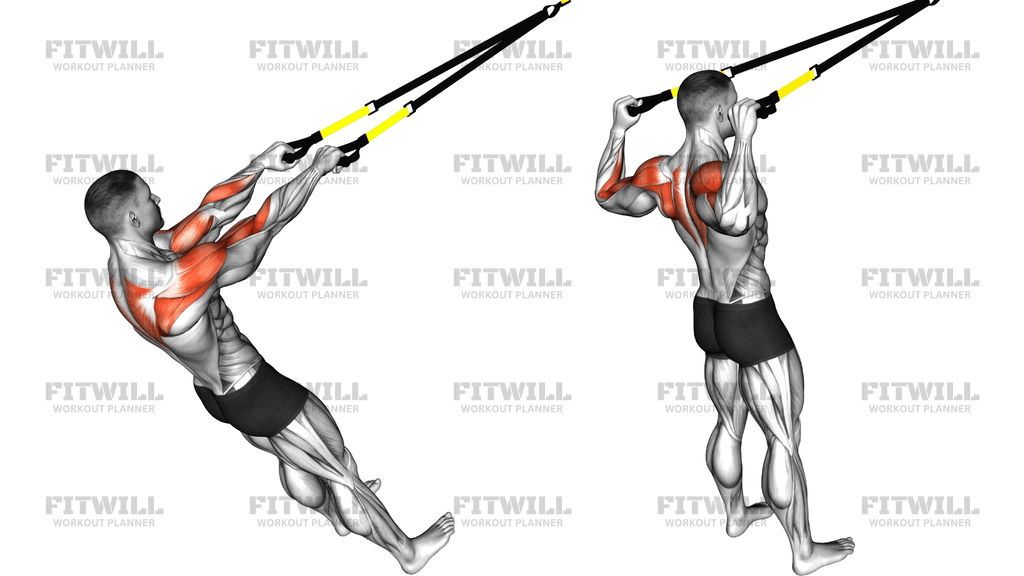
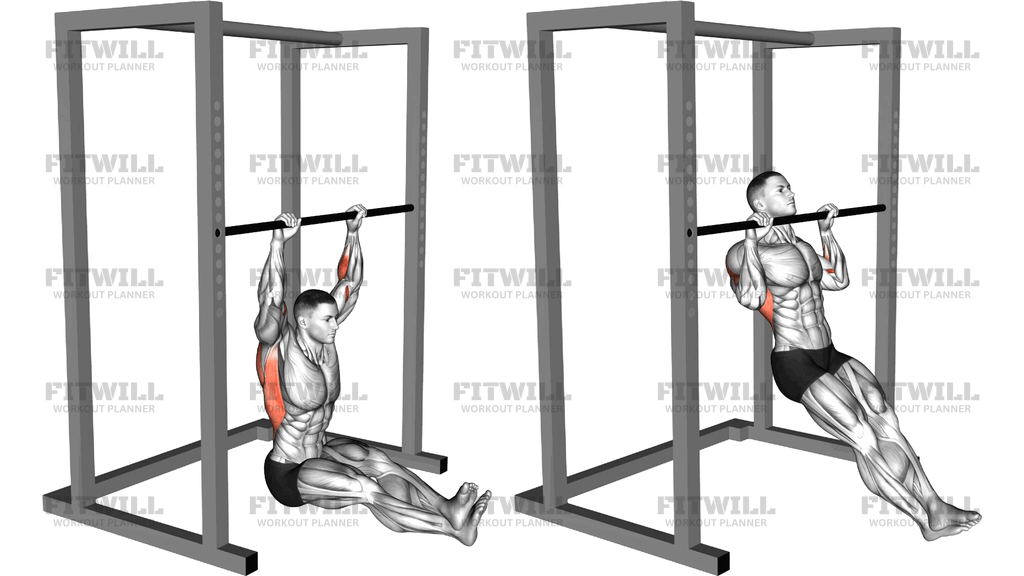
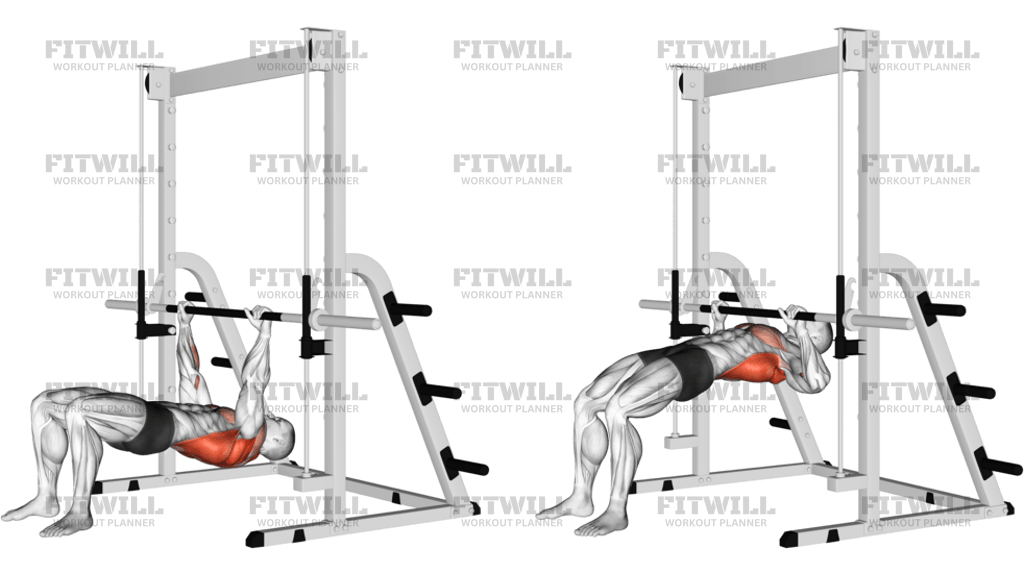
Inverted Row Bent Knees is a bodyweight pulling exercise performed under a fixed bar, usually a Smith machine bar or similar setup, with the knees bent to shorten the lever and make the row more accessible. It trains the upper back through horizontal pulling while also asking the trunk to stay rigid, so you build strength in the traps, rhomboids, lats, rear shoulders, and biceps at the same time.
The bent-knee position matters because it changes how much of your bodyweight you have to move and how easy it is to keep the torso aligned. With the heels planted and the knees flexed, you can keep the hips from sagging, set the chest position more precisely, and focus on pulling the sternum toward the bar instead of yanking with momentum. That makes this version useful for beginners, higher-rep back work, and technique-focused training when you want a strict row without a lot of lower-body leverage.
A good rep starts from a stable hang: hands fixed on the bar, shoulders set, glutes lightly engaged, and the body forming one long line from shoulders through knees. From there, pull by driving the elbows back and squeezing the shoulder blades together, not by craning the neck or kicking the hips upward. The bar should travel to the lower chest or upper ribs, depending on your limb length and the bar height. At the top, pause long enough to feel the upper back working, then lower under control until the arms are straight and the shoulders are still organized.
Because this is a bodyweight row, exercise quality depends heavily on bar height, foot placement, and how much of your mass is supported by the feet versus the hands. A bar that is too low or a body that is too far under the anchor can make the set unreasonably hard; a bar that is too high can turn it into a partial range pull. Adjust the setup so each rep stays smooth and repeatable, with no twisting through the torso and no loss of shoulder position on the way down.
Use Inverted Row Bent Knees when you want a strict horizontal pull for back development, posture work, or accessory volume without loading the spine with external weight. It fits well in warm-ups, upper-body strength blocks, and supersets with pressing or core work. The safest and most productive version is the one where you can keep the knees bent, ribs controlled, and rep path consistent from start to finish without jerking off the bottom.
[ Workout Log & Planner ]
Put your next workout in Fitwill
Keep your plan and training log ready when you are.


Instructions
- Set a fixed bar, usually on a Smith machine or sturdy rack, at about lower-chest to waist height so you can hang underneath it with bent knees.
- Lie under the bar and take an overhand grip slightly wider than shoulder width, then place your heels on the floor with the knees bent and the feet flat.
- Slide your body so your shoulders are under the bar and your torso forms a straight line from shoulders to knees without arching the lower back.
- Set the shoulders down and back before you pull, then tighten the glutes and brace the abdomen to stop the hips from dropping.
- Pull your chest toward the bar by driving the elbows back and squeezing the shoulder blades together, keeping the neck long and the ribs controlled.
- Touch or nearly touch the lower chest or upper ribs to the bar, depending on your setup and arm length, and pause briefly at the top.
- Lower yourself in a controlled line until the arms are straight again and the shoulders stay organized, avoiding any bounce off the bottom.
- Exhale as you pull up, inhale as you lower, and reset the shoulder position before the next rep.
Tips & Tricks
- If the row feels too hard, raise the bar or walk your feet back less so your body angle is more upright.
- Keep the knees bent at roughly a right angle; straightening the legs turns the movement into a harder lever and changes the load noticeably.
- Think about pulling the sternum to the bar rather than pulling the chin forward, which helps keep the neck out of the rep.
- Let the shoulder blades move, but do not shrug at the top; the upper traps should assist, not take over the entire pull.
- Use a brief squeeze at the top instead of jerking higher, because the pause makes the row cleaner and reduces swinging.
- If your hips drift, lightly tuck the pelvis and squeeze the glutes before every rep to keep the line from shoulders to knees stable.
- Keep the elbows about 30 to 45 degrees from the torso so the pull stays balanced between the upper back and lats.
- Stop the set when the chest stops reaching the bar under control; once you start kicking or bending the neck, the set is over.
Frequently Asked Questions
What muscles do inverted rows with bent knees work?
They mainly train the upper back, especially the traps and rhomboids, while the lats, rear shoulders, and biceps help with the pull.
Why do the knees stay bent in this version?
Bent knees shorten the body lever and make the row easier to control, which is helpful for beginners or higher-rep back work.
Where should the bar touch at the top?
Aim for the lower chest or upper ribs. If you have to crane your neck to reach higher, the bar is probably too low or your setup is too aggressive.
How far should my feet be from the bar?
Set them far enough forward that you can keep a straight line from shoulders to knees. If your hips sag, move the feet or raise the bar to make the angle more manageable.
Should I hold my breath during the rep?
No. Inhale as you lower and exhale as you pull so you can keep the ribs and torso braced without losing tension.
What is the most common mistake on this exercise?
The biggest error is turning the row into a hip-driven swing. Keep the torso still and let the elbows and shoulder blades do the work.
Can I make this exercise harder without adding weight?
Yes. Lower the bar, walk the feet farther out, or straighten the legs more to increase the amount of bodyweight you have to move.
Is this a good exercise for posture or upper-back strength?
Yes. The fixed-bar row pattern is a strong choice for building scapular control, upper-back endurance, and balanced pulling strength.