Medicine Ball Rotary Throw
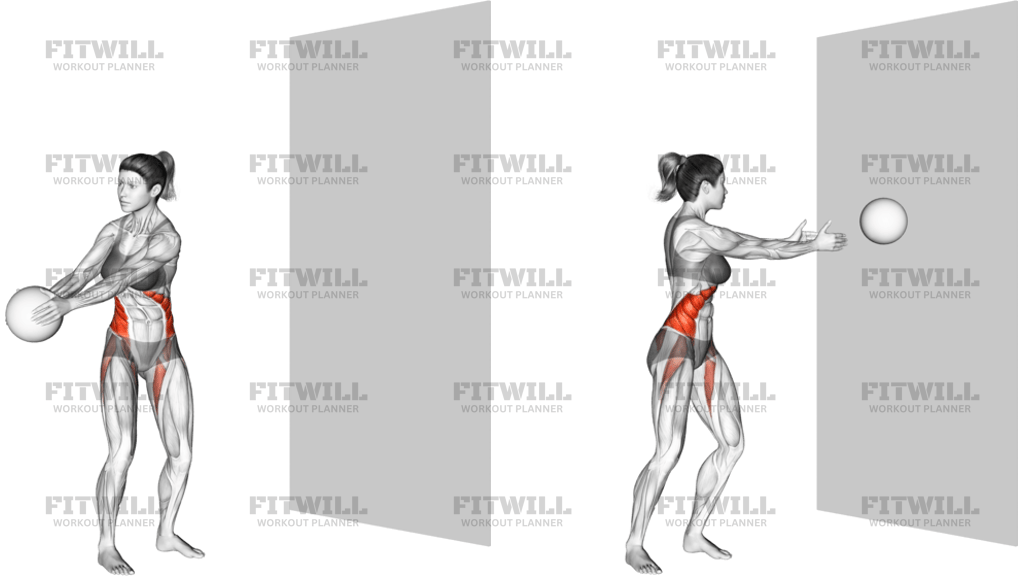
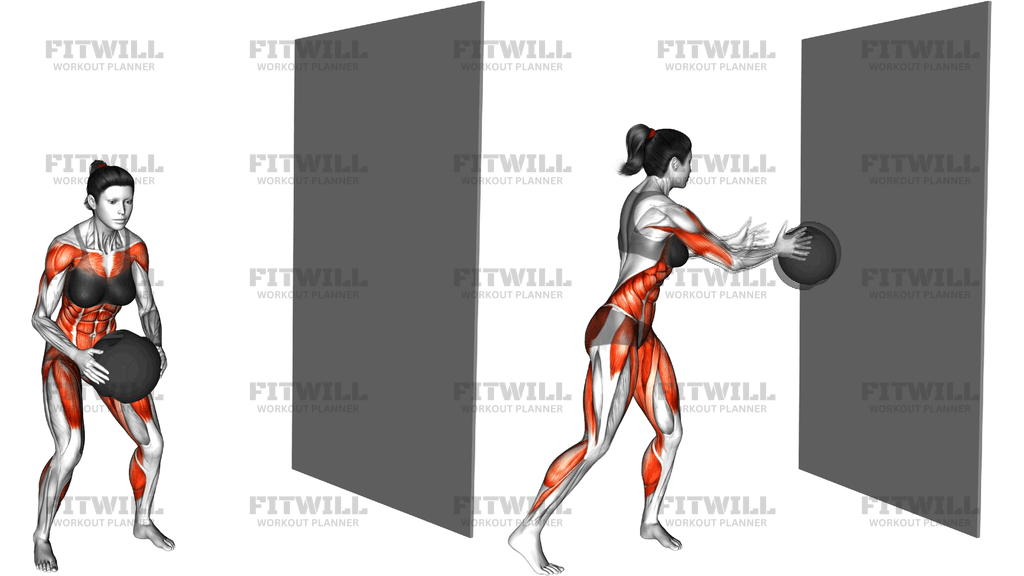
The Medicine Ball Rotary Throw is an explosive rotational exercise where you wind a medicine ball across your body and hurl it sideways into a sturdy wall with as much force as you can generate. Unlike slow, controlled core work, this movement trains your trunk to produce and transfer power quickly, which is closer to what your body actually does when you swing a bat, throw a ball, or change direction on the field.
The main drivers are the obliques on the side of your trunk, but the movement is genuinely full-body. Your hips rotate through the throw, your glutes and legs drive the turn, your chest, shoulders, and arms deliver the ball, and your deep core has to stay braced so force travels through you instead of leaking out at your lower back. That chain from floor to hands is exactly what makes this drill valuable for athletes in rotating sports.
Setup matters more than people expect. Stand far enough from the wall that the ball has a short flight, but close enough that your throw stays accurate, and position yourself so your rotation sends the ball straight into the wall rather than at an angle. A wall you are allowed to mark up, or a designated throw wall, is the right target. Choose a firm medicine ball you can grip confidently, usually somewhere in the 4 to 15 pound range depending on your training age and control.
To execute it well, load the movement first: turn your trunk away from the wall with the ball held at your far hip, let your back heel lift, then unwind aggressively, leading with your hips and letting your arms follow like a whip. Release the ball with extended arms toward the wall and let it bounce or drop before you reset. The power should come from rotation, not from pushing with your arms alone.
This exercise fits well at the start of a workout as a power primer, or as a main conditioning block in athletic programs. Use sets of 5 to 8 explosive throws per side with full recovery between sets, rather than grinding out high-repetition sets with a heavy ball. If your throws start losing snap or accuracy, stop the set. Quality of effort is the whole point of the movement.
[ Workout Log & Planner ]
Put your next workout in Fitwill
Keep your plan and training log ready when you are.


Instructions
- Stand about two to three feet from a sturdy wall, facing perpendicular to it so your throwing side is nearest the wall.
- Hold a medicine ball with both hands at your hip on the side farthest from the wall, elbows bent and the ball snug against your body.
- Set your feet roughly shoulder-width apart with soft knees, and shift your weight onto your back foot as you coil your trunk away from the wall.
- Brace your core and keep your chest tall before initiating the throw.
- Unwind explosively by driving your hips toward the wall, letting your trunk rotate and your arms extend as they follow the turn.
- Release the ball with both hands at chest height so it travels straight into the wall in front of you.
- Let the ball bounce or fall to the floor, and avoid chasing the throw by lunging after it.
- Walk or reach down to retrieve the ball, reset your stance on the same side, and complete your planned reps before switching sides.
- Exhale sharply as you throw and inhale as you coil back into the loaded position.
- Alternate sides set by set so both directions of rotation get equal work.
Tips & Tricks
- If your throws drift off target, you are probably facing the wall too directly. Square your shoulders away from it and let rotation bring you around.
- The most common mistake is arm-throwing. If your hips stay planted, the ball goes nowhere fast; think of your arms as the last link in a chain that starts at your back foot.
- Keep the ball tight to your hip during the coil. Letting it drift away from your body lengthens the lever and strains the shoulders without adding power.
- Do not let your front knee cave inward as you rotate; drive it slightly outward so your hip can turn freely.
- Choose a lighter ball if your throws look like pushes. A ball that is too heavy slows your rotation and teaches your body to move slowly.
- Stop the set the moment your throw height or distance drops noticeably. This is a power exercise, not an endurance one.
- Warm up with slower, half-speed rotations toward the wall before committing to full-effort throws.
- On hard floors, let the ball drop and roll back instead of sprinting after the rebound, which can sneak up on you quickly.
Frequently Asked Questions
What muscles does the Medicine Ball Rotary Throw work?
The obliques are the primary movers, with strong contributions from the deep core, glutes, hips, chest, and shoulders. The exercise trains the whole rotational chain rather than one isolated muscle.
Is the Medicine Ball Rotary Throw suitable for beginners?
Yes, as long as you start with a light ball, around 4 to 8 pounds, and focus on smooth, accurate throws before adding intensity. Learning the hip-first sequencing matters more than throwing hard.
How heavy should the medicine ball be for rotary throws?
Pick a weight you can throw with visible speed and control for 5 to 8 reps per side. If the ball slows your rotation or your throws become pushes, go lighter.
How far should I stand from the wall during the Medicine Ball Rotary Throw?
Two to three feet works for most people. Close enough for accuracy, far enough that the rebound is easy to see and avoid.
Why do my throws hit the wall at an angle instead of straight on?
Your starting stance is probably too square to the wall. Turn your body more perpendicular to it so the rotation itself brings the ball around to the target.
Can I substitute the Medicine Ball Rotary Throw if I have no wall?
Yes. You can throw to a partner, use a rebounder trampoline, or perform a rotational scoop toss into open space if you have a safe landing area for the ball.
Should I do Medicine Ball Rotary Throws before or after lifting?
Do them early in the session while you are fresh, either as a warm-up power primer or as the first main exercise. Explosive rotational work loses its value once you are fatigued.
How many sets and reps should I use?
Three to five sets of 5 to 8 explosive throws per side with a minute or more of rest between sets is a solid range. Prioritize throw quality over volume.
Is the Medicine Ball Rotary Throw safe for people with lower back issues?
Anyone with an existing back condition should clear the movement with a qualified professional first. If cleared, use a lighter ball and emphasize hip rotation rather than twisting purely through the spine.