Barbell Pendlay Row
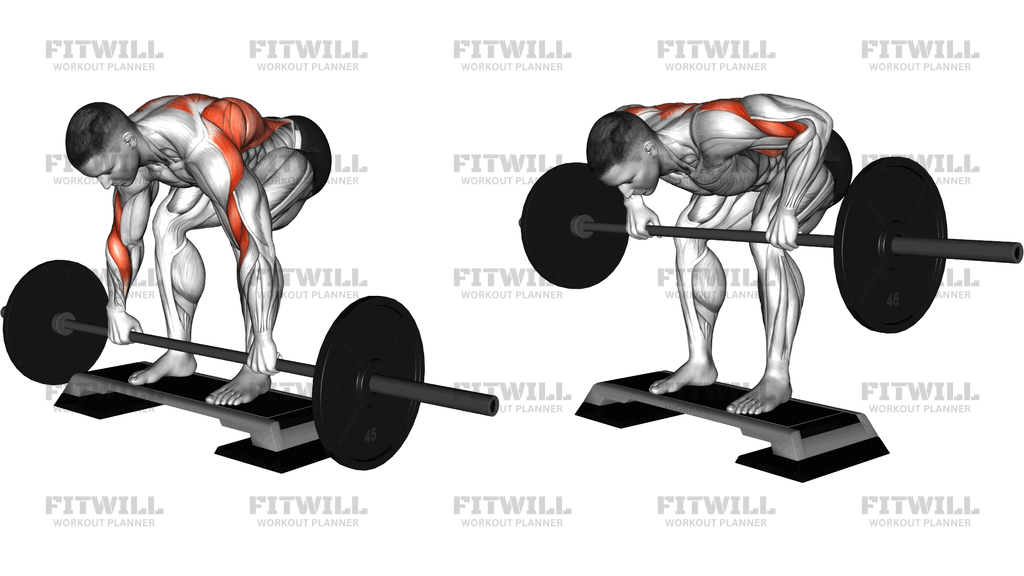
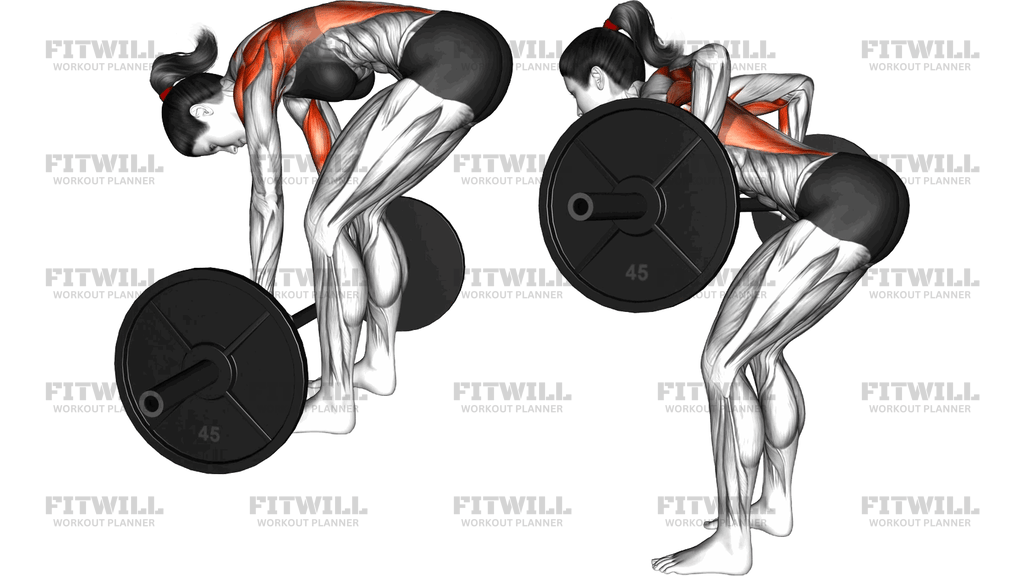
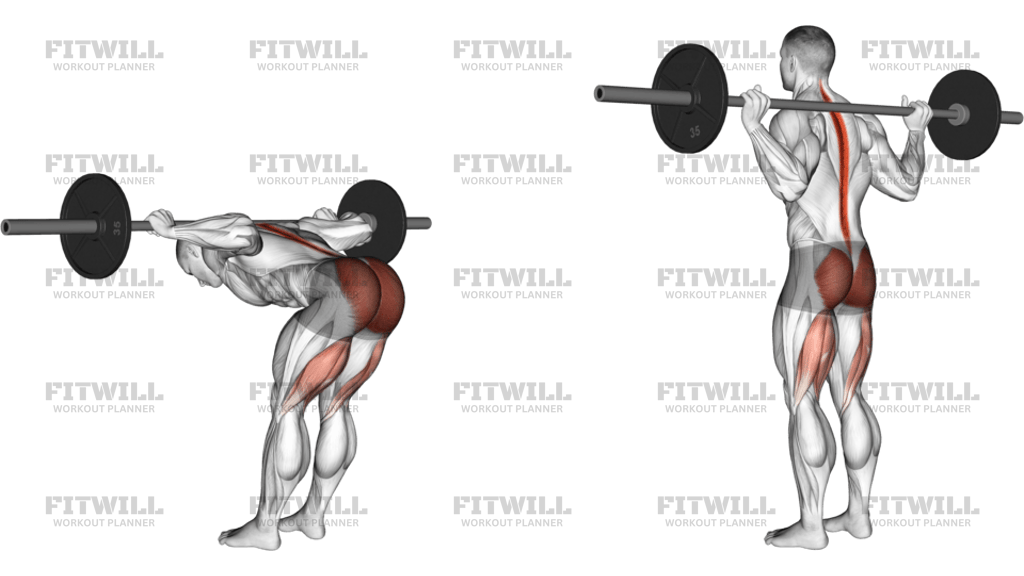
The Barbell Pendlay Row is a strict, explosive rowing variation developed by weightlifting coach Glenn Pendlay. Unlike a standard bent-over row, every rep starts from the floor: you set the bar down completely dead between repetitions, hinge over it, and pull it powerfully up to your lower chest or upper abdomen before returning it under control. The image shows this exact pattern — the torso hinged forward near horizontal with the bar resting on the floor at the start, and the bar pulled up close to the body with the elbows driving back behind the torso at the top.
What makes this lift distinct is the combination of a static hinged torso and a dynamic pull. Your legs and hips hold position while your upper back does the work, which means the rhomboids, mid traps, rear delts, and lats get a strong, focused stimulus. The erector spinae work hard isometrically to keep your back flat, and because the bar restarts from the floor each rep, there is no momentum carryover from one rep to the next. That makes it one of the cleanest ways to build pulling power through the upper back.
This exercise suits intermediate lifters who already own a solid hip hinge, as well as weightlifters and powerlifters who want a stronger bar path off the floor and thicker upper-back musculature. Because the torso is held near parallel to the floor, the lower back is under more sustained load than in a more upright row, so treat it as a strength movement and build up weight gradually rather than chasing heavy numbers on day one.
Setup matters more here than in most rows. Bar height, foot position, and grip width determine whether the bar tracks cleanly up your body or drifts forward and turns the lift into a sloppy pendulum swing. A shoulder-width overhand grip with the bar over the middle of the foot, shins nearly vertical, and knees slightly bent gives you the stable base the movement demands.
Executed well, each rep is a short, punchy pull: brace hard, pull the bar into the body with the elbows leading, touch the lower chest, then lower the bar back to the floor and let it settle before the next pull. Common use cases include strength blocks for the upper back, accessory work for Olympic lifting, and breaking through plateaus on conventional rows where momentum has quietly taken over.
For safety, keep the spine neutral and stop the set the moment your lower back starts rounding or the torso begins to rise. Because the dead-stop start removes the stretch reflex, moderate loads with crisp technique build more usable strength than maxing out with a hitching, jerky pull.
[ Workout Log & Planner ]
Put your next workout in Fitwill
Keep your plan and training log ready when you are.


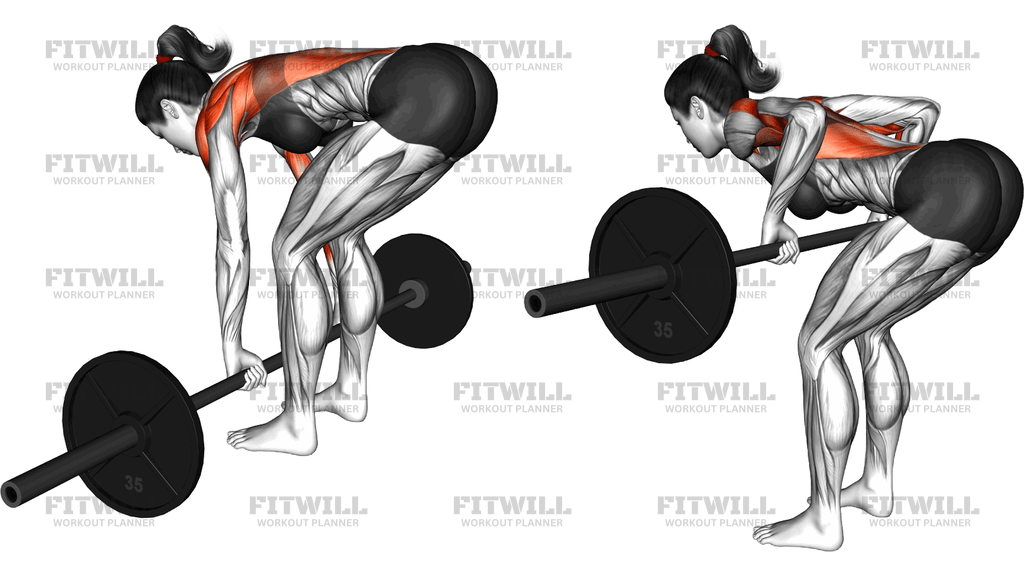
Instructions
- Load a barbell and place it on the floor over the middle of your feet, standing with feet about hip-width apart and shins close to the bar.
- Hinge forward from the hips and bend your knees slightly until your torso is near horizontal, then take an overhand grip on the bar slightly wider than shoulder width.
- Pull your shoulders back into a stable position, flatten your back, and brace your core as if bracing for a light punch to the stomach.
- Keep your hips and knees locked in this hinged position — the torso angle should not change during the pull.
- Drive your elbows up and back to pull the bar from the floor straight up toward your lower chest, keeping it close to your body the whole way.
- At the top, the bar should make contact with your lower chest or upper abdomen, with elbows pointing up behind the torso and shoulder blades squeezed together.
- Lower the bar under control back to the floor, letting it settle completely so each rep starts from a dead stop.
- Exhale as you pull the bar up, then inhale and re-brace while the bar rests on the floor before the next repetition.
- Reset your grip and torso position between reps if anything shifts, and rack the bar once your form changes rather than grinding out uneven reps.
Tips & Tricks
- If your torso creeps upright as the set goes on, the weight is too heavy — the whole point of the Pendlay Row is that the hinge stays fixed while the bar moves.
- A common mistake is jerking the bar off the floor with the lower back. Pull the slack out first, then drive the elbows back so the arms finish the lift instead of your spine.
- Let the bar actually rest on the floor each rep. If you hover it an inch above the ground to save time, you are doing a regular row, not a Pendlay Row.
- Bumper plates or a rack set to floor height help if standard plates are too small for a full dead stop — a half-start from short plates changes the whole pull.
- Chalk or a hook grip is worth using here, because grip usually gives out before the upper back does once the weight gets meaningful.
- Aim to touch the same spot on your lower chest every rep. Contact gives you a clear target and stops the bar from drifting forward into a shoulder-heavy swing.
- Keep the knees soft but quiet — if the legs start extending to heave the bar up, the movement has turned into a sloppy power clean instead of a row.
- Warm up the hinge first with a few light deadlifts or good mornings so your lower back is ready to hold a near-parallel torso under load.
Frequently Asked Questions
What muscles does the Barbell Pendlay Row work?
It primarily targets the upper back — the rhomboids, mid traps, and rear delts — with strong support from the lats, biceps, and grip. The erector spinae work isometrically the entire set to hold your torso near parallel to the floor.
How is the Barbell Pendlay Row different from a regular bent-over row?
A regular row keeps the bar moving through continuous reps with tension never fully released, while the Pendlay Row restarts from a dead stop on the floor every rep. This removes momentum and forces a fresh, explosive pull each time.
Can beginners do the Barbell Pendlay Row?
Beginners can learn it with an empty bar or very light load, but it helps to be comfortable with a hip hinge first. If holding a near-parallel torso is difficult, start with a chest-supported row or a more upright bent-over row and build up to it.
Where should the bar touch at the top of the Barbell Pendlay Row?
The bar should make contact with your lower chest or upper abdomen, pulled close along the body. Touching higher or letting the bar swing away from the torso shifts work toward the shoulders and reduces the upper-back focus.
Why does my lower back fatigue before my upper back in this exercise?
That usually means the torso angle is too low for your current strength, or your brace breaks down as the set continues. Reduce the weight, re-brace between every dead stop, and consider trimming sets to 5–6 reps while your endurance improves.
What grip should I use for the Barbell Pendlay Row?
A double-overhand grip slightly wider than shoulder width works best for most lifters. Use chalk or straps when grip becomes the limiting factor, since the goal is to challenge the upper back, not just the forearms.
How heavy should I go on the Barbell Pendlay Row?
Work with moderate loads in the 5–8 rep range and prioritize a clean dead stop and full contact at the chest. Because the stretch reflex is gone and the lower back is loaded throughout, weights will typically sit below your regular bent-over row numbers.
What can I substitute for the Barbell Pendlay Row if I do not have a barbell?
A chest-supported dumbbell row or a seated cable row trains similar upper-back muscles with far less lower-back demand. Those are the better options if your lower back is fatigued or you cannot maintain a stable hinge.
Is it safe for the lower back to row with a parallel torso?
It is generally safe for healthy lifters when the spine stays neutral and the load is sensible, but the position does place sustained demand on the lower back. Stop the set if your back rounds or your torso position changes, and ramp the weight up gradually over weeks.