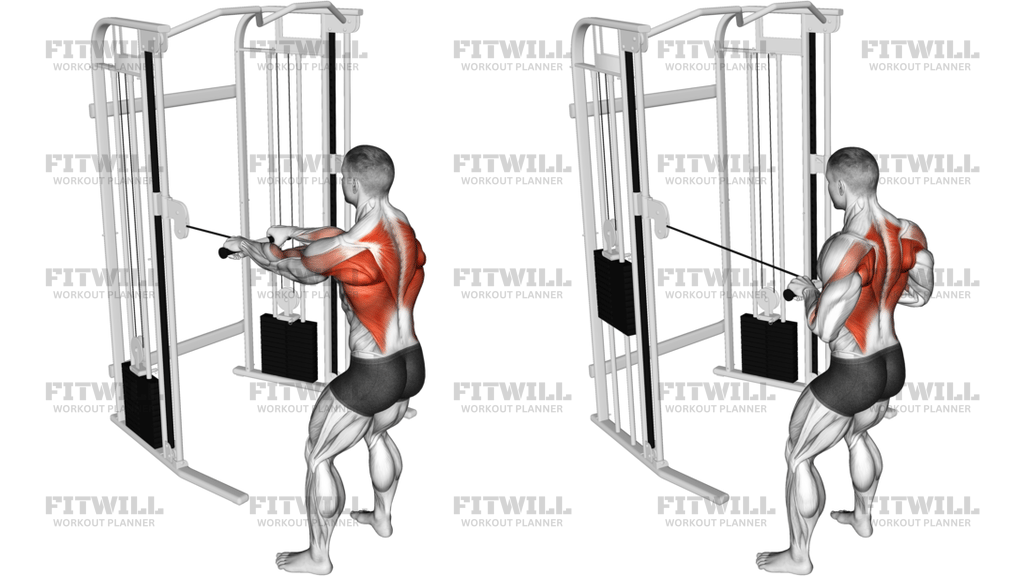
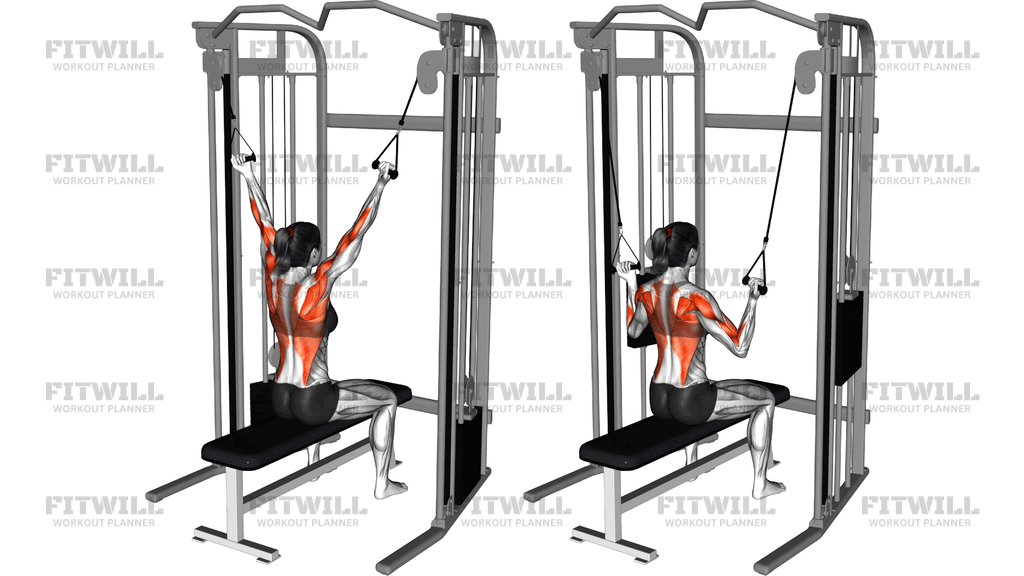
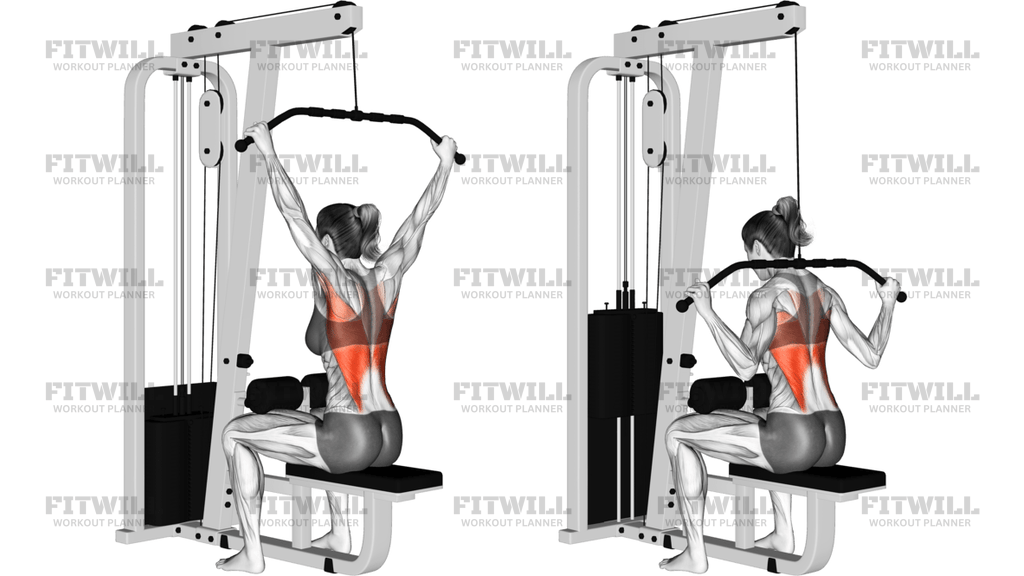
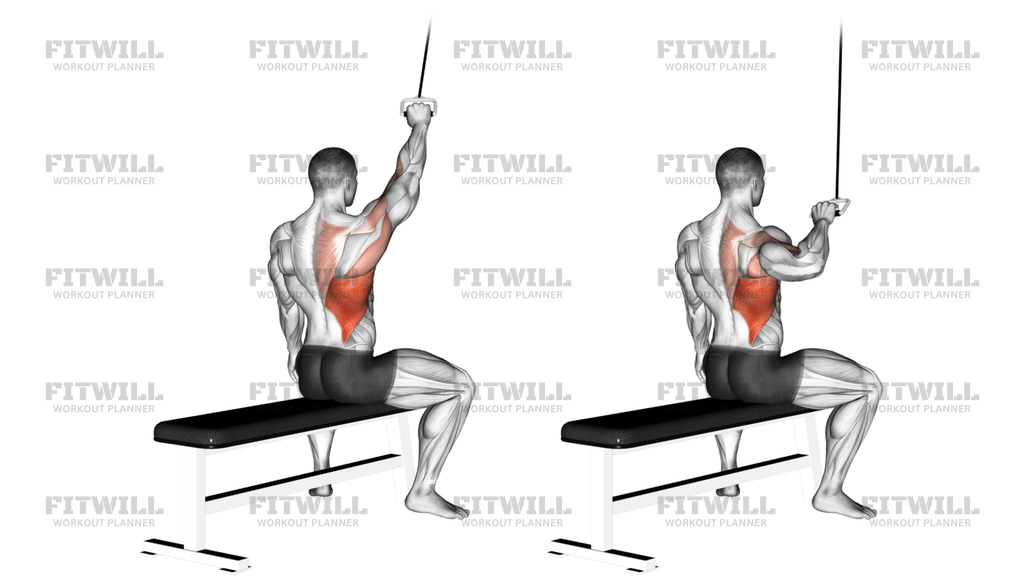
Cable One Arm Reverse Fly
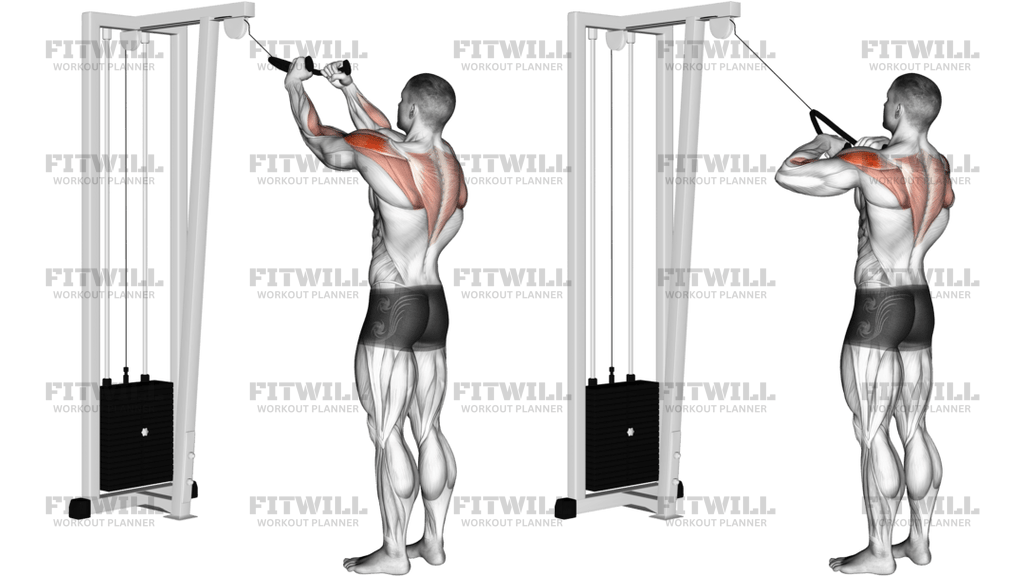
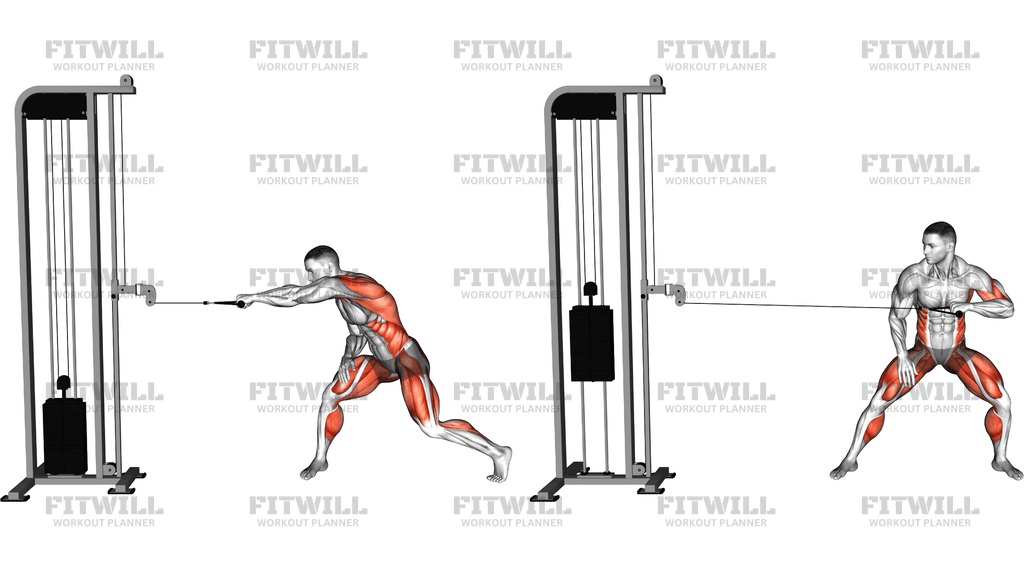
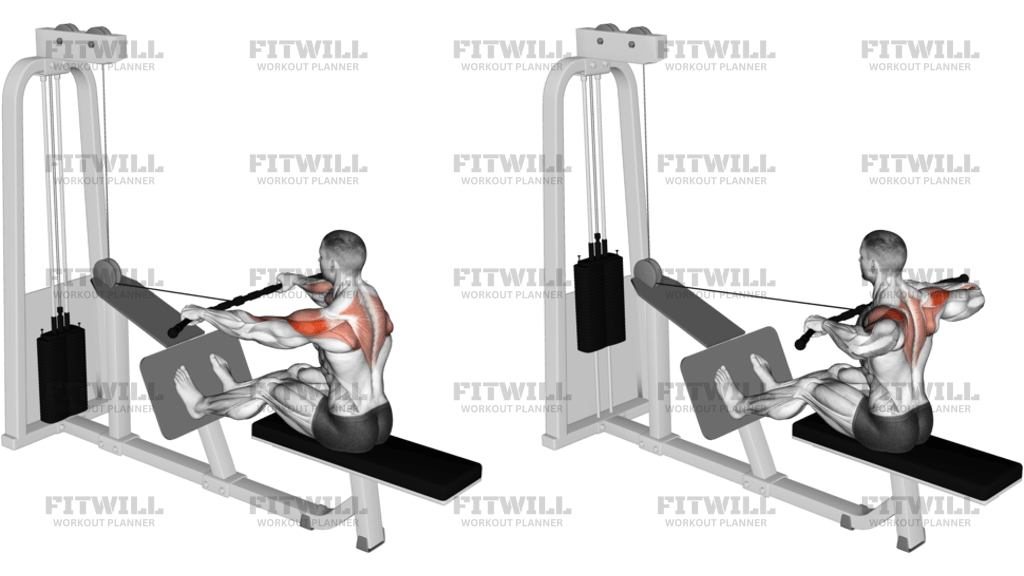
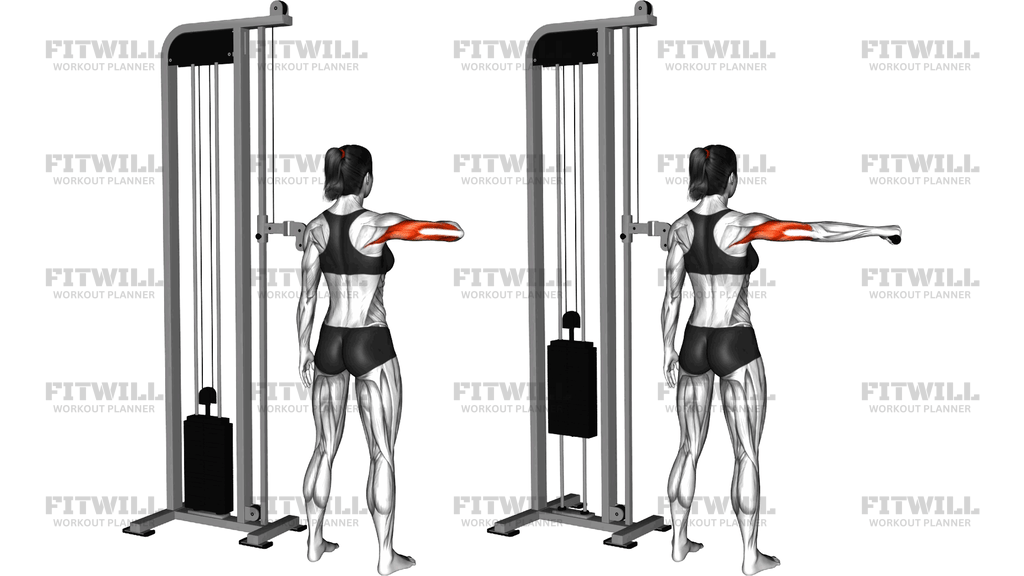
The Cable One Arm Reverse Fly is a bent-over cable movement that targets the rear delts by sweeping one arm up and out to the side against resistance from a low pulley. You hinge forward at the hips so your torso is close to horizontal, grab a single handle attached to the low pulley on the same side as your working arm, and lift the cable in a wide arc until your arm is roughly level with your shoulder. The other hand can rest on the cable machine for balance, which lets you stay steady and focus entirely on the shoulder doing the work.
Because you work one side at a time, this exercise gives you a level of focus that is hard to match with two-arm reverse fly variations. You can feel the rear shoulder contracting on every rep, spot left-to-right differences in strength, and address the side that lags behind. For most people who sit at a desk or push a lot of pressing movements in training, the rear delts and upper back are the weak link, and this is one of the cleanest ways to load them directly.
The cable setup matters more than it might seem. With the pulley set low, the resistance pulls your arm down and slightly across your body at the start, which means the rear delt has to work hardest right where it is usually strongest, and the tension stays smooth through the entire arc. Unlike dumbbells, which lose tension as your arm rotates past vertical, the cable keeps constant pull from the first inch to the last. Keeping the torso hinged and still is what separates a real reverse fly from a row or a swing.
Execution is simple but unforgiving in the best way. With a soft bend in the knees and hips pushed back, you keep a slight bend in the elbow of the working arm and raise it out to the side, leading with the elbow rather than the hand. The lift should come from the shoulder blade moving on the rib cage, not from twisting the torso or yanking with the biceps. Pause briefly at the top, then lower the handle under control so the arm travels back across the body to the starting point.
This movement fits well as an accessory on shoulder or upper back days, usually after heavier presses or pulls. Typical sets run from 10 to 15 reps per side with a light enough weight that the last few reps still look identical to the first. It is also a smart pick for anyone rehabbing or prehabbing the shoulder area, since the cable path is gentle on the joint and easy to scale, though anyone with a current shoulder issue should clear it with a professional first.
[ Workout Log & Planner ]
Put your next workout in Fitwill
Keep your plan and training log ready when you are.


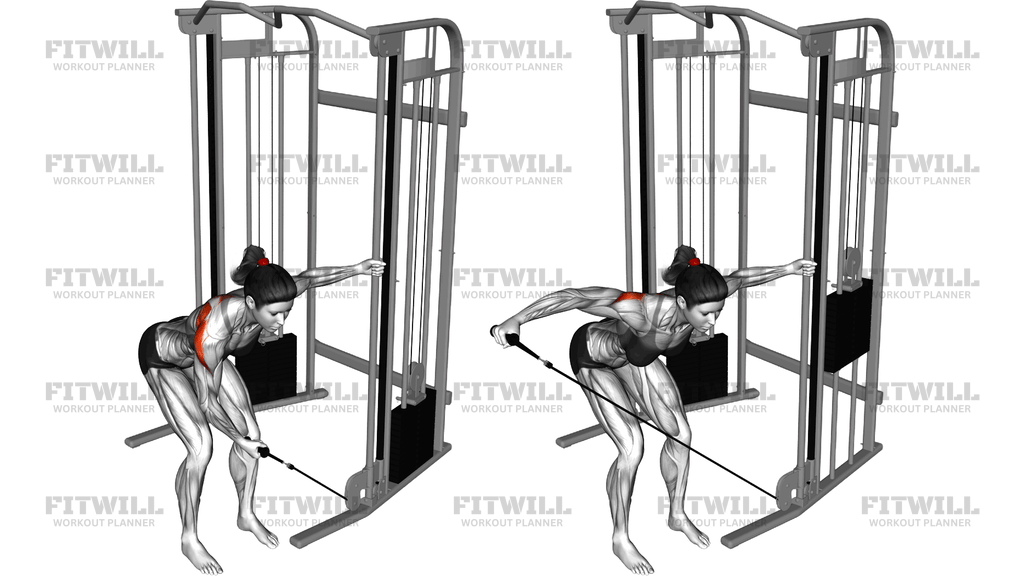
Instructions
- Set the pulley of a cable machine to the lowest position and attach a single handle.
- Stand side-on to the machine, then hinge forward at the hips with a soft knee bend until your torso is angled close to horizontal and your back stays flat.
- Grip the handle with the hand on the same side as the pulley, letting the cable pull your arm down and across the front of your body toward the opposite side.
- Place your free hand on the cable machine frame or your own thigh to steady your torso, and brace your core before the first rep.
- Exhale and raise the handle up and out to the side in a wide arc, keeping a slight bend in the elbow and leading with the elbow rather than the hand.
- Stop when your arm reaches roughly shoulder height and is in line with or slightly behind your torso, and squeeze the rear of the shoulder for a beat.
- Inhale and lower the handle slowly along the same arc, letting the arm travel back down across your body until the shoulder is fully stretched.
- Finish all reps on one side, re-brace, then switch stance and grip to train the other arm.
Tips & Tricks
- If your torso starts rotating toward the working arm as you lift, the weight is too heavy or you are initiating with the trunk instead of the shoulder — drop the load and keep your chest facing the floor.
- Lead with the elbow. Lifting with a straight, leading hand turns the movement into a front raise and shifts work away from the rear delt.
- Keep the bend at the hips locked in. The most common fault is straightening up rep by rep so the set quietly becomes a cable pull rather than a reverse fly.
- Stop at shoulder height. Pulling the arm higher than parallel usually just drags the upper traps into the lift and irritates the top of the shoulder.
- Let the arm finish slightly across your body at the bottom. Cutting the lowering phase short robs you of the stretched position where the rear delt gets most of its stimulus.
- Use a thumb-down or neutral hand orientation and keep the grip light — squeezing the handle hard recruits the forearm and biceps and dulls the feel in the shoulder.
- One arm at a time means one side always gets more rest. Match reps strictly between sides by starting with your weaker arm.
- A brief pause at the top is worth more than extra weight here; the rear delt responds better to a controlled squeeze than to momentum.
Frequently Asked Questions
Which muscles does the Cable One Arm Reverse Fly work?
The rear deltoid does most of the work, with the middle traps and rhomboids assisting as the shoulder blade moves. The core and lower back also work isometrically to hold the hinged position.
Why does the Cable One Arm Reverse Fly use a low pulley instead of a pulley at shoulder height?
With the pulley set low, the cable pulls your arm down and across your body at the start, so you lift against resistance through the whole arc and the rear delt is loaded in its stretched position. A low pulley also keeps tension smooth in a way dumbbells cannot at this angle.
Is the Cable One Arm Reverse Fly suitable for beginners?
Yes, as long as the weight stays light and the hinged position feels comfortable. It is actually one of the better beginner rear delt exercises because the single-arm setup makes it easy to feel the correct muscle working.
How do I stop my torso from twisting during the Cable One Arm Reverse Fly?
Brace your core, keep your free hand on the machine or your thigh, and imagine your chest staying pointed at the floor throughout the set. If you still rotate, the weight is too heavy.
How heavy should I go on the Cable One Arm Reverse Fly?
Pick a load you can control for 10 to 15 reps with strict form and a full arc. Because the rear delt is a small muscle and the bent-over position is demanding, this exercise works best light and precise rather than heavy.
Can I substitute the Cable One Arm Reverse Fly with dumbbell reverse flyes?
Dumbbell reverse flyes are a solid substitute, but they lose tension near the top of the movement and make it harder to isolate one side. The cable version keeps constant resistance and lets you address side-to-side imbalances more directly.
Should my elbow stay bent during the Cable One Arm Reverse Fly?
Keep a small, fixed bend in the elbow — about 10 to 20 degrees — from start to finish. Straightening and bending the arm turns it into a triceps or biceps movement instead of a shoulder fly.
My lower back gets tired before my shoulders — is that normal?
Some fatigue in the hips and lower back is expected since they hold the hinged position the whole time, but if it dominates the set, hinge slightly less deep, brace harder, or place your free hand on your thigh for extra support.
How does the Cable One Arm Reverse Fly differ from a cable row?
A row pulls the elbow down and back toward your ribs and loads the lats and mid-back heavily. The reverse fly raises the arm out to the side in a wide arc with the elbow staying high, which shifts the load onto the rear deltoid.
Is the Cable One Arm Reverse Fly safe for the shoulder joint?
For healthy shoulders, the cable's smooth arc and light loads make it one of the more joint-friendly rear delt options. If you have a current or past shoulder injury, check the movement with a qualified professional before adding it to your routine.