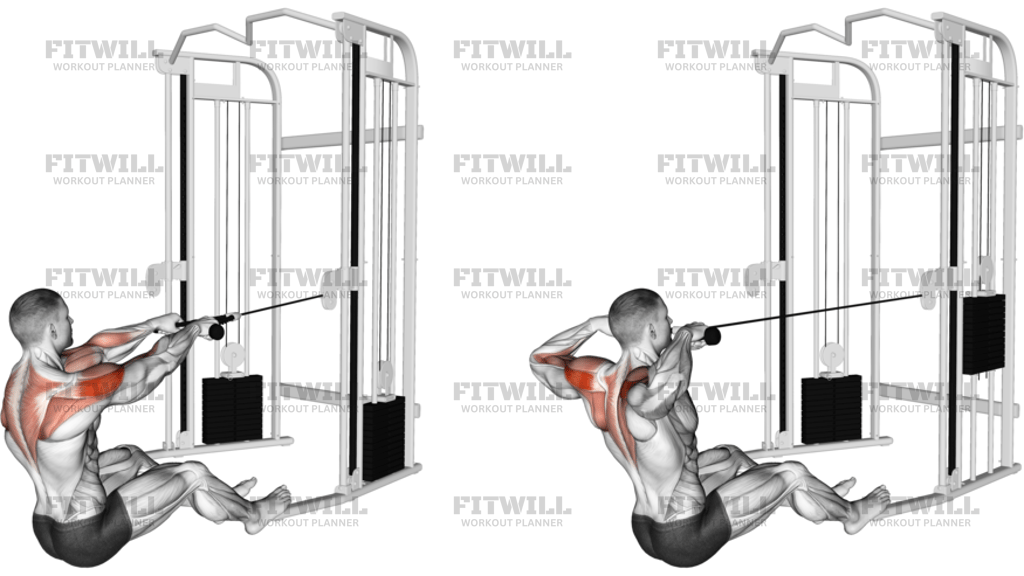
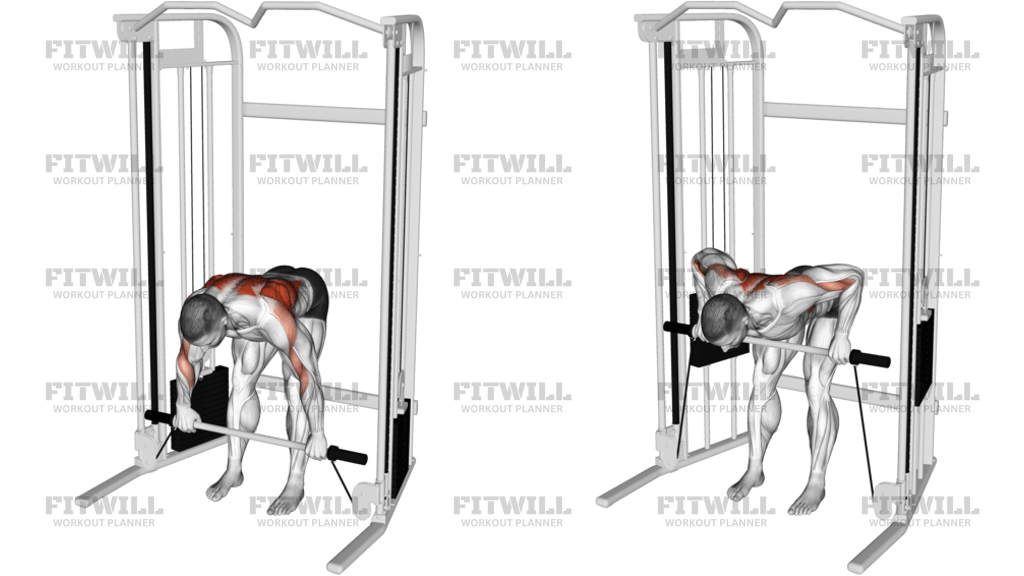
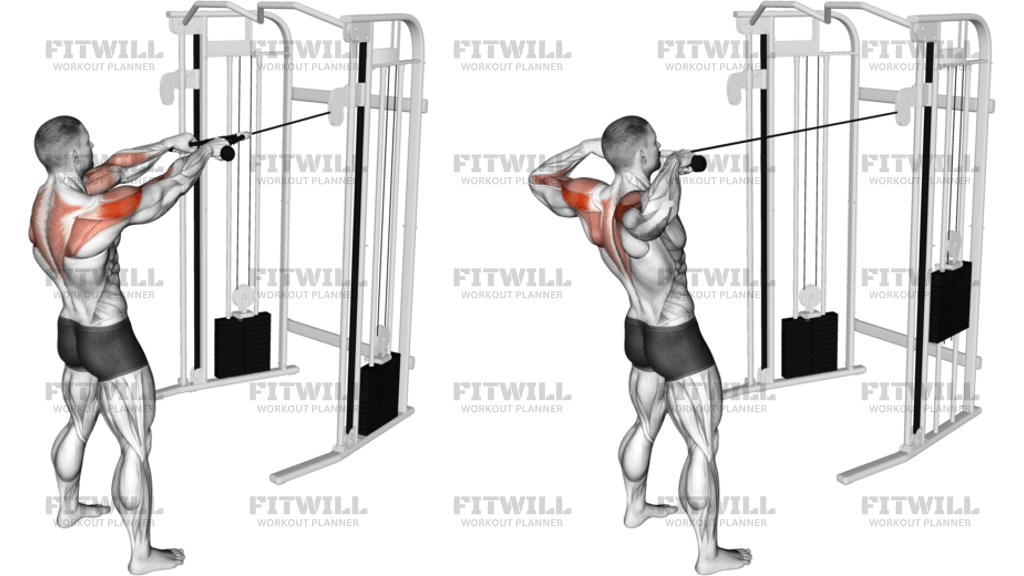
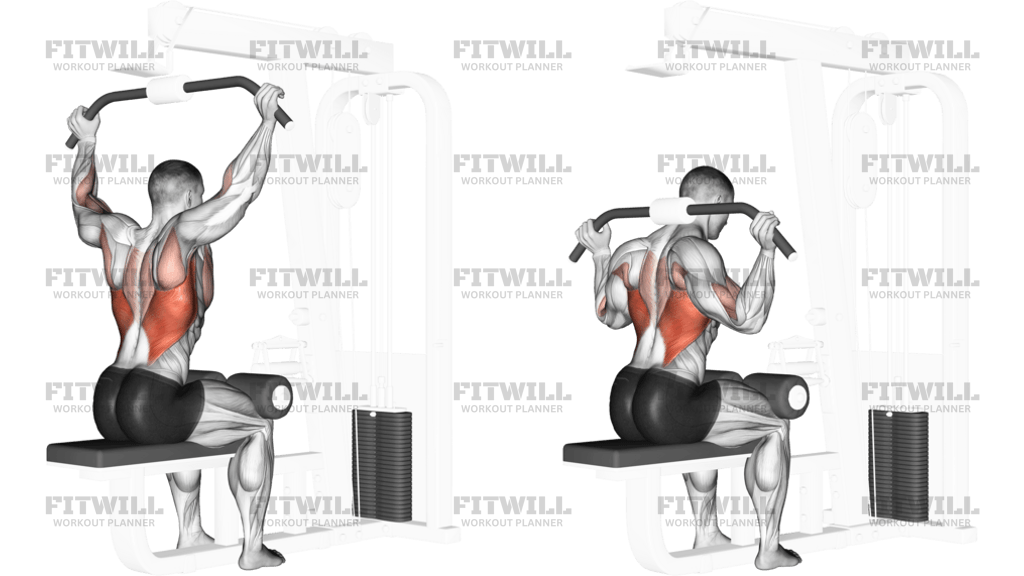
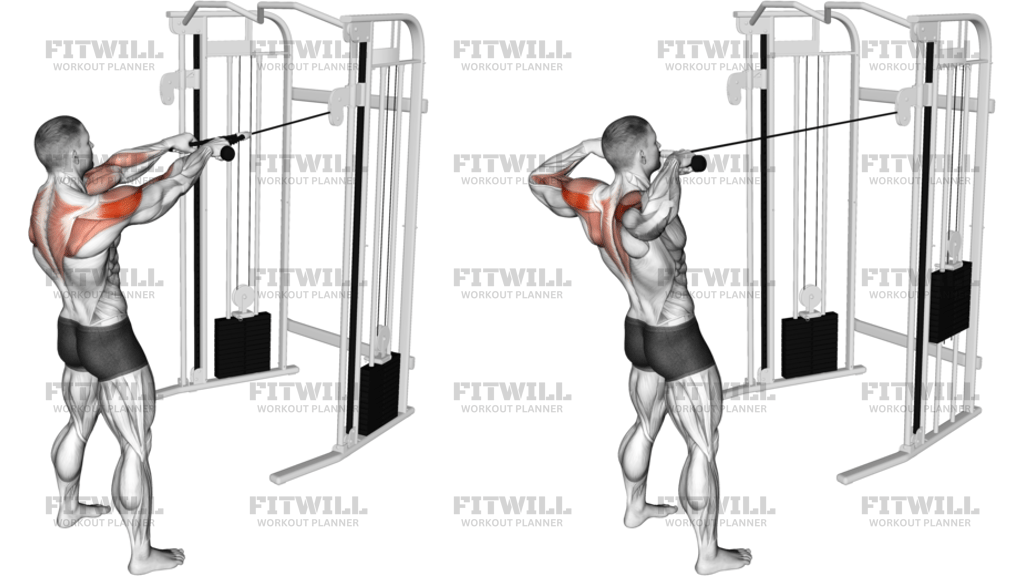
Cable Rear Delt Row With Rope
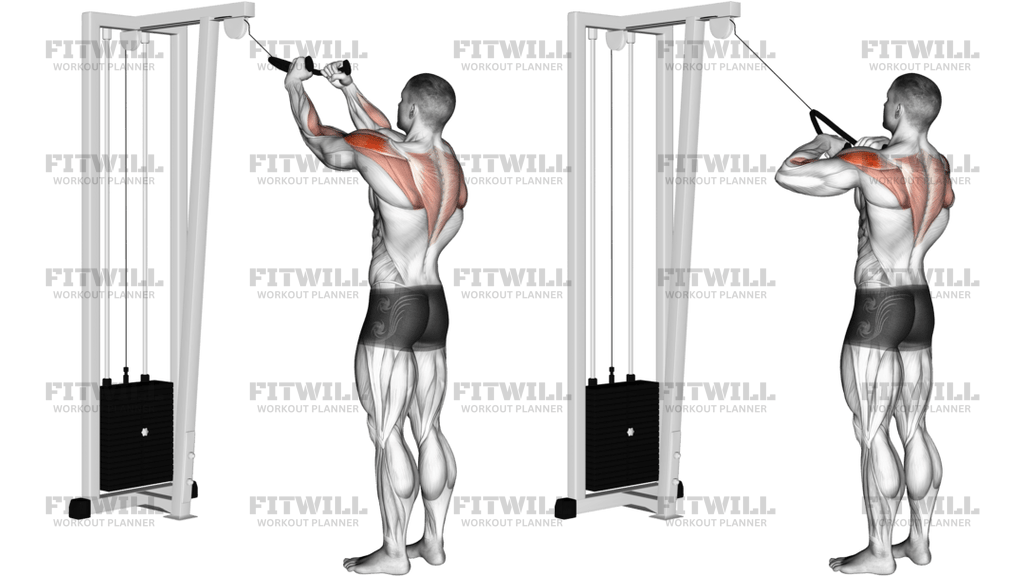
Cable Rear Delt Row with Rope is a rear-shoulder biased rowing exercise that uses a rope attachment to give each hand a slightly freer path. The rope makes it easier to keep the elbows moving in a rear-delt line while still getting support from the upper back, which is why the movement feels like a mix of a row and a shoulder isolation drill.
The primary target is the posterior deltoids, with the trapezius, rhomboids, and biceps assisting the pull. It works best when the chest stays stable, the neck stays relaxed, and the elbows travel back and a little out rather than straight down into a lat row. That makes Cable Rear Delt Row with Rope a useful choice for rear-delt growth, shoulder balance, and controlled upper-back work.
Set the rope at about chest height, stand in a stable stance, and take the rope ends with a neutral grip before the first rep. Brace the core, keep the torso steady, and pull the elbows back and slightly out until the rear shoulders and upper back finish the contraction. Pause briefly, then return slowly to the start while keeping the wrists neutral and the shoulders from creeping up.
Cable Rear Delt Row with Rope works well as a rear-delt accessory after rows or presses, or as a way to train the back of the shoulder with a smoother hand path than a fixed handle sometimes gives. It can also be useful when one side feels a little tighter or stronger because the rope allows small differences in the hand path without losing the basic pattern. Good reps are controlled, deliberate, and quiet, with the torso staying mostly still.
If the neck tightens or the shoulders shrug, reduce the load and keep the elbow path a little lower and cleaner. The goal is a rope rear-delt row that feels rear-shoulder driven from start to finish.
[ Workout Log & Planner ]
Put your next workout in Fitwill
Keep your plan and training log ready when you are.


Instructions
- Attach a rope at about chest height and stand in a stable stance before the first rep.
- Hold the rope ends with a neutral grip and brace your core.
- Keep your chest stable and your neck relaxed as you begin the pull.
- Pull the elbows back and slightly out in a rear-delt row path.
- Pause briefly at the squeeze without letting the shoulders shrug.
- Return the rope slowly to the start while keeping the wrists neutral.
- Keep the torso quiet so the rear shoulders and upper back do the work.
- Repeat for the planned reps, then let the stack settle before stepping away.
Tips & Tricks
- Keep the elbows a little wider than a regular row so the rear delts stay involved.
- If the neck tightens, lower the load and let the shoulders stay down through the finish.
- Use the rope to your advantage by keeping the hand path smooth and symmetrical.
- Do not lean back to finish the rep; the torso should stay mostly still.
- A brief pause at the squeeze helps reveal whether the rear shoulders are actually doing the work.
- Keep the wrists neutral so the forearms do not dominate the movement.
- A moderate load with a slow return usually works better than a heavy, jerky pull.
- If the movement starts to feel like a lat row, raise the elbows a little and shorten the range.
Frequently Asked Questions
What muscles does Cable Rear Delt Row with Rope work?
It mainly works the rear deltoids, with the upper back, rhomboids, and biceps helping support the pull.
Why use a rope handle for this row?
The rope often allows a smoother, more joint-friendly hand path and makes it easier to keep the elbows slightly wider.
Can I do Cable Rear Delt Row with Rope one arm at a time?
Yes, unilateral rear-delt cable rows can work well if you want even more control on each side.
Should I pull my elbows high in Cable Rear Delt Row with Rope?
Pull them in a rear-delt line without forcing a painful or overly high range.
What is the most common mistake in this exercise?
Shrugging and letting the upper traps take over instead of keeping the rear delts in charge.
Is Cable Rear Delt Row with Rope a back or shoulder exercise?
It is both, but the rear shoulders should be the main focus.
What rep range works well here?
Controlled moderate-rep sets usually work well for rear-delt training.