Lever One Arm Lateral Wide Pulldown (Plate Loaded)
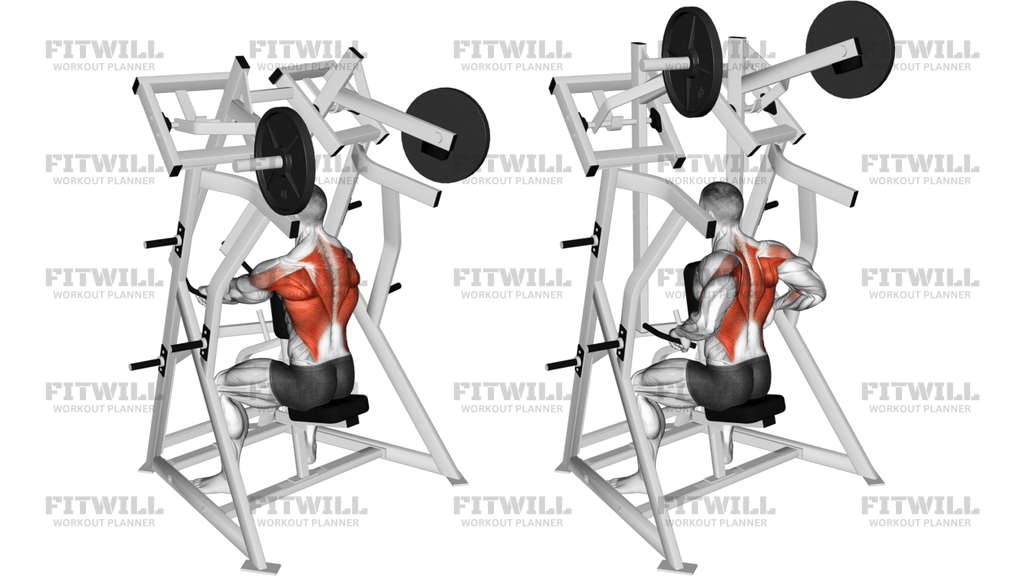
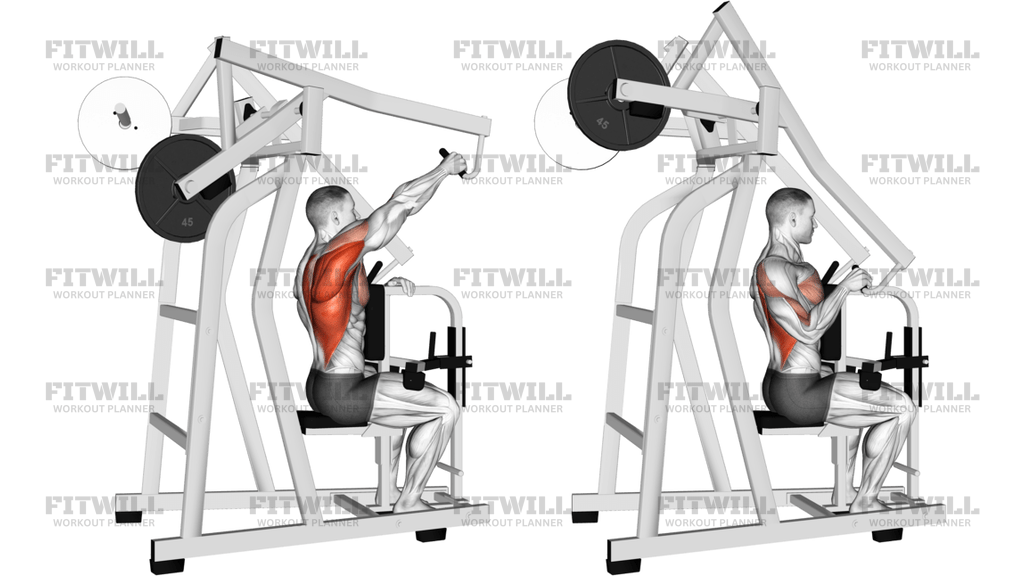
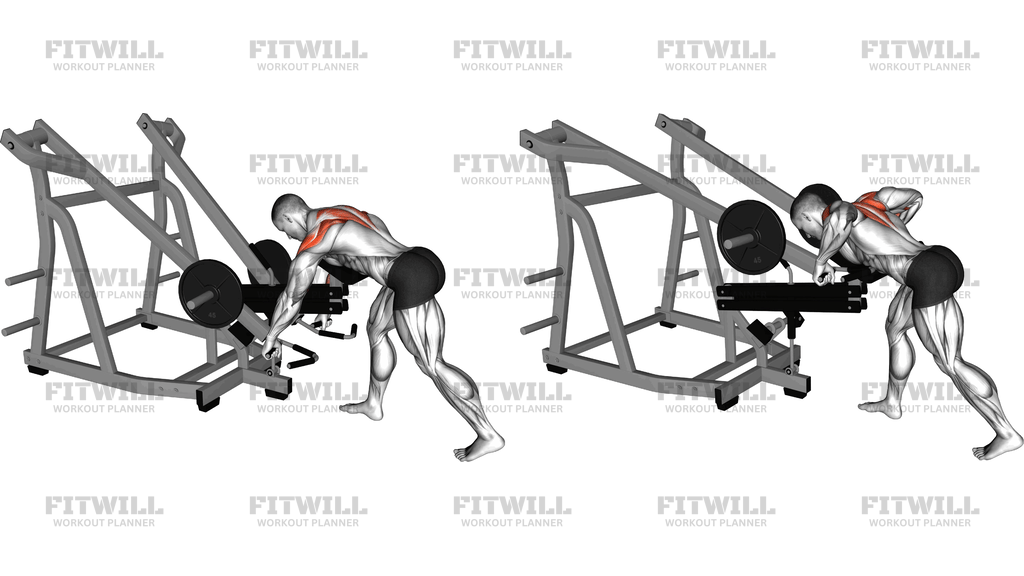
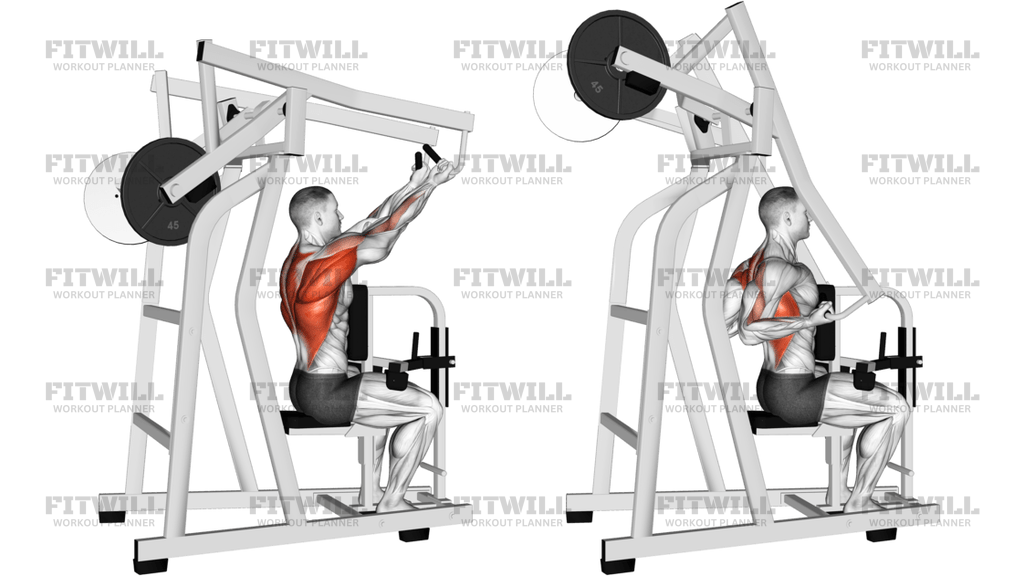
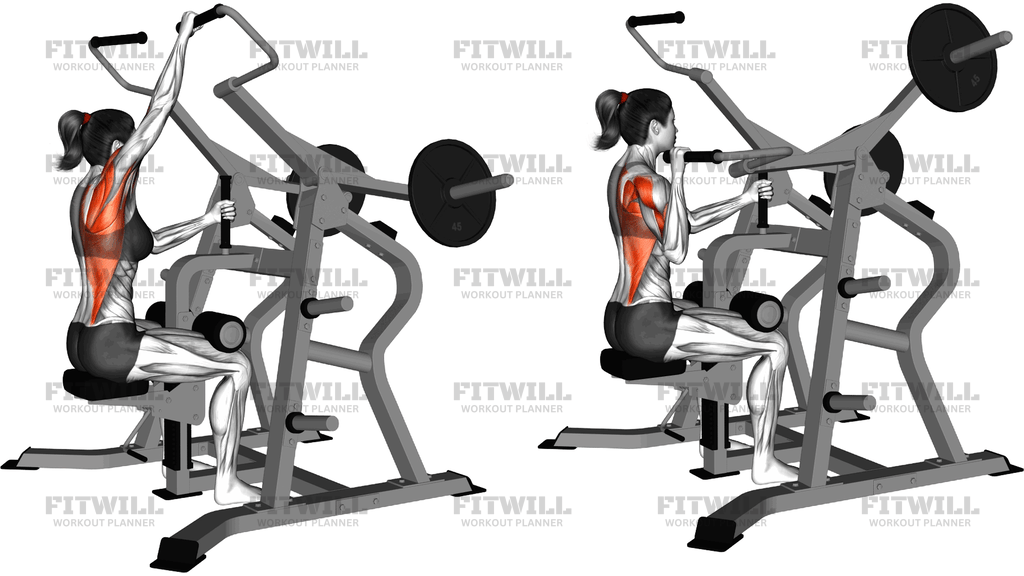
The Lever One Arm Lateral Wide Pulldown is a plate-loaded machine exercise that trains the lat through a wide, sweeping pulling arc, one side at a time. You sit braced against the machine's pad with one hand gripping the wide lever handle high above your shoulder, then pull it down and out toward your side until your elbow lands near your ribs. Because the resistance rides on a lever arm loaded with weight plates rather than a cable stack, the strength curve feels smooth and slightly harder mid-range, which suits lats that respond well to tension in the stretched and mid positions.
Working one arm at a time is the main selling point here. Most people have a noticeable side-to-side difference in lat strength and back width, and bilateral pulldowns let the stronger side quietly take over. The unilateral setup forces each lat to do its own share of the work, and the free hand gripping the machine's fixed handle gives you a brace to keep your torso from twisting as you pull. That braced position makes it easier to feel the lat doing the work instead of the lower back and torso rotating the handle down.
This movement fits well for lifters who want more back width and detail, for anyone rehabbing or balancing out an asymmetry after months of barbell work, and for people who struggle to feel their lats on conventional pulldowns. The wide handle and lateral path take the shoulder through adduction across the body rather than a straight vertical pull, which many lifters find easier to connect with mentally. The machine also removes the grip and bodyweight demands of pull-ups, so you can accumulate quality volume even when your grip is already tired from other training.
Setup matters more than it looks. The seat height should place the handle roughly at or just above shoulder level at full stretch, and your thigh should sit snugly under the pad so your hips stay planted. If you sit too low, the stretch at the top gets excessive and pulls you out of position; if you sit too high, you shorten the range and lose the stretch that makes this exercise effective. Keep your torso mostly upright with a slight lean away from the working arm, ribs down, and let the shoulder rise slightly at the top so the lat lengthens fully before you pull.
Execute the pull by driving the elbow down and slightly out toward your side, thinking about bringing your elbow to your hip rather than your hand to your chest. Squeeze at the bottom for a beat, then let the arm travel back up under control so the lat stretches again at the top. Breathe in as the arm rises, exhale through the pull. Keep the weight honest: if your torso starts cranking sideways or your shoulder shrugs hard at the bottom, the load is beyond what your lat can handle with good mechanics.
The main cautions are straightforward. Do not yank the handle down from a dead stretch, and stop the set if you feel pinching at the front of the shoulder rather than muscular work in the back of the armpit. Because each side is trained separately, match your weaker side's rep count on the stronger side rather than the other way around, and you will gradually even out imbalances without forcing it.
[ Workout Log & Planner ]
Put your next workout in Fitwill
Keep your plan and training log ready when you are.


Instructions
- Load weight plates evenly on the machine's plate pegs and adjust the seat so the wide lever handle sits at or slightly above shoulder height when your arm is stretched overhead.
- Sit facing the machine with your feet flat on the floor and slide your thighs firmly under the roller pad so your hips stay locked in place for the whole set.
- Grip the wide lever handle with one hand using an overhand grip, and hold the machine's fixed vertical handle with your other hand to brace your torso.
- Set your posture before the first rep: chest tall, ribs down, a small lean away from the working arm, and let the working shoulder rise slightly so the lat is fully stretched at the top.
- Pull the handle down and out in a wide arc, leading with the elbow until it finishes near your side at hip level and the handle comes down to roughly shoulder height.
- Pause briefly at the bottom and squeeze the lat, keeping the shoulder down rather than shrugging it toward your ear.
- Return the handle along the same wide path until your arm is extended overhead again, stopping just short of letting the weight stack slam or the lever drop.
- Exhale as you pull down and inhale as you let the arm rise back to the stretch.
- Complete all reps on one side, then switch hands, brace with the opposite arm, and match the rep count on the second side.
Tips & Tricks
- Think elbow to hip, not hand to chest. If the handle ends up in front of your sternum, you are turning it into an arm-dominant pull and the lat stops driving the movement.
- The most common mistake on this machine is torso rotation. If your chest swings toward the working arm each rep, lighten the load and press harder into the fixed handle with your free hand.
- Do not cut the top range short. The stretched position overhead is where this exercise earns its place, so let the shoulder blade rise slightly at the top instead of starting every rep half-extended.
- A shrug at the bottom means the upper traps are stealing the finish. Keep the working shoulder pressing away from your ear as you squeeze the lat.
- Match your weaker side first. If your left lat fatigues at ten reps, do ten reps per side even when the right side could do more, or the imbalance will keep growing.
- If your forearm and biceps burn out before your back feels anything, loosen your grip slightly and focus on pushing the elbow down rather than pulling with the hand.
- Keep a slight lean away from the working arm, not toward it. Leaning into the pull shortens the lat's range and turns the movement into a crush rather than a sweep.
- Set the plate load conservatively on your first session. The lever arm changes the feel compared to cable pulldowns, and a weight that looks light can still stall out mid-range.
- Control the eccentric for about two seconds. Letting the lever fall back up wastes the stretch phase and is the fastest way to get banged up at the shoulder.
Frequently Asked Questions
Which muscles does the Lever One Arm Lateral Wide Pulldown work?
The latissimus dorsi is the prime mover, with the teres major and rear shoulder assisting the wide pull. The biceps and forearm muscles work to hold the handle, and the traps help control the shoulder blade at the top stretch.
Why train one arm at a time instead of a regular two-hand pulldown?
The unilateral setup stops your stronger side from compensating, which helps even out left-to-right differences in lat strength and development. It also lets you brace with the free hand so your torso stays square instead of rotating through the pull.
How high should the seat be set on the Lever One Arm Lateral Wide Pulldown?
Adjust it so the wide handle sits at or just above shoulder level with your arm fully stretched overhead. Too low and the top stretch gets uncomfortable; too high and you lose range on the pull.
Is this exercise suitable for beginners?
Yes, the machine path and back support make it easier to learn than pull-ups or free-weight rows. Start light, focus on feeling the lat pull the elbow down, and only add plates once the movement feels smooth on both sides.
What is the most common mistake on this machine?
Twisting the torso to help the handle down. If your chest rotates toward the working arm, the weight is too heavy or you are rushing the pull; brace harder with the free hand and reduce the load until the movement comes from the shoulder.
Can I use the Lever One Arm Lateral Wide Pulldown if I cannot do pull-ups yet?
Absolutely. It builds the same vertical-to-lateral pulling strength without needing to lift your bodyweight, making it a practical stepping stone toward your first pull-up.
What can I substitute if my gym has no plate-loaded pulldown machine?
A single-arm cable pulldown with a handle, or a one-arm dumbbell row, covers similar ground. The machine's advantage is the supported torso and fixed arc, so choose the cable version if staying braced is your priority.
How many sets and reps should I do per side?
Two to four sets of 8 to 12 reps per side works well for muscle building. Let your weaker side dictate the rep count so both sides receive the same volume.
Is it normal to feel this more in the shoulder than the lat?
Some rear shoulder work is expected, but sharp discomfort at the front of the shoulder is not. Check that you are not pulling the handle across your neck, reduce the range slightly at the top, and drop the weight if the pinch continues.