Lever Alternate Leg Press (Plate Loaded)
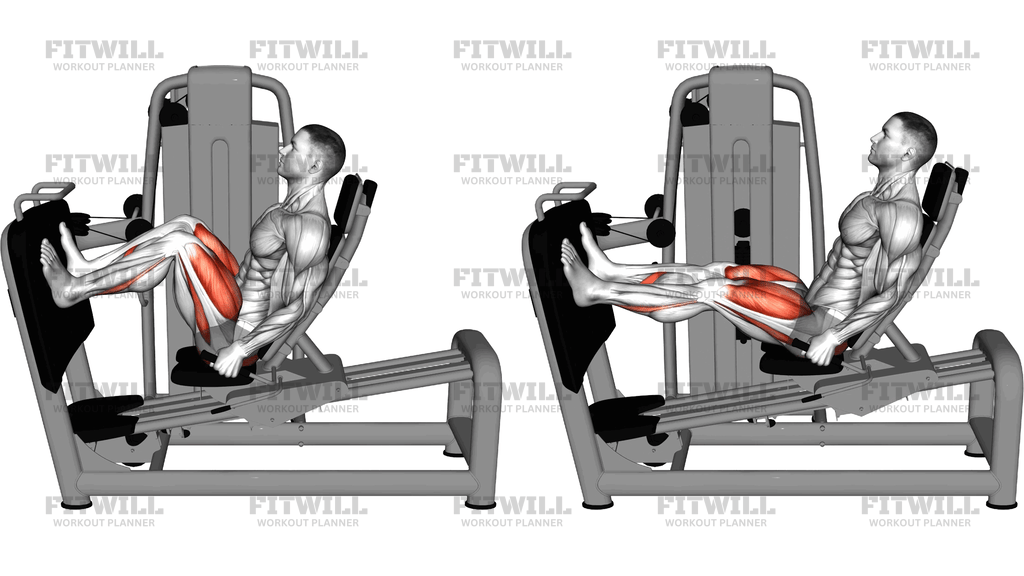
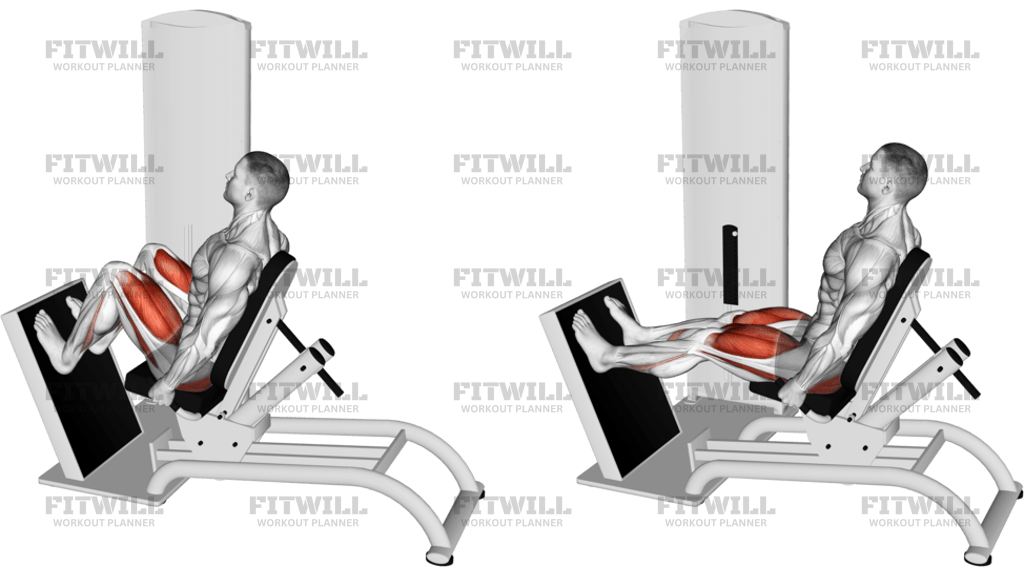
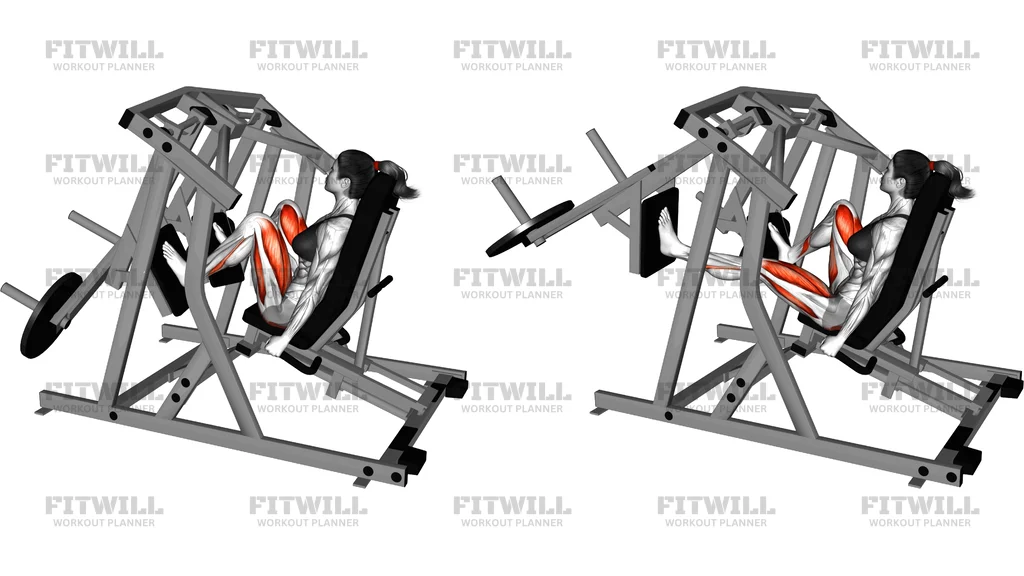
The Lever Alternate Leg Press (Plate Loaded) is a seated machine exercise where you press weighted foot plates away from your body one leg at a time. Unlike a standard leg press where both legs share a single sled, this version uses independent lever arms, so each leg works on its own while the other either rests lightly on its plate or stays prepared for its turn. The machine is loaded with weight plates on pegs at the sides, and you sit back against an angled pad with your hands gripping the side handles for stability.
This setup is especially useful when you want to expose and correct side-to-side strength differences. Most people have a dominant leg that quietly takes over during two-legged presses; working each limb separately removes that option and forces the weaker side to pull its own weight. It is also a smart choice for lifters returning from an injury to one leg, since the healthy limb no longer compensates and the load can be matched precisely between sides.
The main muscles worked are the quadriceps at the front of the thigh, which extend the knee on every press. The glutes and hamstrings contribute heavily as the hip travels from the folded position toward full extension, and the adductors help control the thigh path. Your calves and foot stabilizers stay active to keep the foot planted squarely on the plate throughout the rep.
Setup matters more here than on a dual-sled press because each leg follows its own track. Sit so your lower back and hips stay pressed into the backrest, and check that the seat position lets your knees bend deeply without your tailbone rolling off the pad at the bottom. Your hands should grip the handles beside your hips, not press on your thighs, so the legs do all the work.
To execute the movement, place both feet on the plates about hip-width apart, press one leg up until the knee is nearly straight without locking hard, then lower it back under control while the other leg takes its turn or holds position. Keep the pressing knee tracking in line with the toes, and avoid letting it cave inward as fatigue builds. Breathe in as the leg lowers and exhale as you press away.
Expect to use less weight per side than you would on a two-legged press, and program it as an accessory after your main lower-body lifts or as the primary leg press variation in a unilateral-focused block. Because the machine guides the path, it suits beginners learning pressing mechanics as well as experienced lifters chasing balanced leg development.
[ Workout Log & Planner ]
Put your next workout in Fitwill
Keep your plan and training log ready when you are.


Instructions
- Load the plate sleeves on both sides with equal weight, then sit on the seat and place your back and hips flat against the angled backrest.
- Position both feet on the separate foot plates roughly hip-width apart, with the balls of your feet centered and heels fully in contact.
- Grip the handles beside your hips firmly, press your head and shoulders back against the pad, and set the seat so your knees reach about 90 degrees without your hips lifting.
- Release the safety mechanism or levers so both lever arms can move freely under your control.
- Brace your abdominal muscles and keep your lower back in contact with the pad before initiating any press.
- Press with your right leg until the knee is almost fully extended but not jammed straight, keeping the knee aligned over the middle of the foot.
- Lower the right leg back down slowly until the knee returns close to your torso, letting the plate come back near the starting position without clanking.
- Either alternate immediately, pressing the left leg as the right returns, or complete all repetitions on one side before switching, depending on your goal.
- Exhale as you press the plate away and inhale as the leg lowers back toward you.
- After the final repetition, return both plates to the start position, engage the safety pins, and step off the machine carefully.
Tips & Tricks
- The most common fault on this machine is letting the hips and tailbone lift off the backrest at the bottom of the rep; if that happens, reduce the depth or move the seat back one notch.
- Do not lock the knee hard at the top of each press. Stop just short of full extension so the quadriceps stay under tension and the joint is not slammed into the end range.
- Watch for the pressing knee caving inward toward your midline, which is common on the weaker leg; cue your knee toward your little toe as you press.
- Because each lever is independent, even small plate differences will be obvious at the end of a set. Load both sides identically and count reps per side to keep the work matched.
- Keep your hands on the handles, not braced on your thigh, since pushing off the working leg with your arm hides how hard the leg is actually working.
- If your heel peels off the plate during the press, shift your foot slightly higher on the plate and slow the lowering phase; heels drifting forward means the load is too far forward on the foot.
- Start with your weaker leg when doing single-leg sets, and match the reps and weight to what that leg can handle so the stronger side never gets extra volume.
- Keep the resting foot in contact with its own plate rather than letting it dangle or rest on the floor, so you stay stable and ready to transition between legs.
Frequently Asked Questions
What muscles does the Lever Alternate Leg Press (Plate Loaded) work?
The quadriceps are the primary movers, with strong contributions from the glutes and hamstrings as the hip extends. The adductors and calves assist in controlling the leg path and keeping the foot stable on the plate.
How is the alternate version different from a regular leg press?
Each leg rides its own lever arm, so one leg presses at a time instead of both sharing a single sled. This isolates each side and prevents your stronger leg from taking over the majority of the load.
Should beginners use the Lever Alternate Leg Press (Plate Loaded)?
Yes, it is beginner-friendly because the machine fixes the arc of the press and removes balance demands. Start with light plates, master the knee-over-toe alignment, and progress the weight gradually.
How much weight should I use compared to a two-legged leg press?
Expect to handle noticeably less per side, often around a third to a half of your two-leg press load depending on the machine's lever design. Judge by controlled depth and full-foot pressure rather than the number on the plates.
Is it better to alternate legs every rep or finish all reps on one side first?
Alternating every rep keeps the heart rate up and mimics continuous pushing, while completing one side first makes it easier to focus on form and match reps. Both are valid; choose based on whether you want conditioning or targeted strength work.
Why does my lower back round at the bottom of the press?
That usually means the seat is positioned too far forward, your hips lack the mobility to reach that depth, or the load is too heavy. Adjust the seat back a notch, shorten the range slightly, and keep your glutes glued to the pad.
Can I use the Lever Alternate Leg Press (Plate Loaded) if one leg is recovering from injury?
It is often used for exactly that purpose because the healthy leg cannot compensate for the weaker one. Follow the guidance of your physical therapist or doctor for load and range before returning to it.
How deep should each leg press go?
Lower until the knee is deeply bent and the thigh approaches your torso, as long as your hips and lower back stay against the backrest. Depth you cannot control with the pelvis stable causes more problems than it solves.
What can I substitute if my gym has no alternate leg press machine?
Use a standard leg press with one foot on the platform at a time, or do dumbbell step-ups, split squats, or single-leg presses on a bilateral machine. All of these train one leg independently with similar pressing mechanics.
How should I breathe during the set?
Exhale as you press the plate away and inhale as the leg lowers back toward you. Keep the breathing steady on each rep rather than holding your breath through the set.