Dumbbell Standing Wrist Reverse Curl
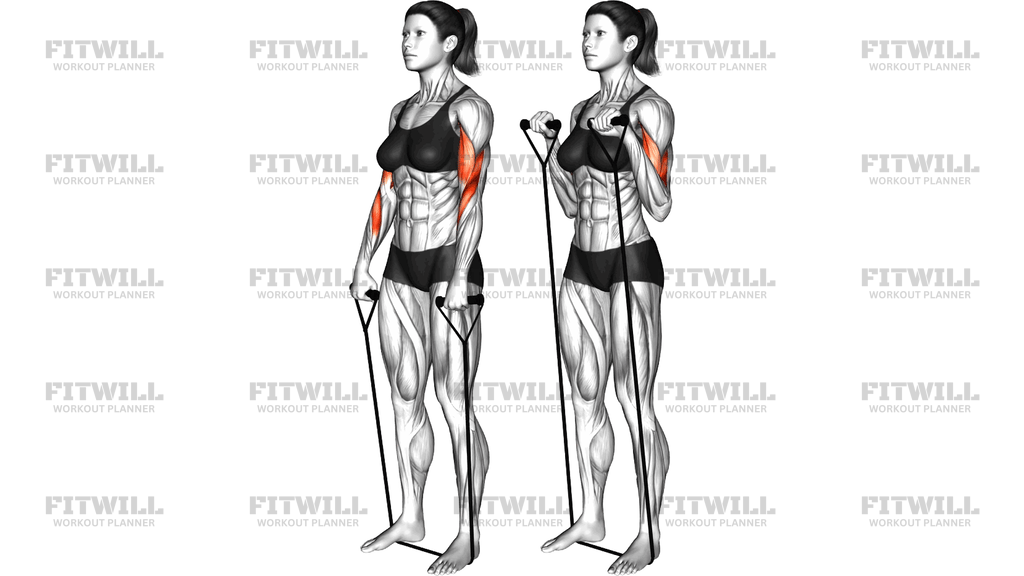
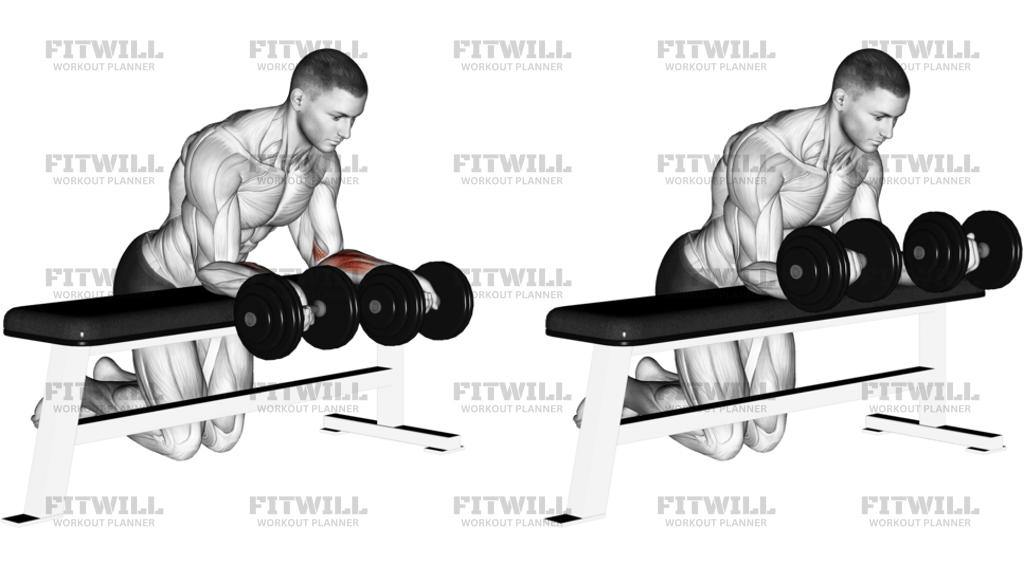
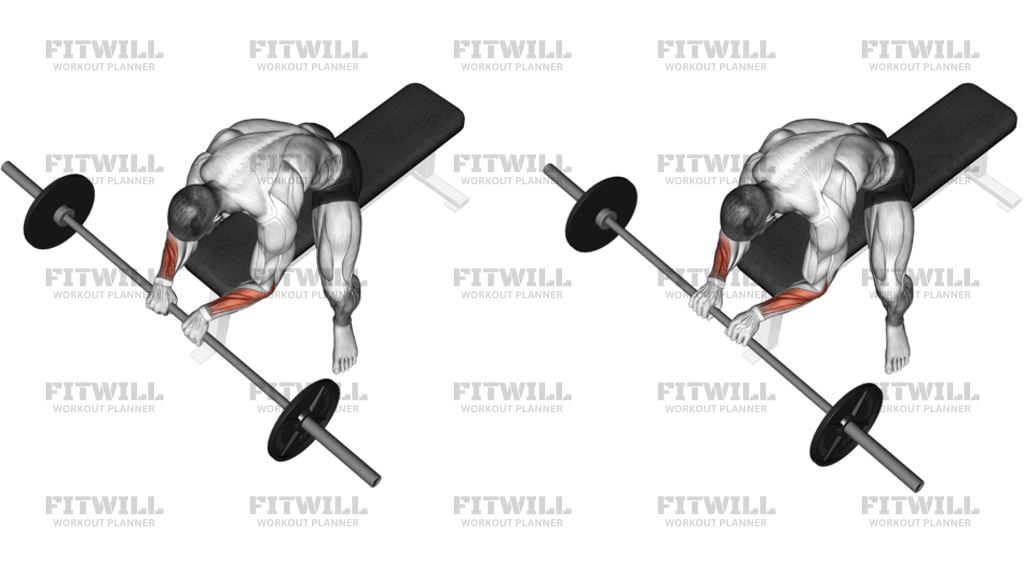
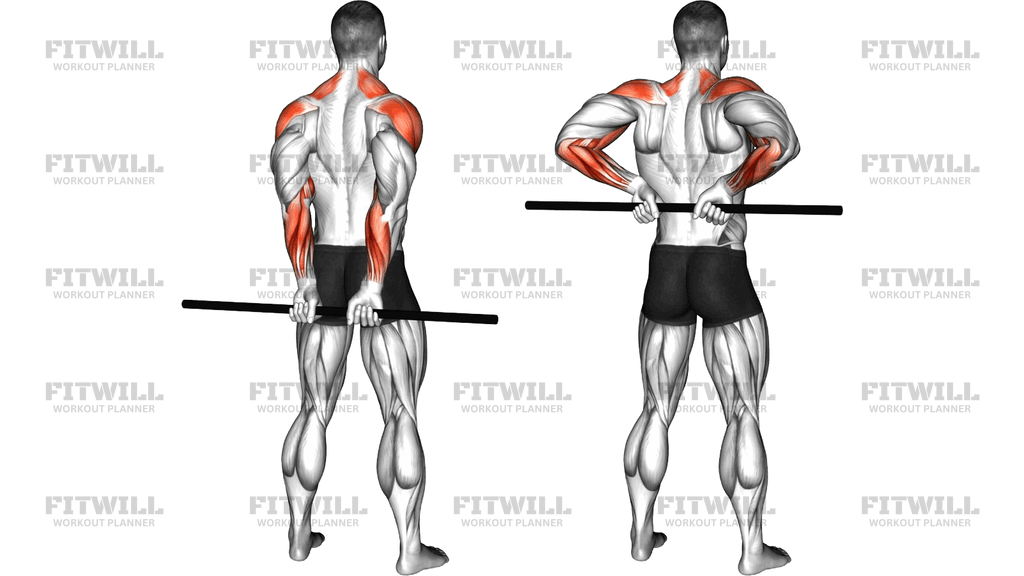
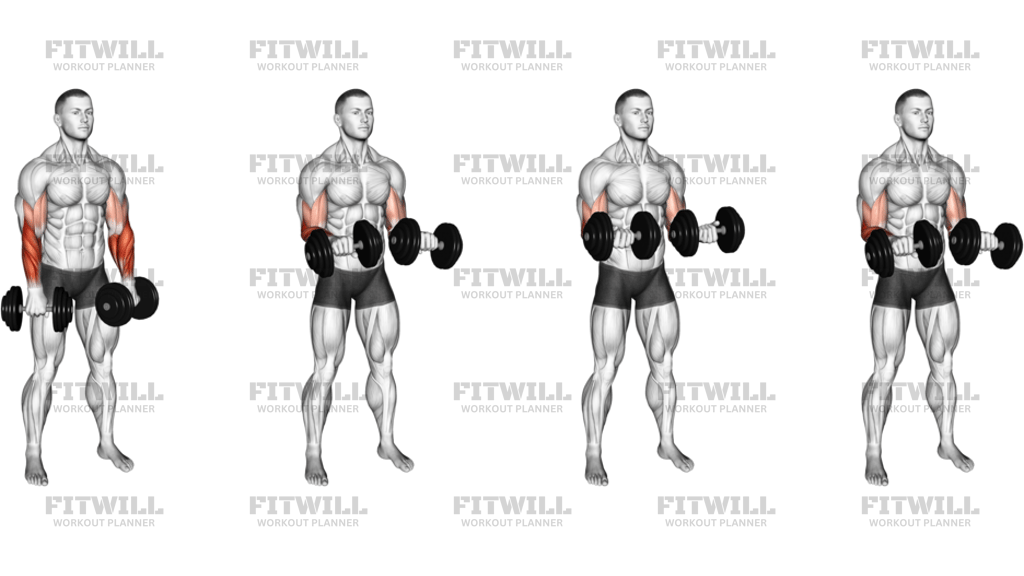
The Dumbbell Standing Wrist Reverse Curl is a forearm-focused movement performed standing with a dumbbell in each hand, using an overhand (pronated) grip so your palms face down toward the floor or behind you at the start. From there, you curl the weights upward by bending at the elbows and wrists, keeping the palms turned away from you the entire time. That reversed grip is what separates this exercise from a standard dumbbell curl and shifts the workload away from the biceps and onto the top of the forearms.
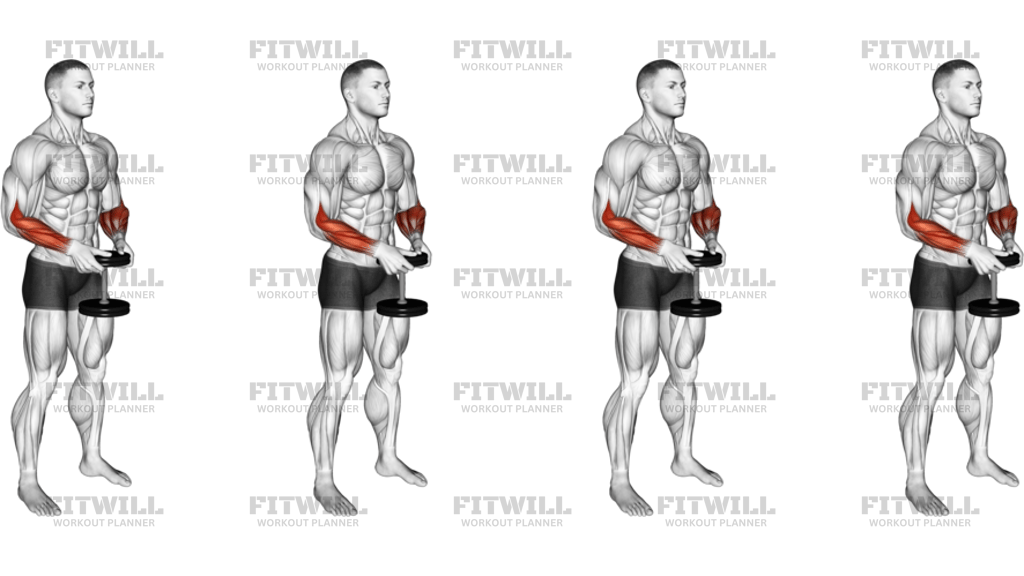
The main muscles working here are the wrist extensors, the group running along the top of the forearm from the outer elbow down to the wrist. The brachioradialis, the thick muscle near the elbow on the thumb side of the forearm, assists strongly, and your grip gets a steady challenge because the overhand position is mechanically weaker than a palms-up curl. Because the forearms are highlighted as the working area in this movement, expect a burning pump along the outside of the lower arm rather than in the upper arm.
This exercise is useful for anyone whose grip or forearm strength lags behind the rest of their body. Climbers, golfers, tennis players, and martial artists all benefit from stronger wrist extensors, and lifters who struggle to hold heavy bars during deadlifts, rows, or carries often find that direct forearm work closes that gap. It is also a common addition to rehab-style or preventive routines for the outer elbow area, since controlled strengthening of the extensors can support the tendons there when programmed sensibly.
Setup matters more than it might seem. Standing with your feet about hip-width apart, a dumbbell in each hand, and your arms fully extended at your sides gives you a stable base, but it also means there is nothing supporting your elbows. If you sway, lean back, or swing the dumbbells, momentum from the torso will steal work from the forearms. Keeping the upper arms pinned against your ribs and the shoulders relaxed is what forces the wrist extensors and brachioradialis to do the lifting.
To execute the movement well, curl the dumbbells up in a smooth arc until the backs of your hands face your shoulders or your forearms reach a comfortable peak contraction, pause briefly, then lower under control over two to three seconds. The lowering phase is where most of the muscle-building stimulus lives, so resist the temptation to let the weights drop. Exhale as you curl up and inhale on the way down.
A few practical points will keep this exercise productive. Choose lighter dumbbells than you would use for a regular curl, because the pronated grip is a weak position and the wrists tire quickly. Keep the wrists straight and rigid rather than letting them collapse backward or fold forward, and stop the set when your grip starts to slip and your form changes. One to three sets of ten to fifteen controlled reps at the end of an upper-body session is a typical placement, and because the forearms recover reasonably fast, the exercise can be trained two to three times per week.
[ Workout Log & Planner ]
Put your next workout in Fitwill
Keep your plan and training log ready when you are.


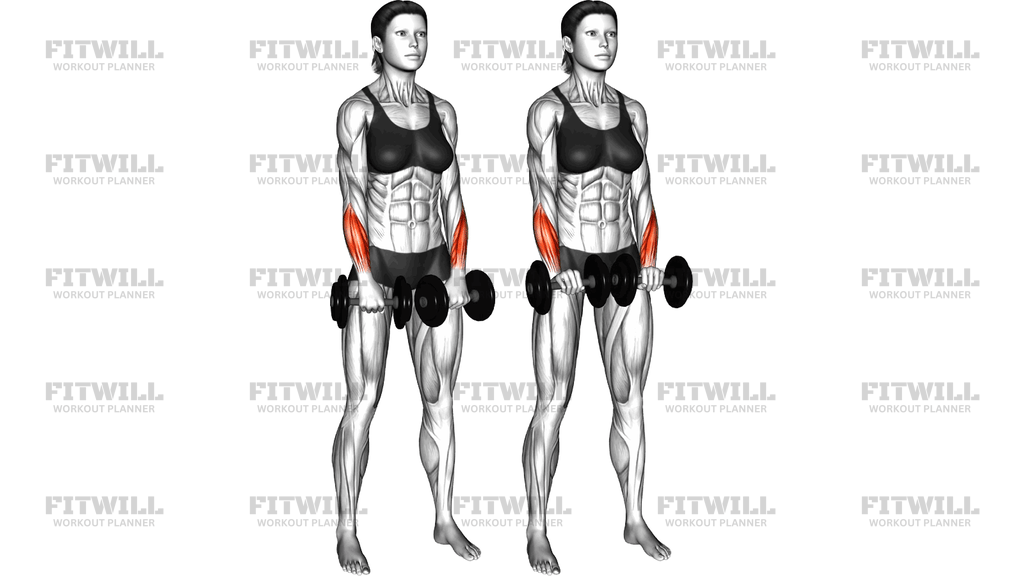
Instructions
- Stand upright with your feet about hip-width apart, holding a dumbbell in each hand with an overhand grip so both palms face down toward the floor.
- Let your arms hang fully extended at your sides, dumbbells in front of your thighs, and relax your shoulders down away from your ears.
- Brace your core lightly, keep your chest tall, and pin your upper arms against your ribs so they cannot drift forward during the rep.
- Keeping the palms turned down, curl both dumbbells upward at the same time by bending at the elbows and extending at the wrists.
- Continue curling until the backs of your hands face your shoulders or your forearms reach a firm, comfortable contraction at the top.
- Squeeze the top position for a brief pause of one second without shrugging or leaning back.
- Lower the dumbbells slowly along the same arc over two to three seconds until your arms are fully extended again.
- Exhale as you curl the weights up and inhale as you lower them back to the start.
- Reset your stance and elbow position between reps if needed, and stop the set once your grip begins to slip or your wrists start to bend.
Tips & Tricks
- Pick a noticeably lighter weight than you would use for a palms-up dumbbell curl; the overhand grip removes most of the biceps' leverage and the forearms fatigue fast.
- If you feel your upper arms swinging forward, imagine squeezing a towel under each armpit to lock the elbows against your torso.
- Do not let the wrists collapse backward under the load. Keep them in line with the forearm so the elbow does the hinging, not a floppy wrist.
- A common mistake is turning the palms upward halfway through the rep, which converts it into a regular curl. Check your knuckle direction at the top; they should face forward or up, never toward your body.
- Avoid leaning your torso back as the dumbbells rise. If your shoulders travel behind your hips, the weight is too heavy.
- The easiest point of the range is the bottom, so many lifters rush it. Pause for a beat with the arms straight before starting the next rep to keep tension honest.
- If your outer elbow complains during the movement, shorten the range slightly at the bottom and keep the tempo slow rather than stopping forearm training altogether.
- Train this exercise after your main pulling or pressing work, since pre-fatiguing the grip first will weaken your hold on heavier barbell and dumbbell lifts.
- Chalk or a secure grip on the dumbbell handles matters here; a slipping grip forces you to squeeze harder than the forearms can curl, cutting reps short.
Frequently Asked Questions
Which muscles does the Dumbbell Standing Wrist Reverse Curl work?
The primary movers are the wrist extensors on the top of the forearm, with strong assistance from the brachioradialis near the elbow. The grip muscles and biceps play a smaller supporting role because the palms-down grip limits biceps contribution.
Why does the Dumbbell Standing Wrist Reverse Curl use an overhand grip instead of a normal curl grip?
With the palms facing down, the biceps are in a shortened, weak position, so the forearms have to drive the movement. This is exactly what makes the reverse grip the defining feature of the exercise.
Is the Dumbbell Standing Wrist Reverse Curl suitable for beginners?
Yes, as long as beginners start with light dumbbells and focus on keeping the elbows still and the wrists straight. Even 2 to 5 kilograms per hand is often enough for a first session.
Why are the weights I can use so much lighter than on a regular dumbbell curl?
The pronated grip puts the forearm extensors and brachioradialis in charge and weakens the pull of the biceps, so the load feels heavier at the same weight. This is normal and not a sign of weakness.
How many reps and sets should I do for the Dumbbell Standing Wrist Reverse Curl?
One to three sets of 10 to 15 controlled reps works well for most lifters. Because the forearms recover quickly, the exercise can be trained two to three times per week.
Can I do this exercise seated or with a barbell instead?
Yes. A barbell or EZ barbell works with the same overhand grip, and a seated or preacher-bench version removes momentum by supporting the arms. The dumbbell standing version is simply the most convenient and lets each wrist work independently.
My wrists bend backward at the top of the rep. What should I change?
That usually means the weight is too heavy or you are substituting a wrist extension for an elbow curl. Reduce the load, keep the wrists rigid and in line with the forearm, and think of hinging only at the elbow.
Is the Dumbbell Standing Wrist Reverse Curl safe for the outer elbow?
When performed with light weights, a slow tempo, and a pain-free range, it is commonly used to condition the extensor tendons around the outer elbow. If a movement causes sharp or lingering pain, reduce the range or load and consult a qualified professional.
Should I feel this in my biceps at all?
A mild biceps involvement is normal since the elbow still flexes, but the dominant burn should sit along the top and outside of the forearms. If your biceps do most of the work, your palms have probably rotated up during the rep.