Dumbbell Standing Reverse Curl Rotate
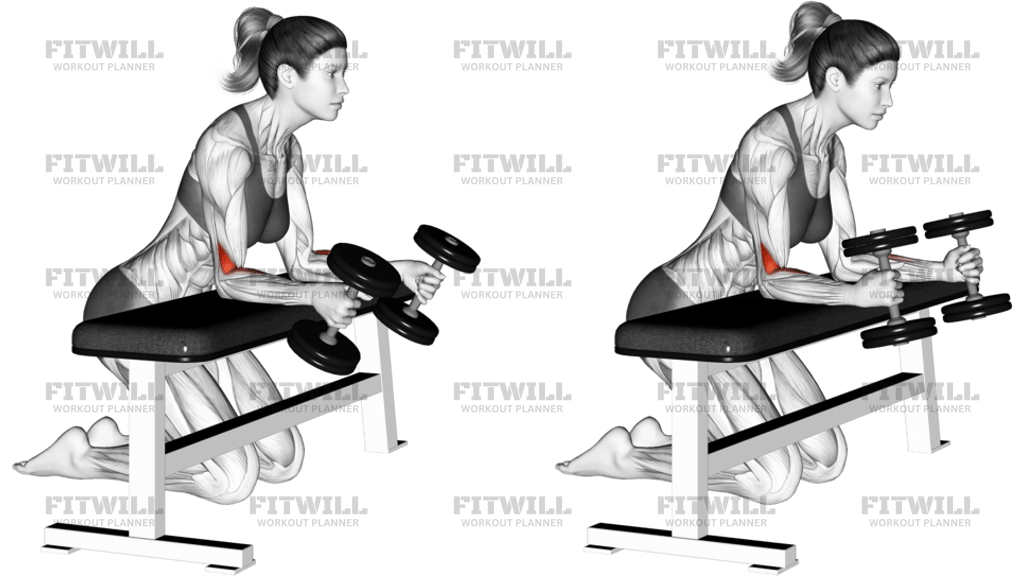
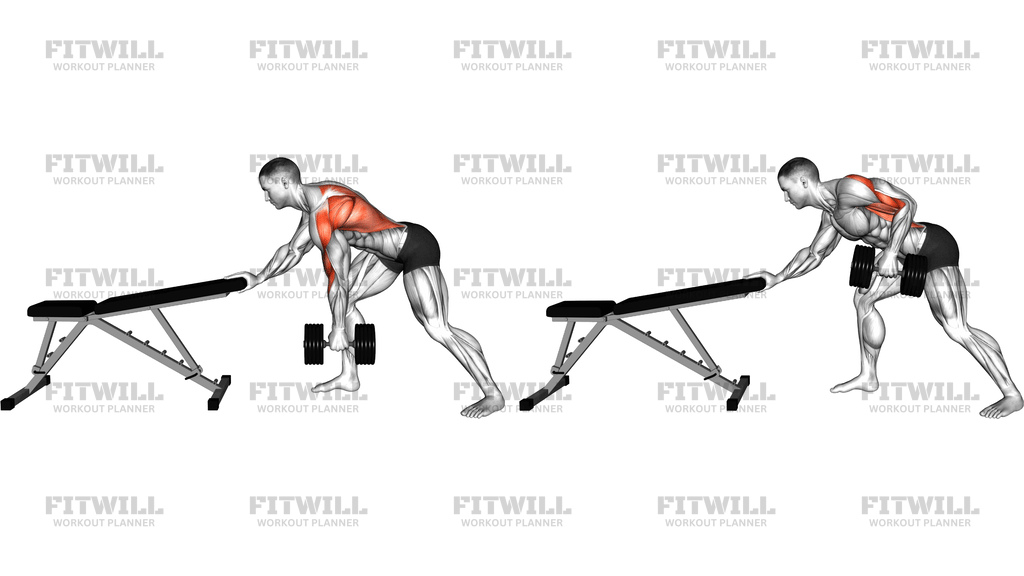
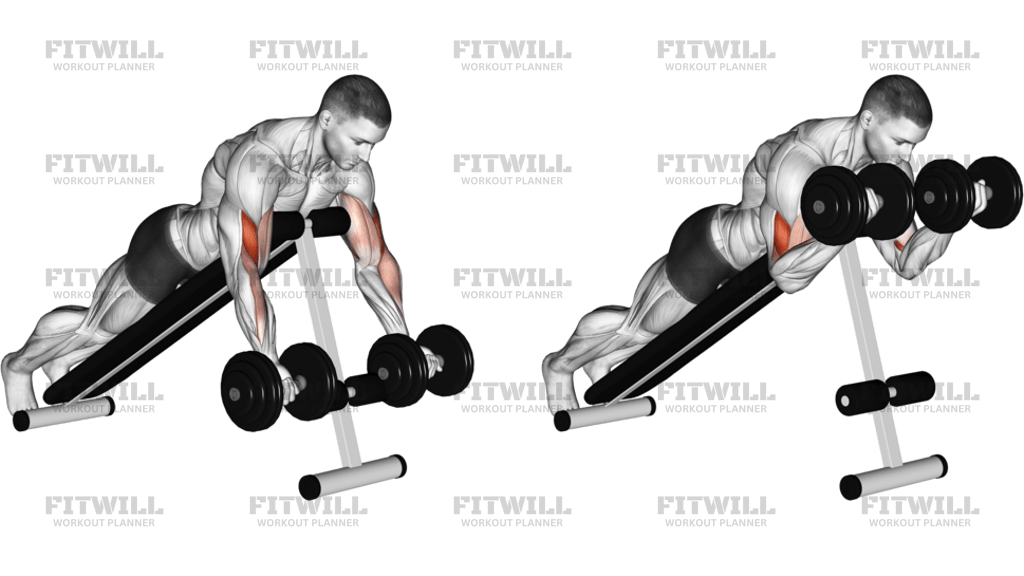
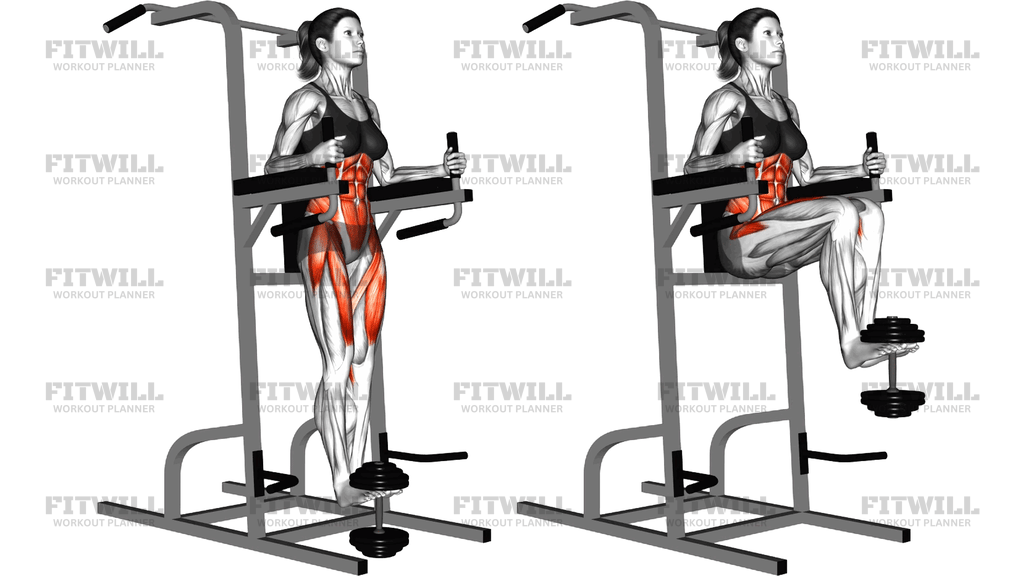
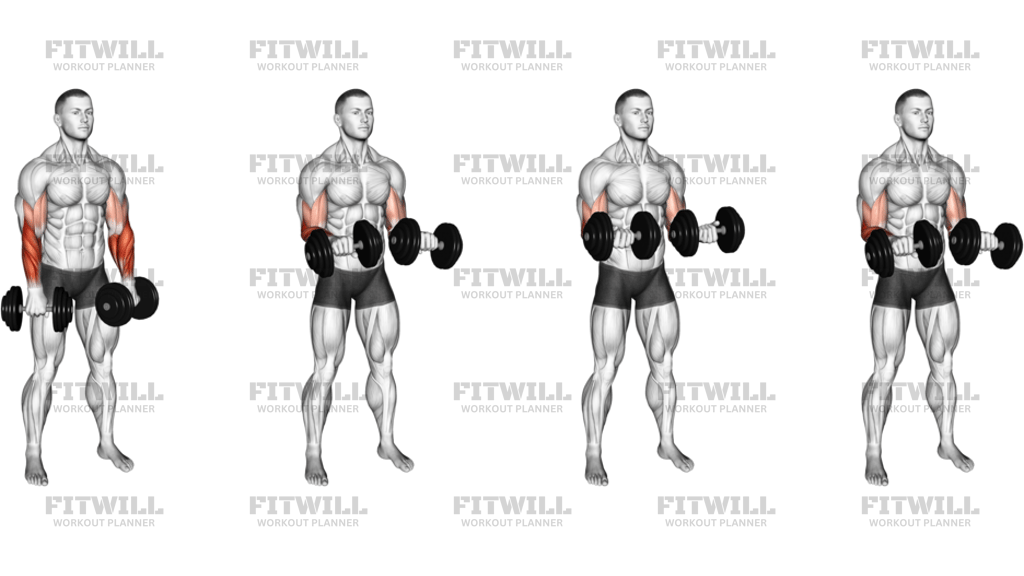
Dumbbell Standing Reverse Curl Rotate is a standing dumbbell curl variation built around a reverse-grip lift and a controlled forearm rotation through the rep. The image shows the lifter standing tall with the dumbbells held beside the thighs, elbows tucked, and the upper arms staying quiet while the forearms do most of the work. That makes the exercise a useful choice when you want to train the forearms hard without turning the movement into a body-swinging curl.
The main training effect comes from the forearms, especially the wrist flexors and the brachioradialis, with the biceps, wrist extensors, and shoulder stabilizers helping to keep the path clean. Because the rotation is part of the rep, the exercise asks more of grip control and wrist alignment than a standard curl. The load should feel challenging in the forearms before it feels like a full-body effort.
Setup matters here. Stand with your feet about hip width apart, keep your chest stacked over your pelvis, and let the dumbbells hang at your sides with the grip shown in the image. From that start, curl by bending the elbows rather than pulling the shoulders forward. As the dumbbells rise, rotate the forearms smoothly through the top of the movement instead of snapping the wrists at the last second.
At the top, the forearms should be fully engaged but the shoulders should still be relaxed and down. Lower the dumbbells under control and reverse the rotation on the way back to the start so the rep stays even from bottom to top. That controlled return is where a lot of the training effect lives, especially for forearm endurance and tendon-friendly strength.
This exercise fits well as accessory work, forearm training, or an arm-day finisher when you want direct elbow-flexion work with extra rotational demand. Beginners can use it if they keep the weight light and the rotation smooth. If the wrists start to bend back, the elbows drift forward, or the torso begins to rock, the set is too heavy for the movement you are trying to train.
[ Workout Log & Planner ]
Put your next workout in Fitwill
Keep your plan and training log ready when you are.


Instructions
- Stand tall with the feet about hip width apart and hold a dumbbell in each hand beside the thighs, matching the grip shown in the image.
- Keep the elbows close to the ribs, soften the knees, and stack the ribs over the pelvis so the torso stays quiet.
- Set the wrists straight before the first rep; do not let the dumbbells drift in front of the shoulders.
- Curl the dumbbells upward by bending the elbows while keeping the upper arms still.
- As the weights rise, rotate the forearms smoothly through the rep instead of flipping the wrists at the top.
- Finish the curl near the lower chest or upper abdomen with the forearms fully engaged and the shoulders relaxed.
- Lower the dumbbells slowly, reversing the rotation under control until the arms are straight again.
- Exhale as you curl up, inhale as you lower, and reset your posture before the next repetition.
Tips & Tricks
- Use lighter dumbbells than you would for a regular curl, because the reverse grip and rotation increase forearm and wrist demand.
- Keep the wrists in line with the forearms; if the knuckles tip back, the load is too heavy or the range is too long.
- Let the elbows stay pinned near the ribs so the shoulders do not take over the movement.
- Rotate the forearms smoothly through the curl instead of twisting the dumbbells abruptly at the top.
- Lower with a slow, even tempo to keep tension on the forearms and avoid a dead drop.
- If your torso starts leaning back, switch to alternating reps or reduce the load before the set turns into a swing.
- A slight pause at the top is useful when the forearm burn fades too quickly or the rotation gets sloppy.
- Stop the set when grip fatigue forces the dumbbells to wobble, because that is usually the first sign the wrists are losing position.
Frequently Asked Questions
What does Dumbbell Standing Reverse Curl Rotate train most?
It mainly trains the forearms and brachioradialis, with the biceps, wrist extensors, and shoulder stabilizers helping through the lift.
How is this different from a regular reverse curl?
A regular reverse curl usually stays in one grip position, while this variation adds a forearm rotation that increases grip and wrist control demand.
What should the starting position look like?
Stand upright with the dumbbells hanging at your sides, elbows close to the ribs, and the torso stacked so you do not need to swing the weights.
Should my elbows move forward as I curl?
No. The elbows should stay mostly beside the ribs so the forearms do the work instead of the shoulders and lower back.
Can beginners do this exercise?
Yes, but only with light dumbbells and a small, smooth rotation. The movement is simple, but the wrist control makes it harder than it looks.
Why do my wrists feel stressed during this movement?
Usually the load is too heavy, the wrists are bending back, or the rotation is being forced instead of guided by the forearms.
What if the rotation bothers my elbows or wrists?
Use a standard reverse curl or a hammer curl for a more fixed hand position, then return to this variation when the joints tolerate it better.
Where does this fit best in a workout?
It works well as accessory arm work, a forearm finisher, or a technique-focused curl block after bigger compound lifts.