Resistance Band Standing Hip Extension
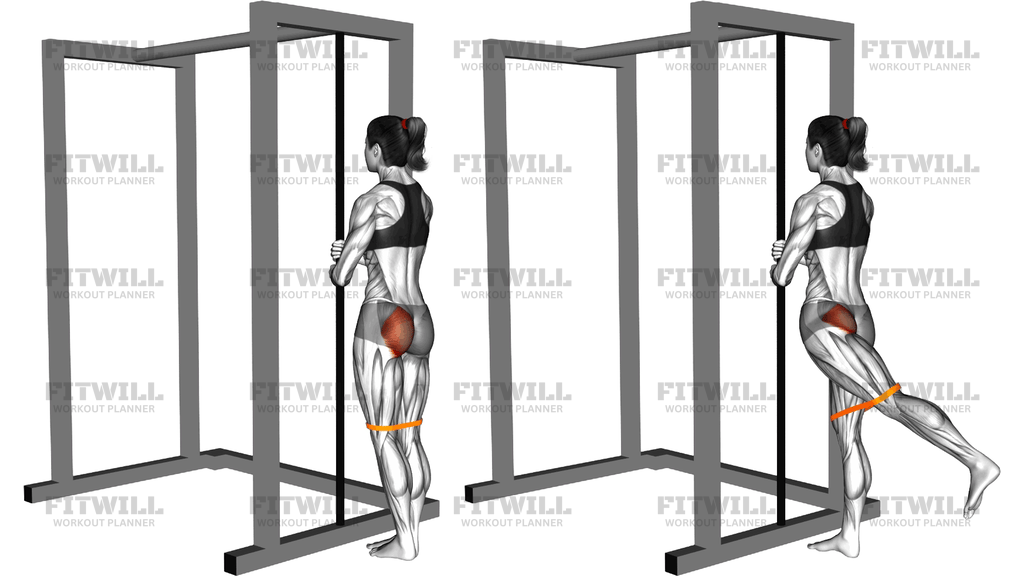
Resistance Band Standing Hip Extension is a single-leg exercise where you stand tall, hold a rack or sturdy post for balance, and pull one leg straight back behind you against the pull of a band looped around your ankles. The band resists the backward swing of the leg, so your glute on the moving leg has to work hard to finish the extension, while the standing leg and trunk handle balance.
This movement is a great fit for people who want to strengthen the glutes without loading the spine with weights. Because you are standing and only moving one leg at a time, the demand on your lower back stays modest compared to barbell hip hinges, making it a practical choice for beginners, people returning from a layoff, or anyone adding glute volume at the end of a leg session. It is also commonly used in warm-ups to switch the glutes on before squats, deadlifts, or running.
The main muscle at work is the gluteus maximus of the moving leg, which drives the leg backward into extension. The hamstrings assist as the leg travels behind the body, the standing leg works to keep you upright, and the core stabilizes your torso so the movement comes from the hip rather than from leaning or twisting. The band placement at the ankles means the resistance increases as your leg swings further back, which matches the strength curve of the glute nicely.
Setup matters more than most people expect. Loop the band securely around both ankles, stand close enough to your support that your hands can rest lightly on it, and set your feet about hip-width apart. If you stand too far from the support or let the band go slack, you lose tension and the exercise turns into uncontrolled leg swinging. Keep the band flat against your skin or leggings so it does not roll up your calves as you move.
Execution should feel deliberate and smooth. Extend one leg straight back by squeezing the glute of that leg, pause briefly at the back, then bring the foot forward under control without letting the band snap your leg back in. Keep your torso tall and your hips level throughout — the moment your chest drops or your lower back arches to gain range, the glute stops doing the work. A short, controlled range with a clear glute squeeze beats a big, loose swing every time.
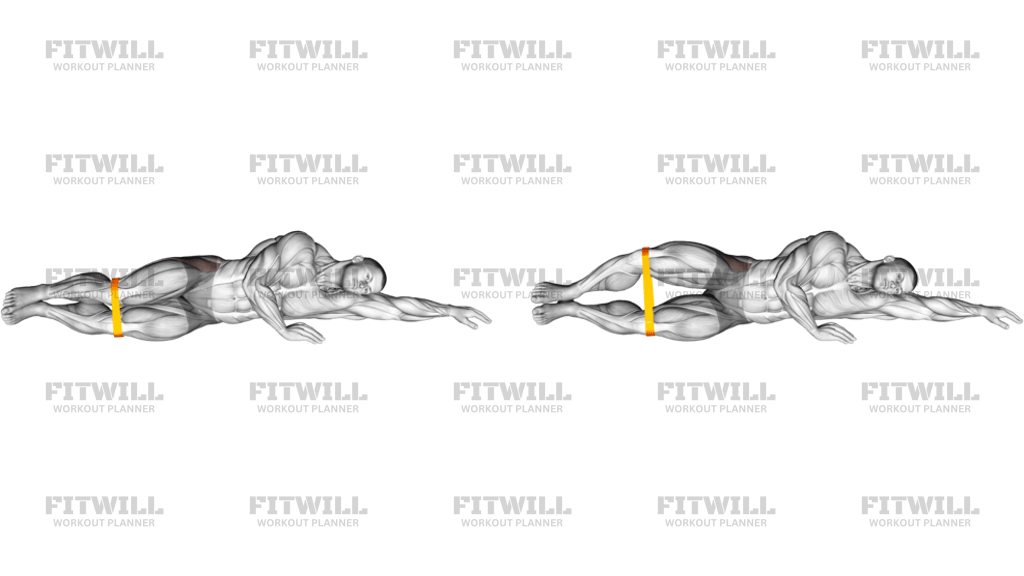
Because it requires only a band and something to hold, this exercise slots easily into home workouts, hotel gym sessions, or busy commercial gym floors. It pairs well with band side-lying abductions or clamshells for a complete glute routine, and doing two to three sets of ten to fifteen controlled reps per leg covers most goals, from general strength to glute shaping.
[ Workout Log & Planner ]
Put your next workout in Fitwill
Keep your plan and training log ready when you are.


Instructions
- Loop a resistance band around both ankles so it sits flat and snug against the skin, then step away until the band is taut when your feet are hip-width apart.
- Stand facing a rack upright, post, or wall and place both hands lightly on it at chest height for balance support.
- Set your feet hip-width apart, stand tall, and gently brace your abdominal muscles so your ribs and pelvis stay stacked.
- Shift your weight onto your left leg, keeping a soft bend in the standing knee, and lift your right foot slightly off the floor.
- Squeeze the right glute and extend your right leg straight back behind you, letting the band stretch until your leg reaches a comfortable height.
- Pause for one to two seconds at the back of the movement, feeling the contraction in the glute rather than in your lower back.
- Slowly bring your right foot forward to the starting position under control, resisting the band's pull instead of letting it snap your leg back.
- Exhale as you extend the leg back, inhale as you return it forward.
- Complete all reps on the right leg, then switch sides and work the left leg against the same band tension.
- When finished, step toward the support to slacken the band before sliding it off your ankles.
Tips & Tricks
- If your lower back arches as the leg goes back, shorten the range — stop the leg at the point where you still feel the glute, not the spine, doing the work.
- Resist the urge to grip the rack hard; hold it lightly so your hands assist balance without your torso leaning heavily into it.
- A common mistake is letting the hips rotate open as the leg swings back. Imagine your hip bones pointing straight ahead the entire set.
- Keep the working leg straight but not locked; a rigid, hyperextended knee shifts effort away from the hip and can feel unpleasant at the back of the knee.
- If the band rolls up your calves during the set, reposition it directly over the ankle bones before starting again.
- Move slower on the return than on the extension — most people control the backward swing but lose tension when the band pulls the leg forward.
- Point your toes down slightly and think about pushing the heel back and up rather than lifting the foot high; this cues the glute more directly.
- If you wobble badly on the standing leg, hold the support with one hand and let the other arm hang at your side, or widen the stance of your support foot a touch.
- Choose a band resistance that lets you finish twelve controlled reps per side with a two-second pause; if you cannot pause, the band is too strong.
Frequently Asked Questions
Which muscles does Resistance Band Standing Hip Extension work?
The gluteus maximus of the moving leg is the primary muscle, with the hamstrings assisting as the leg travels behind you. The standing leg, core, and lower back stabilizers also work to keep you balanced and upright.
Why is the band placed around the ankles rather than the thighs in this exercise?
At ankle level, the band lengthens as your leg extends backward, so resistance rises through the exact range where the glute shortens. Ankle placement also lets the leg travel through a fuller, straighter path than a thigh-loop band would allow.
Is Resistance Band Standing Hip Extension suitable for beginners?
Yes, it is one of the most beginner-friendly glute exercises because the band provides light, joint-friendly resistance and the rack or post removes most of the balance challenge. Start with a light band and focus on a controlled, short range.
How far back should I extend my leg?
Extend only as far as you can while keeping your torso tall and your lower back from arching. For most people this is roughly a 15 to 30 degree angle behind the body; chasing more height usually comes from the spine, not the hip.
Why does my lower back feel this instead of my glutes?
That usually means your torso is leaning forward or your pelvis is tipping as the leg goes back, which transfers work to the erectors. Slow the tempo, reduce the range slightly, and consciously squeeze the glute to start each rep.
Can I do Resistance Band Standing Hip Extension without a rack to hold?
Yes, you can place a hand on a wall, a sturdy chair back, or even hold a pole or doorframe. If no support is available, the exercise still works but demands more balance from the standing leg, so expect lighter band tension to feel harder.
How many sets and reps should I do?
Two to four sets of ten to fifteen controlled reps per leg works well for most goals. Because the resistance is light, prioritize the pause at the back and the slow return over adding heavy band tension.
Can this exercise replace glute bridges or hip thrusts?
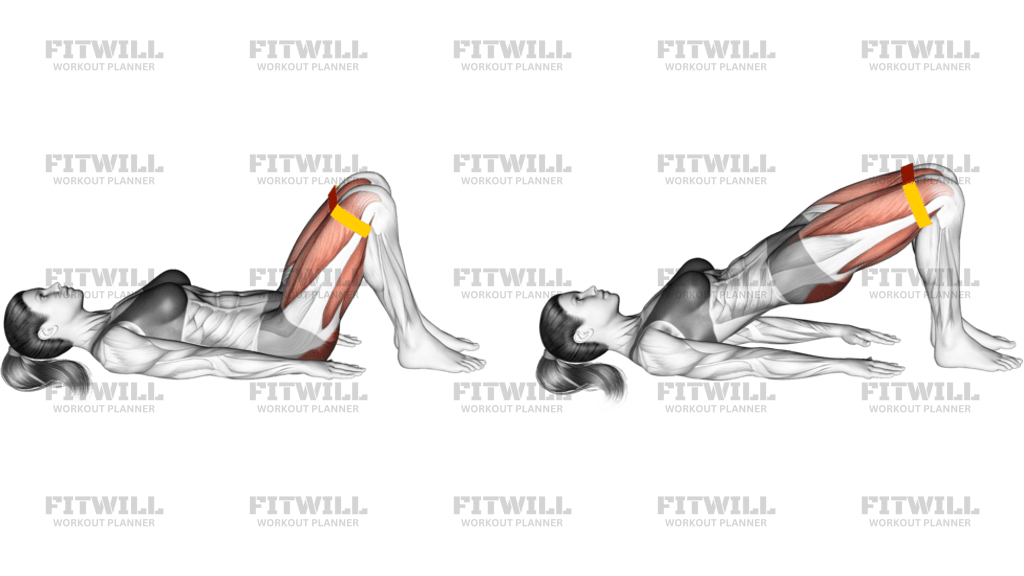
It complements them rather than replacing them. Bridges and thrusts load the glute in a shortened position under heavier resistance, while standing hip extension trains the glute through a lengthened, functional range with minimal spinal loading.
Is it safe for people with knee discomfort?
Since the movement occurs at the hip and the working knee stays mostly straight with no load on it, many people with cranky knees tolerate it well. Keep the working leg relaxed rather than forcefully locked, and stop if the standing knee feels strained from balancing.
Should I do both legs back to back or finish one side first?
Finish all reps on one leg before switching. This keeps tension on the working glute, makes comparing sides easier, and avoids the fumbling of resetting the band between every rep.