Cable Incline Row
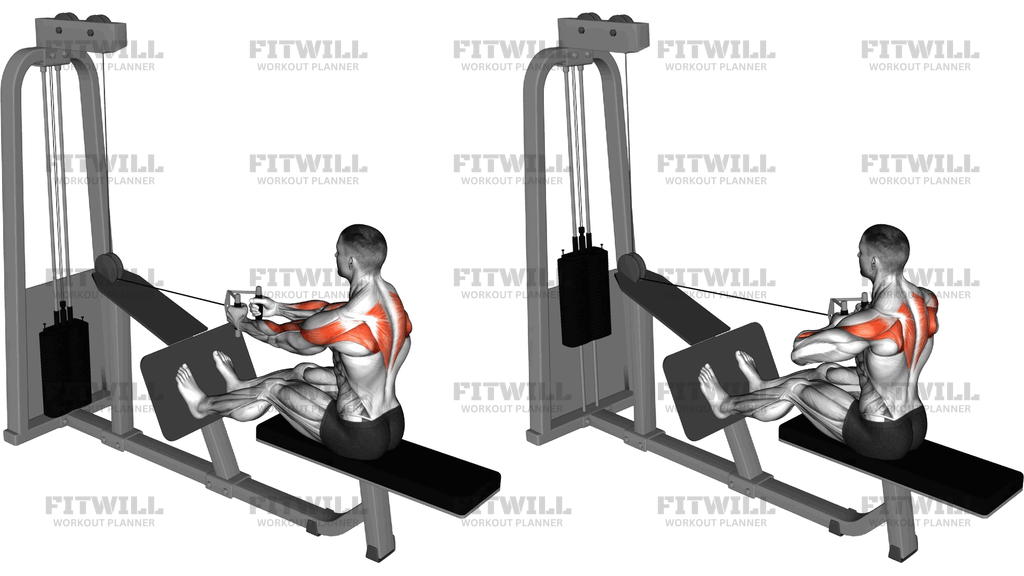
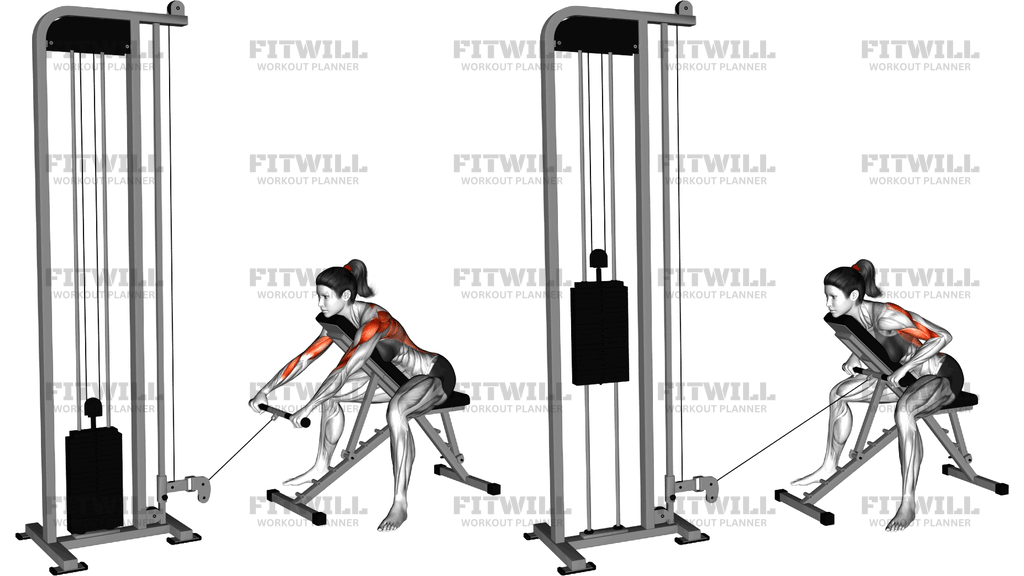
The Cable Incline Row is a chest-supported row performed while sitting astride an incline bench angled at roughly 30-45 degrees, pulling a low-pulley cable handle up toward your lower chest. Because your chest and torso stay pressed against the bench pad through the whole set, the bench itself removes most of the momentum and lower-back loading you get with bent-over rowing variations, leaving the mid-back muscles to do the work.
The main targets are the rhomboids and middle trapezius between the shoulder blades, with strong assistance from the lats, rear delts, and biceps. The chest-supported position also keeps the shoulder blades free to retract fully, so you can squeeze the upper back at the top of every rep instead of cutting the range short.
This setup matters more than people expect. With the chest in contact on the pad and the cable running low from the pulley, the pulling angle naturally draws the elbows down and back along your sides rather than flaring them high, which biases the mid-back without irritating the shoulders. If you let your chest peel off the pad to start the pull, you instantly convert the set into a partial swing row and lose the main benefit of the bench.
The Cable Incline Row suits a wide range of lifters. Beginners like it because the bench guides the torso and makes cheating difficult, while more experienced lifters use it as a strict, higher-rep accessory after heavy rows or deadlifts when the lower back is already fatigued. It is also a common choice for people who feel bent-over rows in their lower back rather than their upper back.
To execute it well, set the bench a short stride from the low pulley, sit facing the machine with your chest resting on the incline pad, and grasp the handle with a neutral or slightly wider grip. Pull the handle to your upper abdomen or lower chest by driving the elbows back, pause briefly to squeeze the shoulder blades together, then let the handle travel forward under control until the arms are long and the shoulder blades have spread apart again.
Keep expectations practical: this is a controlled, moderate-load movement, not a max-effort lift. Pick a weight you can stop cleanly at the top for each rep, breathe out on the pull, and treat the stretch at the front of each rep as part of the exercise rather than a pause before the next one.
[ Workout Log & Planner ]
Put your next workout in Fitwill
Keep your plan and training log ready when you are.


Instructions
- Position an incline bench two to three feet in front of a cable machine's low pulley, angled at about 30-45 degrees, and attach a short handle to the cable.
- Sit astride the bench facing the machine, plant your feet firmly on the floor on either side, and lean forward so your chest is fully supported against the incline pad.
- Reach down and grasp the handle with both hands using a neutral grip, letting the arms extend fully toward the pulley before the first rep.
- Draw your shoulder blades slightly down and back, and brace your core while keeping your chest and ribs in contact with the pad.
- Exhale as you pull the handle up toward your lower chest by bending the elbows and driving them back close to your sides.
- At the top of the pull, the handle should be near your upper abdomen or lower chest with the elbows pointing back, not out wide; hold and squeeze the shoulder blades together for a beat.
- Inhale as you lower the handle forward under control, letting the arms extend fully and the shoulder blades protract at the end of the stretch.
- Keep your chest glued to the pad throughout the set; if it lifts, the weight is too heavy.
- Complete your reps, then return the handle to the stack slowly rather than letting the weight crash down.
Tips & Tricks
- The most common fault on the Cable Incline Row is rocking the chest off the pad to kick-start each pull. Drop the weight until you can move the handle using only your arms and shoulder blades.
- Because the cable comes from a low pulley, keep the elbows tracking slightly down and back rather than flaring to shoulder height; a high flare turns it into a different row and stresses the shoulder.
- Let the arms go fully long at the front of each rep and feel the shoulder blades slide forward on the rib cage. Half reps that never reach full extension shrink the stretch on the lats and rhomboids.
- Squeeze for a full second at the top instead of rushing reps. The bench support means you cannot cheat with body english, so tempo is where you earn the growth stimulus.
- If the pad digs into your chest or shoulders at your bench height, adjust the bench angle slightly rather than hunching around it; your airway and posture should stay neutral.
- Keep wrists straight and the grip relaxed enough that your forearms do not fatigue before your upper back. If the handle keeps slipping, a wider or heavier grip attachment may help.
- Plant the feet wide enough on either side of the bench that your legs are stable; a narrow base lets the whole body shift sideways as you pull.
- Do not hold your breath on the hard reps. Exhale during the pull and inhale during the return to keep the brace steady.
- Set the bench far enough from the machine that the weight stack does not bottom out at full arm extension; losing tension at the stretch defeats the point of the cable setup.
Frequently Asked Questions
What muscles does the Cable Incline Row work?
The primary muscles are the rhomboids and middle traps between the shoulder blades, which pull the shoulder blades together. The lats, rear delts, and biceps assist heavily, and the forearms work to hold the handle.
Why is the chest supported on an incline bench for this row?
The pad holds your torso still so momentum and lower-back strain cannot contribute to the pull. This keeps the tension on the upper back and makes each rep noticeably stricter than a bent-over row.
Is the Cable Incline Row good for beginners?
Yes, it is one of the more forgiving rows to learn because the bench enforces torso position and the cable provides smooth resistance. Start light, focus on squeezing the shoulder blades, and build the weight gradually.
What angle should the incline bench be set at?
Around 30-45 degrees works best for most people. Too flat and you have to bend forward awkwardly to keep the chest on the pad; too steep and the pulling angle drifts toward an upright row pattern.
Where should I pull the handle to at the top?
Aim for the upper abdomen or lower chest with the elbows drawn back close to your sides. Pulling toward the neck with flared elbows changes the emphasis and can bother the shoulders.
My chest keeps lifting off the pad during the Cable Incline Row. How do I fix it?
That almost always means the weight is too heavy or the reps are too fast. Reduce the load, control the return for two to three seconds, and think of pulling only with the elbows and shoulder blades.
What can I substitute if the cable machine is busy?
A dumbbell incline row, where you lie chest-down on an incline bench and row dumbbells to your sides, trains the same pattern. Resistance-band rows with the chest braced against an incline bench are another option.
Should my feet be on the floor or on the bench?
Keep both feet on the floor, one on each side of the bench, so your hips and legs are stable. This base stops side-to-side shifting as you pull the handle toward you.
Is it safe to do the Cable Incline Row with lower-back issues?
The chest-supported position generally removes most lower-back demand compared with bent-over rowing, which is why many people with back-sensitive rowing prefer it. Still, keep the load moderate, avoid holding your breath, and follow any guidance you have been given for your situation.
How many sets and reps should I use for the Cable Incline Row?
It works well as an accessory movement for 3-4 sets of 8-15 reps with a brief squeeze at the top of each rep. Because cheating is hard to do on this setup, prioritize clean reps over heavier weight.