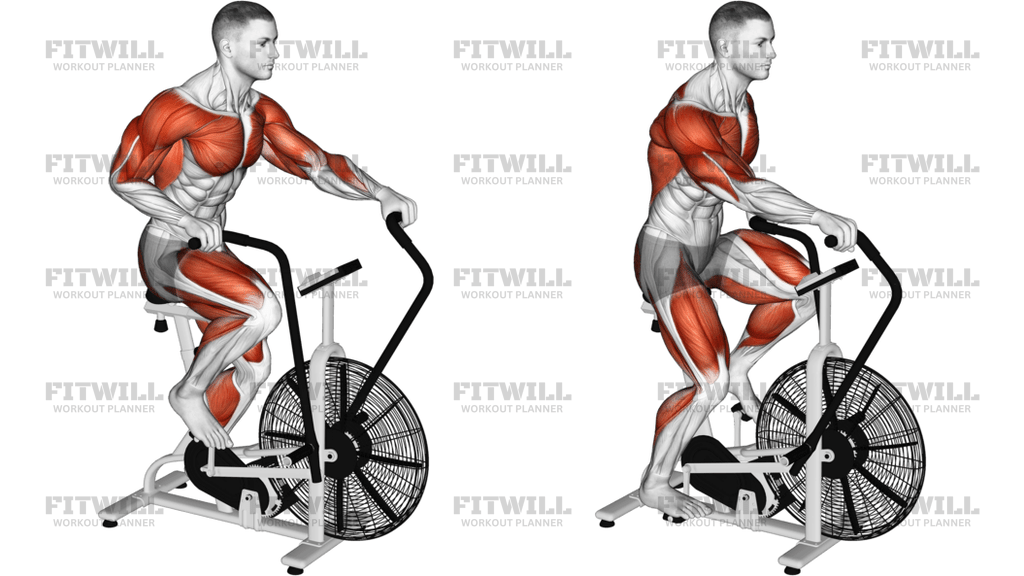
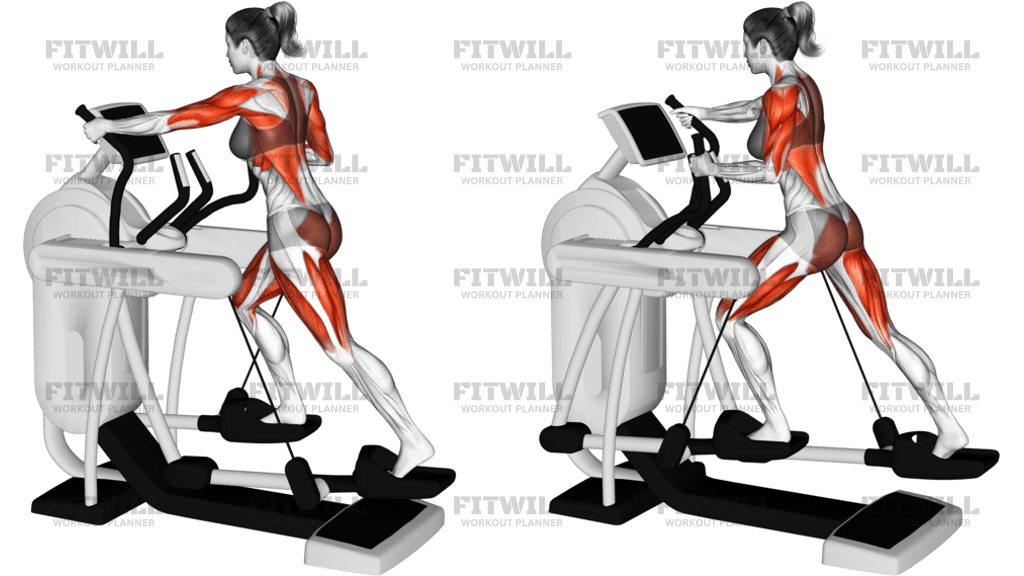
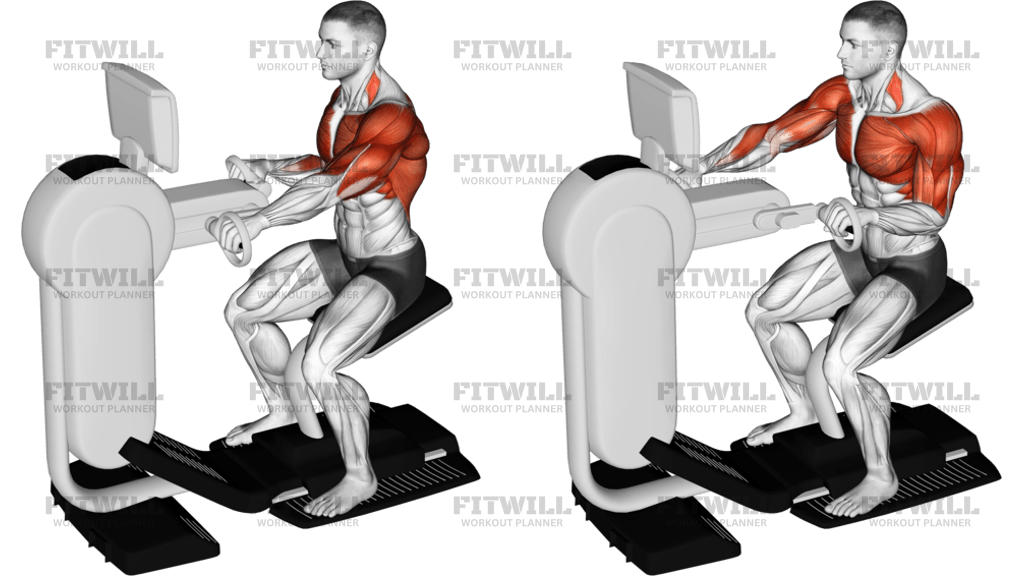
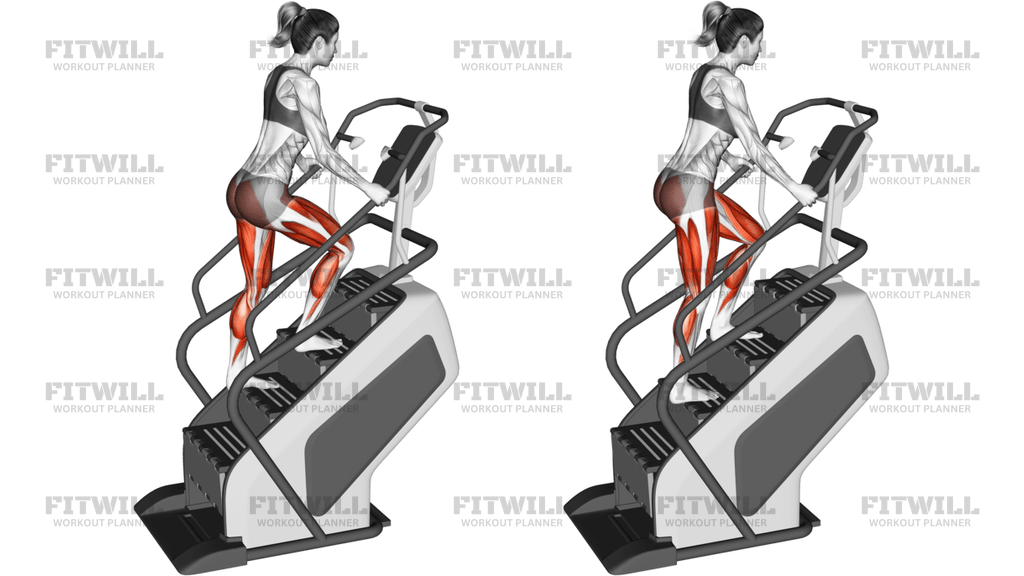
Rowing With Rowing Machine
Rowing with a rowing machine is a rhythmic, low-impact cardio exercise that trains the whole body through a repeated drive and recovery pattern. It is built around a seated pull, but the real power comes from the legs, hips, back, arms, and trunk working in sequence. That makes the exercise useful for conditioning, warm-ups, interval work, and steady-state aerobic training when you want a movement that challenges both fitness and coordination.
The setup matters because the stroke starts from a compact position at the front of the slide. Your feet should be secured on the plates, your shins close to vertical, and your torso hinged slightly forward with a long spine. From there, each rep should follow the same order: push with the legs first, open the hips, then finish the pull with the arms. On the way back, extend the arms, fold the torso forward, and only then bend the knees as the seat glides forward.
That sequence keeps the handle path smooth and helps you avoid the most common rowing mistake, which is yanking early with the arms or rounding the lower back at the catch. A clean stroke keeps the handle level, the wrists neutral, and the shoulders down so the machine feels powerful without becoming jerky. The finish should feel strong but controlled, with the handle coming to the lower ribs or upper abdomen rather than being flung high toward the chest.
Rowing is especially useful when you want cardio that also asks the posterior chain and trunk to stay organized under repeat effort. It can be scaled for beginners by reducing resistance and stroke rate, or challenged with harder intervals and longer sessions once the rhythm is consistent. The main goal is not to row as hard as possible on every stroke, but to keep each repetition technically sound so power, breathing, and posture stay repeatable.
If the stroke starts to feel choppy, shorten the range slightly, relax the grip, and slow the recovery until the sequence is clean again. A better row feels smooth from the catch to the finish and back to the front of the slide, with the machine doing the work of resistance while you control the timing and body positions.
[ Workout Log & Planner ]
Put your next workout in Fitwill
Keep your plan and training log ready when you are.


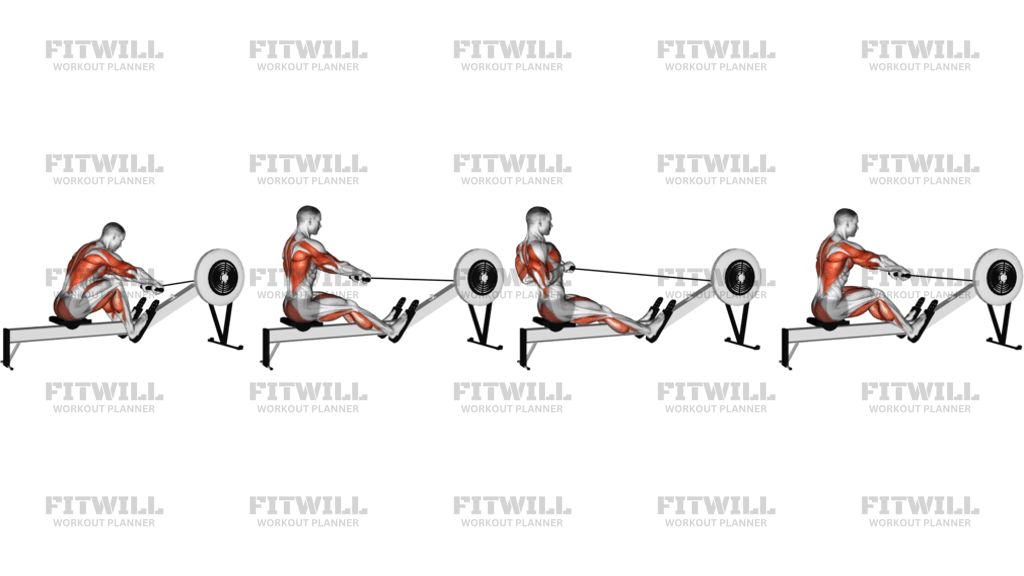
Instructions
- Sit on the rowing seat with your feet strapped in, your shins near vertical, and your hands holding the handle with a relaxed overhand grip.
- Slide to the front of the machine, hinge slightly forward from the hips, and keep your spine long with your shoulders down.
- Set your torso angle, brace lightly through the trunk, and let your arms stay straight before the drive starts.
- Push the foot plates away first by extending your legs while keeping the handle close and level.
- When the legs are nearly straight, open the hips and lean back only slightly as the handle travels toward your lower ribs.
- Finish the stroke by pulling the elbows back and keeping the wrists neutral, not by shrugging the shoulders.
- Reverse the motion in order: extend the arms first, then hinge the torso forward, then bend the knees as the seat slides forward.
- Keep the recovery smooth and quiet, then begin the next stroke from the same controlled front position.
- Breathe out through the drive and breathe in during the return for the planned duration or rep count.
Tips & Tricks
- Set the damper or resistance so the first pull feels smooth, not like you have to yank the handle off the flywheel.
- Keep the handle path level so it passes just over the knees on the recovery instead of arcing upward.
- Drive with the legs before the arms; if your elbows bend early, the stroke loses power and becomes arm-dominant.
- Keep your grip light enough that the forearms do not take over the stroke.
- At the finish, stop with the handle near the lower ribs or upper abdomen rather than pulling it high to the chest.
- Let the shoulders stay low and wide so the neck does not tense up during longer rows.
- On the recovery, let the arms and torso move away before the knees bend, or the seat will rush forward too early.
- If your lower back rounds at the front of the stroke, shorten the reach slightly and keep the chest lifted.
Frequently Asked Questions
What muscles does rowing with a rowing machine work?
It trains the legs, glutes, back, arms, and core together, with cardio conditioning as the main training effect.
Can beginners perform this exercise?
Yes. Beginners usually do best with a lighter resistance setting and a slower stroke rate so the sequence stays smooth.
Where should the handle finish on each stroke?
The handle should finish around the lower ribs or upper abdomen, with the elbows drawn back and the shoulders kept down.
What is the biggest mistake on the rowing machine?
Most people pull with the arms too early or round the lower back at the catch, which breaks the stroke order and reduces power.
Should the seat or the handle move first?
The legs should start the drive, so the seat moves first while the handle stays controlled and close to the body.
How do I breathe during rowing intervals?
Exhale as you drive through the stroke and inhale as the seat slides back to the front.
Is rowing hard on the joints?
It is generally low impact because you stay seated and slide instead of landing or jumping, which makes it easier on the joints than many cardio options.
Can I use rowing for both warm-ups and conditioning?
Yes. Short, easy rows work well for warm-ups, while longer steady sessions or intervals are useful for conditioning.