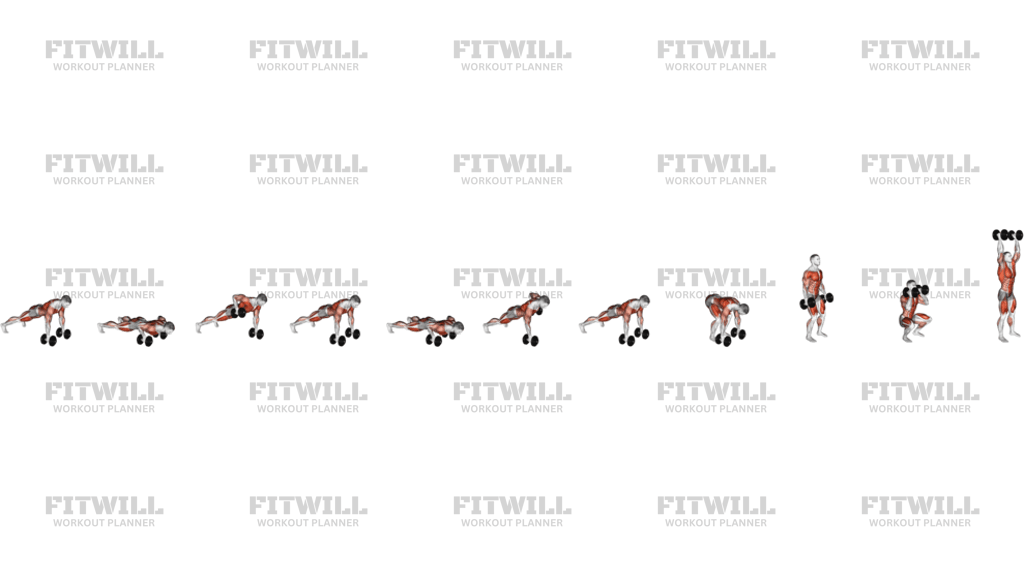
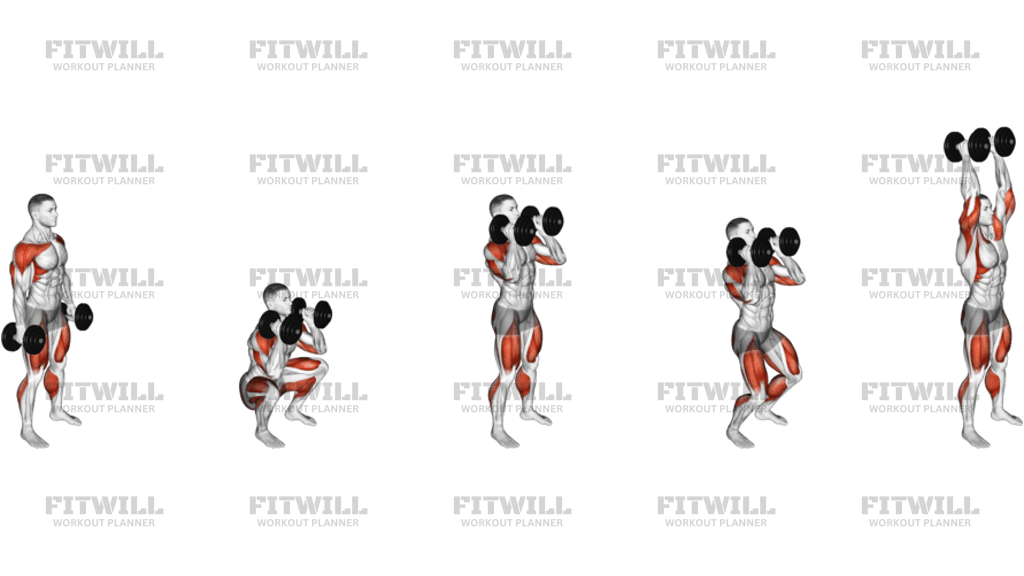
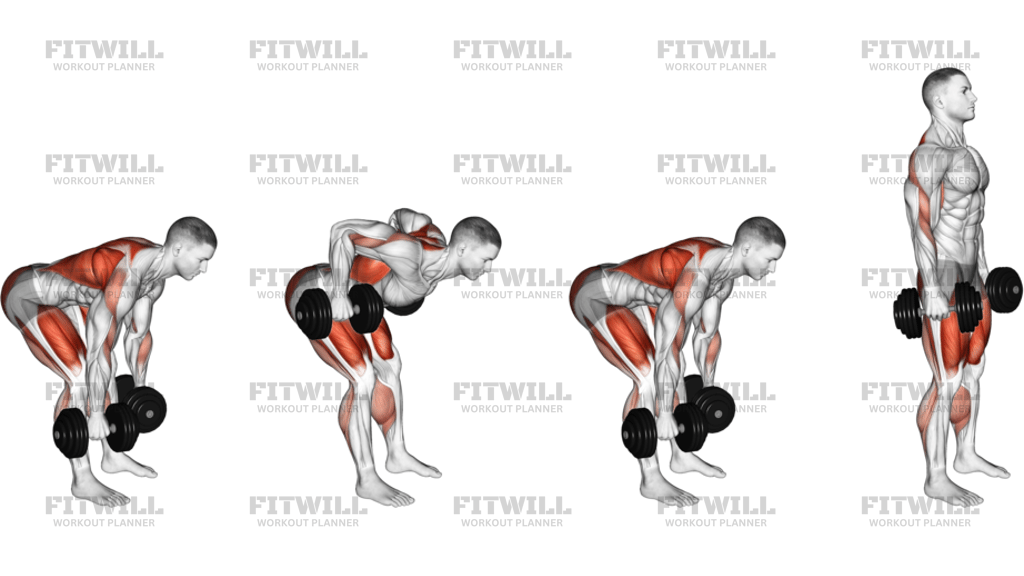
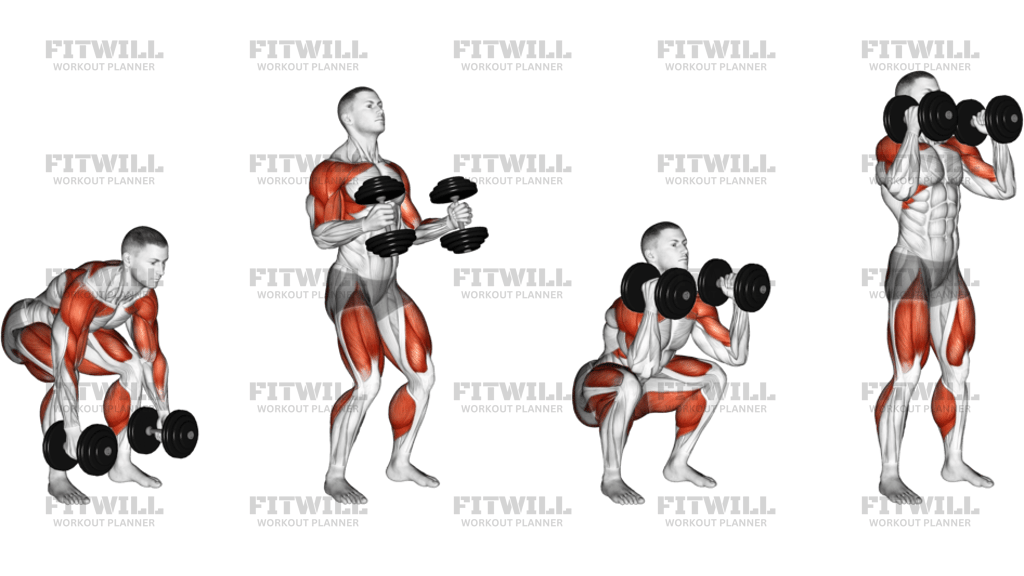
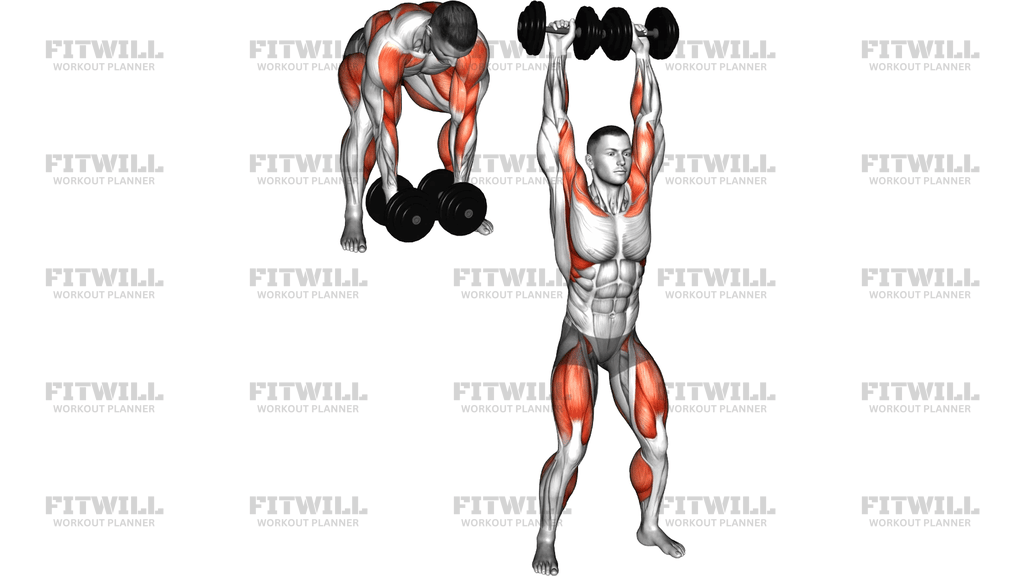
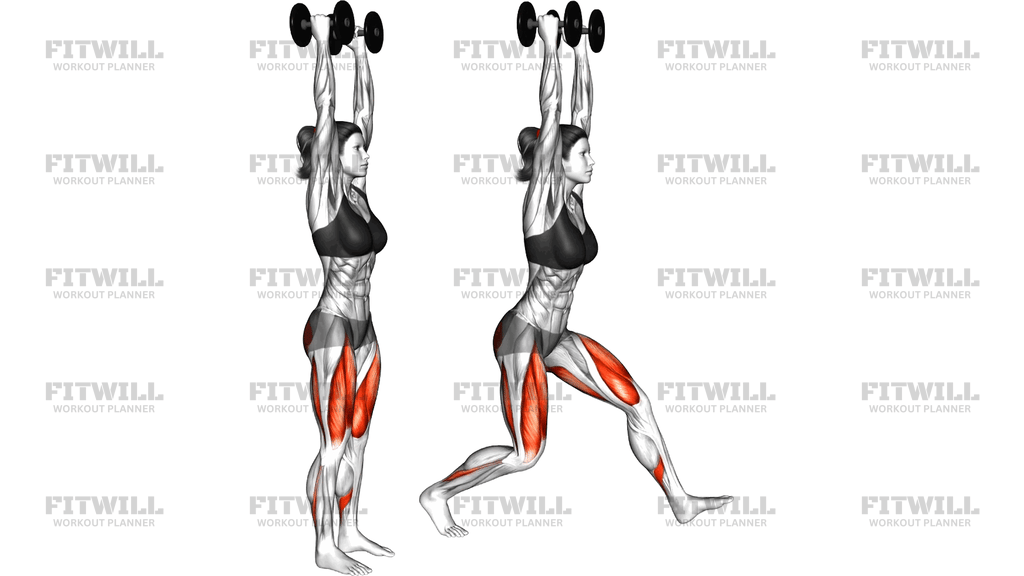
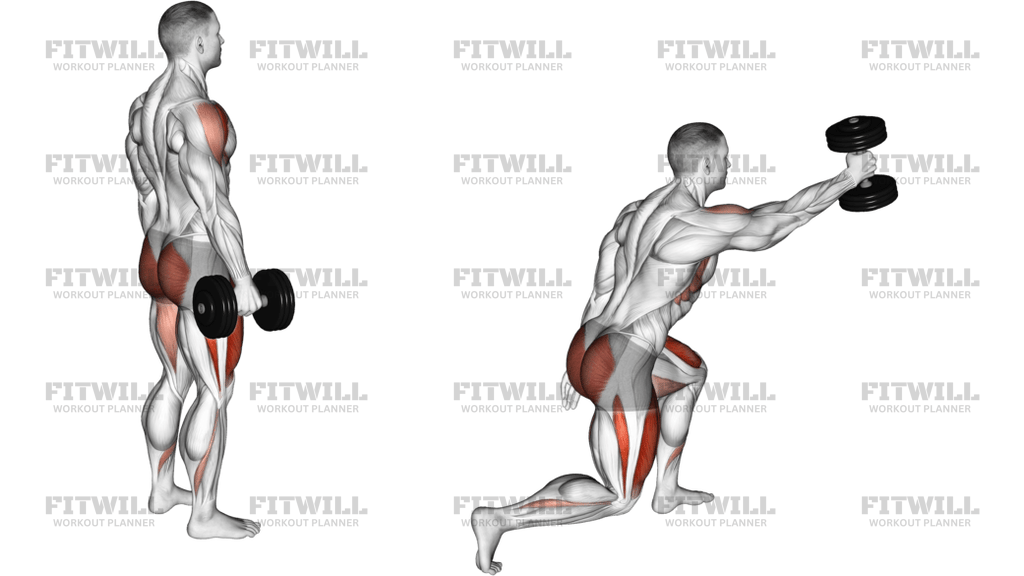
Dumbbell Turkish Get Up (Squat Style)
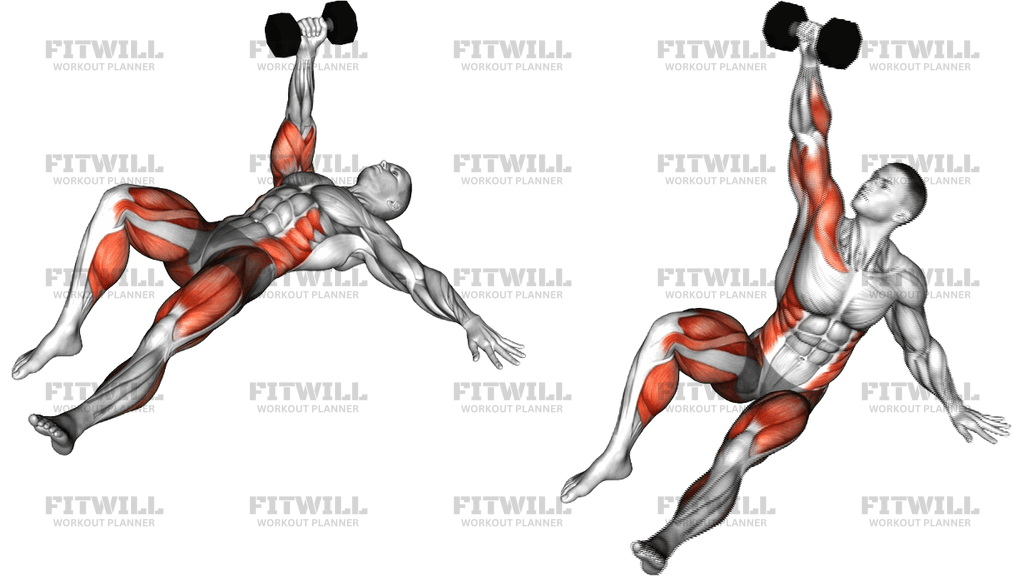
The Dumbbell Turkish Get Up (Squat Style) is a full-body movement that takes you from lying on your back to standing, all while holding a dumbbell locked out overhead in one hand. Unlike the lunge variation, the squat style brings both feet close together under your hips before you rise, so you come to standing through a symmetrical squat instead of a split stance. This changes the demands considerably: your legs share the load evenly, and your core has to work harder to keep your torso upright as you climb out of the bottom position.
The exercise is built from distinct segments: rolling to press yourself up, bridging your hips, pulling yourself to a seated position, tucking your legs under you, and then squatting to stand with the weight still vertical. Each segment isolates a different skill, which is why the get up rewards patience and control far more than speed. Grip strength, shoulder stability, and midline control are trained continuously, while the squat portion adds significant work for the quads, glutes, and deep core.
The overhead position is the defining feature. From the moment you press the dumbbell up until you are standing tall, your working arm stays locked out and stacked over your shoulder. If the weight drifts forward or back, you will feel it immediately in your shoulder joint, which makes the get up one of the best self-correcting exercises for building overhead stability and shoulder girdle control.
This movement suits lifters who already have some training experience and want to develop coordination, mobility, and stability rather than pure maximum strength. It is popular in functional training programs, martial arts and grappling preparation, and as a warm-up or finisher that challenges the whole body with a single dumbbell. Because it moves you through lying, seated, kneeling, and standing positions, it also exposes asymmetries and tight spots that conventional two-sided lifts can hide.
Setup matters more than in most exercises. Your grip, hand position on the floor, and the path your hips travel are all determined before you move an inch. Start lighter than you think you need, keep your eyes on the dumbbell through the rollout and sit-up portions, and treat each segment as its own small rep. If you cannot hold the bottom of the squat position calmly with the weight overhead, reduce the load before adding more.
For safety, never let the dumbbell pull your arm out of line, and never rush the transition from seated to squatting, which is where most form breaks happen. Practice the movement without weight or with a very light dumbbell until every segment feels deliberate, and always lower yourself back down with the same control you used to stand up.
[ Workout Log & Planner ]
Put your next workout in Fitwill
Keep your plan and training log ready when you are.


Instructions
- Lie on your back on the floor with your legs extended. Place a dumbbell on the floor next to your right hand, roll slightly toward it, and grip the handle firmly with your palm facing inward.
- Press the dumbbell straight up until your right arm is locked out over your shoulder, then bend your right knee and place that foot flat on the floor. Keep your left arm relaxed out to your side at roughly 45 degrees, palm down.
- Brace your core and keep your eyes on the dumbbell. Push through your right foot and left forearm, bridge your hips slightly off the floor, and pull yourself up to a seated position by driving your torso up through your left elbow and then your left hand.
- From the seated position, press down through your left hand and right foot, slide your left leg under your body, and place your left knee on the floor beside your left hand so you are in a low crouch facing the dumbbell.
- Bring your left foot around to plant it flat on the floor next to your right foot, so both feet are roughly hip-width apart and under your hips in a deep squat. Keep your chest up and the dumbbell locked out overhead.
- Stand up from the squat by driving through both heels, keeping the dumbbell stacked directly over your right shoulder and your ribcage down. Exhale as you rise to full standing with the arm still vertical.
- Pause at the top, then reverse every step in order: squat down with control, place your left hand on the floor, bring your left knee down, sit back onto your hip, support yourself on your left hand, lower your hips to the floor, and finally roll back flat while lowering the dumbbell with your right arm under control.
- Breathe steadily through each segment, exhaling during the effort portions like the bridge and the squat to stand, and inhale during the transitions.
- Complete all reps on one side, then switch the dumbbell to your left hand and repeat the entire sequence on the other side.
- Reset your lying position completely between reps, making sure the dumbbell starts over your shoulder and your feet are set before you begin the next get up.
Tips & Tricks
- Choose a weight you could hold overhead for at least 30 seconds without shaking. Most people fail the Dumbbell Turkish Get Up (Squat Style) because of shoulder fatigue, not leg strength.
- Keep your wrist straight and knuckles facing the ceiling. A bent or collapsing wrist is the most common reason the dumbbell drifts off its overhead path during the roll to sit.
- Watch the dumbbell with your eyes through the lying, bridging, and seated phases. Only look straight ahead once you reach the low squat and your head is upright.
- If you crash from seated into the low squat, your feet are probably planted too far from your hips. Tuck them closer so the squat bottom feels compact and balanced before you stand.
- The squat style demands more ankle and hip mobility than the lunge version. If your heels lift at the bottom, spend time improving ankle dorsiflexion or temporarily reduce your squat depth and rise from a slightly higher position.
- Avoid letting the dumbbell drift behind your head when you bridge your hips. Drive it vertically by thinking about pushing the weight toward the ceiling, not rolling it back.
- Do not rest your free hand on your knee for help in the squat; it hides instability. Instead, hover it at your side or extend it forward for counterbalance.
- Film yourself from the side for one set. The most frequent error is losing the stacked line between the dumbbell, shoulder, and hip during the stand-up, which quietly shifts load onto the lower back.
- Learn the sequence in segments before doing full reps. Practice the roll to sit, then the tuck to squat, and the stand separately with no weight until each piece is automatic.
Frequently Asked Questions
What muscles does the Dumbbell Turkish Get Up (Squat Style) work?
It works the whole body, with the shoulder stabilizers and deltoids holding the weight overhead, the core controlling every transition, and the quads and glutes driving the squat to stand. Grip and upper back muscles are also heavily involved throughout.
How is the squat style different from the lunge-style Turkish Get Up?
In the squat style, you tuck both feet under your hips and rise from a symmetrical deep squat instead of stepping up into a lunge. This spreads the load evenly across both legs and places a greater demand on upright torso control and hip and ankle mobility.
Can beginners do the Dumbbell Turkish Get Up (Squat Style)?
Beginners can learn it, but it should be done unweighted or with a very light dumbbell first. The squat-style exit from the floor requires more mobility than the lunge version, so master the sequence before adding meaningful load.
Why do I keep my eyes on the dumbbell during the movement?
Watching the weight keeps your shoulder in a stable, stacked position and prevents the dumbbell from drifting off its vertical path as your body rotates underneath it. Only shift your gaze forward once your head is upright in the low squat.
What is the most common mistake in this exercise?
Rushing the transition from seated to the low squat, which lets the dumbbell pull the arm forward and rounds the back. Slow that segment down, get both feet planted close to your hips, and squat up deliberately.
How heavy should my dumbbell be for the Turkish Get Up?
Pick a weight you can press overhead and hold steady for the entire duration of one get up without your wrist bending or your shoulder fatiguing. For most people that is far lighter than their pressing weight, and it is smarter to progress slowly.
Can I substitute a kettlebell for the dumbbell in this exercise?
Yes, the kettlebell is the traditional tool and its center of mass sits above the hand, which some people find more stable. The movement pattern and the squat-style stand-up stay exactly the same.
How many reps should I do per side?
One to three controlled get ups per side is typical because the time under tension is long. Quality matters more than volume, and one slow, precise rep per side is better than three rushed ones.
Is it safe if my shoulder feels unstable overhead during the get up?
If the dumbbell drifts or your shoulder feels shaky, stop and reduce the weight rather than pushing through. The exercise should feel stable and controlled; persistent discomfort overhead is a sign the load or your shoulder mobility needs work.
Where should the Dumbbell Turkish Get Up (Squat Style) fit in my workout?
It works well as a warm-up to activate the shoulders and core at low weight, or as a strength finisher with a challenging load for low reps. Avoid doing it fatigued when you are first learning, since form breaks down quickly under tiredness.