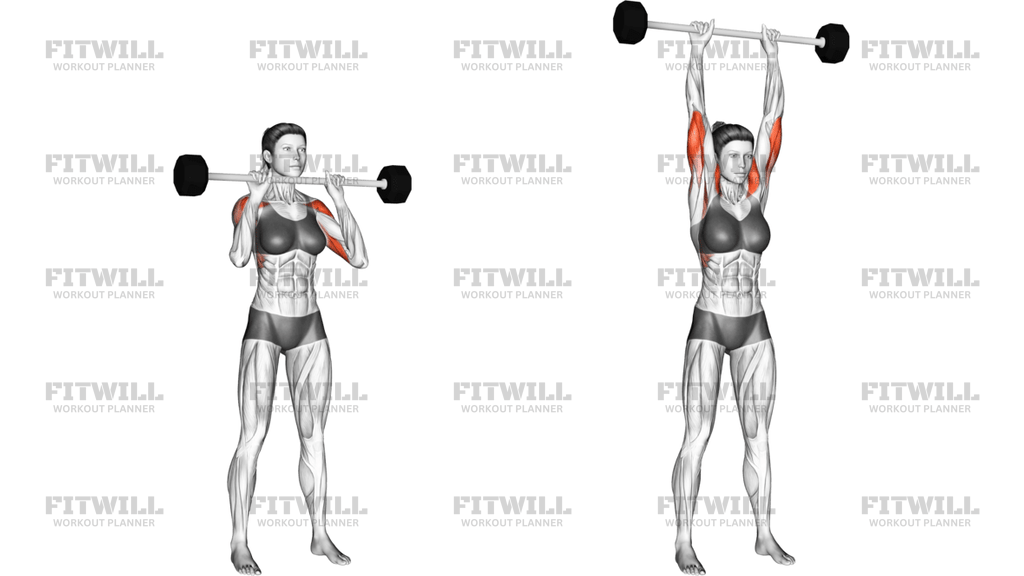
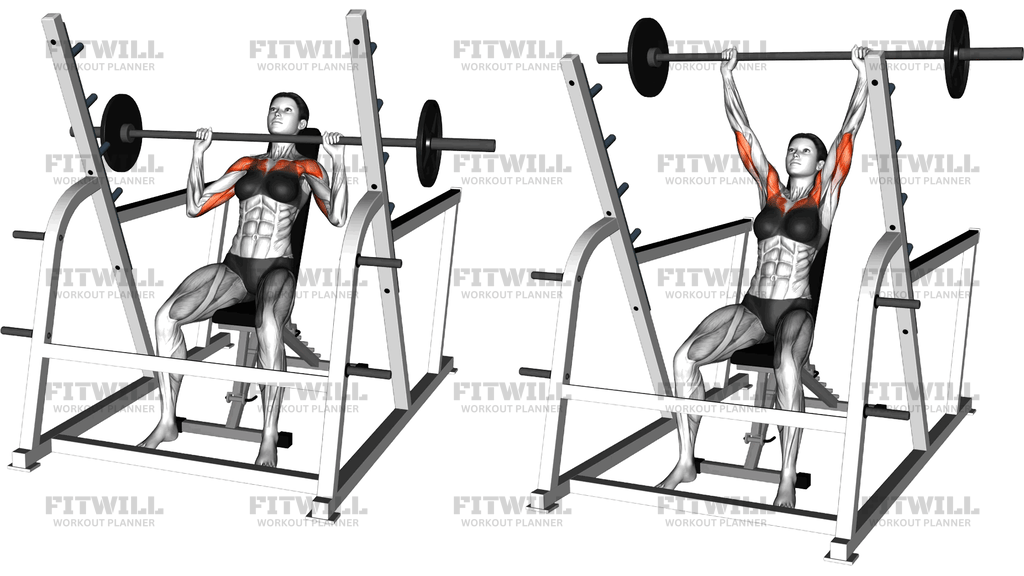
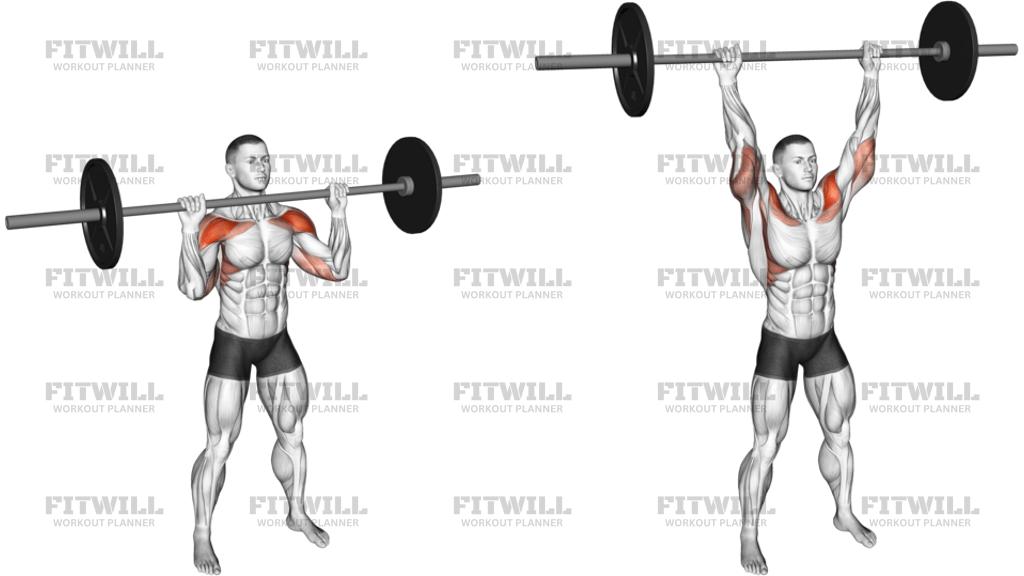
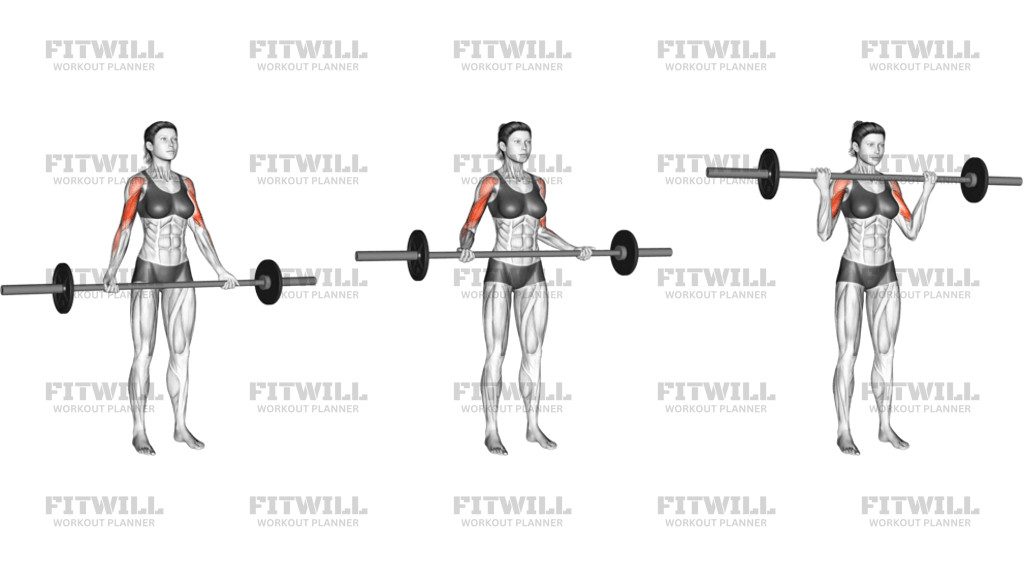
Barbell Standing Military Press
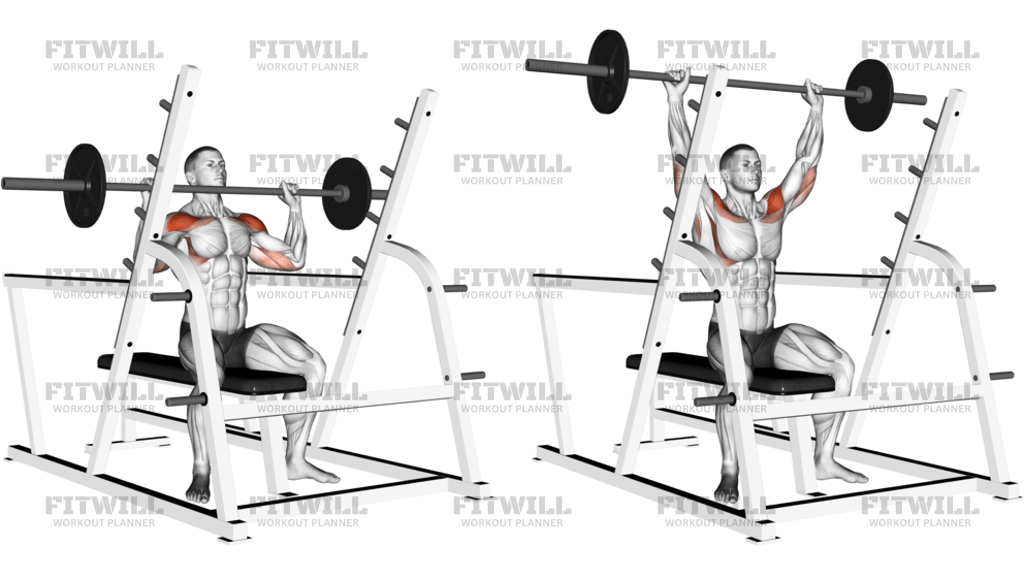
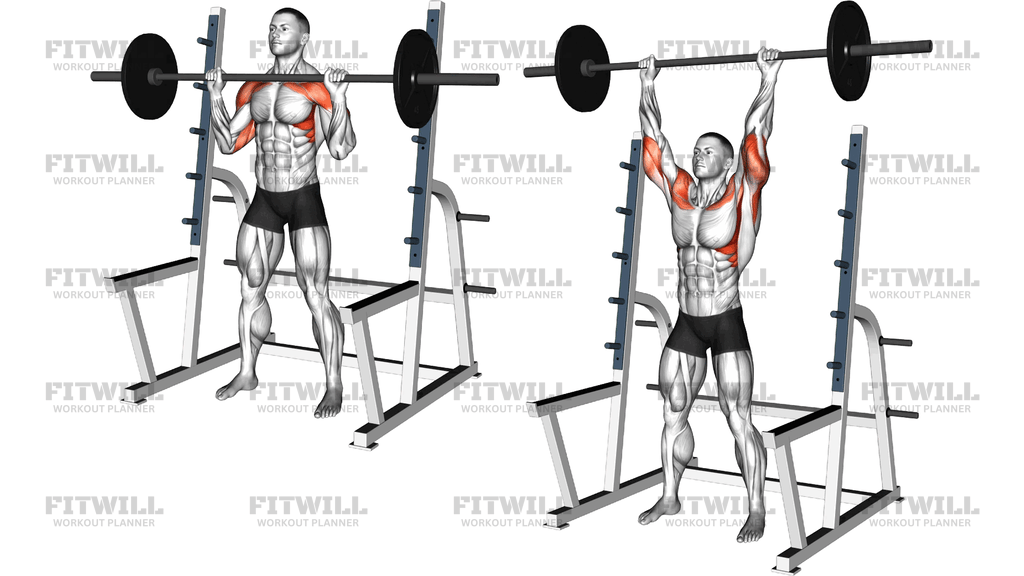
Barbell Standing Military Press is a strict overhead press performed from a standing position with the barbell starting on the upper chest and finishing locked out overhead. It is built to train shoulder strength, pressing control, and upright torso stability while the legs stay quiet. The exercise is not about leaning back and turning the lift into a push press; the value comes from a clean vertical press that stays stacked over the midfoot.
The main workload sits on the deltoids, especially the front and middle heads, with the triceps helping finish the press and the upper back working to keep the rib cage and shoulder girdle organized. In broader anatomy terms, the deltoids are the primary movers, while the triceps brachii, trapezius, and rhomboids help stabilize and guide the bar. Because the bar starts at shoulder height, the setup matters as much as the press itself: if the elbows, wrists, and rib cage are out of position before the first rep, the bar usually drifts forward and the lower back takes over.
Set the feet under the bar, squeeze the glutes, and keep the ribs down so the torso stays braced without over-arching. The bar should sit in the front rack on the upper chest or front delts with the elbows slightly in front of the bar, not flared straight out to the sides. From there, press the bar in a straight line close to the face, move the head slightly back to clear the path, then bring the head and torso back under the bar as it passes the forehead.
At the top, finish with the arms straight, biceps near the ears, and the bar stacked over the shoulders, hips, and midfoot. Lower the bar under control to the same shoulder-level start position and reset each rep instead of bouncing off the chest. This makes the press more repeatable and reduces the temptation to use leg drive, excessive back lean, or a loose grip to get through sticking points.
Barbell Standing Military Press fits well in strength-focused upper-body sessions, shoulder days, or as a main vertical press when you want a simple, measurable overhead pattern. It is also useful for learning how to brace, press, and stabilize under load in a standing position. Keep the range pain-free, keep the bar path efficient, and choose a load that lets you maintain a clean line of press from the front rack to overhead without turning the rep into a whole-body heave.
[ Workout Log & Planner ]
Put your next workout in Fitwill
Keep your plan and training log ready when you are.


Instructions
- Stand with your feet about hip-width apart and unrack the bar so it rests across your upper chest and front delts.
- Place your hands just outside shoulder width and wrap your thumbs around the bar if your grip allows it.
- Set the elbows slightly in front of the bar and keep the wrists stacked over the forearms.
- Brace your abs and glutes so your ribs stay down before the first press.
- Press the bar upward in a straight line, moving your head slightly back so the bar can pass close to the face.
- As the bar clears your forehead, bring your head and torso back under it and finish with the bar over the middle of your body.
- Lock out the elbows overhead without shrugging the shoulders aggressively.
- Lower the bar under control back to the upper chest/front rack position.
- Reset your breath and body position before the next rep.
- Repeat for the planned number of repetitions.
Tips & Tricks
- If the lower back is doing the work, reduce the load and squeeze the glutes harder to keep the ribs from flaring.
- Keep the bar close to the face on the way up; a drifting bar usually means the press is arcing forward instead of traveling vertically.
- Use the front rack, not the fingertips, to support the starting position so the wrists do not collapse backward.
- Let the elbows sit slightly forward of the bar at the start; a straight-out elbow position often turns into a painful wrist angle.
- Move your head out of the bar path just enough to clear the forehead, then re-stack under the bar at lockout.
- Pause for a clean reset at the bottom if the bar bounces off the chest or your torso starts leaning back rep to rep.
- Choose a load that lets you keep the bar path smooth all the way through the sticking point near forehead height.
- Keep the neck long and avoid cranking the chin up; the press should be driven by shoulder flexion, not head posture.
- If your shoulders feel pinched, narrow the grip slightly and lower the bar only to the highest pain-free front-rack position.
- Exhale through the press and re-brace before lowering so each rep starts from a stable torso.
Frequently Asked Questions
What muscles does the Barbell Standing Military Press work most?
It mainly trains the deltoids, especially the front and middle heads, with the triceps helping finish the lockout.
Where should the bar start before each rep?
The bar should start across the upper chest or front delts in a front-rack position, not out in front of the body.
Should I lean back to get the bar overhead?
No. A slight torso brace is normal, but a big lean turns the press into a lower-back-dominant movement and usually means the load is too heavy.
How do I get the bar past my face without hitting my nose?
Move the head slightly back as the bar rises, then bring the head back under the bar once it passes the forehead.
What grip width should I use on the barbell?
Use a grip just outside shoulder width so the forearms stay mostly vertical in the start position.
Can I use leg drive on this exercise?
Not if you are doing a strict military press. Keep the legs still and let the shoulders and triceps move the bar.
Is this exercise beginner-friendly?
Yes, if you start very light and learn the front rack, bar path, and overhead lockout before adding weight.
What is a common form mistake with the standing press?
Common mistakes are flaring the ribs, letting the bar drift forward, and finishing with the bar in front of the shoulders instead of stacked overhead.