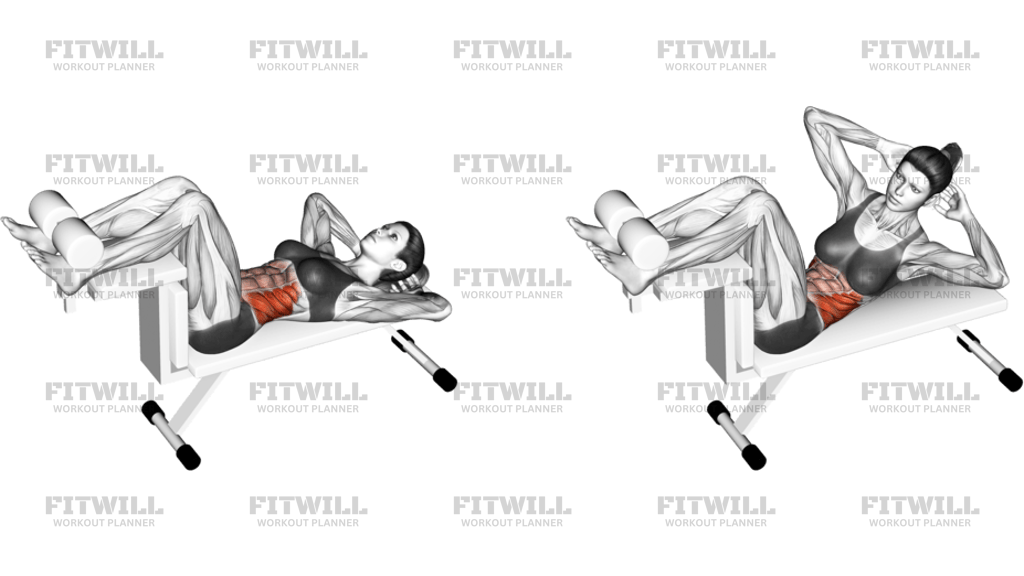
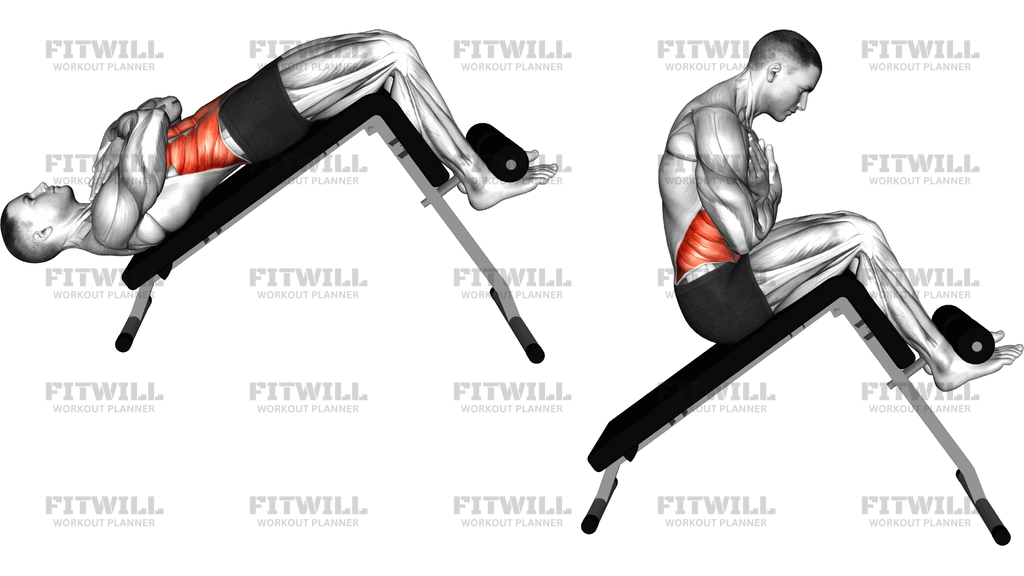
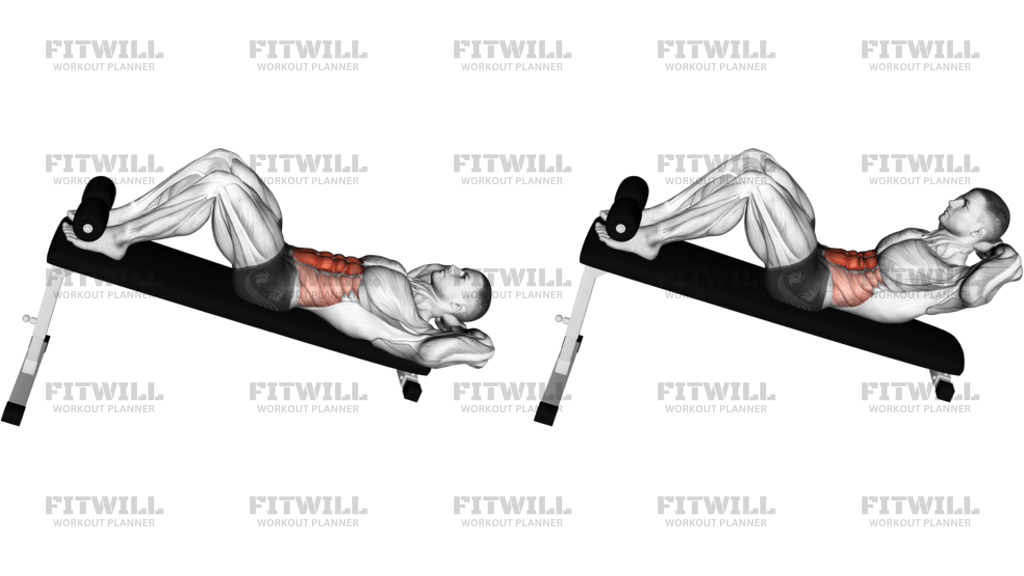
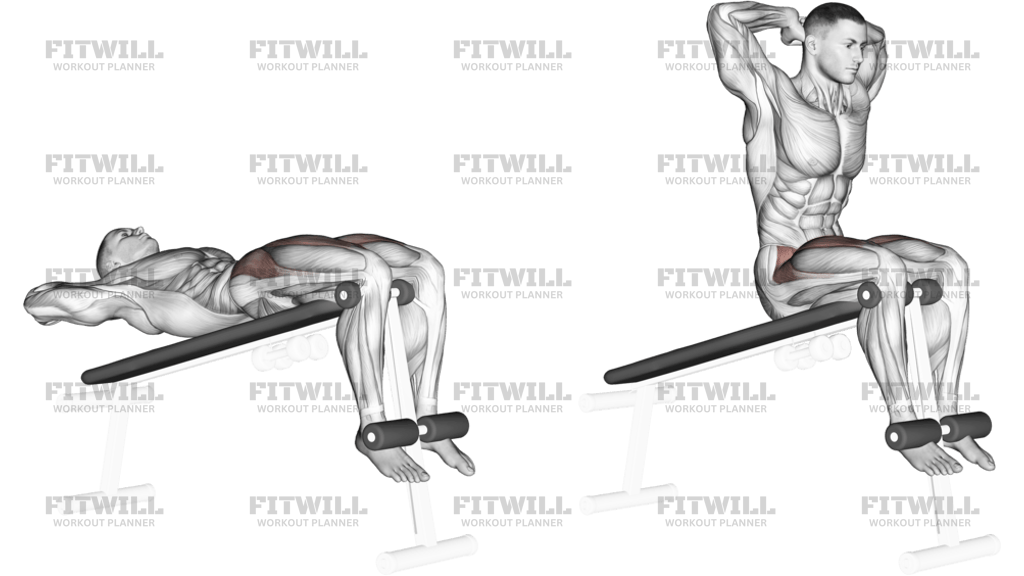
Band Decline Crunch
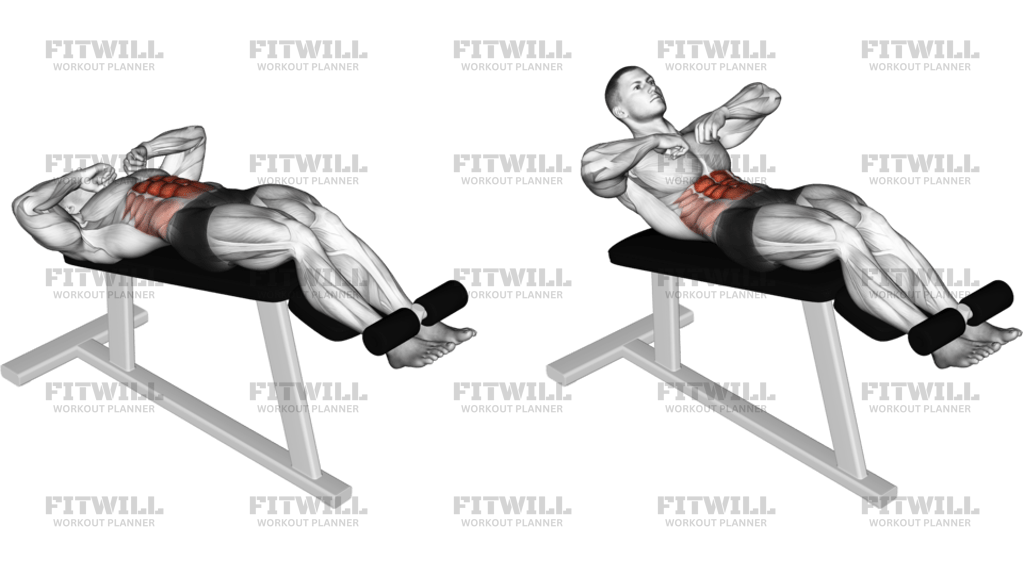
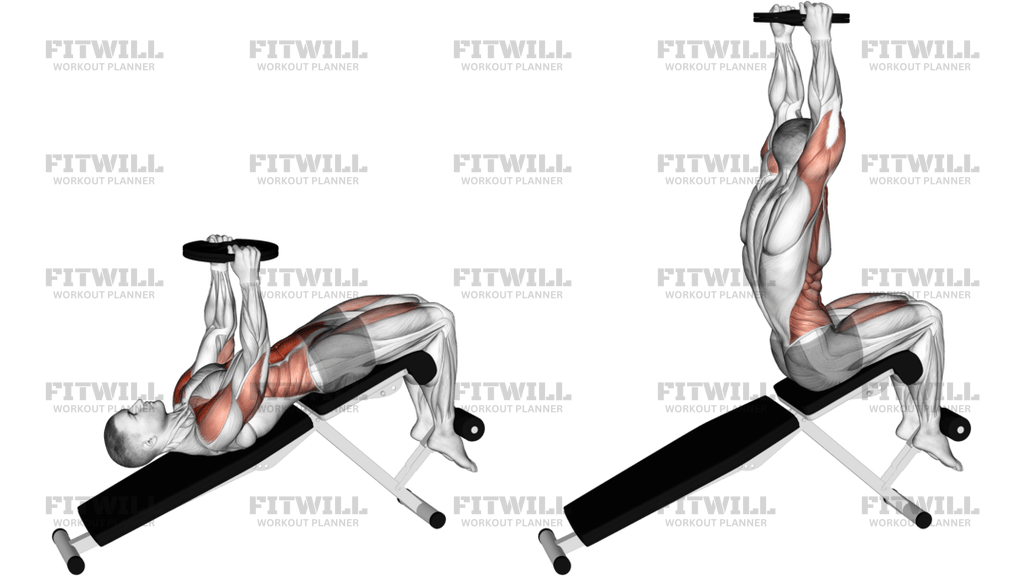
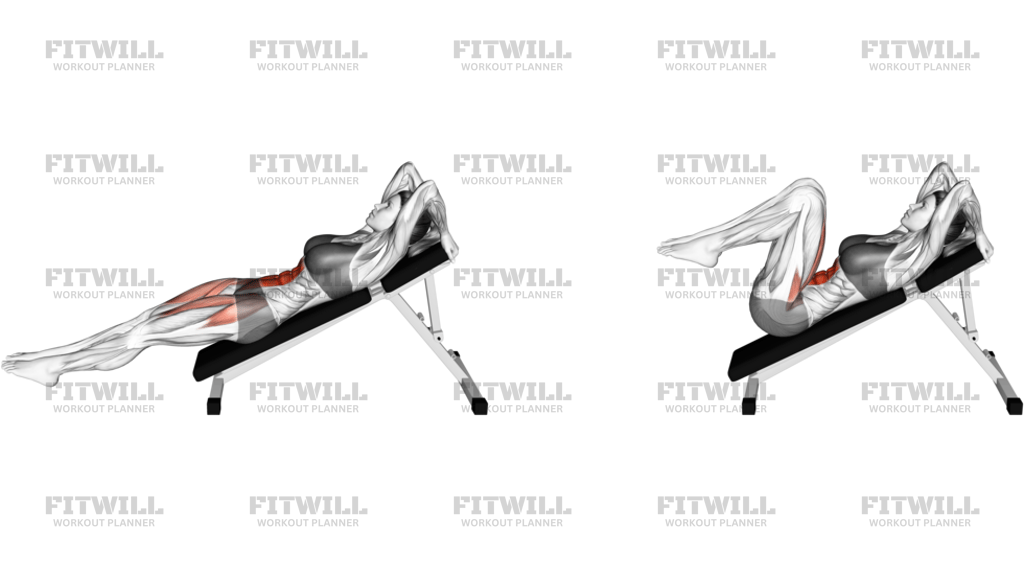
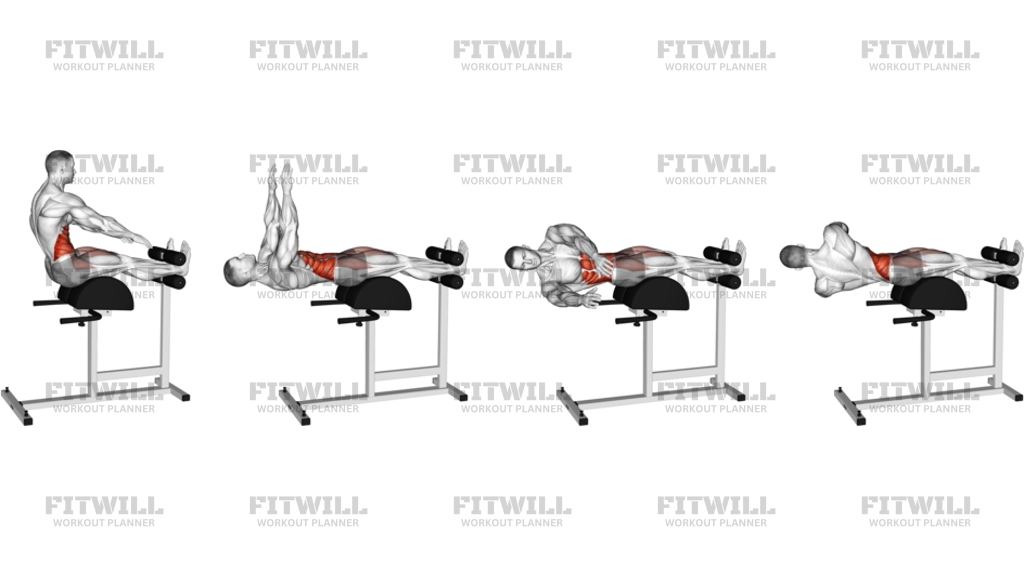
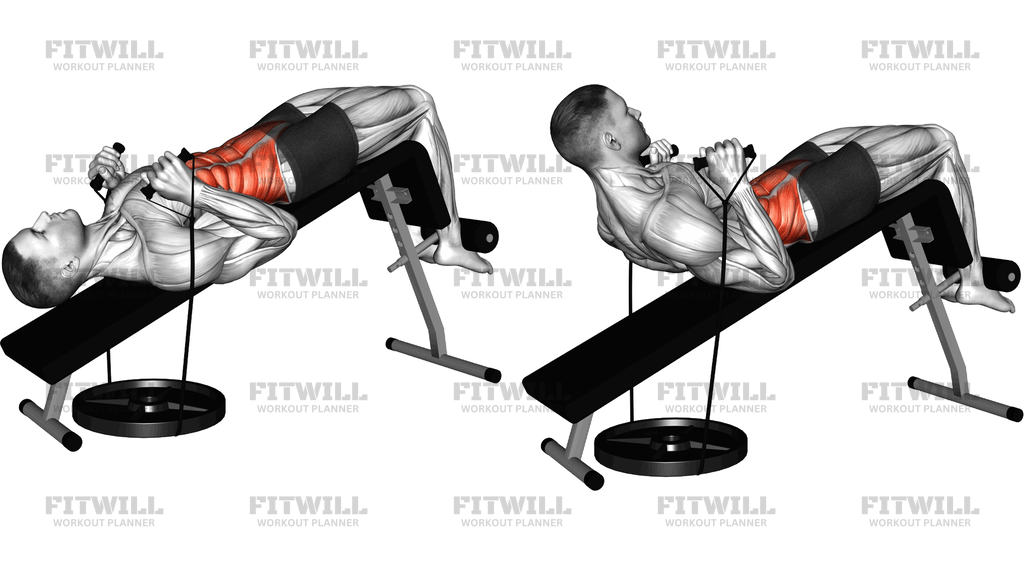
Band Decline Crunch is an abdominal exercise performed on a decline bench with the feet hooked under the roller pads and a resistance band stretched from an anchor point on the floor up to your hands. As you lie back on the bench, the band pulls down toward your feet, so your abs have to work against a downward load the entire time, both at the bottom of the rep and through the crunch itself.
The movement trains the rectus abdominis as the main driver, with the obliques helping to control the trunk and the hip flexors working isometrically to keep your torso stable on the bench. The decline angle extends your range of motion beyond what a floor crunch allows, letting you stretch the abs at the bottom and shorten them fully at the top. Adding the band creates resistance that stays challenging from start to finish rather than fading as the rep progresses.
This variation suits lifters who have outgrown bodyweight decline crunches and want extra load without a cable stack or plate. Because the band is anchored low and held at chest height, the resistance is heaviest at the top of the crunch, which is exactly where the abs are strongest. Athletes and anyone training for visible, defined abs often use it in the middle or end of an ab session for higher-rep, focused work.
Setup matters more here than in a standard crunch. If the bench angle is too steep, the hip flexors take over; if the band is anchored too far away or too slack, the tension is inconsistent and the movement loses its point. Your lower back should stay supported against the bench pad throughout, and the crunch should come from curling the ribcage toward the hips, not from yanking with the arms or pulling the neck forward.
Executed well, the rep looks like a controlled spinal flexion: exhale as you round your upper back off the bench, pause briefly when your abs are fully contracted, then lower back until your shoulder blades touch the pad without releasing tension in the band. Keep the elbows in a fixed position near your chest so the arms simply hold the band while the torso does the work.
Two practical safety points: start with a lighter band than you think you need, because the decline position amplifies the stretch on the way down, and make sure your feet are securely locked under the rollers before you begin. If you feel strain in your lower back at the bottom of the rep, reduce the band tension or raise the bench angle slightly.
[ Workout Log & Planner ]
Put your next workout in Fitwill
Keep your plan and training log ready when you are.


Instructions
- Set a decline bench to a moderate angle and anchor a resistance band underneath the low end of the bench or around a heavy weight plate on the floor.
- Sit on the bench, hook your feet securely under the roller pads with knees bent, and lie back while gripping one end of the band in each hand.
- Position your hands beside your chest with elbows tucked in, and take up the slack so the band is already taut before you start the rep.
- Brace your abdominal muscles and press your lower back lightly into the bench pad.
- Exhale and curl your upper back and shoulders off the bench, driving your ribs toward your hips while keeping the elbows fixed near your chest.
- Squeeze hard at the top for a brief pause, making sure the contraction comes from your abs rather than pulling with your arms.
- Inhale and lower yourself slowly until your shoulder blades touch the pad, keeping tension in the band and control in your trunk.
- Reset your brace at the bottom, confirm your feet are still locked under the rollers, and begin the next repetition.
- Complete your set, then sit up carefully while holding the band before releasing your grip and unhooking your feet.
Tips & Tricks
- Choose a band you can hold taut with your arms relaxed; if your triceps and shoulders fatigue before your abs, the resistance is too heavy for the position.
- Do not let your hips lift or slide down the bench during the crunch, which turns the rep into a hip flexor movement and reduces abdominal work.
- Keep your chin about a fist's distance from your chest; leading with the head is a common way to fake extra range without actually flexing the spine.
- If the band slips off the anchor, loop it fully around the bench leg or weight plate rather than relying on friction.
- Shorten the range slightly if your lower back arches sharply at the bottom; you should feel a stretch in the abs, not a strain in the lumbar area.
- A slow three-second lowering phase works far better than extra reps for this setup, since the decline angle plus band tension punishes sloppy eccentrics.
- Hold the band with a neutral grip at your collarbone level and treat your arms as hooks; any pulling with the hands steals work from the abs.
- Breathe out forcefully during the crunch to help the abs shorten fully instead of holding your breath through the top half of the rep.
Frequently Asked Questions
Which muscles does the Band Decline Crunch work?
The rectus abdominis is the primary muscle, with the obliques assisting trunk control and the hip flexors stabilizing your position on the decline bench. The arms only hold the band, so they should not be doing meaningful work.
Is the Band Decline Crunch good for beginners?
It can be, but only with a light band and a gentle bench angle. Beginners are usually better served by mastering floor and flat-bench crunches first, since the decline position plus band tension makes poor form more costly.
Where should the resistance band be anchored for this exercise?
Anchor it low, under the foot end of the bench or around a heavy weight plate on the floor, so it pulls down toward your feet as you crunch. This keeps tension directed against the abdominal contraction.
Why use a decline bench instead of doing band crunches on the floor?
The decline angle puts your torso below your hips, which extends the range of motion and adds a stretch at the bottom that a floor crunch cannot provide. The foot rollers also lock you in place so the band's pull does not slide you around.
How do I know if the band tension is set correctly?
The band should already be taut when you are lying back with hands at chest height, and the last few reps of a set should feel genuinely hard. If you can relax your arms at the bottom and the band goes slack, shorten the band or use a heavier one.
What is the most common mistake in the Band Decline Crunch?
Pulling with the hands and arms instead of curling the torso, which turns the rep into a band row. Keep your elbows pinned near your chest and focus on rounding your upper back off the bench.
Can I substitute the Band Decline Crunch with a cable crunch?
Yes, a kneeling or decline cable crunch trains the same pattern with a similar downward resistance. The band version is simply more portable and easier to set up anywhere.
How many reps and sets should I do?
Two to four sets of 10 to 20 controlled reps works well, since the band resists the abs smoothly through the whole range. Prioritize a full curl and a slow lowering phase over chasing high numbers.
Is it safe for the lower back?
Generally yes when the bench angle is moderate and the lower back stays supported on the pad. If you feel lumbar discomfort at the bottom of the stretch, use less band tension or a shallower decline rather than pushing through pain.