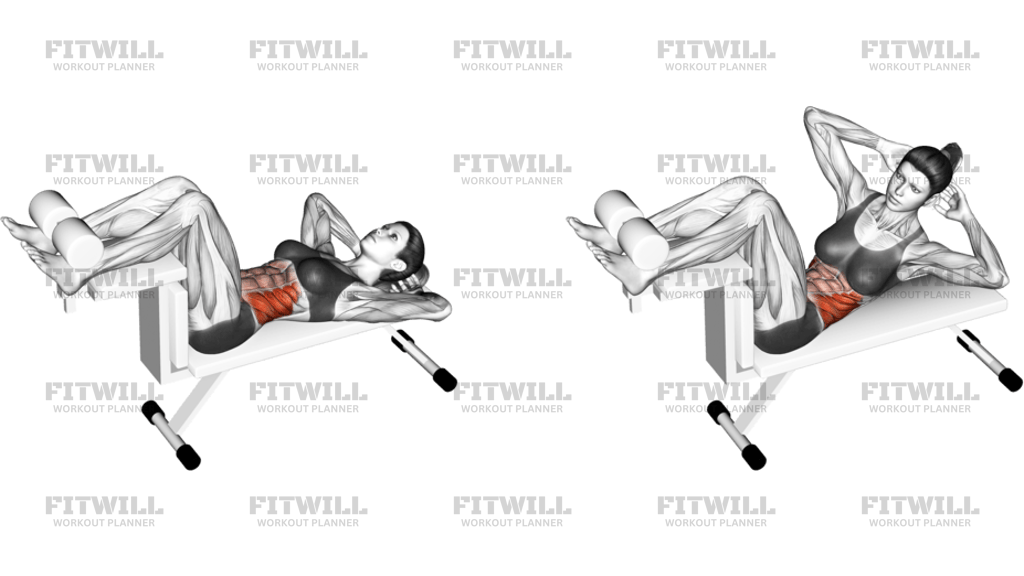
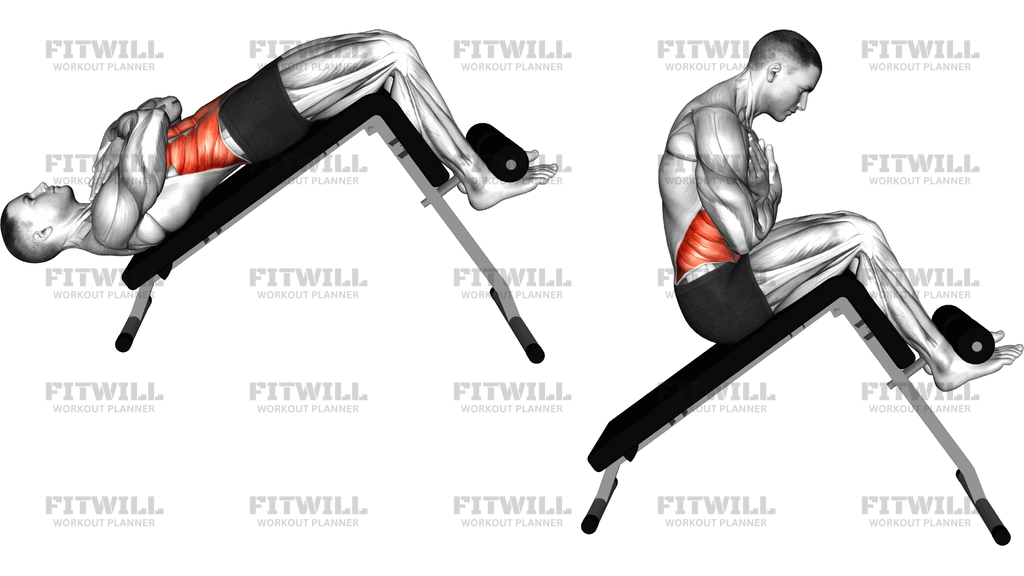
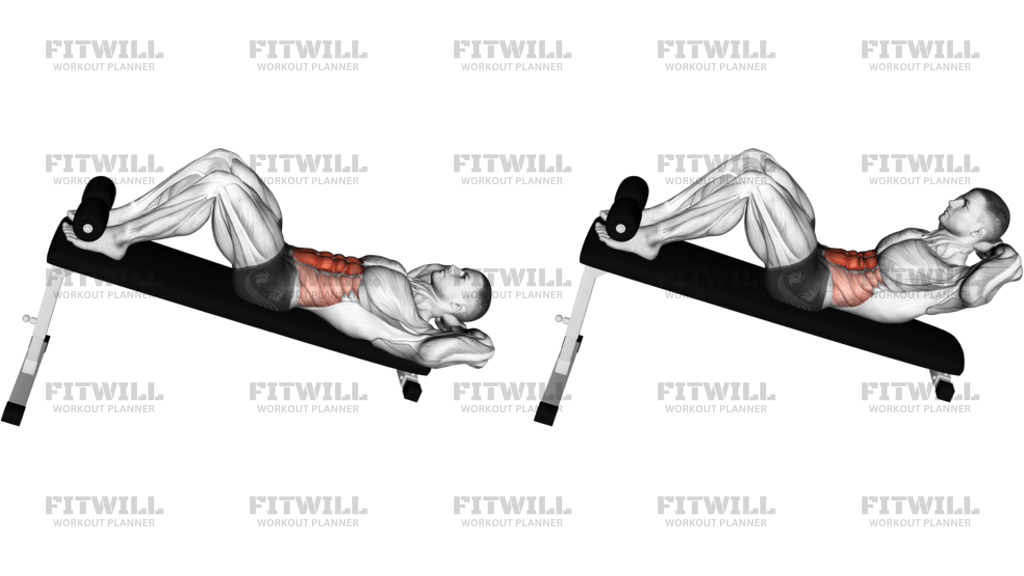
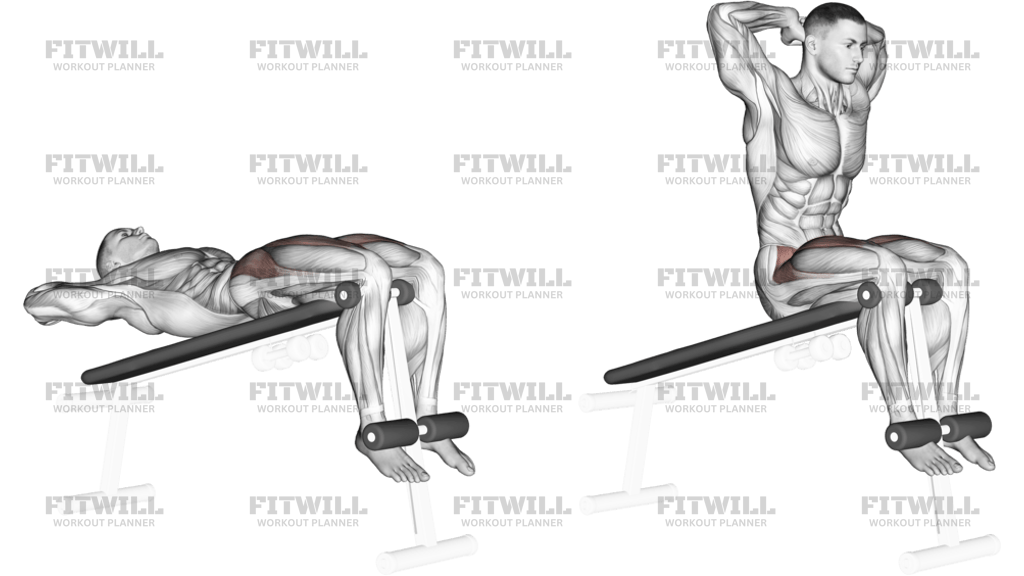
Band Decline Crunch
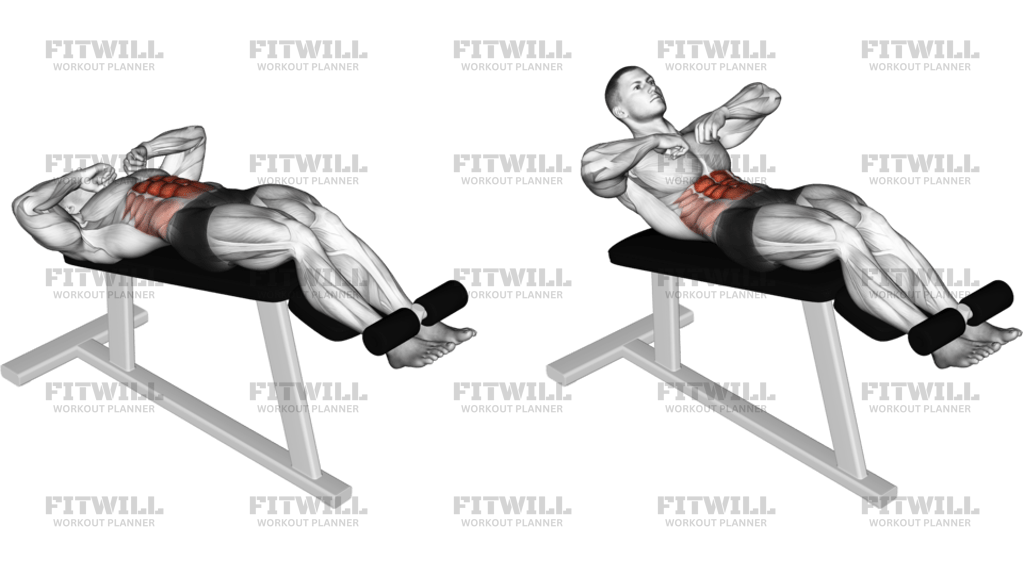
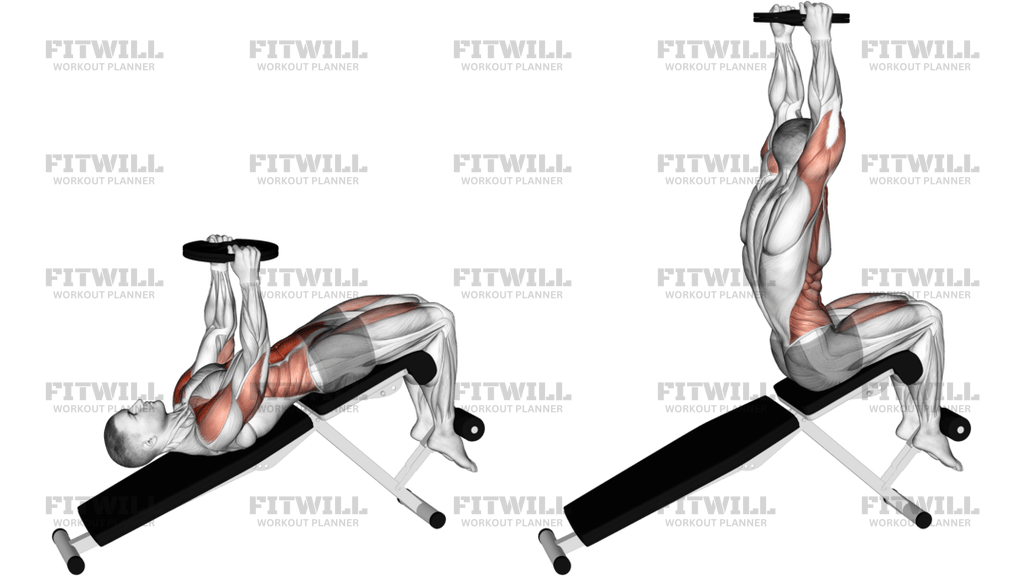
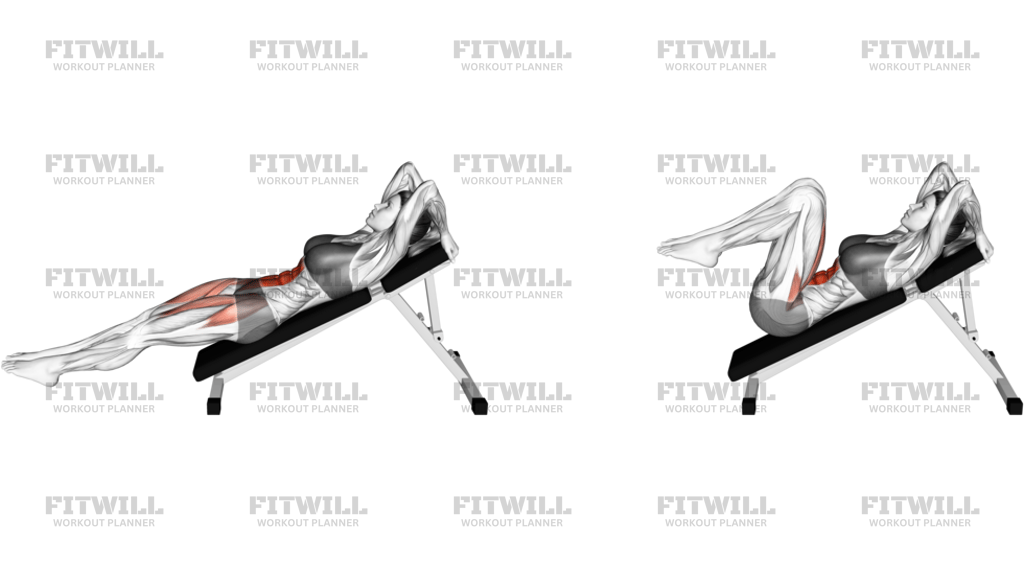
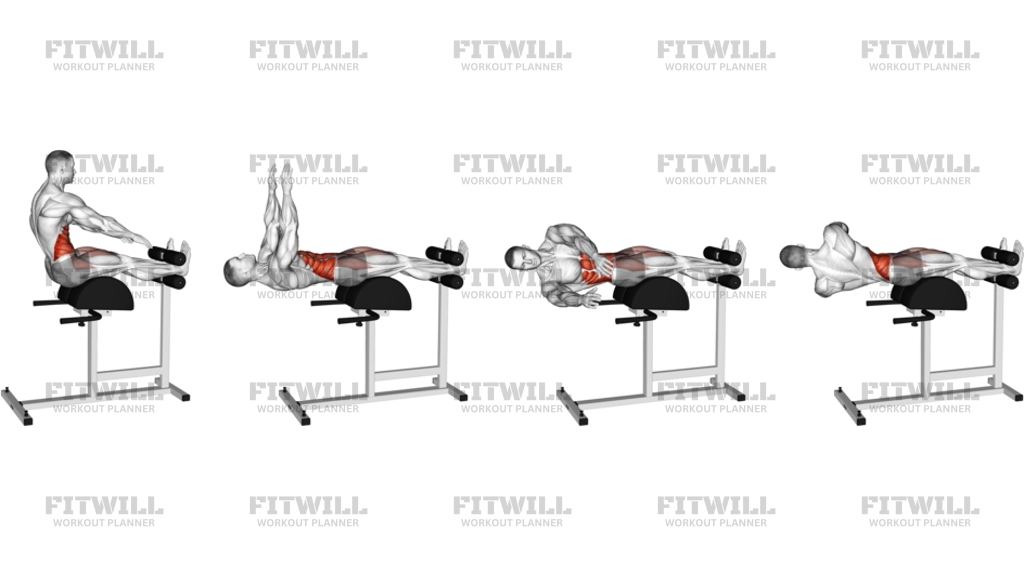
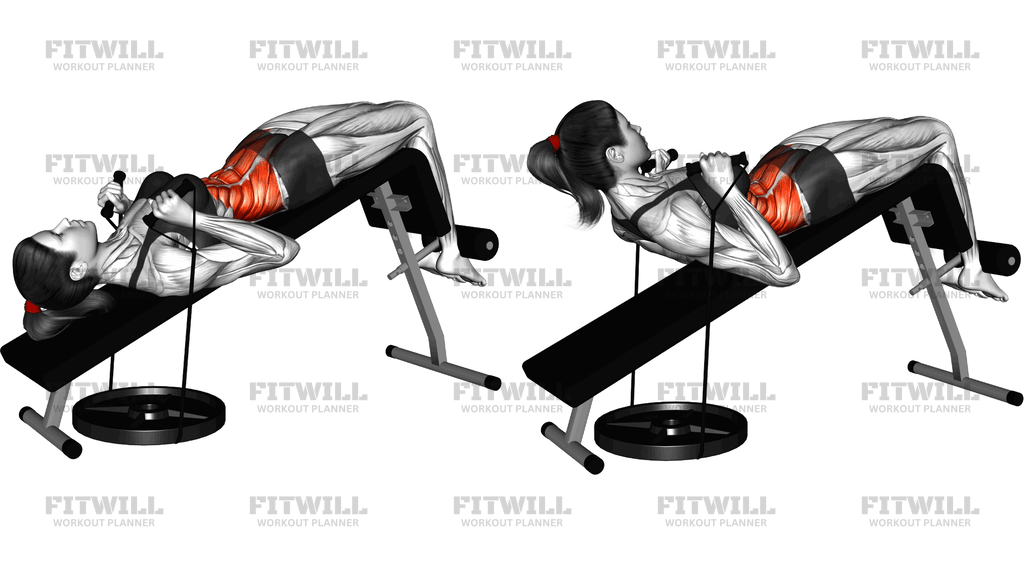
Band Decline Crunch is an abdominal exercise performed on a decline bench with a resistance band anchored behind you, usually looped around a weight plate or low point on the floor, so the band pulls your hands backward as you crunch forward against it. The decline angle tilts your torso below your hips, which lengthens the working range of the abdominals, and the band adds tension that is greatest at the top of the crunch, where body weight alone often lets you off the hook.
The main target is the rectus abdominis, the sheet of muscle running down the front of your torso, with the obliques assisting as you flex and slightly rotate the ribcage toward the hips. Because your feet are hooked under the bench's roller pads and the band loads the top of the movement, this version is noticeably harder than a floor crunch at the same effort level, so it suits people who already own solid crunch technique and want more resistance without holding a plate or dumbbell.
Setup matters more here than in most ab work. Your hips need to sit low on the bench with your upper back and shoulders on the pad, and the band must run directly behind your shoulders so the resistance pulls along the line of your crunch rather than dragging you sideways. Hands stay fixed relative to your torso; the movement comes from curling your spine, not from pulling the band with your arms. If your elbows drift or your shoulders shrug, your arms and neck start doing work your abs should be handling.
To perform it well, exhale as you curl your ribcage toward your pelvis, lifting your shoulder blades off the bench while pressing your lower back into the pad, then pause briefly at the top where band tension peaks. Lower yourself slowly and with control rather than letting the band snap you back down; the eccentric portion is where a lot of the benefit lives.
This exercise fits well into ab-focused sessions, home or gym routines where a decline bench is available, and progressive abdominal training, since increasing band thickness or pre-tension is an easy way to scale difficulty. Common use cases include building crunch strength past the bodyweight plateau and adding loaded flexion work without spinal compression from held weight.
For safety, keep the band anchored securely so it cannot release toward your face, choose a resistance you can control through the full arc, and stop if you feel strain in your neck or lower back rather than your abdominals. Keep repetitions smooth and avoid bouncing off the bottom position.
[ Workout Log & Planner ]
Put your next workout in Fitwill
Keep your plan and training log ready when you are.


Instructions
- Set a decline bench to a moderate angle and secure your feet under the roller pads so your body cannot slide down the pad.
- Loop the resistance band around a heavy weight plate or low anchor point on the floor behind the bench, then lie back and take a handle in each hand, positioning the band so it runs evenly behind both shoulders.
- Hold the handles beside your head or upper chest with elbows bent and tucked, keeping your hips and lower back flat against the bench.
- Brace your abdominals lightly and check that the band already has slight tension before you begin the first rep.
- Exhale and curl your ribcage toward your pelvis, lifting your shoulder blades off the bench while your hands travel with your torso, not ahead of it.
- Pause for a moment at the top of the crunch, where the band tension is highest, and squeeze your abdominals.
- Inhale as you lower your torso back down in a slow, controlled arc until your head and shoulders rest on the bench again.
- Keep the band taut even at the bottom so you maintain tension instead of collapsing into the start position.
- Complete your repetitions, then sit up carefully, release the handles before unhooking your feet, and re-anchor the band safely.
Tips & Tricks
- If your neck aches before your abs do, you are probably pulling your head forward with your hands. Keep the handles beside your head and let the curl come from your ribcage.
- Most people fail at the top of Band Decline Crunch, not the bottom, because band tension peaks there. If you have to shorten the range to finish reps, the band is too heavy.
- Do not let your hips lift off the bench as you crunch. Digging your heels into the roller pads helps keep your pelvis anchored so the abdominals do the work.
- Watch that the band stays centered behind your shoulders. If it slides toward one side, one oblique takes over and the resistance path turns into a twist.
- Move your grip closer to your chest for an easier version or farther overhead for a harder one, since a longer band path increases resistance.
- Avoid bouncing off the bench at the bottom. The stretch position is useful, but only if you lower with control and restart each rep deliberately.
- Keep your chin about a fist's width from your chest throughout. Craning the neck is the most common form breakdown on decline crunches.
- Exhale sharply on the way up to help your abdominals shorten fully, and avoid holding your breath through the whole set.
Frequently Asked Questions
Which muscles does Band Decline Crunch work?
The rectus abdominis is the primary mover, with the obliques assisting to flex and guide the torso. The hip flexors help stabilize but should not dominate the movement.
Why use a decline bench instead of doing crunches on the floor?
The decline angle increases the range of motion and lets gravity work against your torso, while the band adds peak tension at the top of the crunch. Together they make the movement substantially harder than a floor crunch.
Is Band Decline Crunch suitable for beginners?
It is better as a step after you can perform controlled floor and decline crunches with clean form. Beginners should start with a light band and a smaller decline angle, or master bodyweight decline crunches first.
Where should I anchor the band for this exercise?
Loop it around a heavy weight plate or a low, secure point on the floor behind the head of the bench, so the band runs straight back from your shoulders. A sideways-angled anchor will pull you off center and stress one side more than the other.
How far should I curl up on Band Decline Crunch?
Lift until your shoulder blades are clearly off the bench and your ribcage has rolled toward your pelvis. Going higher than that usually shifts work to the hip flexors without extra abdominal benefit.
My arms feel tired before my abs. What am I doing wrong?
You are likely pulling the handles with your arms instead of keeping them fixed relative to your torso. Think of your hands as anchors for the band and let the curl of your spine move them.
What can I use if I don't have a decline bench?
You can anchor the band low behind you and do kneeling or standing band crunches, or perform decline crunches on a stability ball with the band anchored behind you. Both keep the same crunch pattern with less setup.
How do I make Band Decline Crunch harder over time?
Progress to a thicker band, move the anchor farther away to increase pre-tension, or slow the lowering phase to three or four seconds. These scale the load without needing extra equipment.
Is it safe for my lower back?
The decline position keeps your hips flexed and your lower back supported by the bench, which most people tolerate well. Keep the movement a spinal curl rather than a sit-up, and reduce the band tension or angle if you feel any discomfort.