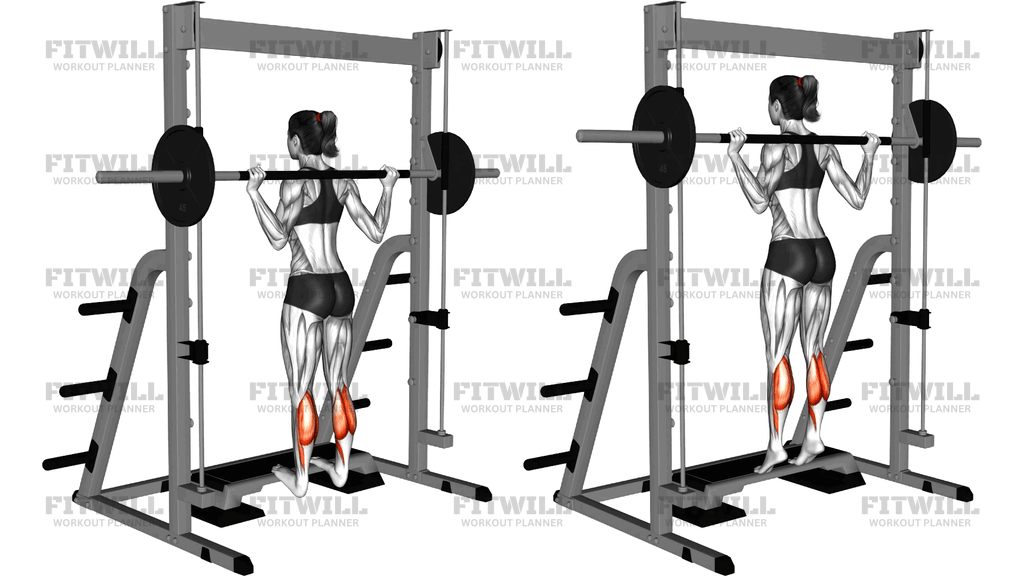
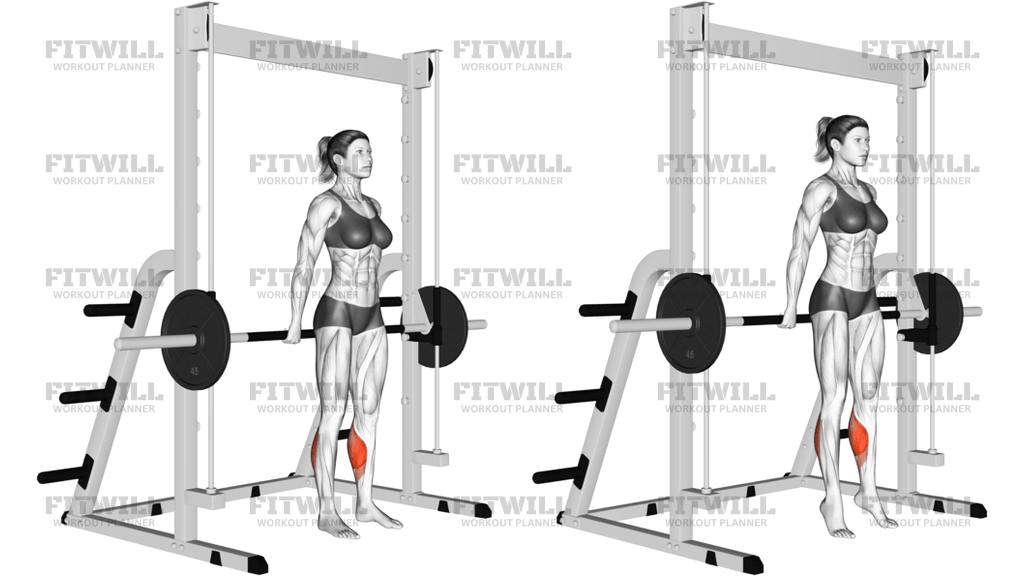
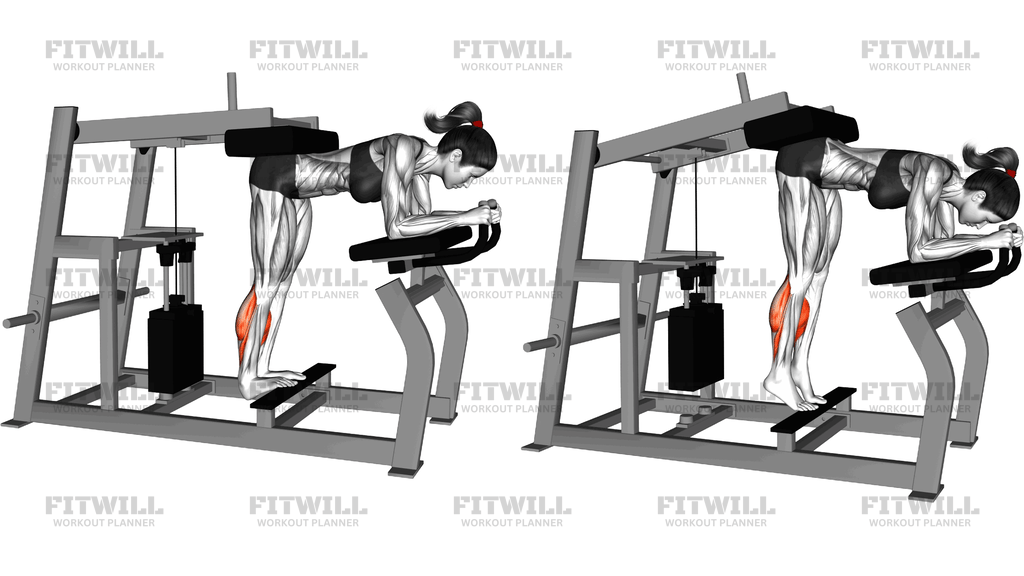
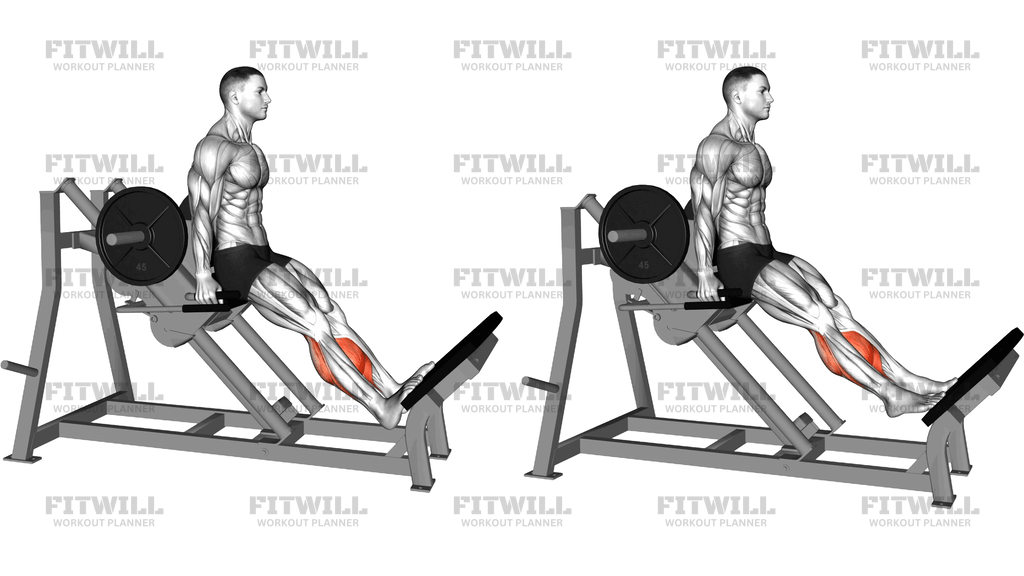
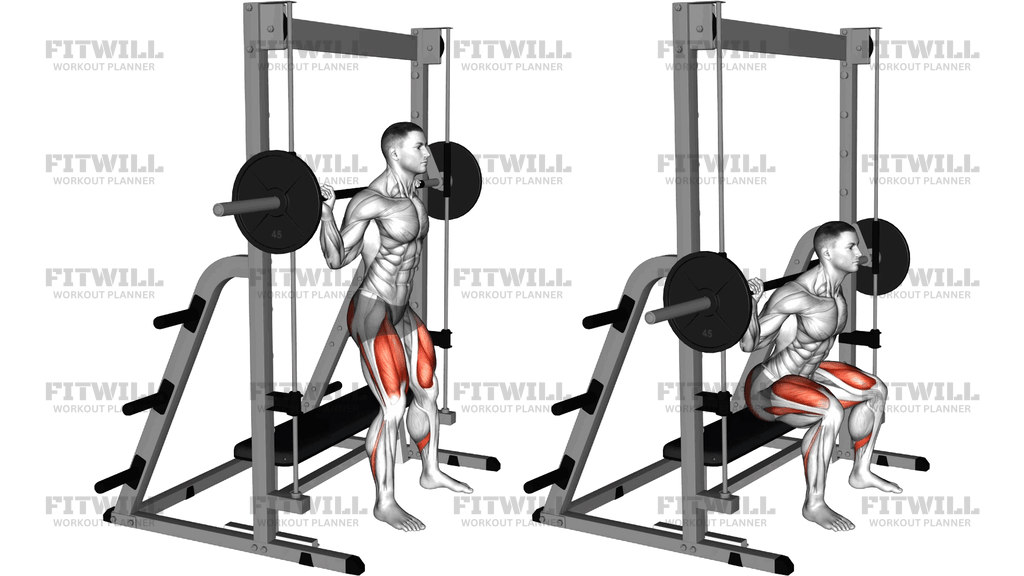
Smith Reverse Calf Raises
Smith Reverse Calf Raises is a Smith-machine calf exercise built around controlled ankle motion rather than body English. The guided bar lets you load the calves without needing to balance a free weight, so the quality of each rep depends mostly on how well you set your feet, control the descent, and finish the top of the movement. In this variation, the calves do the main work while the ankles, feet, and trunk provide the small amount of stability needed to keep the rep clean.
The setup matters more than it looks. Place the balls of your feet on a small block, wedge, or step so your heels can drop below forefoot level, then stand under the Smith bar with your torso tall and your stance about hip width. The bar should sit securely in the position used for a standing calf raise, and your weight should stay centered over the big toe and second toe instead of drifting to the outside edges of the feet. If the setup is off, the movement turns into a bounce or a balance drill instead of a calf exercise.
Each repetition should move only at the ankle. Lower your heels slowly until you feel a clear stretch through the calves and Achilles, pause without collapsing into the bottom, then drive straight up through the forefoot until the heels are as high as you can lift them. Keep the knees softly straight rather than squatting, and keep the bar path smooth while the torso stays stacked. Breathing should stay simple: inhale on the way down, exhale as you rise, and reset only after both feet are stable again.
This exercise is useful when you want a straightforward way to train calf size, calf endurance, or lower-leg strength without a lot of coordination cost. It fits well as accessory work after heavier lower-body lifts, or as focused calf work on a lower-leg day. The main tradeoff is that the Smith bar makes it easy to use too much load, so the safest progress comes from cleaner reps, a longer controlled lowering phase, and a full but pain-free stretch. If your Achilles tendon or front of the ankle feels irritated, shorten the range and lighten the load until the movement is smooth again.
[ Workout Log & Planner ]
Put your next workout in Fitwill
Keep your plan and training log ready when you are.


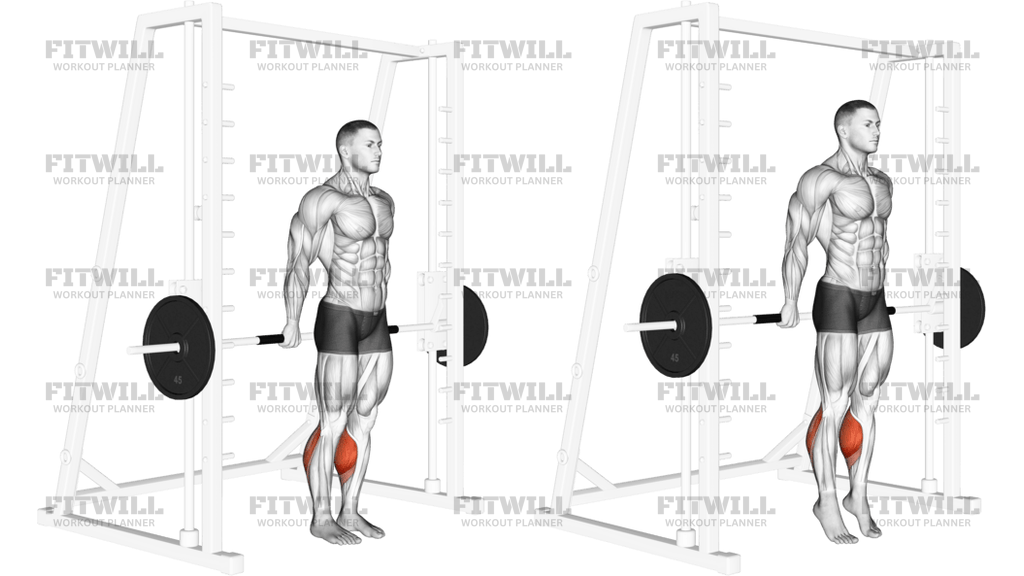
Instructions
- Place the balls of your feet on a calf block, wedge, or step so your heels can hang free, then step under the Smith bar and set your feet about hip-width apart.
- Position the bar securely for a standing calf raise, stand tall with your torso stacked, and keep your weight centered over the big toe and second toe.
- Unlock the bar, keep a soft bend in the knees, and brace your midsection without turning the rep into a squat.
- Lower your heels slowly until you feel a strong stretch through the calves and Achilles tendon.
- Pause briefly at the bottom without bouncing or losing foot pressure.
- Drive straight up through the forefoot to raise the heels as high as possible and squeeze the calves at the top.
- Keep the Smith bar path smooth while your torso stays quiet and your ankles do the work.
- Inhale as you lower, exhale as you rise, and re-rack the bar only after both feet are flat and steady.
Tips & Tricks
- A small wedge or step usually gives better calf tension than standing flat on the floor.
- Keep pressure through the big toe and second toe so the ankles do not roll outward at the top.
- Use a slower lowering phase; the calves usually respond better to a controlled stretch than to heavy bouncing.
- Do not let the knees bend and straighten like a squat, or the calves will stop being the limiting factor.
- If the bottom position feels sloppy, shorten the depth before you increase the load.
- Think about lifting the heels straight up instead of rocking the body backward.
- Stop the set when the top squeeze disappears or the feet start shifting around on the platform.
- If the Achilles tendon feels cranky, reduce range of motion and keep the descent smooth.
Frequently Asked Questions
What muscle does Smith Reverse Calf Raises target most?
The calves do most of the work, especially the gastrocnemius and soleus.
Can beginners perform this exercise?
Yes. Beginners usually do best with a light load, a small wedge or step, and a slow lowering phase.
Should my heels drop below the edge of the step?
Only as far as you can control. A deeper stretch is useful, but not if it causes bouncing or Achilles pain.
Why use a Smith machine for calf raises?
The guided bar reduces balance demands, so you can focus on ankle motion, tempo, and a clean calf contraction.
What is the biggest form mistake on this exercise?
Bouncing out of the bottom or turning the rep into a knee bend instead of a true ankle raise.
Is this the same as a seated calf raise?
No. This standing version keeps the knees more extended, which usually shifts more emphasis toward the gastrocnemius.
How should I breathe during the reps?
Inhale as you lower into the stretch and exhale as you drive up into the calf contraction.
Where should I feel the movement?
You should feel the stretch and contraction mainly in the calves, with the feet and ankles staying stable rather than fighting for balance.