Standing Glute Squeeze
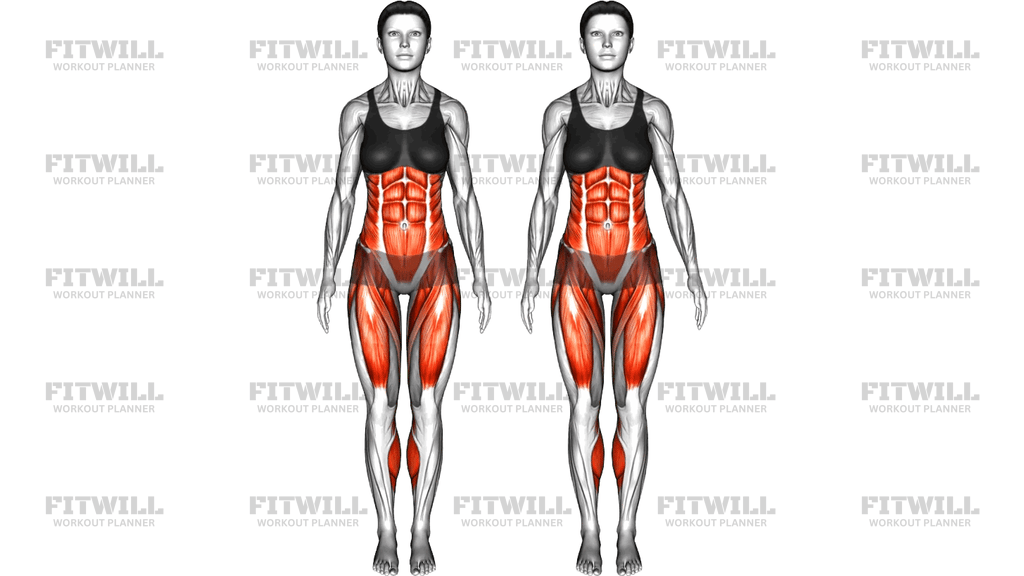
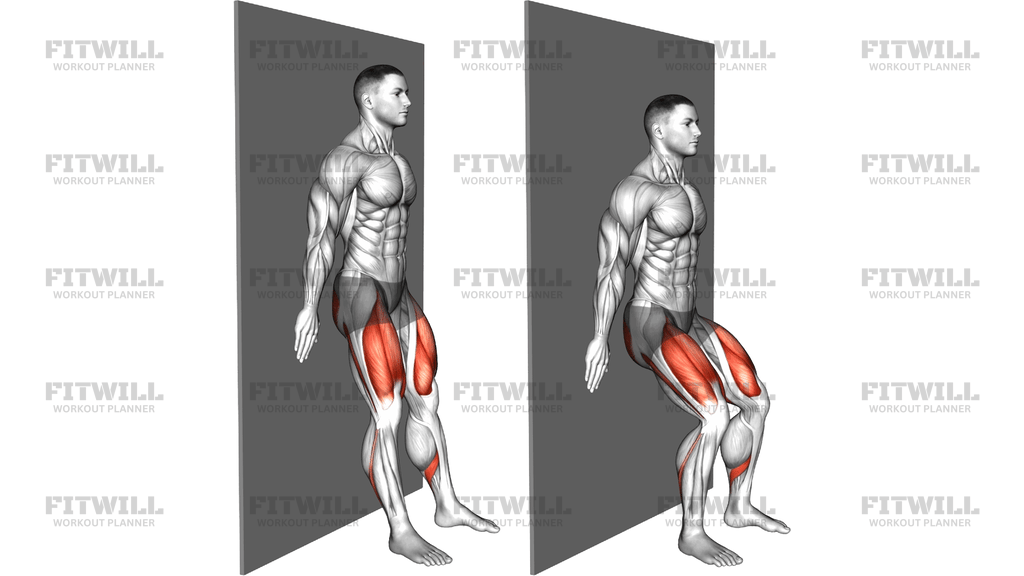
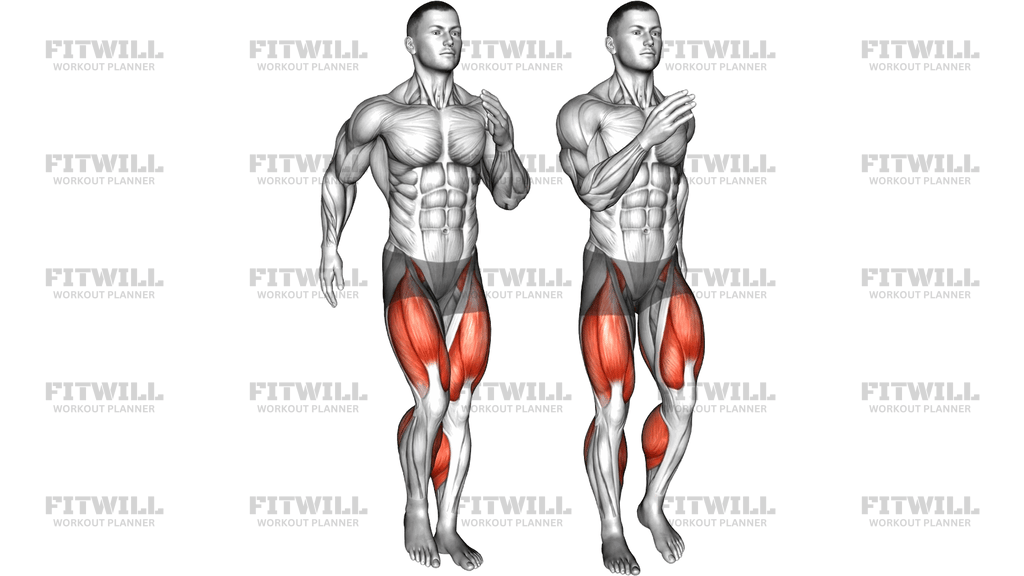
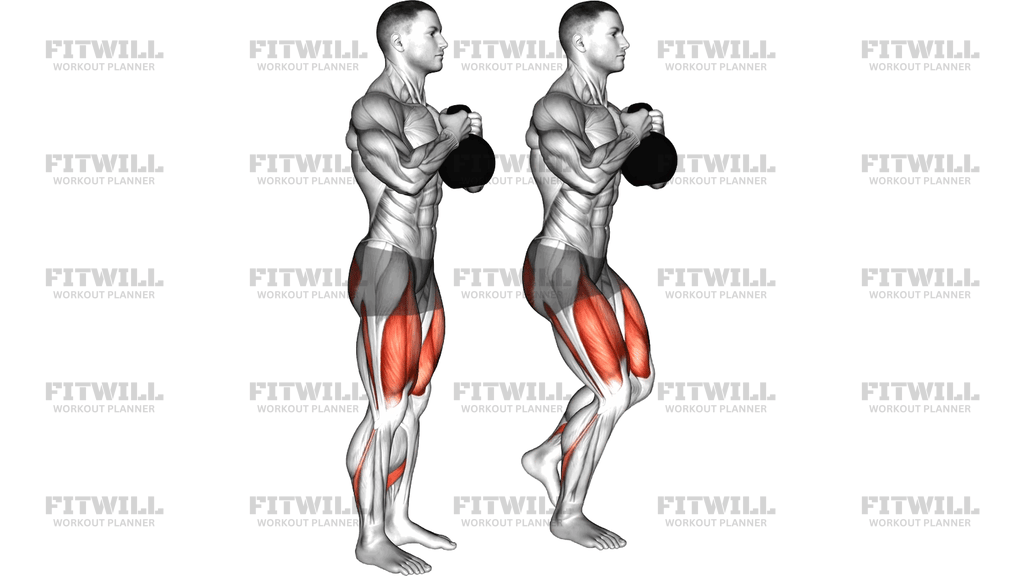
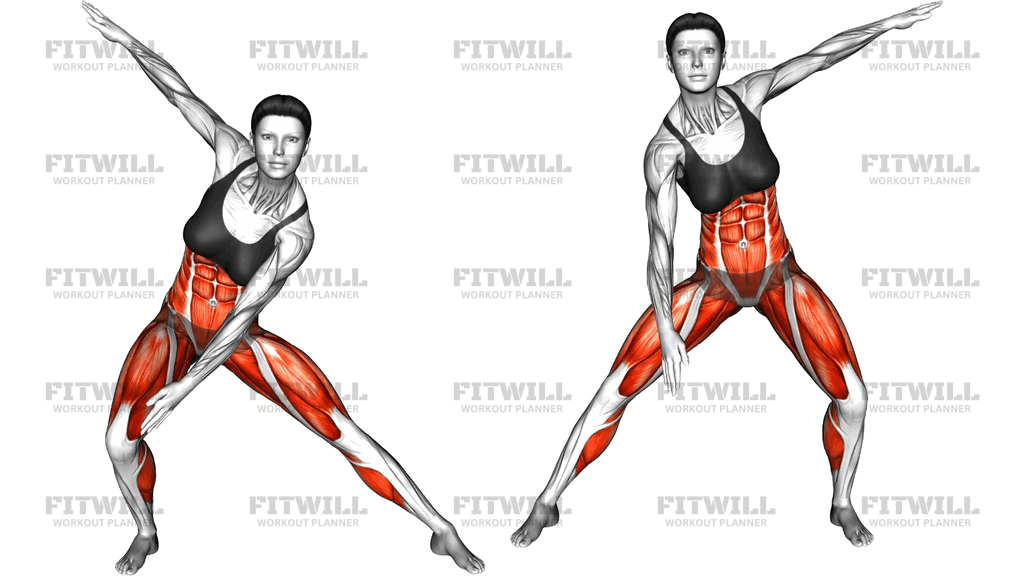
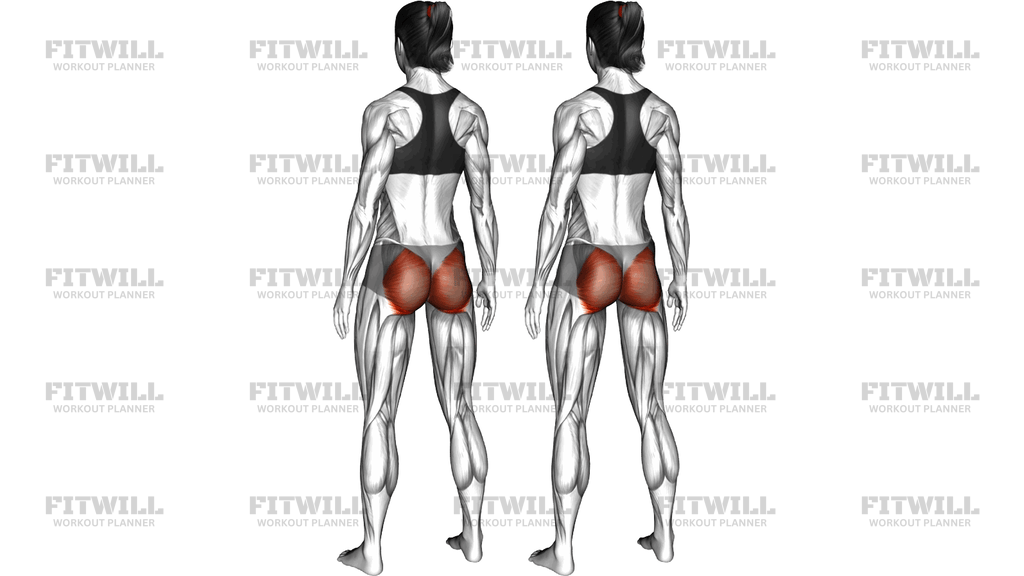
The Standing Glute Squeeze is a simple body-weight activation exercise performed upright with the feet about hip-width apart. Instead of moving through a large range of motion, you deliberately contract the glutes as hard as you can, hold the contraction for a few seconds, and then release with control. The illustration shows the target area clearly: both gluteal muscles light up while the rest of the body stays relaxed and tall, making this one of the most direct ways to feel the glutes working without any load at all.
This movement is useful for almost anyone. Beginners use it to learn what a real glute contraction feels like before moving on to squats, hip thrusts, or deadlifts. People who sit for long hours often have glutes that are dormant and underused, and this standing version is an easy way to remind those muscles how to fire. It is also popular as a warm-up primer before lower-body training, and as a low-effort exercise that can be done at a desk, in the kitchen, or anywhere you can stand.
The primary muscle trained is the gluteus maximus, with the gluteus medius on the sides of the hips assisting to keep the pelvis level. The hamstrings and deep core muscles contribute lightly as stabilizers, but the intent of the exercise is to isolate the squeeze to the glutes rather than compensate with the lower back or thighs. Because it is isometric, the muscle works by generating tension without shortening, which is a safe and joint-friendly way to build awareness and endurance in the hips.
Setup matters more than it looks. Standing with balanced weight across both feet, a soft knee bend, and a neutral pelvis gives the glutes the correct line of pull. If you arch your lower back, tilt the pelvis, or thrust the hips forward aggressively, the squeeze becomes a lower-back exercise instead. The goal is a clean posterior tilt driven by the glutes themselves, with the ribcage stacked over the pelvis and the shoulders relaxed.
To execute well, exhale as you clamp the glutes together, imagine trying to crush a coin between the cheeks, and hold the peak contraction for five to ten seconds without holding your breath. Release slowly rather than letting everything go at once, and rest briefly before the next rep. Common use cases include glute activation circuits, rehab-style hip routines, desk-break training, and adding extra quality tension to an existing glute program without equipment.
From a safety standpoint, keep the movement smooth and pain-free. The knees should stay softly bent rather than locked, and the lower back should never be forced into an exaggerated arch or tuck. Because there is no external load, the main risk is simply practicing a sloppy pattern, so prioritize a strong, honest contraction over speed or repetitions.
[ Workout Log & Planner ]
Put your next workout in Fitwill
Keep your plan and training log ready when you are.


Instructions
- Stand upright with your feet about hip-width apart and your weight spread evenly across both feet.
- Keep a soft, unlocked bend in the knees and let your arms hang relaxed at your sides.
- Stack your ribcage over your pelvis so your lower back is in a neutral position, and look straight ahead.
- Brace your core gently, as if preparing for a light push to the stomach, without sucking in hard.
- Exhale and squeeze both glutes forcefully at the same time, imagining the cheeks pressing inward toward each other.
- Let the glute contraction gently tuck the tailbone under slightly, but do not force the hips forward or arch the lower back.
- Hold the peak squeeze for five to ten seconds while continuing to breathe in a steady rhythm.
- Release the contraction slowly over two to three seconds instead of dropping it all at once.
- Pause briefly at the relaxed position, then reset your posture and begin the next repetition.
Tips & Tricks
- A common mistake is clenching with the thighs and lower back instead of the glutes — touch the side of your hip with a hand to confirm the glute is the muscle getting hard.
- Do not thrust the hips aggressively forward at the top; the tuck should come from the glute contraction itself, not from pushing the pelvis with the lower back.
- If you cannot feel the glutes working, try turning the toes out slightly and squeezing the heels gently toward each other, which biases the glute fibers.
- Keep the knees soft throughout — locked knees make it harder to tilt the pelvis and shift tension toward the joints.
- Quality beats quantity here: a few honest five-second squeezes with a full release do more than twenty half-hearted clenches held nonstop.
- Breathe through the hold rather than bearing down; holding your breath turns this into a straining exercise and reduces control.
- Use it as a primer before squats, lunges, or hip thrusts — two sets of eight holds is enough to wake the glutes up without fatiguing them.
- Check your feet in a mirror: weight should sit mid-foot, not on the toes, or the calves will try to take over the contraction.
- If standing feels unstable, hold a wall or chair with one hand — the support should not change your posture, only your confidence.
Frequently Asked Questions
What muscles does the Standing Glute Squeeze work?
The gluteus maximus is the primary muscle, with the gluteus medius assisting to keep the pelvis stable. The hamstrings and core play only a small supporting role.
Is the Standing Glute Squeeze good for beginners?
Yes, it is one of the best first exercises for learning glute activation because there is no load and no complex movement pattern. Once you can produce a strong, clean squeeze, exercises like hip thrusts and squats become much more effective.
How long should I hold each Standing Glute Squeeze?
Five to ten seconds is a solid working hold for most people. Focus on squeezing at a high effort for the entire hold rather than extending the duration with a weak contraction.
Why do I feel my lower back instead of my glutes?
This usually means you are arching or forcing the pelvis forward instead of letting the glutes drive the tuck. Re-stack your ribs over your hips, soften the knees, and restart with a smaller but cleaner squeeze.
Can I do the Standing Glute Squeeze every day?
For most people, yes, since it is a low-load isometric with minimal recovery demand. If your glutes feel sore or cramped, take a day off or reduce the hold intensity.
How many reps and sets should I do?
Two to three sets of eight to twelve holds works well, whether as a warm-up primer or a standalone activation drill. Rest about thirty seconds between sets so each squeeze stays crisp.
What can I use instead of the Standing Glute Squeeze?
Glute bridges, prone glute squeezes, and banded glute contractions train the same pattern. The standing version remains the most convenient because it needs no floor space or equipment.
Is it normal for the glutes to cramp during the squeeze?
Mild cramping is fairly common when the glutes are unaccustomed to hard isometric work. Ease off the intensity, shorten the holds, and build up gradually as the muscle adapts.
Can the Standing Glute Squeeze actually build muscle?
It is primarily an activation and endurance drill rather than a mass-builder, since there is no external load. Its main value is teaching strong glute recruitment that carries over to loaded exercises.