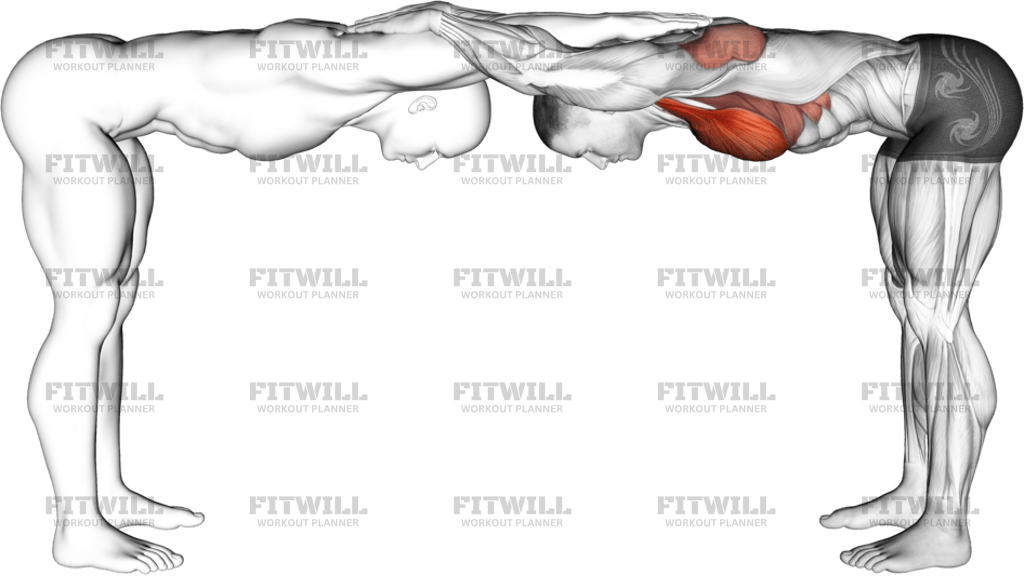
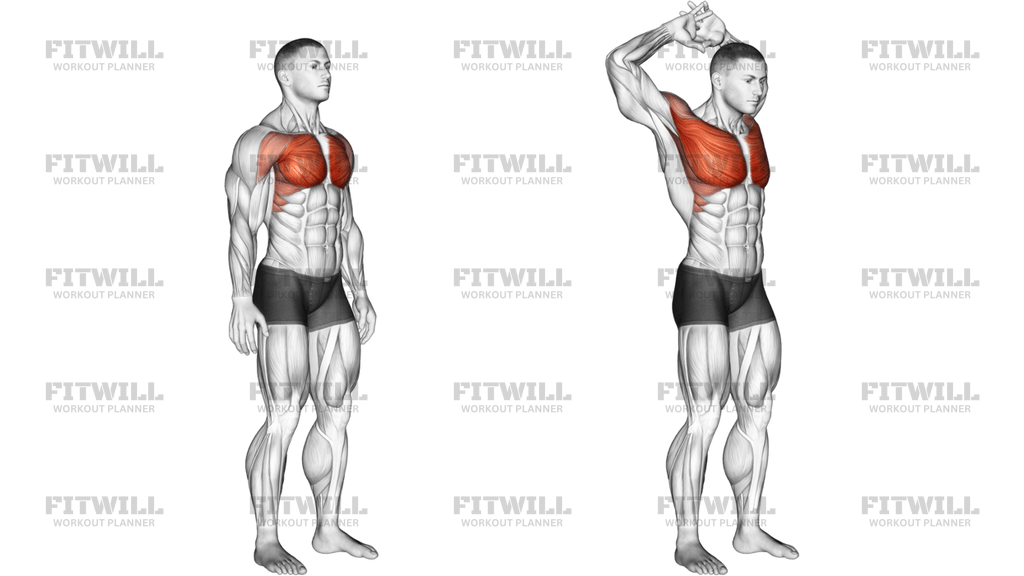
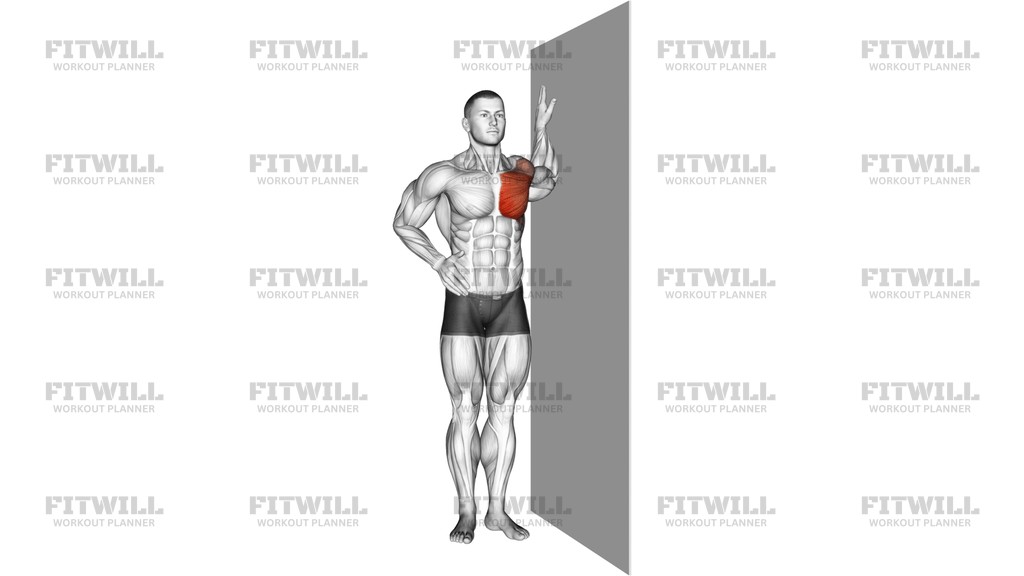
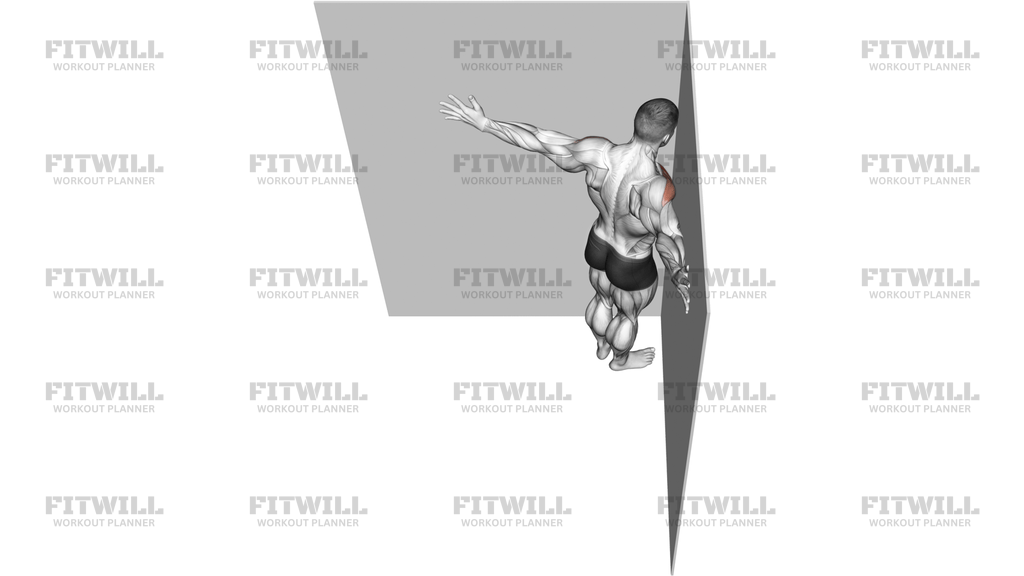
Dynamic Chest Stretch
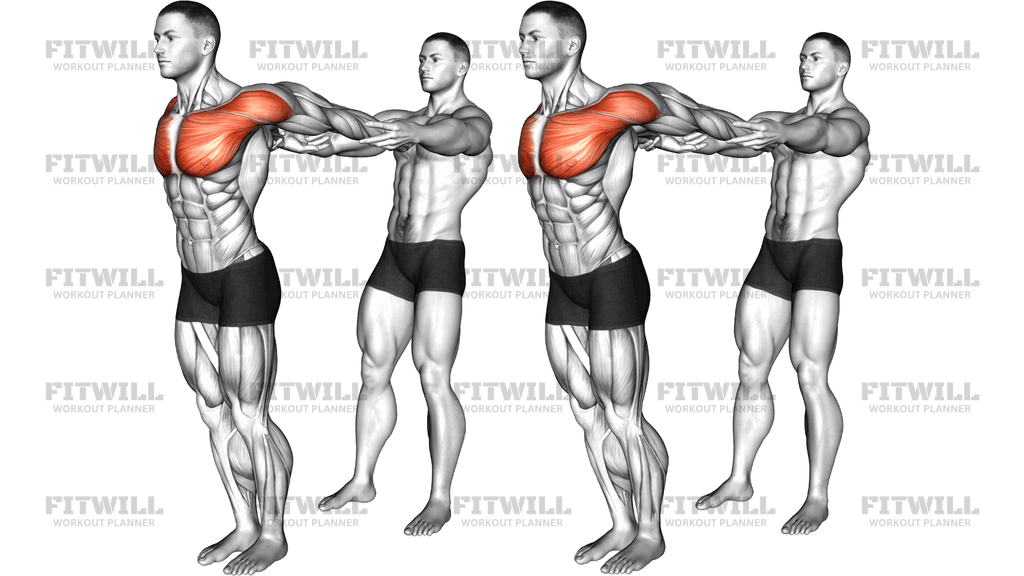
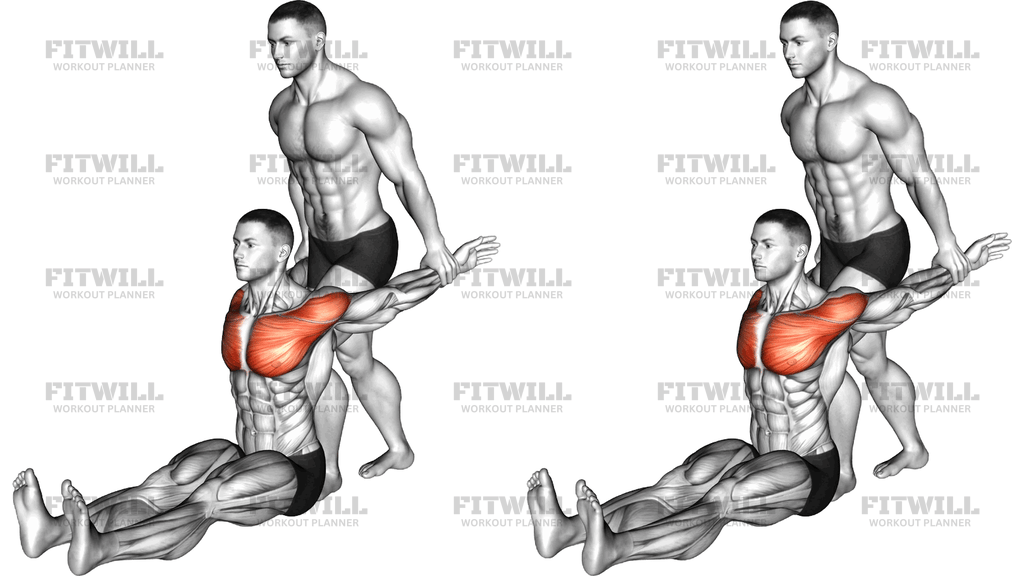
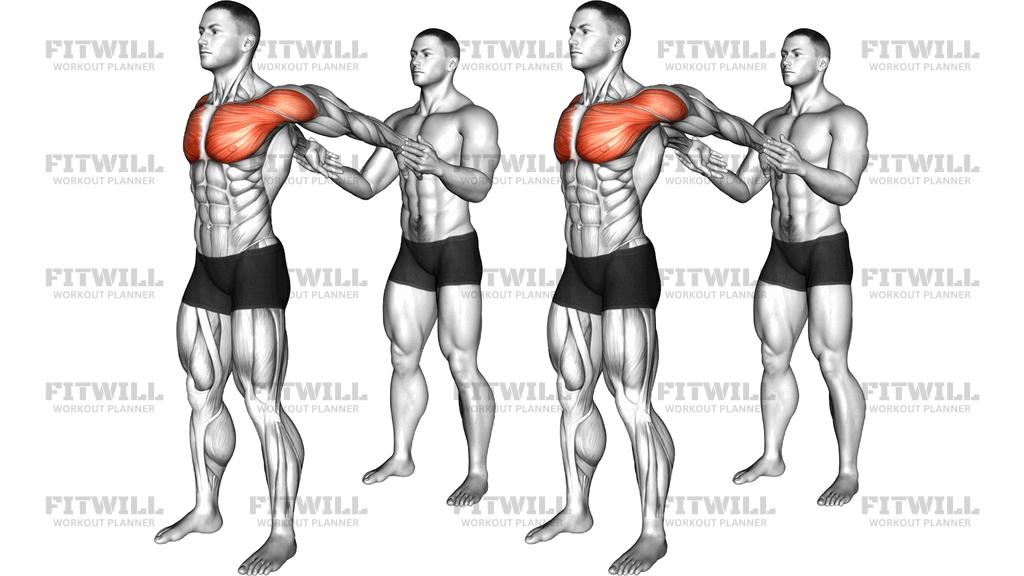
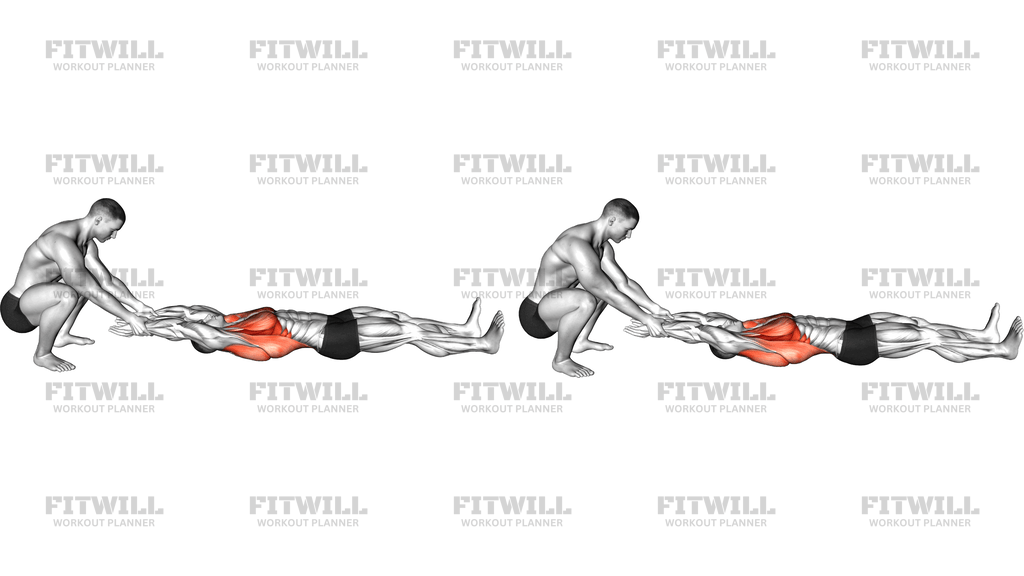
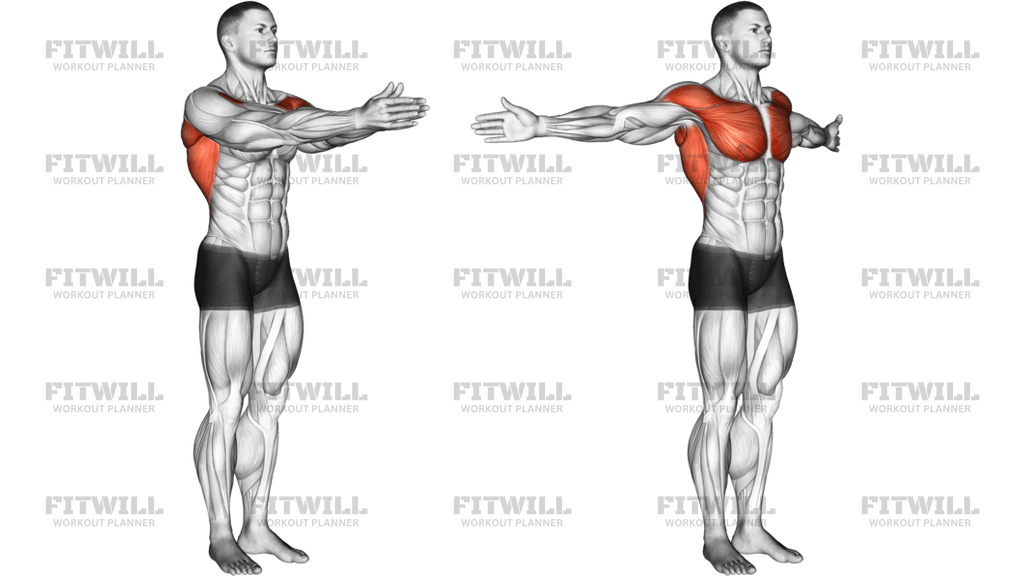
Dynamic Chest Stretch is a standing mobility drill that opens the pectorals and front shoulders through repeated arm sweeps rather than a long static hold. It is most useful when the chest feels tight from pressing, desk work, or any session that needs better shoulder positioning before lifting. The exercise uses body weight and an exercise mat as a simple, low-friction setup so you can focus on smooth shoulder motion and clean posture.
The movement centers on the Pectoralis major while the anterior deltoids, triceps, and trunk help keep the arms and ribs organized. The key idea is not to yank the shoulders backward; it is to move the arms through a wide, controlled arc while the ribcage stays stacked over the pelvis. When the chest opens well, the shoulders usually sit more comfortably and the upper body feels less compressed in pressing and overhead work.
A good rep begins with the feet planted, spine tall, and arms extended in front of the body at about shoulder height. From there, sweep the arms outward until the chest opens and the shoulder blades move gently together without forcing the low back to arch. The stretch should feel active and repeatable, not like a forced end-range hold. If the shoulders rise toward the ears or the ribs flare, the range is too aggressive.
Because this is a dynamic stretch, the return path matters as much as the opening phase. Bring the arms back together under control, breathe continuously, and let the chest soften between reps rather than bracing hard the whole time. That makes the drill a useful warm-up before bench pressing, push-ups, dips, or any workout where the front of the upper body tends to tighten up.
Use Dynamic Chest Stretch when you want a simple chest-opening drill that prepares the shoulders without fatiguing them. It works well early in a session, between pressing sets, or after prolonged sitting. Beginners can use it easily, but the movement should still stay deliberate and pain-free. The best version of the exercise leaves the chest feeling open and the shoulders moving freely, not strained or pinched.
Fitwill
Log Workouts, Track Progress & Build Strength.
Achieve more with Fitwill: explore over 9600 exercises with images and videos, access built-in and custom workouts, perfect for both gym and home sessions, and see real results.
Start your journey. Download today!




Instructions
- Stand tall on the exercise mat with your feet about hip-width apart and your torso stacked over your hips.
- Reach both arms straight forward at shoulder height with your palms facing each other or lightly together.
- Keep your shoulders down and neck long before you start the sweep.
- Open the arms out to the sides in a wide arc until you feel the chest and front shoulders lengthen.
- Let the shoulder blades move gently together without forcing your low back to arch.
- Pause briefly in the open position with relaxed breathing and controlled tension.
- Sweep the arms back to the front under control instead of snapping them shut.
- Repeat smoothly for the planned number of reps, then lower the arms and reset.
Tips & Tricks
- Keep your elbows almost straight so the stretch comes from shoulder opening, not from bending and straightening the arms.
- Think about sliding the shoulder blades together, not pinching them hard.
- If your ribs flare forward, shorten the arc and keep the sternum stacked over the pelvis.
- Move at a pace that lets you control the return path just as well as the opening path.
- Stop the sweep before the front of the shoulder feels jammed or pinched.
- Use the drill as a warm-up, not as a max-flexibility test.
- If one side feels tighter, do not twist through the torso to chase more range.
- Keep the neck relaxed and look straight ahead instead of craning the chin upward.
Frequently Asked Questions
What does Dynamic Chest Stretch mainly target?
It mainly targets the pecs, with the front shoulders and triceps helping as the arms open and close.
Can beginners perform this exercise?
Yes. It is beginner-friendly because the movement is simple and you can control the range with your own arm position.
How should my arms move during the stretch?
Start with the arms reaching forward at shoulder height, then sweep them out to the sides in a smooth arc before bringing them back together.
Should I bend my elbows?
Keep the elbows nearly straight. A small softness is fine, but a big bend turns it into a different shoulder drill and reduces the chest stretch.
Why should I keep my ribs down?
If the ribcage flares, the low back takes over and the stretch stops being a clean chest opener.
What is a common mistake with the chest opener?
Rushing the return and snapping the arms back to the front is the most common issue. The closing phase should stay just as controlled as the opening phase.
When should I use this in a workout?
It fits best in a warm-up, between pressing sets, or any time the chest and shoulders feel tight before upper-body work.
How do I make the stretch stronger without forcing it?
Open the arms a little wider, but only as far as you can keep the shoulders down and the chest unpinched.
Do I need equipment for this movement?
No. A mat is enough, and the body weight setup is mainly there to make the standing position stable and comfortable.