Lying Abdominal Stretch
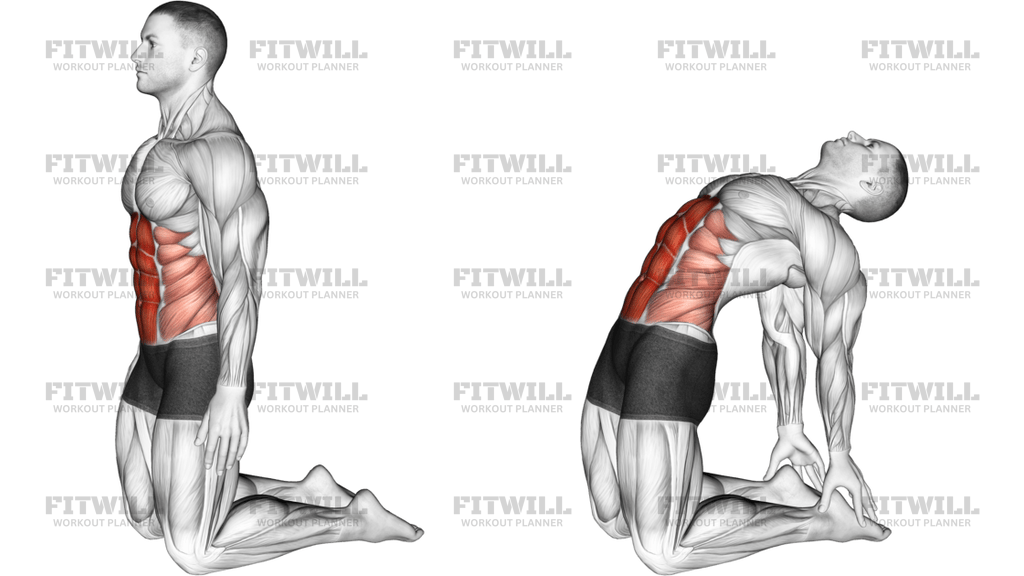
Lying Abdominal Stretch is a floor-based extension stretch for the front of the torso. It is performed face down on an exercise mat with the hips and thighs staying in contact with the floor while the chest is gently pressed up, so the rectus abdominis and the front of the hip line can lengthen without turning the movement into a hard low-back bend.
This exercise is useful after long periods of sitting, after ab work, or any time the trunk feels stiff and flexed. The main tissue being opened is the abs, especially the rectus abdominis, with the obliques and hip flexors contributing to the stretch as the spine extends. Because the pelvis stays grounded, the target is the front of the body rather than a full backbend.
The setup matters because small changes in hand position and pelvis contact change where the stretch lands. A lower hand position makes the movement gentler and keeps more of the load out of the lumbar spine, while a higher press-up increases the stretch through the abdomen and front hips. The goal is not to force height; it is to create a smooth, even stretch from the lower ribs through the abdomen and into the hip crease.
Move into the stretch slowly and stop as soon as the front body opens without pinching the low back. Keep the shoulders relaxed away from the ears, breathe into the rib cage, and let the chest rise only as far as the pelvis can stay down. If you feel the stretch in the stomach and hip flexors, you are in the right place; if you feel a sharp compression in the low back, reduce the height or bring the hands farther forward.
Lying Abdominal Stretch works well in warm-ups, recovery sessions, and after exercises that heavily bias spinal flexion such as crunches, sit-ups, or hanging knee raises. It also fits between strength sets when the goal is to restore trunk extension before pressing or overhead work. Treat it as a controlled mobility drill, not a rep test, and finish each repetition by lowering with the same care you used to lift the chest.
Fitwill
Log Workouts, Track Progress & Build Strength.
Achieve more with Fitwill: explore over 9600 exercises with images and videos, access built-in and custom workouts, perfect for both gym and home sessions, and see real results.
Start your journey. Download today!




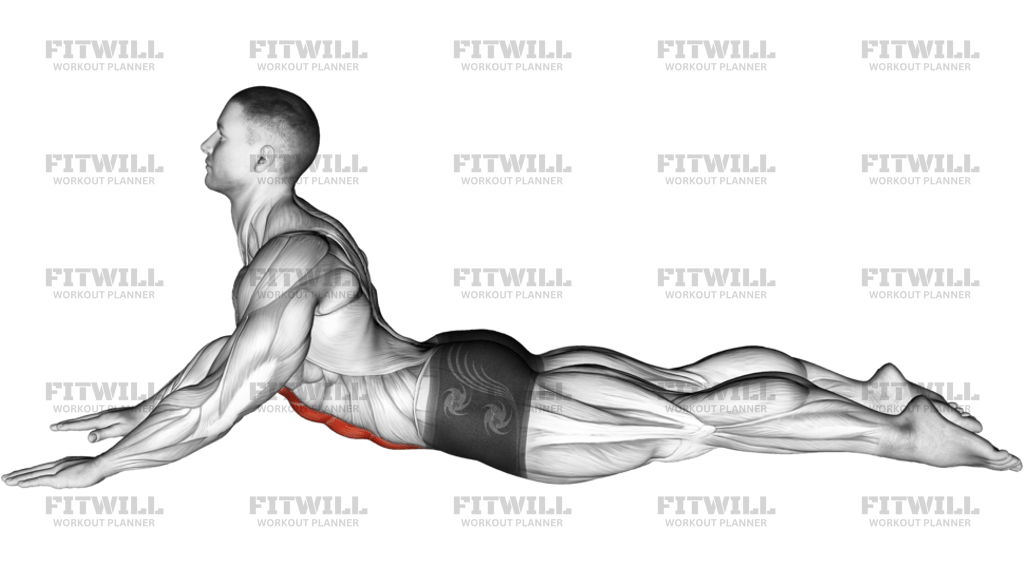
Instructions
- Lie face down on an exercise mat with your legs extended behind you and the tops of your feet on the floor.
- Place your hands under your shoulders or slightly in front of them, with your elbows bent and your palms flat.
- Keep your hips, thighs, and pelvis pressed into the mat before you begin the stretch.
- Set your neck in line with your spine and look slightly forward without cranking your chin up.
- Inhale to brace lightly, then press your chest up by straightening your arms only as far as the pelvis stays down.
- Let the front of your abdomen and hip line open while your shoulders stay relaxed away from your ears.
- Pause for a brief breath at the top if the stretch feels smooth and even, not pinchy.
- Exhale as you lower your chest and chest-rib cage back toward the mat under control.
- Reset your hands and pelvis before the next rep, or hold the final stretch for a short, steady breath cycle.
Tips & Tricks
- Move your hands farther forward if the stretch feels too aggressive in the low back.
- Keep your pelvis heavy on the mat; if the hips lift, you have turned it into a back extension instead of an abdominal stretch.
- A small press-up is usually enough to feel the rectus abdominis lengthen, so do not chase a huge range.
- Think about lifting the sternum, not jamming the lower ribs forward.
- If your shoulders shrug, slide them down and away from your ears before pressing up again.
- Breathing into the lower ribs helps the abdomen soften instead of guarding against the stretch.
- Use a slower lowering phase than lifting phase to keep the movement calm and controlled.
- Stop short of any sharp pinch in the lumbar spine and reduce the height of the press-up.
- This stretch works best after crunches, sit-ups, or any session that leaves your trunk feeling rounded forward.
Frequently Asked Questions
What does Lying Abdominal Stretch target?
It mainly stretches the rectus abdominis, with help from the obliques and hip flexors as you press the chest up from the floor.
Is Lying Abdominal Stretch the same as cobra stretch?
It is very similar to a gentle cobra-style press-up, but the goal here is an abdominal stretch with the pelvis kept down and the range kept comfortable.
Should my hips stay on the mat during Lying Abdominal Stretch?
Yes. Keeping the hips and thighs down makes the stretch land on the front of the body instead of turning it into a deep low-back extension.
How high should I press my chest?
Only as high as you can go without the low back pinching or the hips lifting. A small, smooth press-up is usually enough.
Can beginners do Lying Abdominal Stretch?
Yes. Beginners should start with the hands a little farther forward and use a short range so they can feel the abdomen lengthen without forcing the spine.
What is the most common mistake with this stretch?
The biggest mistake is jamming the chest up while the pelvis comes off the floor. That shifts the stress into the lumbar spine instead of the abs.
When should I use Lying Abdominal Stretch?
It fits well after ab work, after long sitting, or during a cooldown when you want to restore trunk extension and hip-front mobility.
What should I do if I feel a pinch in my lower back?
Reduce the press-up height, move your hands farther forward, and keep the pelvis heavier on the mat. If the pinch stays sharp, stop the stretch.