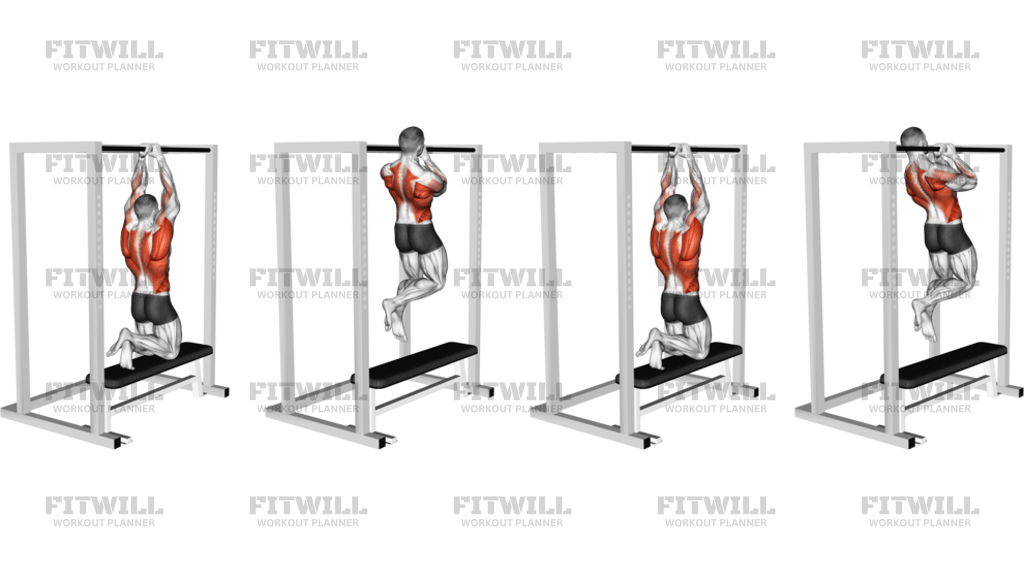
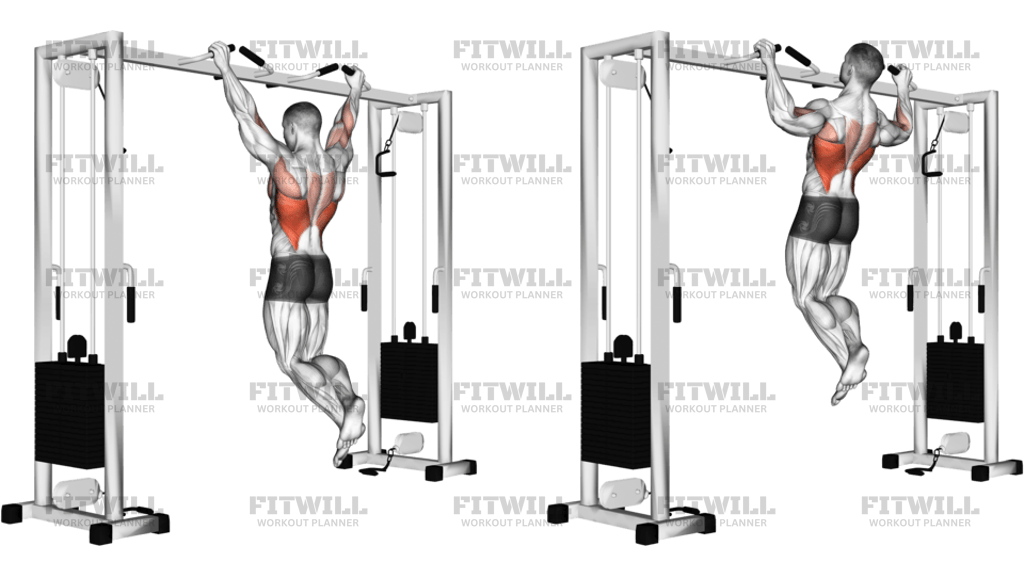
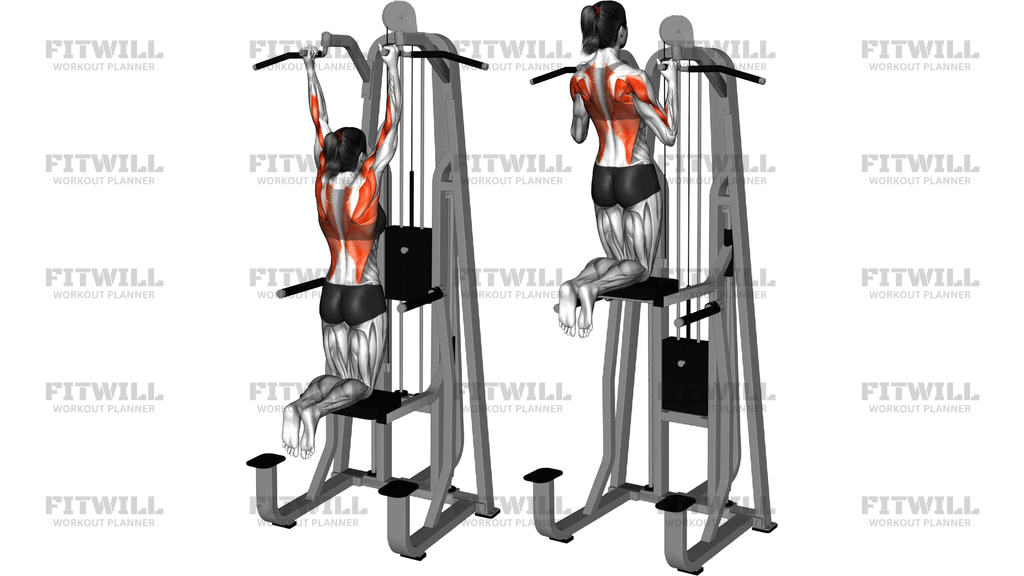
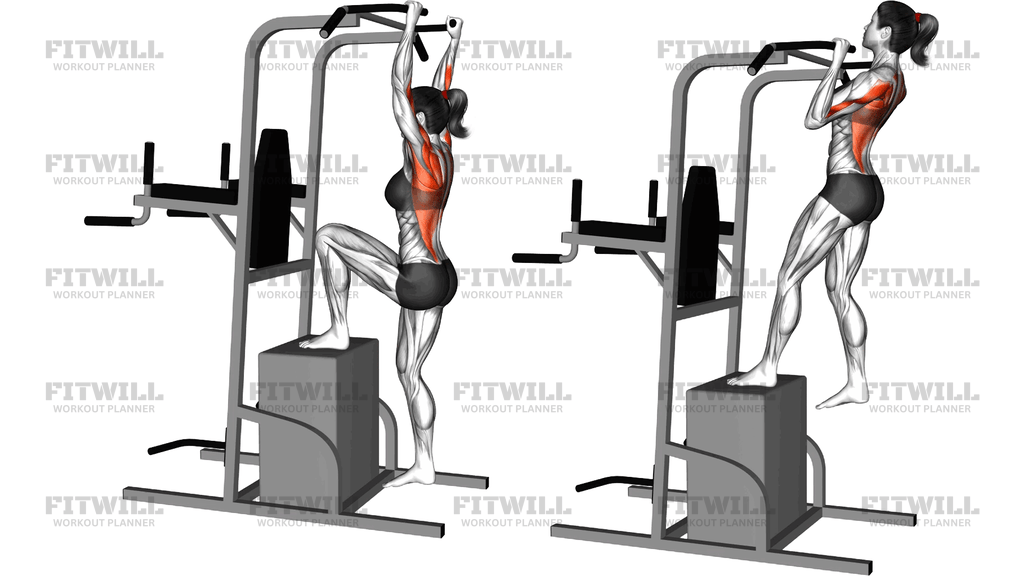
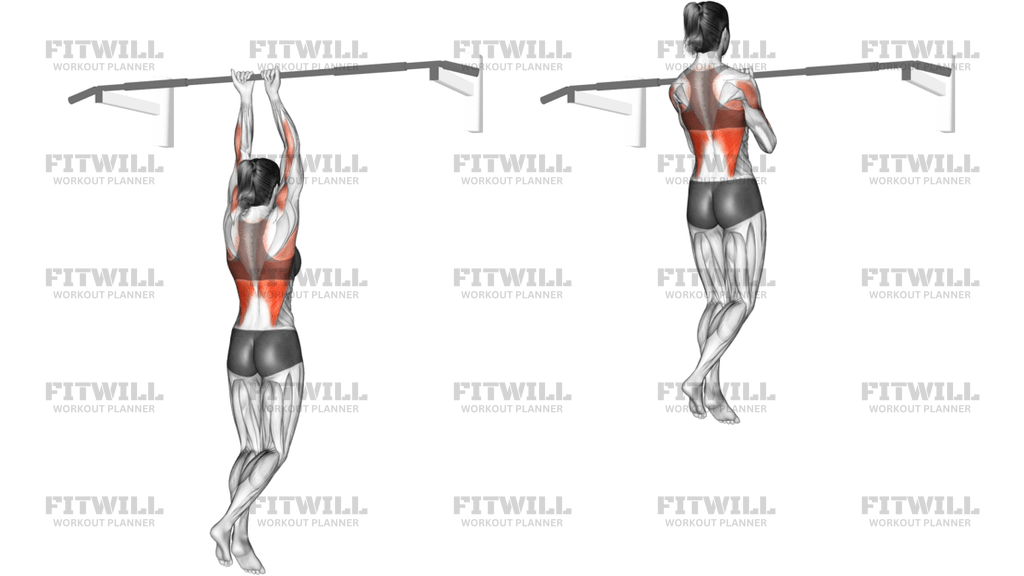
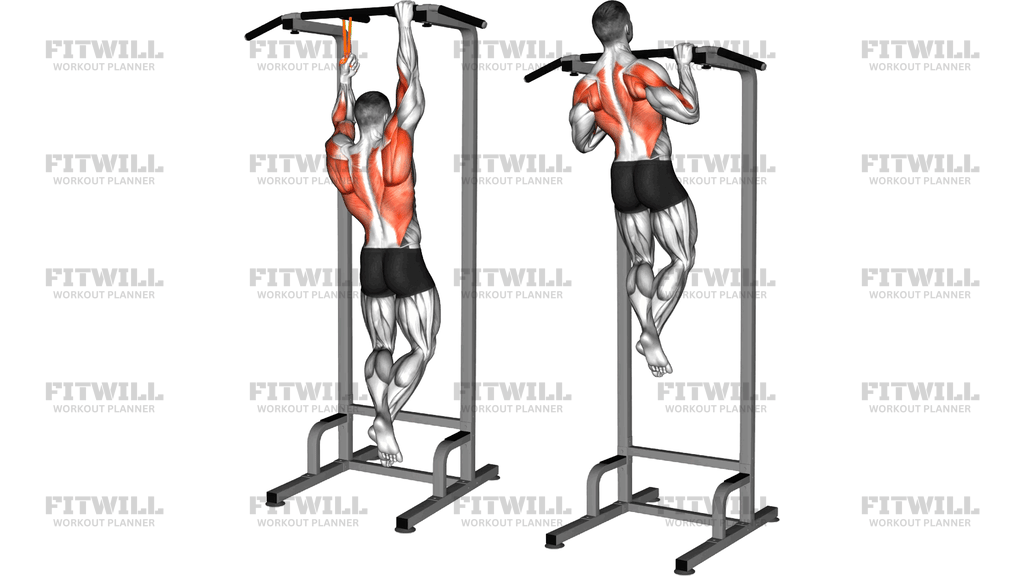
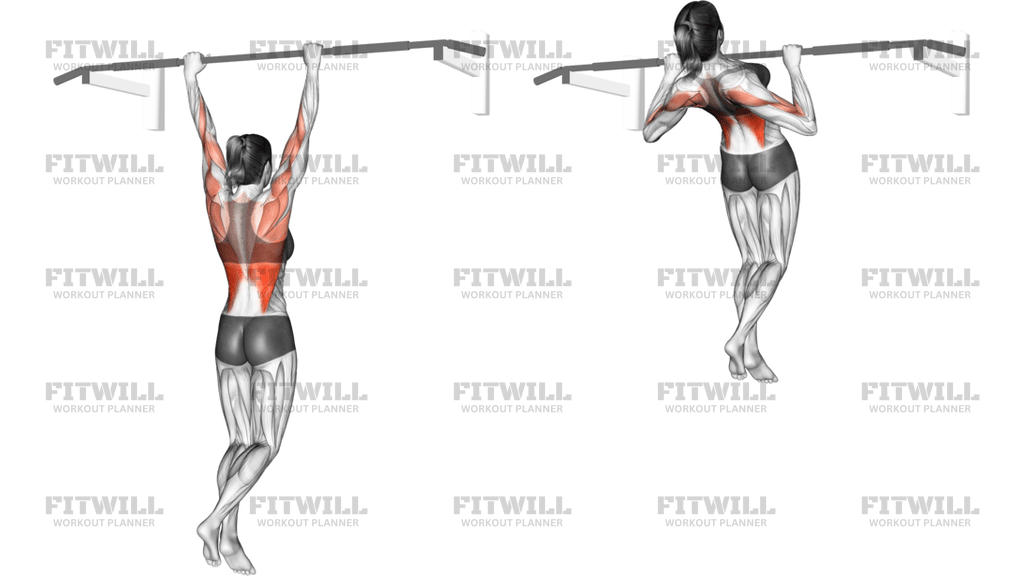
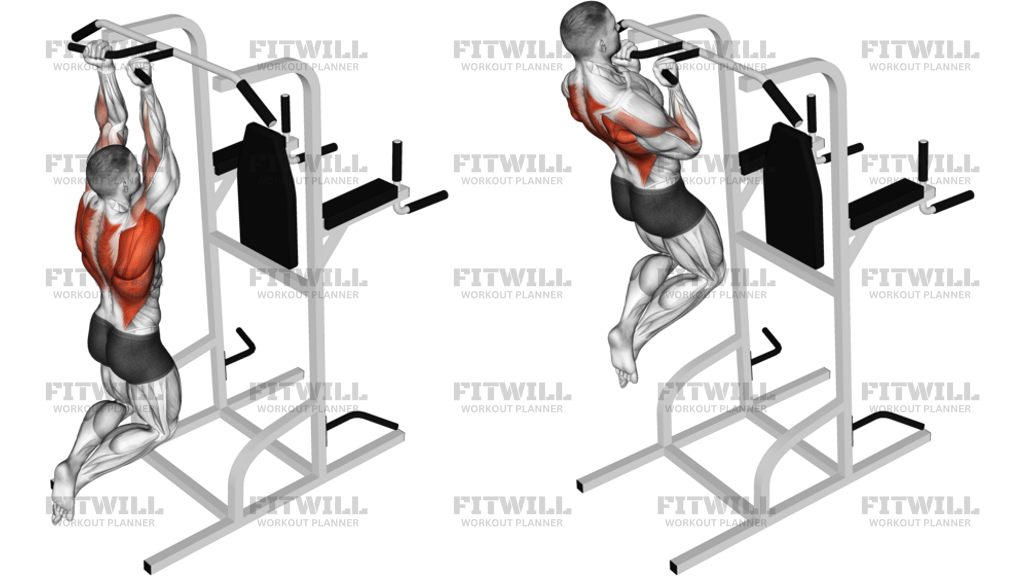
Lever Gravitron Assisted Wide Pull Up
The Lever Gravitron Assisted Wide Pull Up is a machine-based version of the classic wide-grip pull up, performed on a counterweighted assisted pull-up station. You kneel or stand on the machine's pad, which is connected to a weight stack that offsets a portion of your body weight, and pull your chest up toward a wide bar until your chin clears it. The wide hand position shifts the emphasis toward the lats, particularly the outer fibers, while the upper back muscles work hard to pull the shoulder blades down and together.
This exercise is one of the most practical ways to build toward an unassisted pull up. Because you can dial the assistance up or down in small increments, it suits complete beginners who cannot yet lift their full body weight, as well as stronger lifters who want controlled volume on the wide-grip variation after reaching failure on free-hanging sets. It is also a low-impact option for anyone returning from a layoff who needs to rebuild pulling strength gradually.
Setup matters more on this machine than most people realize. The amount of counterweight determines the actual load, and the position of your knees or shins on the pad changes how stable your body feels throughout the rep. A grip slightly wider than shoulder width, with palms facing away, places the shoulders in a position that favors lat involvement, while a narrower grip would shift more work to the biceps and inner back muscles.
Execution should always start from a full hang with the arms extended. Pull by driving the elbows down and back toward your ribs rather than simply yanking with the arms, and aim to bring your upper chest toward the bar. Pause briefly at the top, then lower yourself under control until the arms are straight again. Rushing the descent is the most common fault and it robs you of a large share of the training effect.
In a typical program, the Lever Gravitron Assisted Wide Pull Up works well as a primary pulling movement for beginners or as an accessory for intermediate lifters. Aim for sets of 6 to 12 reps, adjusting the stack so the last two reps are challenging but doable with clean technique. As you get stronger, reduce the assistance rather than adding reps indefinitely, since the goal is eventually to need less help.
[ Workout Log & Planner ]
Put your next workout in Fitwill
Keep your plan and training log ready when you are.


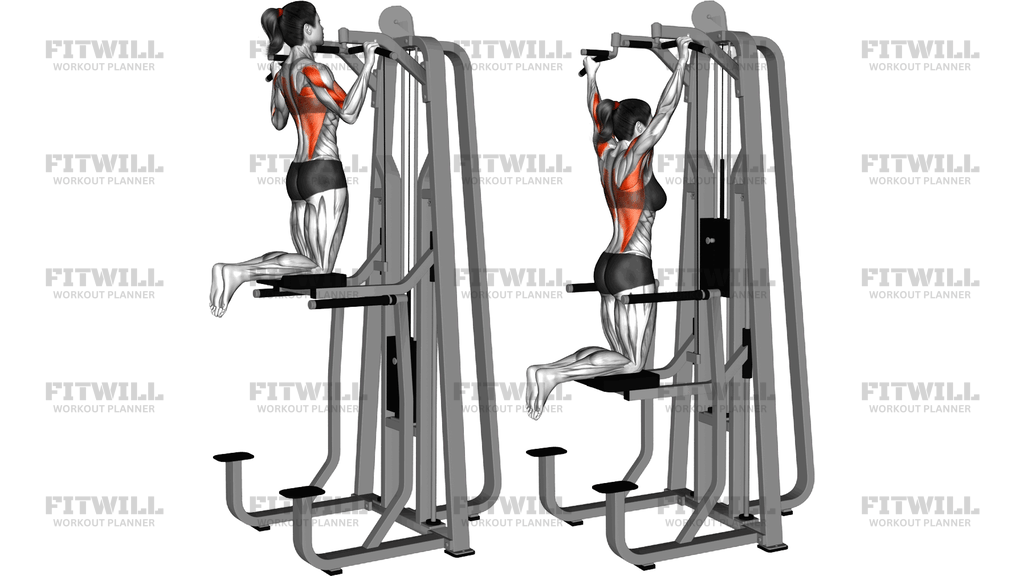
Instructions
- Select your assistance weight on the stack, then climb onto the machine and place both knees (or shins, depending on the pad design) firmly on the support platform.
- Grip the wide handles with an overhand grip, hands set noticeably wider than your shoulders, and let your body hang with the arms fully extended.
- Lift your chest slightly and brace your midsection so your torso stays upright rather than swinging forward or backward.
- Start each rep from a dead hang with the shoulders relaxed away from the ears.
- Pull by driving your elbows down and back toward your sides, leading with your chest toward the bar.
- Continue pulling until your chin clears the bar and your shoulder blades are drawn down and together; hold this top position for a beat.
- Lower yourself slowly and under control until your arms are fully straight again, resisting gravity instead of dropping.
- Exhale as you pull up and inhale as you lower back down.
- Complete your planned reps, then step off the pad carefully using the machine's foot supports before removing weight from the stack.
Tips & Tricks
- Do not set the assistance so high that the movement becomes effortless; the pad should remove just enough load that you can finish your target reps with two reps left in reserve.
- Keep your knees or shins planted on the pad for the whole set. Letting them drift forward or slide off turns the exercise into an unpredictable partial and can jar the shoulders.
- If your chin never clears the bar but your arms keep bending, the load is too heavy or the biceps are taking over. Reset to a full hang and focus on driving the elbows to your ribs first.
- Avoid leaning your head back to 'finish' the rep with your neck. Your chest should travel to the bar, not just your chin.
- The lowering phase should take two to three seconds. Dropping quickly on a machine like this builds momentum that hides how much assistance you actually need.
- Grip the handles with your whole hand wrapped around them, not just the fingers, so your forearms do not fatigue before your lats do.
- If your shoulders feel pinched at the top, widen the assistance slightly and stop the pull at collarbone height for a few sessions while your mobility adapts.
- Track your assistance weight each session. Lowering the stack by one plate every week or two is a clear sign of progress toward an unassisted wide pull up.
Frequently Asked Questions
What muscles does the Lever Gravitron Assisted Wide Pull Up work?
The primary movers are the lats, with strong assistance from the teres major, middle traps, rhomboids, and rear shoulders. The biceps and forearms work to hold the grip and flex the elbows through the pull.
How does the wide grip change the exercise compared to a shoulder-width assisted pull up?
The wider hand position shortens the range slightly at the top and biases the outer lats and upper back. It also puts the biceps at a slightly weaker angle, so the back muscles have to contribute more.
How do I choose the right assistance weight on the Gravitron machine?
Pick a load that lets you complete 6 to 12 reps with your chin clearing the bar and the last two reps feeling hard. If every rep feels easy, reduce the assistance on your next set.
Should I kneel or stand on the assist pad?
Follow the machine's design: most Gravitron-style stations have a pad for kneeling, while some allow you to stand with one or both feet. Kneeling is generally more stable, so use it if your machine supports it.
Can beginners use the Lever Gravitron Assisted Wide Pull Up?
Yes, it is one of the best entry points to vertical pulling because the counterweight lets you train the exact pull-up pattern at a load you can handle. Start with generous assistance and reduce it gradually over weeks.
Why can't I fully straighten my arms at the bottom of each rep?
This usually happens when the assistance is set too light, making the stretch position too heavy to control, or when the knees slip off the pad. Check your pad position first, then add a small amount of assistance.
What is the most common mistake on this machine?
Bouncing out of the bottom and using momentum to get to the top. Both habits mask your true strength level and reduce the work the lats actually do, so pause at full extension before every pull.
How do I progress from this exercise to an unassisted wide pull up?
Reduce the assistance in small increments whenever you can complete your target sets with good form, and periodically test a single bodyweight rep. Pairing this with hangs and slow negatives speeds the transition.
Is the Lever Gravitron Assisted Wide Pull Up safe for the shoulders?
For most people it is a joint-friendly option because the counterweight limits the load and the machine guides the path. Keep the pull controlled, avoid shrugging into the ears, and stop if you feel sharp pain rather than muscle effort.